Reading The Great Writers, part four

Reading The Great Writers, part three

Another shorter middle bit
While my experience of reading The Great Writers’ novels had always been a little marred by their layout and print, something far worse awaited at university.

Condescension.

Jane Austen, Pride and Prejudice (1813)
This was the very first novel we were required to read on my degree (and one of the very small number by women). I had not read anything quite like it before. Despite my forays into ‘literature’ and ‘literary fiction’, I still mostly read genre fiction. I got through a lot of those 180ish-page sf paperbacks, often at a rate of one or more per day, so I was not at all used to having to keep track of large numbers of characters and their relationships with each other. I remember breaking off after several chapters to jot down their names and draw a diagram mapping how they connected to each other.

I remember a fellow student getting a glimpse of it and laughing.

But mostly I remember being the only student in the seminar without a brand-new Penguin Classic, and the looks on (some of) their faces when they saw my manifestly cheap ‘fancy’ hardback. It was that Oxford interview all over again.

When I was growing up, Plymouth was one of just a handful of places that still retained the 11+ exam, the already archaic post-war system for streaming pre-adolescent children into secondary education at technical schools, secondary moderns or grammar schools. It pretended to neutrality but was really a system for maintaining economic and social class hierarchies while allowing limited social mobility for the ‘worthy’ few. We moved to Plymouth right at the end of 1979 and I started my half year at Hyde Park Juniors on the January day the rest of the class were taking the second part of the 11+. So a couple of months later, after which most school places in the city had already been assigned, I had to take an alternative exam. The outcome was I had done well enough to go to a grammar school but there were no places available, so I could either

  1. commute to the anomalous Southway Comprehensive (which also was not quite a comprehensive, either, since it streamed some subjects) on the northern edge of the city; or
  2. apply for a scholarship to Plymouth College, the public (i.e., private) school less than a ten-minute walk from home, not quite opposite my junior school.

No way was I going endure being patronised and mocked as a scholarship boy!

By not going there or to Oxford, I really thought I’d dodged the bullet of class condescension.

After that Austen seminar, I went back to my room in Mansfield Hall and looked at the reading list we’d been sent in advance and at the shelf of books I’d brought with me. Every one of them was second-hand, and most of them editions which were less than infra dig (a phrase I’d never encountered before, let alone heard being bandied about, and had to look up in a dictionary). And some of them were so embarrassingly bulky and mouldering that I went scouring Reading’s second-hand bookstores for replacements, which of course meant it would probably have been cheaper to buy new editions in the first place.

Anyway, Austen. Took me a while to get it. But then quickly became quite fascinated and read all the novels – except, for some reason, Northanger Abbey (1817), which I only got to maybe five years ago. Predictably, I guess, sarky Emma (1815) was my favourite, but I’ve only ever re-read Mansfield Park (1814) and Persuasion (1817), both for things I was writing. Maybe when I’m through (re)reading the Brontes (and George Eliot), I’ll move Austen into the rotation.

Herman Melville, Moby-Dick (1851)
What can I say? It is an absolute monster of a book. I fell in love immediately. So much so that my first tattoo was very nearly the Penguin edition barcode on the back of my neck. (Again, I wish I was making this up but am also quite delighted by my own ridiculousness. And both relieved and saddened that I never managed to scrape together the cash.)

The tattoo that got away: 0140390847 

For my first essay on my American Literature module – which anthology-wise was thoroughly Norton not Heath, so Ralph Waldo Emerson, Henry David Thoreau, Walt Whitman, Mark Twain, early Henry James and our token woman, Emily Dickinson – I decided to develop an angle on Moby-Dick by holding it up alongside Ernest Hemingway’s The Old Man and the Sea (1952), which I also read for the first time. Quite why I thought Moby-Dick could not sustain a 1500-word critical treatment on its own, I have no idea. Maybe Melville’s encyclopedism was contagious.

I read Moby-Dick half a dozen times over the next decade, a couple of them for teaching. After my MA at Warwick, I returned to Reading for my PhD and a couple of years in a row I taught the same American literature module – literally the same, completely unchanged – I’d studied five or six years earlier. Each time, at some point in the first seminar, I advised the class that it was a really big book but they would only need to read so many pages per day to have it under their belts by the time we got to the two weeks we would spend on it. And each week, I updated the increasing page-count if they were to start from that day. Of the 25 students I taught over those two years, not one of them took my advice. But more than half skipped class during the Moby-Dick fortnight… Their loss.

A few years ago, we went to Inverness for our Xmas/New Year’s break, and I decided to read Moby-Dick for the first time in at least 20 years. Once again, I was utterly smitten. Fortunately, it was fucking freezing outside, and the days were much shorter that far north, so my partner didn’t really mind that I basically sat and read it in 4-or-more-hour chunks.

At the start of lockdown, I decided to read all of Melville. Breezed through Typee (1846) and Omoo (1847), both of which I’d previously read and this time liked even more.  And I finally got through Mardi (1849), which had defeated me several times before, and which this time broke me of Melville for a while. However, I’m determined to bring him into the rotation – Redburn (1849) is cued up for 2024, which means I should get to my Moby-Dick reward-read around 2030 or 2031 (depending on what I do about the short stories and poetry). I seriously cannot wait. Such are the schemes of mice and men.

Mark Twain, Adventures of Huckleberry Finn (1885)
I must have read a version adapted for younger readers at some point, because parts of it were already familiar. I have not reread it since I taught it in 1996 at Exeter University on an American Literature survey course which was very Heath, not Norton, in its orientation. I feel no particular desire to read it again.

Except.

How the hell you abridge Huckleberry Finn. Surely, I can’t be daft enough to track down a children’s version and read it alongside the complete text.

Reader, that’s precisely how daft I can be.

F Scott Fitzgerald, The Great Gatsby (1925)
We read this on the Literature, Film and Television module alongside the 1974 Coppola-scripted, Jack Clayton adaptation, starring Robert Redford. The one good thing about Fitzgerald’s novel is that it is quicker to read than it is to sit through the 1974 Coppola-scripted, Jack Clayton adaptation, starring Robert Redford.

And it turns out, a quarter century later, quicker to read than to sit through Baz Luhrmann’s 2013 adaptation, starring Leonardo DiCaprio. So that’s two good things.

But it is even quicker to watch Elliot Nugent’s 1949 version, starring Alan Ladd, which regardless of the liberties it takes with the novel, but also mostly because of them, makes it way better than Fitzgerald’s effort.

Which is to say, I not only don’t like the novel – the ash heaps and big googly eyes are fine – but am mystified by its critical standing. It’s right down there with JD Salinger’s Catcher in the Rye (1945–6) and that whiny little fuck Holden Caulfield, the literati’s Danny Rand.

Not a still from the 1985 BBC adaptation of Tender is the Night

However, being a dutiful student, I also read Tender is the Night (1934) and re-watched the 1985 BBC mini-series adaptation – I saw the initial broadcast of it because of: a) flailing around re. cultural capital, but also really b) Peter Strauss (i.e., Wolff aka Spacehunter, of Adventures in the Forbidden Zone fame) was in it.

I’d found a cheap paperback Gatsby to switch in for my Great Writers version but did not keep it once we were done with Finals. Of course, a few years later I found myself teaching on an updated version of that module, and equally inevitably, the one bit that had been kept unchanged was the block on Fitzgerald. His estate has made a (very small) fortune from me, and I resent that.

Henry Fielding, Tom Jones (1749)
Our 18th Century Literature module was an intoxicating brew of bawdiness, wit, humanism, misanthropy, scepticism, formal experimentation, moralising, mockery of moralising, refusal to moralise, baby-farming and horse-people. Fortunately John Dryden died in 1700, so there was Alexander Pope instead, with The Rape of the Lock (1712) and The Dunciad (1728). There was Jonathan Swift’s A Tale of a Tub (1704), The Battle of the Books (1704), ‘A Modest Proposal’ (1729) and Gulliver – so I finally learned how to pronounce Houyhnhnms. And for novels, there was Tom Jones, which I liked most of all, with Laurence Sterne’s Tristram Shandy (1759–67) a close second and Daniel Defoe’s Moll Flanders (1722) some way back in third place. Samuel Richardson’s Pamela (1740), trailing the field by quite a distance, was in danger of being lapped. Which makes it all the odder that rather than reading Fielding’s brief spoof, Shamela (1741), or any of his other novels, I voluntarily ploughed through Richardson’s breezeblock response to Fielding, Sir Charles Grandison (1753), and his other doorstop, Clarissa (1748). Of them, I remember nothing beside their immensity.

Thomas Hardy, Tess of the D’Urbervilles (1891)
Our module on The Novel gave us Austen, George Eliot, later Henry James, Conrad, Lawrence and Hardy. See, I told you it was a devotedly Leavisite department!  (Eliot, James, Conrad and Lawrence will return in part five.)  I found Tess a bit meh, not Far From the Madding Crowd meh, but meh nonetheless.  Jude the Obscure (1894–5)  seemed stronger, undoubtedly because Jude’s struggle for and with social mobility struck a chord. Also, pig pizzles being lobbed over hedges always puts me in a cheery mood. But it was The Woodlanders (1887) that won me to Hardy’s corner. That and him not being James or Lawrence. (I eventually got to write about The Woodlanders in The Anthropocene Unconscious: Climate Catastrophe Culture – alongside Groot, Swamp Thing and Man-Thing, because I’m nothing if not classy.)

Virginia Woolf, To the Lighthouse (1927)
This wasn’t actually on my degree. It’s best shot was the Modernism module but, although that somehow (and somewhy) devoted two weeks to Ezra Pound’s Hugh Selwyn Mauberly (1920),  there was only room for one woman, which was Woolf, represented by one novel, which was  Mrs Dalloway (1925), but I liked it so much I read Lighthouse and The Waves (1931), too.

And that was it. My degree was over. More house moves – Plymouth, Coventry, Reading, Reading, Reading, Exeter, Exeter, High Wycombe, High Wycombe, High Wycombe, High Wycombe, High Wycombe, Bristol – and my parents wanting to reclaim some space in their own house (the nerve!) and somewhere in all of that The Great Writers (and many other books) found their way to charity shops.

But there are still 26 titles unaccounted for…

Which I realise is not much of a cliffhanger, but it’s the best I can muster right now.

Reading The Great Writers, part five

Menschen am Sonntag/People on Sunday (Siodmak and Ulmer 1930)

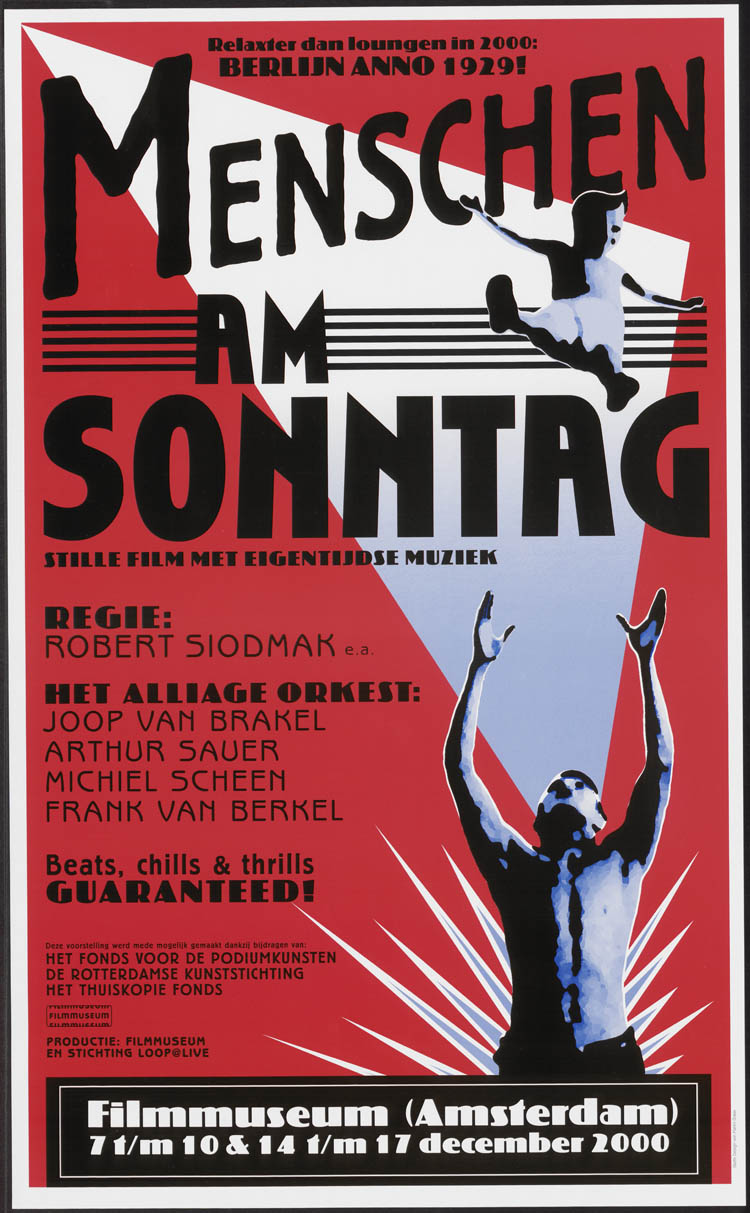
People-on-sunday-poster[A version of this review appeared in Film International 22 (2006), 69–71.]

Even if it were not a remarkable film, People on Sunday (1930) would still have a place in film history because of the subsequent fame of its makers, all of whom sooner or later left Germany for America. It is based on an original story by Curt Siodmak, who later wrote and directed a number of horror and exploitation movies in Hollywood, but is probably best known as the author of Donovan’s Brain (1942), filmed several times. He developed the screenplay with his brother, Robert, who became one of the major directors of American film noir, and Billy Wilder, who became one of the major Hollywood directors full stop. Robert co-directed the film with Edgar G. Ulmer, who directed numerous Hollywood films, mainly for poverty-row studios, including The Black Cat (1934) and Detour (1945). Their cinematographer was Eugen Schüfftan. A decade older than the others, he was already an established figure in German cinema, probably best known for the special-effects process which he invented for Fritz Lang’s Metropolis (1926) and which still bears his name (because of union disputes, his Hollywood career is largely uncredited, although he did eventually win the cinematography Oscar for The Hustler (Robert Rossen, 1961)). Schüfftan’s camera assistant was Fred Zinnemann, who later directed such films as High Noon (1952) and From Here to Eternity (1953). People on Sunday, the project that brought all these talents together right at the start of their careers might well have been remembered for this reason alone. However, it is much more than a mere curiosity or apprentice piece. It stands – alongside Berlin, ein Symphonie einer Grosstadt (Ruttman, 1927), Berliner Stilleben (Moholy-Nagy, 1929), M (Lang, 1931) and Kuhle Wampe (Dudow, 1932), alongside Alfred Döblin’s Berlin Alexanderplatz (1929) and the writings of Rudolf Arnheim, Walter Benjamin, Bertolt Brecht and Siegfried Kracauer – as a key document of the late Weimar period.

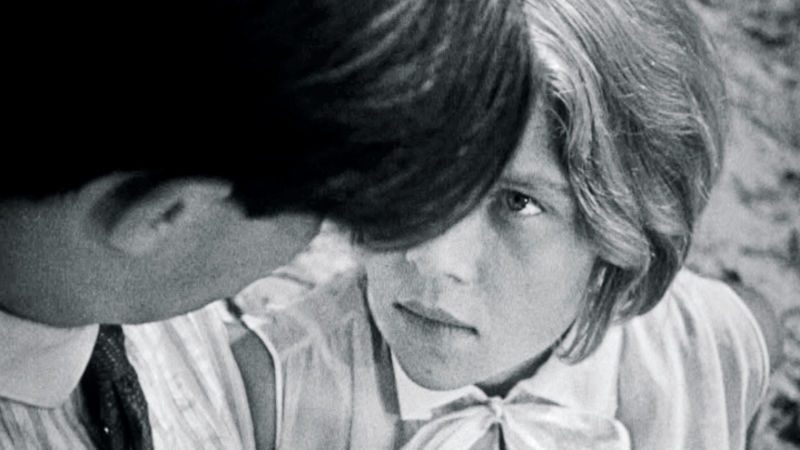
plakat-menschen-am-sonntag-1933-werner-labbeSubtitled ‘A film without actors’, it cast five non-professional actors as young Berliners, each character with the same name and job as the person playing him or her. The taxi-driver Erwin lives with the model Annie. On Saturday evening, his friend, the travelling wine salesman Wolfgang, picks up the film-extra Christl, and arranges to go out with her the following day. He invites Erwin and Annie along, but next morning Annie sleeps in, so Erwin goes without her. Christl brings her friend, the record-shop salesgirl Brigitte, with her. The foursome travel out into the countryside, swim in the lake, picnic, listen to records and nap. Christl rejects Wolfgang’s advances and becomes jealous when he switches his attentions to Brigitte. At the end of the day, they all go their separate ways. Next morning, it is back to work, back to everyday life – four million Berliners all looking forward to next Sunday.

When I have taught this film, my students have generally been surprised by its casual attitude towards sex and struck by Wolfgang’s laddish preference to go to a football match with Erwin the following weekend rather than on the date he has made with Brigitte. Others are impressed by the energy and mobility of the camera – an example of the enfesselte Kamera (unchained camera) that was so central to the Kammerspielfilm (chamber play film) and Milieutonfilm (milieu talkie) traditions with which Robert Siodmak’s later Weimar work is associated. What I find most interesting about People on Sunday, though, is the way in which it blends together actuality footage and undressed (and uncontrolled) location shooting with events staged on location (some of which are presented as actuality footage) and on the film’s single set (Erwin and Annie’s apartment). It begins, like a city symphony film, with montages of Berlin’s streets and buildings, eventually selecting Christl and Wolfgang from its countless bustling inhabitants. Throughout the film are interspersed similar prolonged actuality sequences, cutting away from the characters to real Berliners as they too undertake workday labour or pursue Sunday leisure activities. Pedestrians weave through horse-drawn and motorised vehicles; streets are swept and hosed down; elevated trains race past ubiquitous advertising; people swim or boat or play field hockey (or a strange schoolboy spanking game); they eat and sleep; they play with their children; they visit memorials or listen to bands; they relax – while shop-window mannequins are left with nothing to do, no actual function, when the stores are closed and the streets deserted. And then, next day, Berlin goes back to work.

resolveIn the late 1920s, Germany’s left-wing intelligentsia formulated an array of artistic-political movements, including activism, expressionism and new objectivism (Neue Sachlichkeit). People on Sunday, along with Erich Maria Remarque’s fiction, is a prime example of the latter, which Walter Benjamin attacked in his essay ‘The Author as Producer’ (1934). He argued that, whereas Dadaism framed collages of picture fragments, ticket stubs, cotton reels and cigarette butts, thus demonstrating how the picture frame destroys time, new objectivist photomontage is ‘incapable of photographing a tenement or a rubbish-heap without transfiguring it … It has succeeded in turning abject poverty itself, by handling it in a modish, technically perfect way, into an object of enjoyment’ (Benjamin 1973: 94–95). Or, in Esther Leslie’s memorable explication of his critique, ‘The world is beautiful, it gushes, and [new objectivism] shows its skill by lavishing any soup can with cosmic significance, while unable to grasp a single one of the human connections in which it exists’ (Leslie 2000: 59). While this might be true of the movement more generally, I think it is hard – or, perhaps, with the passage of time has become harder – to dismiss People on Sunday in this way. Without doubt, its images are pristine and its methods if not modish then at least cutting edge. But its blending of types of footage does weave its characters into a broader social and economic fabric than is common, and the images of contemporary Berlin form such a major part of the film that they are more than mere scene-setting, positioning the characters as typical rather than exemplary. This typicality is captured by non-actors Erwin and Annie destroying each other’s photos of movie stars. This scene – shot, ironically enough, on the film’s only set – announces the film’s sense of its own difference from dominant forms of cinematic realism, and critics have been quick to describe it as an influence on Jean Renoir’s films of the 1930s, Italian neo-realism, the French New Wave, the British Free Cinema movement, and others. It certainly raises lots of questions as to what we mean by ‘realism’.

One of the major early debates in film theory was about whether to consider the frame as a window opening on to a world that extends unseen into off-screen space or as a border which, like a picture frame, is an absolute limit, with meaning determined solely by the enframed image’s composition. The former position is typically associated with André Bazin, the latter with Jean Mitry. Curiously, for all the championing of People on Sunday as realist, the sequence most frequently recalled is one in which the filmmakers most decisively intervene in what we see. thenewyorker_movie-of-the-week-people-on-sundayPhilip Kemp describes it as ‘the famous shot where, as two people start to make love in a sylvan glade, the camera pans tactfully away – to a nearby rubbish tip’. The camera in fact performs a complex figure-of-eight pan-and-tilt movement, taking us away from Wolfgang and Brigitte as they recline onto the dirt. It moves away and up into the air, past phallic fir trees which also connote the naturalness of sex while suggesting some kind of transcendent experience, and then down to reveal garbage scattered on the forest floor. It then moves back across the forest floor, up past more trees until it reaches the tallest fir, again connoting the phallic as well as an orgasmic climax, and then down to find Wolfgang, fully dressed, standing over Brigitte.

This elaborate camera movement – there is a cut in the middle, but it is unclear whether it is deliberate, connoting the passage of time, or an ‘invisible’ cut we are not supposed to register, or a case of missing frames1 – goes right to the heart of the debate between Bazin and Mitry. Through its duration it reveals the world extending beyond the frame, while each individual frame does precisely the opposite. Likewise, its complex set of meanings is achieved not through the composition of the individual frame but through movement and duration, the juxtaposition of different frames some seconds apart from each other and, equally significantly, through activating and playing with fiction conventions. In the shots immediately preceding this one, Wolfgang takes on the air of a melodramatic villain about to force virginal Brigitte into despicable acts. That she responds to the kiss he forces on her is a cliché familiar from rape fantasies, from Samuel Richardson’s Pamela (1740) onwards. But as her willing surrender reconstitutes rape as lovemaking, the pan away should be to a roaring fireplace or a moonlit window or, bearing in mind their location, animals frolicking. And the camera movement initially works in this way, if only then to make the deflationary comparison with the garbage heap more effective. However, the shot does not end there. Instead, it makes quite compelling comparisons between the camera and the phallus, technical virtuosity and (male) sexual climax, before returning us to a scenario which is both comically deflationary – Wolfgang’s sexual prowess does not seem to include either duration or repetition – and potentially melodramatic: for a brief moment it looks as though he is standing over Brigitte’s corpse, and in the subsequent pair of shots of her she at least seems to have swooned. Her subsequent assumption that their lovemaking is a meaningful prelude to a relationship is depicted as a dewy-eyed romanticism, which even Wolfgang’s calculated indifference does not shatter.

The introduction of any new cinematic technique intended more realistically to capture the world inevitably draws attention to itself. By breaking with convention – even in order to make film more transparent – artifice announces itself. While People on Sunday might initially seem to compile elements that merely open up the debates around how the realist image of the world is to be regarded, this sequence, like the destruction of the photos, argues for a somewhat different position than those associated with Bazin and Mitry. The frame is neither a window nor a border, and realism is not about capturing the ‘real world’ or organizing it so as to ‘reveal’ its immanent truth. Realism is ultimately an argument, not about the world but about its representation. Regardless of whether People on Sunday overcomes new objectivism’s general failure to grasp human connections, it does question the place of representation in the world. And as the world it depicts is that of capitalist modernity, it warns, long before postmodernism, of capital’s colonization of both nature and the unconscious.

References
Benjamin, Walter (1973), Understanding Brecht (trans. Anna Bostock), London: New Left Books.
Leslie, Esther (2000), Walter Benjamin: Overpowering Conformism, London: Pluto.

Notes
1 This is the fullest extant version of the film, reconstructed from several prints to 1837 of its original 2014 metres.