The Warped World of Koreyoshi Kurahara (Criterion Eclipse boxset 28)

Kurahara_box[A version of this review first appeared in Film International 62 (2013), 54–8]

Following an apprenticeship under Toho’s Kajiro Yamamoto, and a short stint at Shochiku, Koreyoshi Kurahara joined Nikkatsu in 1954, the year the studio recommenced production after the war. He served as an assistant director on Crazed Fruit (Kurutta kajitsu 1956), Kô Nakahira’s ground-breaking taiyozoku-eiga (sun tribe film), before going on to direct a couple of films per year for the studio between 1957 and 1967, enlivening potentially formulaic material in a manner every bit as distinctive as that of his better-known contemporary, Seijun Suzuki.

XXX_Film_iamwaiting_originalKurahara’s debut film, I Am Waiting (Ore wa matteru ze 1957) – included in the earlier Criterion Eclipse collection, Nikatsu Noir – seems less like American film noir than French poetic realism. A moody, melancholic tale centred on a dockside café, it tells of the apparently doomed love between the café’s owner (an ex-boxer, stripped of his license after killing a man in a brawl) and a woman (a former opera singer, reduced to warbling in a mobster’s nightclub) he dissuades from committing suicide. Their respective backstories, however, contain the cruellest of coincidences and traps. This sense of inescapable fate is key to the earliest of the films included in this boxset, Intimidation (Aru kyouhaku 1960). Like La Bête humaine (1938), it begins with a train approaching a town, but where Jean Renoir’s film concentrates on the rails which run relentlessly ahead, crossing and merging but always driving forward, remorselessly conveying the hapless driver to his fate, Intimidation’s opening shots are misty – oneiric – with steam and condensation. Kurahara’s train races through the tunnels cut into snow-covered mountains, taking us beneath the cold heights that rise above but are inseparable from the darkness below.

Kurahara_Filmw_Intimidation_originalIntimidation focuses on the relationship between Takita, the assistant manager of a regional bank, and his childhood friend, Nakaike. Many years earlier, Takita had been involved with Nakaike’s sister, Yuki, but abandoned her to steal Kumiko, the daughter of the bank president, away from Nakaike and thus accumulate nepotistic advantages. While Nakaike is still a lowly clerk, and Yuki an embittered geisha, Takita is being promoted to the Tokyo head office, where he is to be groomed as his father-in-law’s successor. The train, though, has brought a stranger to town who threatens blackmail: unless Takita rob his own bank, Kumaki will reveal his financial irregularities and sexual infidelities. Takita hopes to take advantage of the fact that Nakaike is on guard duty on the night of the robbery. But – as an eerie dream sequence, deploying a subjective camera far more effectively than either Dark Passage (Daves 1947) or Lady in the Lake (Montgomery 1947), warns us – nothing is quite what it seems.

The economy of the film’s set-up enables Kurahara to focus upon set-pieces – such as an almost-silent heist, every bit as remarkable as the one in Rififi (Dassin 1955) – and upon unpacking, through a series of reversals, multiple layers of manipulation, revenge, humiliation and despite. Lacking the claustrophobia of film noir’s Academy ratio, Kurahara uses his widescreen format (and a frequently mobile camera) to emphasise movement through physical space, which he contrasts to the relative absence of social mobility. Depth of field, along with startling cuts along the 180° line, stress the gulf between classes. Kurahara also often favours high angle shots that strengthen the diagonal arrangement of rival characters, craning down as the balance of power alters to shift their apparent relative height. Other high angle shots seem to pin characters to the floor, as if on a dissection board. Juxtapositions within and between shots jab the viewer in the eye like a boxer, compressing information with all the swagger of Sam Fuller.

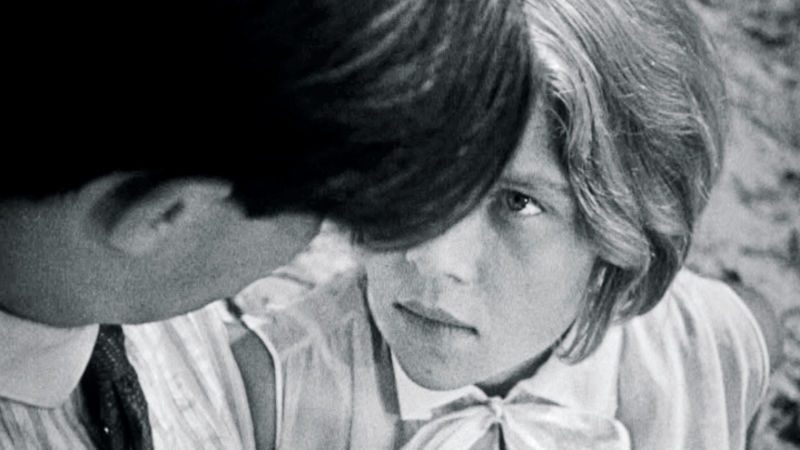
warped ones 1Such bravura flourishes become the core of Kurahara’s style by The Warped Ones (Kyonetsu no kisetsu 1960). Reworking the taiyozoku-eiga by turning from Crazed Fruit’s privileged kids to the disenfranchised youths of the unhomely, post-war tenements, it follows the story of petty criminal Akira. Thanks to journalist Kashiwagi, he is caught pick-pocketing a tourist and sentenced to Tokyo Juvenile Reformatory, where, amidst brutality and violence, he meets another young thug, Masura. After this dazzling title sequence, the film proper begins with their release. Teaming up with the prostitute Yuki, they begin a summer of casual crime. Revenge, rape, street-fighting, murder and abortions follow, interspersed with hi-jinks, impulsive thievery, mucking around and mockery of bourgeois pastimes. Driven by Toshiro Mayuzumi’s jazz score, Yoshio Mamiya’s lively hand-held cinematography and Akira Suzuki’s snappy editing, The Warped Ones is, at times, even more exhausting than it is fascinating – as if Neveldine+Taylor had directed a mash-up of Godard’s À bout de souffle (1960) and Bande à part (1964) co-written by Jim Thompson and a young Harlan Ellison. Kurahara’s camera is constantly distracted, preferring to move through space rather than cut to reaction shots. Its gaze often drifts upwards to swirl across the collage of jazz greats decorating the ceiling of Akira’s favourite bar or, more tellingly, to flood the screen with the brilliant white blaze of the summer sun. This is not the Impressionist dappling of light found in Kurosawa’s Rashômon (1950), but light as a monumental, sublime energy: on the one hand, it suggests the transcendence of earthly conditions for which Akira yearns but lacks the patience to attain; and on the other, an oppressive weight, pinning him down, exposing his purposelessness. As with Intimidation, life presses hot and hard, and Kurahara cannot resist showing us every bead of sweat.

Although not exactly a sequel, Black Sun (Kuroi taiyo 1964) returns to this milieu. In The Warped Ones, Akira threatens Kashiwagi’s pregnant girlfriend Fumiko with a broken bottle. Gill, a black American who hangs out in the same bar, intervenes, dragging Akira away and driving him to the beach. In a totally unexpected sequence – which echoes earlier shots of Masura and Yuki cavorting while Akira rapes and impregnates Fumiko – Gill and Akira run hand in hand across the sand before plunging into the sea harmlessly to exhaust Akira’s rage. In Black Sun, Tamio Kurahara_Filmw_BlackSun_originalKawachi plays Mei, identical to his earlier Akira in almost every respect, Yuko Chishiro plays another prostitute called Yuki, and Chico Roland plays Gill, a wounded GI on the run after killing two other servicemen. The film starts with the desolate wasteland before an ominously alien-looking nuclear power station, where tiny figures scavenge for scrap. The jazz-obsessed Mei, who lives in a bombed-out church with his dog Thelonius Monk, thinks nothing of robbing these weary middle-aged mudlarks so that he can buy the new Max Roach Quartet album. When he finds Gill hiding in his squat, Mei assumes they will automatically be friends, since he loves black American music, and thus all black Americans. The culture-clash melodrama that follows (perhaps the oddest of rashamen films) plays like some demented, infernal rendition of The Defiant Ones (Kramer 1958) – part John Cassavetes, part Shinya Tsukamoto. Roland plays Gill as a feverish, distracted brute, wielding a ridiculously large machine gun, sweating profusely, mumbling and yelping his lines. Kurahara draws awkward parallels between post-Occupation Japan and the American civil rights struggle – and at one point even has Mei don blackface and whitewash Gill’s face so that they can escape by posing as street entertainers.

But all this bizzarerie ends magnificently. The increasingly incoherent Gill is obsessed with reaching the sea, which he associates with his mother and with redemption. Mei manages to get him first to a filthy, oil-slicked estuary, and then to a rooftop overlooking a heavily industrialised port. Somehow Gill gets caught in the ropes tethering an advertising balloon. He pleads with Mei to release it. And as the pursuing MPs close in, the delirious Gill rises up towards the sun, an absurd, black, blasphemous, jazz Christ.

Made between The Warped Ones and Black Sun, I Hate But Love (Nikui an-chikusho 1962) moderates and modulates Kurahara’s stylistic excesses, as one would expect of a colour vehicle for Nikkatsu’s – arguably Japan’s – biggest stars of that year, Yujiro Ishihara and Ruriko Asaoka. (Ishihara, an overnight success thanks to his performance in Crazed Fruit, played I Am Waiting’s ex-boxer and had already in 1962 co-starred with Asaoka in Kurahara’s hit Ginza Love Story (Ginza no koi no monogatari)). Kurahara’s camera remains restless, but not so unanchored that it cannot cope with sets and occasional back-projection. This time the contrived set up comes straight from a 1930s screwball or 1950s sex comedy, but the movie that ensues is more of a melodrama. Sort of.

i hate but love 1In just two years, Daisaku Kita has been transformed from a penniless poet into a radio and television star, thanks to a deal he struck with Noriko Sakakta: she would manage him, initially for free, but they would never consummate their romantic entanglement with so much as a kiss. Fed up with an unfulfilling life of constant bustling activity, and frustrated by his relationship with Noriko, Daisaku encounters Yoshiko Igawa. She has devoted her life to buying a jeep with which to aid Toshio Kosaka, a doctor in a remote village, in his work. Yoshiko insists that she and Toshio, who have conducted their entire relationship through letters, possess a ‘pure love’. Daisaku agrees on air to deliver the jeep to Toshio, so that he can experience some trace of this love – a love so different to that which he shares with Noriko. And Noriko pursues him across Japan, trying to bring him back in order to save his career from his multiple breaches of contract – at least, that is what she tells herself.

Kurahara’s road movie never becomes as achingly romantic as Godard’s Pierrot le fou (1965) or Takeshi Kitano’s Hana-bi (1997), and his melodrama eschews the oedipal intensity of Nicholas Ray. His comedy has neither the bite of Preston Sturges (although one sequence resembles Sullivan’s Travels (1941) more than slightly), nor the brashness of Yasuzo Masumura’s Giants and Toys (Kyojin to gangu 1958), although Masumura – and Frank Tashlin – would undoubtedly have enjoyed the sequence in which Daisaku and Noriko struggle through a cloacal tunnel onto the fecal mud of mountain roads. But somehow Kurahara pulls it off – his stars, especially Asaoka, are a delight – and he even manages to conclude with a shot looking up at the sun, here betokening a pure love of hope and renewal.

The light that saturates Asaoka’s Etsuko – and the entire frame – in Thirst For Love (Ai no kawaki 1967) signifies something rather different: sexual ecstasy, erotic distraction, amoral desire. Etsuko, widowed soon after her marriage, submits to the attentions of her father-in-law, fends off those of her brother-in-law, and yearns for the family’s young groundskeeper, Saburo. Despite desiring Etsuko, Saburo does not know what to make of her, and her pursuit of him is confused, impulsive, uncertain. The class gulf between them is too great for her imagination to bridge, and she becomes increasingly cruel to him, trying to make him suffer just as she (feels she) suffers. Based on a Yukio Mishima novel, and offering the perfect set-up for a film by Luis Buñuel or Douglas Sirk, Thirst for Love instead more closely resembles Shohei Imamura’s The Insect Woman (Nippon konchuki 1963) and Intentions of Murder (Akai satsui 1964) in its study of a feminisuto (but hardly feminist) woman.

While occasional shots and scenes possess the still formality of Yasujirô Ozu, these are odd moments of calm in another stylistically mercurial movie, incorporating voice-over narration, interior monologues, negative footage, slow motion, extreme close-ups, stills, sound distortions, intertitles, flashes of violent fantasised action, brief flashes of colour film (bright red, of course), a conversation that suddenly jumps into long-shot and switches from audible dialogue to subtitles, and, most remarkable of all, a two-and-half minute shot in which the camera cranes around an ornate light-fitting, showing the eight people seated at the family dinner table, before moving off to one side to look down at them as they converse, and then craning around and down behind Saburo as he rises to leave, before zooming in on Etsuko, sitting at the other end of the table, as she watches him depart.

Thirst for Love was Kurahara’s last film under contract to Nikkatsu. Studio bosses purportedly found it too arty and delayed its release, prompting Kurahara to quit the studio (in the same year, Nikkatsu fired Suzuki for turning in the brilliant absurdist hitman movie, Branded to Kill (Koroshi no rakuin 1967), rather than the sane, polished and pedestrian Joe Shishido vehicle they had expected). Kurahara continued to make movies, albeit at a reduced rate, eventually transforming himself into the reliable and unchallenging director of such films as Antarctica (Nankyoku monogatari 1983), the biggest Japanese box-office hit prior to Hayao Miyazaki’s Princess Mononoke (Mononoke-hime 1997). But in his decade as a Nikkatsu contract director with an output as eclectic as Suzuki’s, he developed a personal style and vision every bit as striking as those of such contemporaries in the Japanese New Wave as Imamura, Masumura, Nagisa Oshima and Hiroshi Teshigahara. And by making this selection of his films available, Criterion have once more done us invaluable service.


 

Edmund White’s The Flaneur: A Stroll through the Paradoxes of Paris (2001); or, another night of insomnia, another short book

511krl1ZVELEarly on, White offers a hostage to fortune when he quotes Loius Sébastien Mercier:

Like a true flâneur, Mercier found his ‘research’, disorganized and fragmented as it might be, endlessly absorbing. As he put it, ‘I haven’t been bored once since I started writing books. If I’ve bored my readers, may they forgive me, since I myself have been hugely amused’. (35)

However, White knows how to create the impression of flattering his reader when really he is flattering no-one but himself. Describing Théophile Gautier’s attendance at a monthly meeting of Le Club de Hachichins, who basically ate huge lumps of jellied hash, he writes:

All the signs of being totally, deliriously, even dangerously stoned, so well known to my readers, were already familiar to the arty denizens of Hôtel de Lauzun. (132)

He then goes on to quote the position Baudelaire, who likely only took hashish once or twice, in the great wine vs. hash debate that raged through probably very few fashionable salons:

he compared hasish  unfavourably to wine, which he thought was more ‘democratic’ because more cheaper and more widely available… To be precise he praised both wine and hashish for promoting ‘the excessive poetic development of mankind’, but he pointed out that ‘wine exalts the will, hashish annihilates it. Wine is a support to the body, hashish is a weapon for suicide. Wine makes people good and friendly, hashish isolates. One is hard-working, so to speak, whereas the other is essentially lazy. … Wine is for those people who work and deserve to drink it. Hashish belongs to the category of solitary pleasures; it is made for the unhappy idle. Wine is useful, it produces fruitful results. Hashish is useless and dangerous.’ (133-4).

And to end on a bitchy note, after several pages snarkily but not inaccurately lambasting the lifeless artworks of Gustave Moreau, he concludes the chapter:

Moreau once declared: ‘I love my art so much that I’ll be happy only when I make it for myself’. His wish came true. (144)

With luck I’ll sleep tonight…


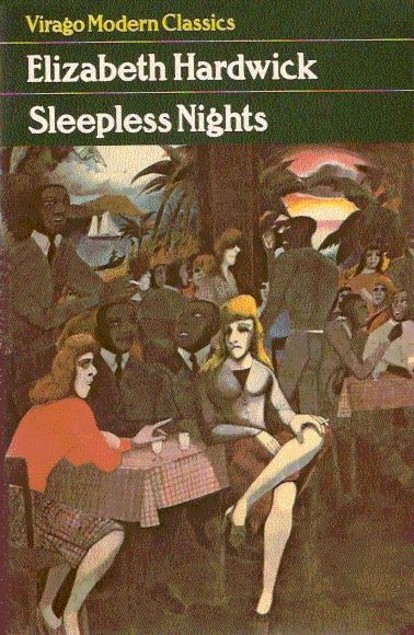
Top three quotes from Elizabeth Hardwick’s rather good Sleepless Nights (1979)

sleeplessnightsWhile I did not really appreciate the irony of reading this short novel while lying awake in the small hours of the morning, unable to sleep, that is not to say that there is not much to admire about it. Here are my three favourite bits.

In third place, describing young Louisa, who has the good sense to lie her way into a job for which she is not exactly qualified:

She spoke to someone of having been to college, spoke of typing, of odd experience, meaning only previous work. She said untruthfully that she could certainly take dictation. They put her in a room and turned on a machine. When it went too fast for her rapid longhand, she stopped the machine and played the difficult part once more. Her typed-up dictation was well-received.

She will not do too much or too little and this is what is wanted. She will have an apartment, a lover, will take a few drugs, will listen to the phonograph, buy clothes, and something will happen. Perhaps it will be good – or at least what she likes. (95–96)

In second place, describing the inhabitants of a residential hotel:

Tell me, is it true that a bad artist suffers as greatly as a good one? There were many performers at the Hotel Schuyler, but they gave no hint of suffering from the failure of their art. Perhaps the art had changed its name and came to their minds as something else – employment. (44)

And the winner, found in a passage about a boozy train journey from Montreal to Kingston, but applicable in all aspects of life:

Canadians, do not vomit on me! (9)

Transformers (Michael Bay US 2007)

Transformers_w1_7spar[A version of this review appeared in Science Fiction Film and Television 1.1 (2008), 163-167. Which seems a very long time ago.]

It all began with Barbie dolls and Gene Rodenberry. In 1964, noting the success of the former (launched by Mattel in 1959), Hasbro designed the G.I. Joe dolls for boys, inspired by characters from the Rodenberry-produced series The Lieutenant (1963-64). In Japan, Takara’s success with Combat Joe, licensed from Hasbro, led them to develop another line of dolls, launched in 1972, called Henshin Cyborg, with visible internal atomic power units and cybernetic systems. A spin-off line called Microman, smaller and less expensive to produce, featured robots who ‘disguised themselves as toys’ (they were released in the US as Micronauts). Their component parts were interchangeable, and some of them could be shapeshifted into vehicles. In 1984, Hasbro bought the rights to the latter variety, combined them with another line of Japanese toys (Takara’s Diaclone, which featured human-piloted robots and vehicles, including Car-Robots), and brought in Marvel Comics to help produce a narrative universe for their new line: The Transformers. There followed toys, comics, a television cartoon series (1984-87), an animated movie (1986), more toys, more comics, more cartoon series (the Canadian and Japanese Beast Wars spin-offs (1996-99 and 1998-99, respectively), the Japanese Robots in Disguise (2001)), some novels and video games, some cross-overs with the American G.I. Joe and British Action Force comics, three seasons of Japanese/American co-produced cartoons (2002-06), more toys, more comics…

Alternatively, it all begins on the planet Cybertron, devastated by a war between two kinds of giant, metamorphic robot: the Decepticons, who are evil because they look that way, and the Autobots, who are not evil because they do not (and when they get to Earth, they transform into down-home, good ol’ boy muscle cars, semis and monster trucks). The Decepticons are led, by the genocidal Megatron, the Autobots by the pompous Optimus Prime. During the war, something called the Allspark (or The Cube) was lost. Its exact nature and purpose are unclear, but both the Decepticons and Autobots have been searching the galaxy for it, so it must be really really important. It is, of course, on Earth.

Back in the 1930s, The Cube (you can hear the capital letters when people say it) was discovered on the border between Arizona and Nevada, prompting President Hoover to order the construction of a giant dam on the Colorado river in which to conceal it. Three decades earlier, in either 1897 or 1895 (the film gives both dates), polar explorer Captain Archibald Witwicky (William Morgan Sheppard) accidentally discovered Megatron, frozen beneath the arctic ice. It is unclear what happened in the interim, but once Hoover Dam was under construction, the US government (somehow) transported the giant robot there, where it has been kept in ‘cryo-stasis’ (somehow) and mined (somehow) for a range of reverse-engineered technologies. But most of the backstory comes later. Once the introductory narration about the Transformer war and The Cube is over, the film starts in Qatar (which mysteriously has mountains), with an attack on a US military base by a Decepticon intent on infiltrating US Defence systems. Only a handful of soldiers, who seem to be in both the airforce and the army, escape. The film also starts in Nevada (if we pay attention to geography) or in California (if we pay attention to licence plates), with Sam Witwicky (Shia LaBeouff), the explorer’s hapless great, great grandson (or great grandson – the film keeps losing count), who is desperate to get a car so he can get a girl, specifically Mikaela Banes (Megan Fox). He ends up buying a battered yellow-and-black Camaro, specifically Autobot-in-disguise Bumblebee, who has in fact sought him out. These lines converge at the Hoover Dam. The audience is fastidiously introduced to all of the Decepticons – unlike many of the human characters, they all have names – and then the humans lure them to a busy intersection in Mission City (which seems to be both 20 miles away and in California, with parts of a Los Angeles skyline and at least one building from Detroit) for a final showdown with the Autobots.

Director Michael Bay brings to the film precisely what one would expect: images which seem to take place behind a brittle veneer; sometimes shockingly poor taste in music and broad comedy; the inability to imagine women (or, actually, people); the homoeroticism; the barely concealed homosexual panic; the jingoism; the cynical patriotism; the racist stereotypes; the world that consists almost entirely of the US; the version of Manifest Destiny which allows for occasional distrust of big government and secret agencies; the passion for really cool pieces of kit, especially guns and other military equipment; the bloated running time; the box-office success. As one imdb user commented, although probably not in the way I read it, ‘To me this film is the imagination of a little kid put to screen’.

Such features of Bay’s films require little explication – for the most part, they are not even subtextual (at last, a WMD in a Middle Eastern desert!). Rather, as my nitpicking suggests, I am interested in considering here a rather different aspect of the film: its use of digital technologies (digital editing, image manipulation and CGI effects), for which Bay’s Transformers themselves provide a compelling metaphor.

The film’s teaser trailer, released in Summer 2007, depicts the Beagle 2 mission to Mars. After the probe lands (‘we were told it crashed’, a caption tells us), its rover rolls out onto the surface, broadcasting the view from its camera eyes (‘its final transmission was classified top secret’). A shadow falls where no shadow should be; a giant robot, silhouetted against the sky, slams down its fist; static (‘it was the only warning we would ever get’). As a hook narrative, it was very effective, building suspense and ending with a flash of revelation which functioned simultaneously as a refusal of revelation (the shot of the silhouetted Decepticon is almost too quick even to register).

The film, of course, cannot be so coy. It has nothing to reveal. Vehicles transforming into giant robots and slugging it out with other giant robots are, as narrative and spectacle, its sole raison d’être. But somehow it gets it badly wrong. Part of the brilliance of Neill Blomkamp’s 2004 advert for the Citroën C4, in which a car transformed into a robot and danced to the music playing on its stereo (it and its successors can be found on youtube), was that the transformation happens at a pace and on a scale that the viewer can follow: you can see where the tyres or the end up in the design of the final robot. In contrast, Michael Bay’s Transformers change impossibly quickly, going through multiple intervening iterations and shifts in mass at the blink of an eye, retaining in their final form only stylised fragments of mechanism.

If this merely represented a loss of the clunky charm of the toys and the comic and cartoon characters, it would not necessarily be a bad thing. However, during the climactic battle between Decepticons and Autobots, it is often impossible to tell which robot is which. Because it has nothing to reveal, the film obscures its visual spectacle – it all happens too quickly, in disconnected fragments – so that it can occasionally puncture this digital blur with some rather more effective shots of the robots in graceful slow-motion. It is a programmer’s aesthetic, performing impenetrable feats before slowing everything down to the comprehensible, the workstation’s-eye view. It revels in the detail of the individual frame, as played back, rewatched and marvelled over during its production.

But, of course, this is deceptive. Watched on frame-advance, the actual still images are filled with motion-blur so as to avoid the stop-start effect of traditional frame-by-frame stop-motion animation; and in the transformation scenes, the recognisable bits of the vehicles mostly do just disappear from view.

Perhaps it was inevitable that a digital-era Transformers movie, with a production budget of US$150 million, would go this way: the Transformers themselves, like digital technologies, offer a powerful fantasy of mutability. This is evident not just in the computer-generated imagery, but also in the manipulation of digital images (removing safety wires in action sequences, and so on) and in digital editing (because every cut is reversible, none of them carry weight). In this sense, what the Transformers actually reveal is the extent to which digital filmmaking on this scale has produced a regime in which signification is more important than coherence: the primary function of a city intersection, or foreign land, is to look like an intersection or a foreign land, and only the money-shot characters need to have names. It is more interested in parts than in wholes, and fantasises complete control over outcomes. Which, it turns out, is not unlike the imperialist project for which Bay’s films cheerlead.

Hawk, Wind & Fire – and other unlikely tribute bands I have known

Just found this old list lying around. Judging by the peculiar stains on the paper and the near-illegibility of the various hands in which it was scrawled, alcohol was involved.

Gracie Fields of the Nephilim
Patsy Cline Inch Nails
Britney Spears of Destiny
Iggy Pop Will Eat Himself
Bing Crosby, Stills and Nash
Justin Timber, Lake and Palmer
BB King Crimson
Lee ‘Scratch’ Perry Como
Kurtis Blow Monkeys
DMXTC
Run DMC5
Debbie Harry Belafonte
Fatboy Slim Gaillard
Chas ’n’ Dave Clark Five
Malcolm X-Ray Specs
Ann Frank Sinatra
Rockabilly Holiday

Khairy Shalaby, The Time-Travels of the Man Who Sold Pickles and Sweets (1991; trans 2010)

51BDxwqGg+LThis is a slippery one.

On the one hand, there is the depth of my ignorance of Egyptian history and Arab cultures (which is considerably more profound than anything I am about to say here). On the other, there is – unless something is lost (or added) in translation – a playful author who likes to keep his reader in a state of constant uncertainty.

In the opening paragraph, Ibn Shalaby is invited by the Fatimid caliph Mu‘izz to break the Ramadan fast – the first ever in the new city of Cairo. The second paragraph tells how he first met Mu‘izz in Qayrawan some years earlier, and how several centuries later he met the British historian of Cairo, Stanley Lane-Pool – they immediately recognised each other but it takes them a moment to recall that it was in Mu‘izz’s court in Qayrawan. In the third paragraph, they go to drink tea and smoke a pipe together so that in the fourth paragraph Lane-Pool can outline some Egyptian history before disappearing in the fifth paragraph so as to stiff Ibn Shalaby with the bill. When he tries to do a runner he timeslips into an earlier and unfamiliar version of the city, where he recognises Maqrizi, a 13th/14th century historian – only it soon transpires that the Mamluk-era author of the famous Topography is also capable of timeslipping, since the year is 358 AH (969 AD). Which means Ibn Shalaby is actually on time for the founding of Cairo, after all – as are other timeslipped historical figures, such as the historian Ibn Taghribirdi and the novelist Naguib Mahfouz.

And so the novel unfurls, a concatenation of comic incidents and episodes, many of which are interrupted by timeslips (both unintended and deliberate), constantly looping around and back and through the Fatimid, Ayyubid and Mamluk periods, with an occasional return to the 1990s. It is not always clear when or where we are, and even when Ibn Shalaby looks at his watch that tells him the date, you cannot always be certain how soon before he notes the new date that he timeslipped. At one point, even he confesses that ‘because of all my bouncing around in history, I tended to confuse one period with another’ (121) – and he’s the narrator!

Eventually this all settles down for a stretch when Ibn Shalaby finds himself stuck in the early 740s AH (1340s AD). He tries the well-worn time-traveller’s trick of trying to impress the locals with modern technology, which works until his batteries run flat. He flees the court and takes shelter in the Storehouse of Banners, which rapidly grows into an alternative state (of cannibals, prisoners of war, barbarians) within the Caliphate. And then, as one would expect of such a hapless, venal, opportunistic – above all, flexible – comic protagonists, he soon finds himself working for both sides against the other. This flexibility further destabilises the narrative by unfixing the protagonist-narrator, but it is also essential to the often-bleak comedy. When approached by someone self-evidently contemptuous of him, Ibn Shalaby

put on [his] own expression of arrogant contempt – the one [he] had picked up from the pictures of American politicians [he] saw in the papers every day. (45)

When a Persian guard in 380 AH (990 AD) fails to defer to the authority signified by the briefcase Ibn Shalaby carries – why would he, not knowing what it is? – the protagonist notes his surprise that ‘American industry had lost its magic touch’ and makes

a mental note to report the incident to the Arab opposition papers so they could use it as an example of the disappointing performance of foreign imports. (42)

The slipperiness of historical settings is held together by a strong sense that complicated, competing and largely pointless bureaucracies will establish themselves anywhere and anytime, given half a chance. That position is always precarious. That behind any façade of governance you will always find brutal, self-serving thugs. That, in the words of emir Khazaal,

Power is like sea monsters, or perfume: it rises to the surface sooner or later. (144)

And that it always pays

to side with the strong against the weak, [because] there’s no such thing as justice except among the strong – and even then, only when one of the strong slips up for a moment. (85)

This jaded view of humanity and of Egyptian history and life, this combination of bitterness, resignation and loss, fills the best lines in the novel:

News travels as fast as you can fill an Egyptian street with victims of abuse. (116)

and

Patience isn’t the only virtue we have in Egypt. It’s not just the ability to endure pain and suffering, it’s the ability to endure the remedy. (43)

***

The Time Travels of the Man Who Sold Pickles and Sweets is not the first African time-travel story.

The earliest African sf I have yet found is a time-travel novel, Muhammad al-Muwaylihi’s A Period of Time, which began newspaper serialisation in Misbah al-Sharq/Light of the East in 1898, was published in book form in 1907 and saw a sequel in 1927 (it has just been translated and published in its entirety for the first time, and I should be reviewing it later this year).

Salam Musa’s Khimi (1926) time-travels into a soulless future (apparently – it is not translated as far as I can discover), as more or less does Tawfiq Al-Hakim’s Ahl al-kahf/Sleepers in the Cave (1933; translated 1989), which I have not yet read.

And there is the 1998 movie Risala ila al-wali, which seems similar to the French comedy Les Visiteurs (Poiré 1993), but I have yet to unearth a subtitled version.

Oh, and the full title of Khairy Shalaby’s novel is The Time-Travels of the Man Who Sold Pickles and Sweets. A Narrative Comprising Events to Dazzle and Astound, Meditations to Divert and Confound, Histories to Edify and Incidents to Horrify. By the Pen of God’s Neediest Creature, the Knowing but Unlearned, the Tutored by Unwise Ibn Shalby, the Hanafi and Egyptian, The Seller of Pickles and Sweets. May God Guard Us from His Ignorance, Amen!

Menschen am Sonntag/People on Sunday (Siodmak and Ulmer 1930)

People-on-sunday-poster[A version of this review appeared in Film International 22 (2006), 69–71.]

Even if it were not a remarkable film, People on Sunday (1930) would still have a place in film history because of the subsequent fame of its makers, all of whom sooner or later left Germany for America. It is based on an original story by Curt Siodmak, who later wrote and directed a number of horror and exploitation movies in Hollywood, but is probably best known as the author of Donovan’s Brain (1942), filmed several times. He developed the screenplay with his brother, Robert, who became one of the major directors of American film noir, and Billy Wilder, who became one of the major Hollywood directors full stop. Robert co-directed the film with Edgar G. Ulmer, who directed numerous Hollywood films, mainly for poverty-row studios, including The Black Cat (1934) and Detour (1945). Their cinematographer was Eugen Schüfftan. A decade older than the others, he was already an established figure in German cinema, probably best known for the special-effects process which he invented for Fritz Lang’s Metropolis (1926) and which still bears his name (because of union disputes, his Hollywood career is largely uncredited, although he did eventually win the cinematography Oscar for The Hustler (Robert Rossen, 1961)). Schüfftan’s camera assistant was Fred Zinnemann, who later directed such films as High Noon (1952) and From Here to Eternity (1953). People on Sunday, the project that brought all these talents together right at the start of their careers might well have been remembered for this reason alone. However, it is much more than a mere curiosity or apprentice piece. It stands – alongside Berlin, ein Symphonie einer Grosstadt (Ruttman, 1927), Berliner Stilleben (Moholy-Nagy, 1929), M (Lang, 1931) and Kuhle Wampe (Dudow, 1932), alongside Alfred Döblin’s Berlin Alexanderplatz (1929) and the writings of Rudolf Arnheim, Walter Benjamin, Bertolt Brecht and Siegfried Kracauer – as a key document of the late Weimar period.

plakat-menschen-am-sonntag-1933-werner-labbeSubtitled ‘A film without actors’, it cast five non-professional actors as young Berliners, each character with the same name and job as the person playing him or her. The taxi-driver Erwin lives with the model Annie. On Saturday evening, his friend, the travelling wine salesman Wolfgang, picks up the film-extra Christl, and arranges to go out with her the following day. He invites Erwin and Annie along, but next morning Annie sleeps in, so Erwin goes without her. Christl brings her friend, the record-shop salesgirl Brigitte, with her. The foursome travel out into the countryside, swim in the lake, picnic, listen to records and nap. Christl rejects Wolfgang’s advances and becomes jealous when he switches his attentions to Brigitte. At the end of the day, they all go their separate ways. Next morning, it is back to work, back to everyday life – four million Berliners all looking forward to next Sunday.

When I have taught this film, my students have generally been surprised by its casual attitude towards sex and struck by Wolfgang’s laddish preference to go to a football match with Erwin the following weekend rather than on the date he has made with Brigitte. Others are impressed by the energy and mobility of the camera – an example of the enfesselte Kamera (unchained camera) that was so central to the Kammerspielfilm (chamber play film) and Milieutonfilm (milieu talkie) traditions with which Robert Siodmak’s later Weimar work is associated. What I find most interesting about People on Sunday, though, is the way in which it blends together actuality footage and undressed (and uncontrolled) location shooting with events staged on location (some of which are presented as actuality footage) and on the film’s single set (Erwin and Annie’s apartment). It begins, like a city symphony film, with montages of Berlin’s streets and buildings, eventually selecting Christl and Wolfgang from its countless bustling inhabitants. Throughout the film are interspersed similar prolonged actuality sequences, cutting away from the characters to real Berliners as they too undertake workday labour or pursue Sunday leisure activities. Pedestrians weave through horse-drawn and motorised vehicles; streets are swept and hosed down; elevated trains race past ubiquitous advertising; people swim or boat or play field hockey (or a strange schoolboy spanking game); they eat and sleep; they play with their children; they visit memorials or listen to bands; they relax – while shop-window mannequins are left with nothing to do, no actual function, when the stores are closed and the streets deserted. And then, next day, Berlin goes back to work.

resolveIn the late 1920s, Germany’s left-wing intelligentsia formulated an array of artistic-political movements, including activism, expressionism and new objectivism (Neue Sachlichkeit). People on Sunday, along with Erich Maria Remarque’s fiction, is a prime example of the latter, which Walter Benjamin attacked in his essay ‘The Author as Producer’ (1934). He argued that, whereas Dadaism framed collages of picture fragments, ticket stubs, cotton reels and cigarette butts, thus demonstrating how the picture frame destroys time, new objectivist photomontage is ‘incapable of photographing a tenement or a rubbish-heap without transfiguring it … It has succeeded in turning abject poverty itself, by handling it in a modish, technically perfect way, into an object of enjoyment’ (Benjamin 1973: 94–95). Or, in Esther Leslie’s memorable explication of his critique, ‘The world is beautiful, it gushes, and [new objectivism] shows its skill by lavishing any soup can with cosmic significance, while unable to grasp a single one of the human connections in which it exists’ (Leslie 2000: 59). While this might be true of the movement more generally, I think it is hard – or, perhaps, with the passage of time has become harder – to dismiss People on Sunday in this way. Without doubt, its images are pristine and its methods if not modish then at least cutting edge. But its blending of types of footage does weave its characters into a broader social and economic fabric than is common, and the images of contemporary Berlin form such a major part of the film that they are more than mere scene-setting, positioning the characters as typical rather than exemplary. This typicality is captured by non-actors Erwin and Annie destroying each other’s photos of movie stars. This scene – shot, ironically enough, on the film’s only set – announces the film’s sense of its own difference from dominant forms of cinematic realism, and critics have been quick to describe it as an influence on Jean Renoir’s films of the 1930s, Italian neo-realism, the French New Wave, the British Free Cinema movement, and others. It certainly raises lots of questions as to what we mean by ‘realism’.

One of the major early debates in film theory was about whether to consider the frame as a window opening on to a world that extends unseen into off-screen space or as a border which, like a picture frame, is an absolute limit, with meaning determined solely by the enframed image’s composition. The former position is typically associated with André Bazin, the latter with Jean Mitry. Curiously, for all the championing of People on Sunday as realist, the sequence most frequently recalled is one in which the filmmakers most decisively intervene in what we see. thenewyorker_movie-of-the-week-people-on-sundayPhilip Kemp describes it as ‘the famous shot where, as two people start to make love in a sylvan glade, the camera pans tactfully away – to a nearby rubbish tip’. The camera in fact performs a complex figure-of-eight pan-and-tilt movement, taking us away from Wolfgang and Brigitte as they recline onto the dirt. It moves away and up into the air, past phallic fir trees which also connote the naturalness of sex while suggesting some kind of transcendent experience, and then down to reveal garbage scattered on the forest floor. It then moves back across the forest floor, up past more trees until it reaches the tallest fir, again connoting the phallic as well as an orgasmic climax, and then down to find Wolfgang, fully dressed, standing over Brigitte.

This elaborate camera movement – there is a cut in the middle, but it is unclear whether it is deliberate, connoting the passage of time, or an ‘invisible’ cut we are not supposed to register, or a case of missing frames1 – goes right to the heart of the debate between Bazin and Mitry. Through its duration it reveals the world extending beyond the frame, while each individual frame does precisely the opposite. Likewise, its complex set of meanings is achieved not through the composition of the individual frame but through movement and duration, the juxtaposition of different frames some seconds apart from each other and, equally significantly, through activating and playing with fiction conventions. In the shots immediately preceding this one, Wolfgang takes on the air of a melodramatic villain about to force virginal Brigitte into despicable acts. That she responds to the kiss he forces on her is a cliché familiar from rape fantasies, from Samuel Richardson’s Pamela (1740) onwards. But as her willing surrender reconstitutes rape as lovemaking, the pan away should be to a roaring fireplace or a moonlit window or, bearing in mind their location, animals frolicking. And the camera movement initially works in this way, if only then to make the deflationary comparison with the garbage heap more effective. However, the shot does not end there. Instead, it makes quite compelling comparisons between the camera and the phallus, technical virtuosity and (male) sexual climax, before returning us to a scenario which is both comically deflationary – Wolfgang’s sexual prowess does not seem to include either duration or repetition – and potentially melodramatic: for a brief moment it looks as though he is standing over Brigitte’s corpse, and in the subsequent pair of shots of her she at least seems to have swooned. Her subsequent assumption that their lovemaking is a meaningful prelude to a relationship is depicted as a dewy-eyed romanticism, which even Wolfgang’s calculated indifference does not shatter.

The introduction of any new cinematic technique intended more realistically to capture the world inevitably draws attention to itself. By breaking with convention – even in order to make film more transparent – artifice announces itself. While People on Sunday might initially seem to compile elements that merely open up the debates around how the realist image of the world is to be regarded, this sequence, like the destruction of the photos, argues for a somewhat different position than those associated with Bazin and Mitry. The frame is neither a window nor a border, and realism is not about capturing the ‘real world’ or organizing it so as to ‘reveal’ its immanent truth. Realism is ultimately an argument, not about the world but about its representation. Regardless of whether People on Sunday overcomes new objectivism’s general failure to grasp human connections, it does question the place of representation in the world. And as the world it depicts is that of capitalist modernity, it warns, long before postmodernism, of capital’s colonization of both nature and the unconscious.

References
Benjamin, Walter (1973), Understanding Brecht (trans. Anna Bostock), London: New Left Books.
Leslie, Esther (2000), Walter Benjamin: Overpowering Conformism, London: Pluto.

Notes
1 This is the fullest extant version of the film, reconstructed from several prints to 1837 of its original 2014 metres.

Jesus Rebooted, Jesus Freebooted: David W Thompson’s Christian Apocalyptic Cinema

A_Thief_in_the_Night_posterA version of this essay originally appeared in Electric Sheep‘s anthology, The End (2011), and in Czech and German in Umelec (2012).

For the longest time, I could only recall two movies ever giving me nightmares. That shot in Carry on Screaming! (1966) when Oddbod shuffles over the glass-tiled ceiling of the underground conveniences of Dan Dann the lavatory man (hey, I was four). And Apaches, the notorious Public Information film about the dangers of playing on farms. Specifically, the p.o.v. of the kid drowning in a slurry pit. I was nine. And this shot does not actually exist.

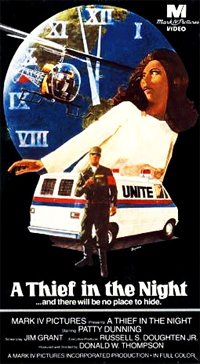
But last summer I discovered that for 30 years I have repressed the memory of a film that absolutely terrified me. You see, I managed to get my hands on a copy of Donald W Thompson’s Christian apocalyptic A Thief in the Night (1972).

And it all came flooding back.

The church hall. The haranguing evangelist. The emotional manipulation.

The break from this horrorshow for a film that I thought might offer some respite.

I was wrong…

***

The Bible says that Jesus will return ‘as a thief in the night’. This does not mean that he will be in top hat, tails and domino mask, but that his reappearance will happen when least expected. Nevertheless, for a century and a half, ‘dispensationalist’ Protestants have, with a remarkable blend of dogmatism and imagination, produced interpretations of biblical prophecy that ‘prove’ The End Is Nigh. Fictionalised versions go back at least as far as RH Benson’s 1907 novel The Lord of the World, in which a beleaguered pope organises secret resistance to an American antichrist, but this predominantly Protestant genre is much more likely to identify the antichrist with Europe and the Vatican.

In the 1970s, Hal Lindsey’s The Late Great Planet Earth, a pop-explication of biblical prophecy, sold 28 million copies, prompting similar volumes and fictional treatments to proliferate, such as Stanley A Ellisen’s ‘non-fiction’ Biography of a Great Planet and Carol Balizet’s novel The Seven Last Years. Hollywood knows a bandwagon when it sees one. While The Omen was busy grossing $60 million, a couple of low-budget, Christian filmmakers were quietly toiling away in Iowa to scare the crap out of me.

Thompson’s apocalyptic quartet – A Thief in the Night is followed by A Sound of Thunder (1978), Image of the Beast (1980) and The Prodigal Planet (1983) – starts with the Rapture, when True Believers are whisked up into heaven. Anyone who has not been Born Again is Left Behind. The films chart the ensuing seven years of Tribulation as the antichrist rises to global power, and end as the battle of Armageddon kicks off. They were produced by Russell S Doughten, Jr, who started out making The Blob (1958) for the secular division of a Christian production company. After a fitful, marginal Hollywood career, he returned to his native Iowa, where since 1972 his companies have produced 20 or so issue-orientated, intentionally didactic, evangelical feature films. His website boasts: ‘Over 6 million have come to Christ through our motion pictures.’[1] My anecdotal evidence is every bit as dodgy as his statistics, but something of the under-the-radar reach of these films is surely indicated by the fact that I was subjected to one of them in the late 1970s.

By stick-in-the-mud Methodists.

On Dartmoor.

***

A Thief in the Night begins with a dark screen and a ticking clock. Patty wakes up in an empty bed. The radio announces that 25 minutes earlier millions of people suddenly disappeared from all around the world. She staggers into the bathroom, in search of her husband Jim, but finds only his razor. The Rapture has happened.

The film goes back to before Patty and Jim started dating. As college-age kids, their summer of fun involves Des Moines’ zaniest spots: a lake, a carnival, a youth centre where an earnest young evangelist propounds biblical prophecy to the folk-rock stylings of The Fishmarket Combo. While her friend Diane encourages Patty to hang out with boys, another, Jenny, is born again. Time passes, couples form. Not particularly stylish Iowans sport 70s fashions and hairstyles and British-looking teeth. They sit around talking about Jesus and stuff.

One day, Jim is bitten by a cobra. There is no anti-venom. His only hope is a blood transfusion from a snake farmer who has survived similar attacks. While Jenny prays, cross-cutting suggests that divine intervention gets the snake farmer’s plane there in time. Months later, being reminded of this ‘miracle’ is enough to persuade Jim to be born again.

The very next morning, Patty wakes up in an empty bed…

The evil new world government (the United Nations Imperium of Total Emergency) replaces money with a credit system that requires people to be tattooed on the forehead or the hand with a pattern of zeroes and ones – 666, the Mark of the Beast, but in binary so no one will know that UNITE represents the forces of Satan. Refuseniks are ‘subject to arrest and prolonged inconvenience’.

UNITE are after Patty because of her (belated) faith in Jesus. She flees town, making it to the dam, where Diane and her husband will pick her up and rescue her. But wait! They both bear the Mark of the Beast!

Patty backs away, falls from the dam…

And wakes up in an empty bed…

The clock is ticking.

***

A Distant Thunder follows Patty’s experience of the Tribulation, and ends with her strapped to a UNITE guillotine for refusing the tattoo. Image of the Beast opens with a fabulously extended revision of her death. Before the executioner can do his job, the skies blacken and an earthquake sends everyone running. She is left strapped to the guillotine, face up, struggling to untie her bonds as the tremors gradually loosen the catch holding the blade in place.

The narrative focus shifts to David, who is plotting to disrupt UNITE’s computer system. He is played by William Wellmann, Jr, who has more acting credits than the entire cast of the four movies put together, and even contributes ‘additional story material’ to The Prodigal Planet, the longest and dullest of the series, an even poorer man’s Damnation Alley (1977).

Although the later films more closely approach professional norms, the first two remain the most intriguing. In them, Thompson’s grasp of cinematic possibilities is strongest. This is most evident in the claustrophobic narrative structure that entraps Patty, and in A Thief in the Night’s long-lensed shot in which she runs – seemingly forever – towards the camera to Fishmarket Combo’s refrain, ‘You’ve been left behind’. And they are also the films in which there is the greatest gulf – often hilarious – between Thompson’s cinematic smarts and what the budget will permit. There is the music ripping off the Where Eagles Dare theme (1968), used without attention to aptness or effect; the weird associative editing (on being born again, Jenny says she feels like she can fly; cut to the carnival’s helicopter, flying; cut to a fly on a kitchen window that Patty swats); the horror set-ups without pay-offs (in A Sound of Thunder, Patty finds Grandma’s house unlocked, walks up dark, Dutch-angled stairs, pushes open Grandma’s bedroom door and screams in terror – only for the reverse shot to reveal a phone that is off the hook since Grandma was Raptured mid-call).

And there is the sequence in A Thief in the Night that begins with a preacher’s anecdote about a woman who woke up thinking the Rapture had happened because her husband had gone downstairs to get a drink. The camera zooms in over the congregation onto the face of the young Sandy. She returns home, but no one is there. She calls and calls. No reply. A rapid montage of growing panic … and then her sister and mother suddenly appear. They are fine. But it looks a lot like a prank gone wrong. And it terrorises Sandy into being born again.

While such moments (now) seem funny rather than scary, one sequence in The Prodigal Planet remains truly – if unintentionally – horrific. All attempts to get the imprisoned David to betray fellow hacker Cathy have failed. UNITE personnel threaten to harm her four-year-old son, Billy, if David won’t speak up. He hears someone being taken to be executed, the whirr-thunk of the guillotine blade. Through his window bars, he sees Billy’s red balloon drifting into the sky.

But wait! Billy is OK!

He’s not been executed. He gave his balloon to that nice lady, Leslie, who told him all about Jesus, and it is she who was guillotined. David – apparently forgetting that Leslie is his sweetheart – is relieved. He doesn’t have to betray Cathy. And thanks to Leslie, Billy was born again, so now it’s perfectly alright for UNITE to decapitate him if they want to.

***

Since the 1970s, such fiction has become commonplace. Among others, Pat Robertson, who once campaigned to become the Republican Presidential candidate, reputedly intending to launch a nuclear war so as to prompt the Second Coming, wrote The End of the Age; and Hal Lindsey, who spent 2008 warning voters that Barack Obama might be the antichrist, gave us Blood Moon. Films include Years of the Beast (1981), Vanished (1998), The Moment After (1999), The Omega Code (1999), Gone (2002) and Six: The Mark Unleashed (2004), some of them with sequels. The greatest commercial success has been Tim LaHaye and Jerry B Jenkins’s 16-book Left Behind series (1995-2007), selling over 60 million copies. Franchised spin-offs include nearly 50 other novels, mostly for teenagers, 10 graphic novels, three video games and three movies. Typical of these works’ smug spite is the defence offered when the video game Left Behind: Eternal Forces was criticised for promoting violence against non-Christians: it was claimed that the game taught pacifism because if the player chooses to shoot rather than convert a non-believer, he must pause to pray in order to regain lost ‘spirit points’.

Still, it’s nice to see Christians treating prayer as a penalty.

And there is an option to play on the antichrist’s side.

***

Clearly a lot of money can be made from apocalyptic Christianity, so I want to pitch my own End Times movie. The Rapture does not take everyone who expects to be swept up, just the downtrodden of the Earth who deserve to be somewhere better. No misogynists or homopobes or white supremacists. No advocates of the silver ring thing or the Twilight franchise. None of those who think there is a liberal media, and sometimes suspect even Fox News is part of it. The Christian right, its ranks undepleted, begins to talk about the False Rapture (seriously, google Project Enoch) and precipitates the world into war.

The second act, set some time later, has a kind of Red Dawn (1984) scenario. A handful of decent people fighting the fundamentalist Army of God. Jesus returns and joins the resistance. Oh, and Jesus is a girl. Of mixed race and ambiguous sexuality. A dark-skinned Tank Girl who sounds like Holly Hunter playing white trash. Christian Bale is her intense dad and says intense dad-like things: ‘No daughter of mine is going out to battle the forces of evil dressed like that! And be home by midnight.’

Jesus is foul-mouthed and loves making lines from the Bible her own. There’s this scene in which the Army of God destroy the resistance headquarters, leaving the barely alive Bale mangled in the rubble. And she faces them down: ‘I am the way, the truth and the life, motherfuckers’ – ch-chunk of pump-action shotgun being pumped – ‘and no one gets to my dad except through me’.

The third act is still a bit hazy, but Jesus teams up with the antichrist to overthrow both God and the devil.

Though I can leave it open for a sequel…


[1] http://www.rdfilms.com.