
Since various Anglophone-only peeps (like me) have asked, here is the draft text of the long interview for lay0ut magazine I did with Marta (the Italian translator of my last book), in which I bang on about various things and then suddenly spring into life to ad-lib a reading of John Wick: Chapter 4.

MARTA: Before delving into the Anthropocene-related discussion, I’d like to talk about the method of literary enquiry you propose in your book. The Anthropocene Unconscious: Climate Catastrophe Culture is made up by four chapters of incredibly varied analyses of books and movies which aim to find out their Anthropocene unconscious. But while working on your book it always seemed to me, that there’s a fundamental message to be found in the introduction and conclusion, where you suggest that every reader (and watcher) can set out to find the unconscious world of a text – whether it be Jameson’s political unconscious, a queer unconscious or, of course, the Anthropocene unconscious. This allows us to imagine a sort of democratic, grassroots, extra-academic idea of criticism which seems, to me, as important as it is revolutionary. I’d like to get to know more about how you picture this democratic literary and cultural lay criticism; and I’d love to know what can we do from within the university (where both of us are positioned, you as a professor and me as a PhD scholar) and within the small and multifaceted world of cultural reviews (where this interview will be published) to facilitate this democratisation of the critical discourse.

MARK: There are whole realms of extra-academic criticism out there. Book clubs, Goodreads, Letterboxd, imdb user comments, people getting a piece of pie after a good movie and talking about it. It might not be criticism in the way academia or broadsheets or literary journals do criticism, but it’s criticism nonetheless. People respond to texts in all kinds of complex ways all the time, including the unconscious dimension – even if they’ve not read Pierre Macherey or Fredric Jameson and are unaware they’re doing it.
It’s partly why different people understand texts in such very different ways. You just have to be in a classroom with students discussing a book or a film and they will come out with the most amazing things. As with ‘professional’ criticism, some of those things are quite nonsensical, some are rote and cliched and boring, some are interesting and insightful, some clearly come from a particular life experience – all are generated from the individual’s situated (social) knowledge. They’ve all read the same words on the page or seen the same images on the screen, but what they each bring activates different parts of the text in different ways, drawing out an array of things that are there/not-there , flickering between the conscious and unconscious of the text (sometimes even reordering which you think is which). Some of it never really gets past basic judgments: “it was boring” or “I liked it” or “it wasn’t relatable” (whatever the fuck that means). But some of it, ah, some of it is exciting and creative and useful.
Or look at organised science fiction fandom: there’s a century-long tradition of lay criticism, some of it really high end and smart and challenging. It may not use critical theory, but that doesn’t mean it doesn’t do and say important things. A significant proportion of active fans are graduates, have some background in arts and humanities, so they draw on some of the critical frameworks and resources academics tend to privilege, but they also reject some – partly, I suspect, because they represent a kind of institutionalised power, which is fair enough.
In terms of what we academics can do, first, we can treat lay criticism with respect. Like academic work, swathes of it’ll not seem relevant and some of it’s garbage. And as you know from academic conference panels when one or two of the papers are really weak, you never ever say that aloud in the Q&A. Because courtesy. Because work and life are hard. And because certain kinds of elitist power are embedded in academic seniority – particularly white male seniority – so you are never that kind of dick, and you shut down anyone who is. Which doesn’t mean there isn’t room for disagreement and argument. And we should treat lay criticism with the same respect: it might have different purposes and intentions, different reasons and reasonings, but that’s no excuse for denigrating or ignoring it.
Second, to the extent that academics are public intellectuals, part of our responsibility is to engage with these bigger worlds. Which means writing and speaking in other kinds of venues, learning different voices, understanding different audiences. So the other week I went from a picket line in the morning to do a student teach-out on sf in the afternoon and then in the evening to introduce a screening of the Jean-Claude Van Damme movie Cyborg, being screened by the Bristol Bad Film Club in honour of its recently deceased director, Albert Pyun. Orthis week, on top of doing a bunch of admin, delivering a conference paper, prepping classes, grading essays and peer-reviewing an academic journal article, I was the guest on a Fantasy/Animation podcast about Free Guy (2021), helped a colleague pitch his book on cultural representations of Thugee to a trade press, wrote an Earth Day blog for Verso about sabotaging fossil fuel infrastructure, proposed a review of M. John Harrison’s new “anti-memoir” (but a mate got there before me, thank goodness, because it is an amazing book and impossible to review), volunteered to introduce an obscure old Norman J. Warren movie (which didn’t work out) – and did this interview (not all my weeks are this busy). None of these other things are part of my job – my employer doesn’t value, reward or respect them – but they should be.
And for all these things, you put in the time to moderate and modulate what you have to say. Last year, I got to interview the director Lucile Hadžihalilović live on stage after a screening of her remarkable film Earwig. It’s not something I’ve ever really done before, so I spent less time rewatching her movies than I did researching how to make that kind of event valuable for an audience. (A really important tip: when you switch to the audience Q&A, always pick a woman to ask the first question, otherwise they tend to get shut out, and if you can get away with it, don’t select questions in order of raised hands but alternate between genders and always bring in any people of colour and young people who might be in your – let’s face it – predominantly white middle-aged arthouse audience.) I’m a massive fan and had all kinds of things I wanted to talk to her about but that’s not why I was there. It’s about respect. About not assuming just because you’re an academic you’re going to gallop in there on a white horse and teach people how to do criticism “properly.”
Which doesn’t mean I always pull it off – once, introducing Starcrash for the Bristol Bad Film Club, I was heckled by an eight-year-old and there’s no coming back from that – but it’s never for lack of preparation.
Third, this kind of engagement should go the other way, opening up academic spaces to other people and never penalising them for not observing academic norms. For example, back in 2008 when Sherryl Vint and I set up Science Fiction Film and Television, we wanted a much wider range of contributors than is usual for an academic journal. And the reviews section was the obvious place to start. We set our sights on grad students, so they could get experience of writing for academic venues and build relationships within the field, but also sf writers and sf fans, who wrote some great stuff for us. We invited them into this perhaps rather alien environment and made it welcoming. Which is a very low-level version of what’s easily possible within existing structures.
When UK universities talk about things like this – they call it “knowledge transfer” or “knowledge exchange” – it’s driven by engaging with industry, trying to find an additional revenue stream by subordinating the university to external corporate needs and agendas. Which makes some sort of sense for certain disciplines, I guess, but it’s such a narrow vision of the role we could and should play in the social, cultural and political life of the cities where we’re based. We’re an important part of local and regional economies, but that’s not all we are or could be.
MARTA: Wow, that’s really interesting and it really shows how wide the array of possibilities is. And since you had so many possibilities of engaging with different audiences, and that’s something that not all of academics, strive for…
MARK: Some of them shouldn’t be allowed near the general public, don’t get me wrong.
MARTA: You’re so right. [Laughs] But my question is, what do you think about this sort of lay criticism when it’s played out in practice? Of course, this is very context-based. And probably the UK is going to be very different to Italy. I mean this also from a concrete, material point of view: do we have enough of these spaces already, and how can we do so while avoiding the risk of recreating other closed bubbles – as academia tends to do?

MARK: Lay criticism often struggles to get past the 4-out-of-5-stars kind of thing: this consumer-advice model of journalistic criticism is what people tend to see, so they orient their responses in that way. And things like Letterboxd add to the problem because of the way it gives greatest visibility to the most liked reviews, which then pushes people to comment on new releases as quickly as possible, without time for reflection, or just to post some kind of amusing quip. So the reviews you’re most likely to see often have little meaningful content. Criticism takes time.
But some parts of lay criticism are really healthy. For example, there’s been a giant shift in sf culture over the last 20 years – really championing and celebrating Afrofuturism, Africanfuturism, Indigenous Futurism, Latinx Futurism, Asian futurism, feminist sf, queer sf, trans sf, sf by and about people with disabilities, and so on – and that’s been much more driven by lay criticism and by fans’ political commitments, using online venues, crowdfunding, small presses and so on, than by anything we academics have been doing. This sustained change of emphasis in fiction being valued is also why we kind of won (for now) the sf “culture wars.” When the Sad Puppies and the Rabid Puppies tried to rig the Hugo Awards to recentre pros sf as some kind of right wing, misogynist, white supremacist, homophobic tech bro nonsense, they were soundly thrashed. And that’s largely because of a global fan culture that incorporates lay criticism as part of what it does, as part of how it understands itself. It’s not just reading the books. It’s thinking about them and talking about them. And it’s one of the places I find a massive hopeful potential for what you called “democratic criticism”.
MARTA: Yeah, that sounds really nice. I’ve not been in academia for long but it seems like this is something that we should strive towards.
MARK: Well I’ve been doing the academic thing for so many years… I’d like it to actually have some practical results: after all, the point is not just to interpret the world but to change it!
MARTA: I’d like to go on to the actual concept of Anthropocene. Because everyone seems to be talking about it, and we should by now be familiar with the definition of this term from an environmentalist point of view, but something which I have gathered from a lot of people reading your book is, “Well, now I actually know what the Anthropocene is!” People in newspapers and talk show talk about it, but they don’t really explain what the term is about, what’s its history: it’s not widely known that, for example, it is used to describe, as you say, a range of very different periods, with different geographical localisations. And of course there’s not only the Anthropocene, but there are so many other coinages which you go through, from “Chthulhucene” to the “Plantationocene” and the “Capitalocene”. And so of course there are a lot of meanings that come with the word: it’s a word heavy with meanings. But my question is, if we want to move the discussion onto a cultural and literary field, what does the Anthropocene mean as a term of literary and cultural enquiry? And of course it’s not possible to detach literary and cultural inquiry from economic and environmental contexts. But do you think that literature can use this openness, this fluidity of the word, to create new meanings?
MARK: Part of the reason for mapping out definitions and alternatives is that I had to go on that journey myself to figure out the book. But it’s also about keeping a sense of how open and contested meaning is – that the possibilities continue to unfold, often in unpredictable ways. I wanted that to reverberate throughout the whole book, not just when I’m offering a reading of a particular novel or film or comic. (The very first review hated this – it wanted the book to state definitively and unambiguously the “secret hidden meaning” of absolutely everything, from the mountain lions in Ducks, Newburyport to the sharks in Sharknado – but everyone else seems to have got the point.)
The study of Anthropocene culture as Anthropocene culture is in its early stages, and it needs to not fall into the tendency in any new field to try to lock things down, to rigidly fix definitions and parameters. But it is hard to avoid. For example, when I was reviewing Dan Hassler-Forest’s brilliant Science Fiction, Fantasy, and Politics: Transmedia World-Building Beyond Capitalism (2016), I did my due diligence and read a number of the recent big name books on transmediality and IP franchises, and it was kind of heartbreaking. All these smart people caught up in a pre-critical anatomising phase, doggedly coining new terms for the different kinds of relationships between a franchise’s texts in different media… They all seemed stuck. Less interested in moving on to serious critical work than in demanding everyone else accept their distinctions and designations. As if they had any means to enforce such shibboleths! Meanings are social, unstable. They can’t be fixed in place like that. Much better to work with contingency.
The longer we keep the definition of the Anthropocene in flux the better, so as to enable, say, Elizabethan scholars, who might feel excluded by certain periodisations, to be part of the struggle. If we date the Anthropocene from the post-war Great Acceleration, we risk losing all the potential in the work of scholars exploring the roots of our thinking about climate and energy and nature. As if these older texts were written in a world that somehow didn’t have climate or weather or catastrophe, as if they haven’t been read since then, as if they’ve played no role in subsequent generations’ thinking engagement with the world. It’s perhaps easier for Film Studies – we just have to date the Anthropocene from Svante Arrhenius’s 1896 discovery of the greenhouse effect and that’s all but the first few months of cinema covered!
But the important thing is to avoid daft turf wars and maintain openness – about meanings, but also about who is part of the conversation. Which brings us back to our last question. There’s no point to these discussions going on in academia and nowhere else. They need to play their part in effecting the massive change of consciousness about how we live in the world. We can’t not engage with this stuff publicly. We can’t not encourage everybody to be involved in the solutions. Because it’s not going to be one solution. Petrocapitalism is so deeply imbricated in everything we do. Dismantling fossil fuel infrastructure is such a massive task – and one to which not a single nation is committed – that we can’t just wait for it to happen. Nor can we imagine it will happen anywhere near quickly enough: that ship sailed in November 1989, when the US, the UK, the USSR and Japan derailed concrete international emissions targets at the Noordwijk conference; and it has sailed again and again and again, after every IPCC report, after every COP meeting.
We have to change the how we think and the how we live. And the only way to get people to embrace that is through engaging with them all the time about it. It doesn’t have to be depressing and browbeating, though that does serve a purpose; it can be positive and creative. For example, my partner runs a national network that encourages people to think about food in all its aspects: they are growing food together, cooking together, sharing meals, getting to know and work with each other. Sometimes it involves larger organisations, sometimes it’s half a dozen people here, twenty people there, but it’s the beginning of a change of consciousness about where food comes from. People are growing fruit and vegetables, eating more healthily, strengthening local ecologies, shortening supply chains, learning about different cultures, building communities. It is a very small drop in a very large ocean, but that doesn’t make it insignificant. We have to fight the big fights against fossil capitalism, and always have one eye on the parts per million, on not breaching 2°C, on not breaching 1.5°C (even though that’s another ship that’s sailed). But we also have to build a better world, and to do that we need to discover and ensure the appeal of living differently to the way we do now.
So alongside that blog about blowing up pipelines, I’m trying to write about ending private car ownership. It is so astonishingly and self-evidently costly and wasteful – but how do we break the libidinal appeal of the automobile, with its mythology of speed and freedom? How do we make alternatives just as sexy? Not everyone gets turned on by the idea of fast, efficient and free public transport (though in the UK, cheap and adequate would probably be enough to get me all hot and bothered). But what if alongside public transport, and, say, legislative measures reducing the cubic capacity of all new car engines to something as resolutely unsexy as a litre or less, we begin seriously to ask: what if our streets were gardens? Arbors to sit in with our friends and neighbours? Communally owned vegetable patches? Havens for wildlife? Pulling down carbon, scrubbing polluted air. And what if our driveways became piazzas? Our garages, bedrooms so the kids don’t have to share, or offices, or community tool sheds or libraries or artists’ studios? You might be able to sell the suburban middle classes on a vision like that, even if it means them giving up using their SUVs for the school run…
MARTA: Yes. And there’s also something very interesting of this pervasiveness of the Anthropocene. As you said, it’s part of our day to day life and it’s going to be part of our future. And this is something that’s not hard to point out. So, since it is so pervasive and fluid, how would you define its “unconscious” status? Fredric Jameson, concerning his political unconscious, was heavily criticised for example by Eve Sedgwick, who pointed out that his way of reading texts was a “paranoid reading”, because it’s went too much into the depth of the texts. But in your book you make very clear something that we’ve also been saying during our chat: that there’s no need to delve in the depth of the text, you don’t need complicated theory, and this is why also lay criticism can uncover the Anthropocene unconscious of a text. In the intro of your book, you say something that has really stuck with me; that in literary analysis there is “no bunny to be taken out of a hat – often, there’s not even a hat”! Because the Anthropocene lies on the surface of many texts, from trash movies to posh literature. So I wanted to reflect on this with you, and I’d also like to know if this can influence the fact that, as we said, the Anthropocene unconscious is open to a very wide and democratic concept of criticism: we just have to see what’s below our noses, and be open to acknowledge the variety of meanings of a text.
MARK: I get the criticism about “paranoid hermeneutics.” Jameson was pretty much the first person to articulate the idea of the text’s political unconscious so he does come on a bit strong. But I don’t think these two approaches are necessarily mutually exclusive. Sedgwick writes that the impulse behind her “reparative readings” has a realistic fear “that the culture surrounding it is inadequate or inimical to its nurture” and that “it wants to assemble and confer plenitude on an object that will then have resources to offer to an inchoate self.” There’s a related debate going on in contemporary American literary theory at the moment, with Rita Felski’s The Limits of Critique attacking a straw-man version of “the hermeneutics of suspicion.” She argues that it’s time to drop what Marx called “the rigorous critique of all that exists” in favour of the readers’ affective connections to the text, to replace demystification with re-enchantment. As if reason and affect can really be separated out in this way; as if we can only do one thing at a time. So I can see how these different approaches might seem to contradict each other, but they really don’t have to.
Jameson is right to basically equate the political unconscious of a text with the mode of production – its ubiquity is largely why our culture is so inadequate and inimical – but we are wrong if we suggest that that is the end of the text. That is why, for example, when I say things like “all zombie movies now cannot not be about climate refugees,” I always insist “whatever else they might mean.” The point is to simultaneously deflate and inflate the text, to lay it bare while also opening up all it has to offer. (An intriguing attempt at this can be found in Uneven Futures: Strategies for Community Survival from Speculative Fiction (2022), edited by Ida Yoshinaga, Sean Guynes and Gerry Canavan.)
As for the textual unconscious being on the surface…do you know the John Wick films? The first one is a nicely done, violent little movie with a modest budget ($20–30 million). Keanu Reeves plays a legendary Bratva assassin, known as the Baba Yaga, who fell in love and completed an impossible mission to be allowed to quit the life. Years later some upstart Russian mobsters steal his car and, worse, kill the puppy his recently deceased wife left him to help him through his grief. So he comes out of retirement to wreak his revenge. He begins by heading to The Continental, a fancy New York hotel just for assassins (they are not allowed to attack each other on the premises). It’s an odd little absurdity in a film that’s otherwise not really any more plausible or implausible than action thrillers usually are – but it is also the tip of an iceberg. As the series proceeds, each budget and body count bigger than the last, so this criminal demimonde hidden in the shadows of our world becomes an increasingly absurd, baroque, global conspiracy of mafias and crime syndicates controlled by a group called the High Table and, above them, The Elder (other characters have significant names like Harbinger, The Director and Charon). It’s like Foucault’s Pendulum if you replaced the alchemy with assassins, the Kabbalah with kung fu. By the time we get to John Wick: Chapter 4 (2023), there’s this entire mirror world – the Continental is one of a global chain of fancy hotels just for assassins – and the film bounces around between New York, the Moroccan desert, Osaka, Paris. The final act sees John Wick, with a $40 million dollar price on his head, fighting wave after wave after wave of heavily armed assassins, henchmen, gangbangers and street punks as he makes his way across Paris to Montmartre to fight a duel at dawn in front of the Sacré-Coeur. Dozens of cars and even more corpses pile up in a huge battle around the Arc de Triomphe, and through the streets and apartment buildings of the 18th arrondissement. As sunrise is imminent, Keanu fights and shoots and karate chops his way up the 222 stairs of the Rue Foyatier, gets thrown all the way down to the bottom, and like Laurel and Hardy in The Music Box, does it all again (without a piano, obvs).
So how do we find the textual unconscious of such a film? One way is to begin with the affective response: the thrills; the enjoyment; the repetitive tedium; the astonishingly camp-without-knowing-it opening sequence; Donnie Yen as a blind swordsman; Keanu still not being able, three decades after Point Break (1991), to deliver certain kinds of dialogue; and so on. And then you think, Oh, hold on, what’s missing from this film? And you move from the enjoyment to the terms of that enjoyment: you wonder, what is necessary for that enjoyment to happen? One place to start is the fact that at no point during all this night’s mayhem do any of the many bystanders call the police. The film’s generic worldbuilding, which enables us to give credence to all this hilarious nonsense, excludes elements of the real world – from the way bullet proof vests actually work to the economics of running a hotel chain – even though it’s set in some version of the real world (albeit one where things like gravity and momentum function differently). The world of the High Table is nested within but hermetically sealed off from the world, just as the film, a product of petrocapitalism, never thinks about its mode of production, never pauses to contemplate the terms of its international jet-setting (on either narrative or production levels). And this is precisely what Amitav Ghosh describes as the foundational and defining limitation of “serious literary fiction” that renders it incapable of addressing climate change: it opts for an intensive focus on a particular finite social and physical setting, minimising or severing its interconnections with the world beyond, such as “the imperial networks that make possible the worlds portrayed by Jane Austen and Charlotte Bronte.” But that doesn’t mean your ruthless critique of all that exists stops you responding in all kinds of affective ways to Bennet sisters or the Baba Yaga.
MARTA: Woah, this is brilliant. But I absolutely agree that these are strands of criticism that can be joined together. Okay, so, just to close up our chat, I’d like to ask you a lighter question, something that’s made me curious: you wrote this book three years ago, but it was an eventful three years to say the least, because of the pandemic, because of the war that’s being fought at the borders of Europe and the public discourse about nuclear energy that it has sparked, and so much more. And so in the book, the macro-areas on which you focus are fossil fuels, water and trees and of course, climate change. But my question is, if you were to add something new to that, would you focus on something different, at the moment? And of course, this question leads me to another one: during the video that you made for the first Italian presentation of the book [in November 2022 in Bologna], you mentioned that you were writing a sequel. So of course, I would like to ask you if the project’s still going on and what we should expect from that.
MARK: The pandemic was in one way really helpful – it meant I ended up home alone for five weeks just as I got to the point when I needed five uninterrupted weeks to finish writing it. So if only out of gratitude, it should really have had a chapter on contagion narratives. And I’m still really disappointed that I was unable to find the resources to write a geology chapter, something from the viewpoint of rocks; I was getting nowhere fast, and then trees came to my rescue – I read Richard Powers’s The Overstory (2018) and suddenly this alternative chapter about trees coalesced out of thin air.
The sequel I’m writing, Climate Monsters, is largely a figment of my imagination at the moment, but it begins with the 1816 Mount Tambora eruption, which changed global weather patterns and created “the year without summer”. And it is because of the miserable weather in 1817 that the Byron-Shelley party were stuck indoors by Lake Geneva, entertaining themselves by trying to come up with horror stories. So there’s this astonishingly generative moment born of particles suspended in the upper atmosphere altering climate: we get Mary Shelley’s Frankenstein (1818) and, via Polidori’s “The Vampyre” (1819) and Byron’s “Augustus Darvell” fragment (1819), we get the modern vampire as more fully formulated in Bram Stoker’s Dracula (1897). The Tambora eruption also changed the monsoon season through South Asia, leading to a mutation in the cholera bacteria which caused a global pandemic, and the “year without summer” led to a massive typhus outbreak in Ireland which spread across Europe. Contagion is key to Stoker’s novel and to Shelley’s The Last Man (1826); a key moment in Frankenstein is underpinned by terror of the revolutionary “mob,” both proletarian and anti-colonial, and Uriah Derick D’Arcy’s “The Black Vampire” (1819) features a Haitian slave killed by his owner returning as a vampire, which gets is to contemporary representations of the multitude, such as zombies. So I want to track the monstrous progeny of Tambora as a way to start thinking about the relationships between climate and monsters. The polar regions of the Frankenstein frame story lead to Poe’s Arthur Gordon Pym (with sequels by Jules Verne and others), which leads to Lovecraft’s At the Mountains of Madness (1936) and John W. Campbell’s riposte, ‘Who Goes There?” (1938), the source of John Carpenter’s The Thing (1982) and its legacy, including TV shows like Fortitude (2015–18), while other recent polar horror novels include trans characters, characters coming to terms with being the product of in-vitro fertilisation, and so on, which prompts some serious questions about how the things we label monstrous have changed. And so on.
As you can probably tell, it’s all a bit of a jumbled mess in my head at the moment. So far I’ve made two key decisions. I’ve decided to hive off part of my original idea – on the forms monstrosity takes in fiction about fossil fuels – into a separate book, Carbon Monsters. And I know exactly what the opening line is going to be – but that’s a secret for now.
MARTA: That’s lovely. I can’t wait to get to read it.
MARK: Thank you!


 Some 700 years later, on human-colonised Venus, in Henry Kuttner’s Fury (1950, co-written with uncredited CL Moore):
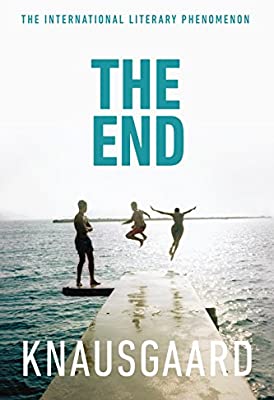 So in the middle section of The End, the sixth and final volume of Karl Ove Knausgaard’s My Struggle, are we supposed to notice all the parallels between Hitler’s youth and his own early years, even though he never draws explicit attention to them, and thus be grateful he is merely making hilariously lofty claims for the significance of his work by subjecting us to 450 interminable pages of poorly argued and banal literary-philosophical-historical-aesthetic-theological exegesis, rather than, say, invading Poland or committing genocide?
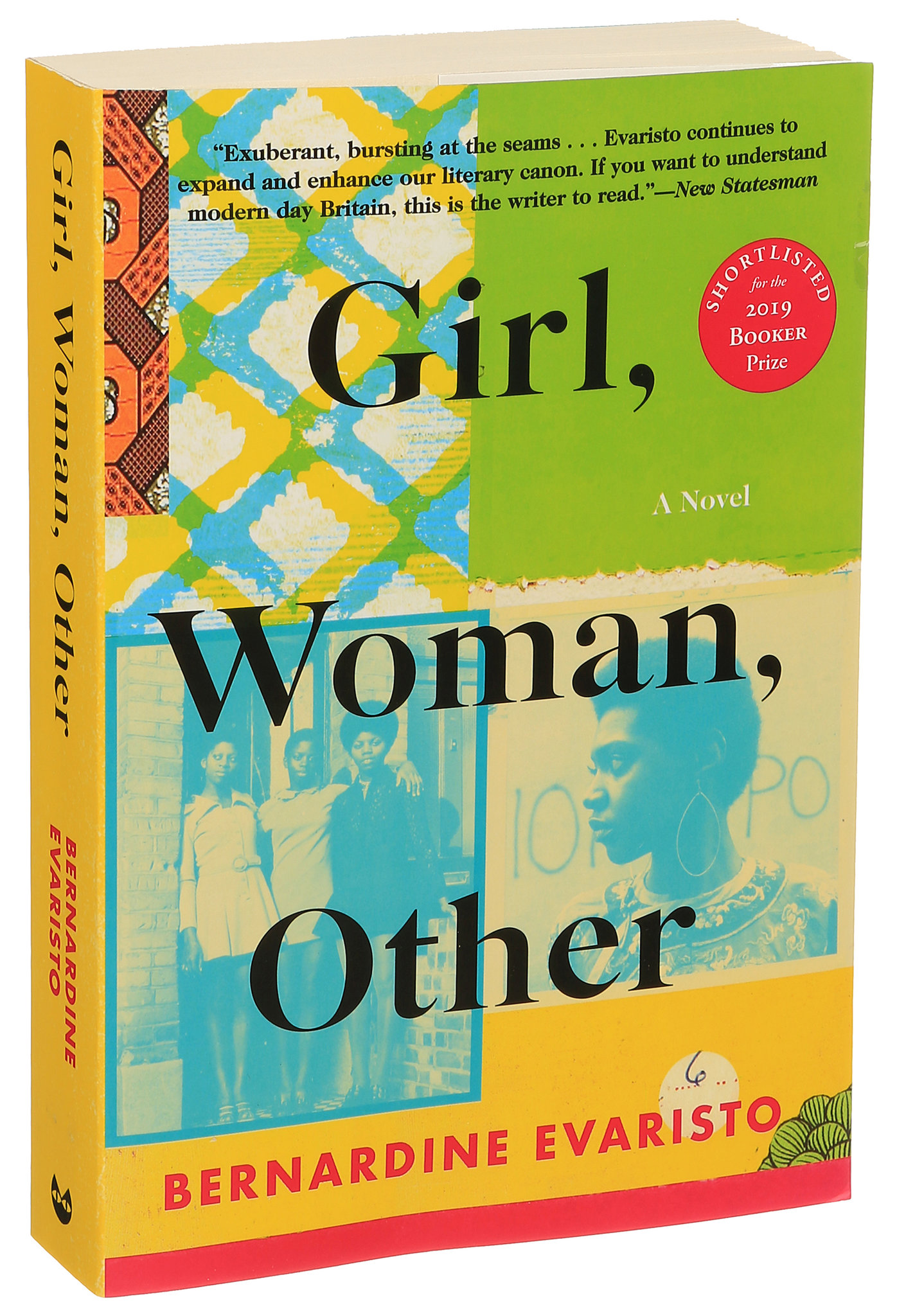 Of the 260 books I read this year (245 for the first time), these are my top 23 (or 34, depending on how you count them)
 I am no fan of Martin Amis, but kudos for the truly incredible piece of confessional writing that is his 2011 intro to Ballard’s THE DROWNED WORLD, which goes: I don’t understand sf, I don’t understand Ballard, I don’t understand this novel, I don’t understand climate science, I don’t understand DeLillo (but I do have a crush on him), I don’t understand introductions, and I’m less than 100% on the placement of commas, but I do understand I get paid the same if I pad this out with long quotes, and I do understand spoilers – and to prove it I’ll end with a really big one:
 “You must know that the houses of Constantinople were built by mixed teams of workers. The reason is clear to see. Turkish carpenters are very good at working and sawing wood, but they can’t carve stone. And a house without a stone foundation is an unstable house. That’s why we turn to Armenian, Greek, and Arab stonecutters. So some of the people dig the foundation: the others build the upper stories and the roof. … Of course, you know the Bible story of the Tower of Babel. Well, many people think the Lord scattered the tongues of men to punish them, but it’s exactly the opposite. He saw that uniformity made them proud, dedicated to enterprises as excessive as they were useless. Then he realized that humanity needed a corrective ad he made us the gift of differences. So the masons, of different customs and faiths, have to find a modus vivendi that allows them to conclude their construction of the building. And for that you need not a conceded, flaunted tolerance, like the tolerance of the powerful, but an experienced tolerance, lived out every day, lived with the awareness that if it is lost, the house will fall down and you will be left without shelter.”
 Mark Bould