Reading The Great Writers, part one
A shorter middle bit
Of the 54 titles in The Great Writers series, I had, it turned out, already read 15.
John Bunyan, The Pilgrim’s Progress (1678)
One advantage of aspirational Protestant parents convinced of the value of reading is that abridged and unabridged Pilgrim’s Progresses are put in front of you before you are ten years old.
Lewis Carroll, Alice in Wonderland (1865)
In the first year of junior school, our teacher (Mrs Eaton) would end every day by reading a few pages of Alice in Wonderland to us (I remember someone spotting the caterpillar in the famous illustration was, it transpires famously, the wrong colour). But that was way too slow a pace for impatient little me, so I got a copy of it (and Through the Looking Glass (1871)) out of the village library.
Jonathan Swift, Gulliver’s Travels (1726)
I got an abridged paperback version in a red leatherette-effect cover from Trago Mills in the mid-70s (also The Adventures of Tom Sawyer (1876)) but have no idea (in either case) when in the intervening years I first read it unabridged. But I do remember already having experienced that feeling of relief when you finally get through the Voyage to Laputa, Balnibarbi, Luggnagg, Glubbdubdrib and Japan and wash ashore in the Land of the Houyhnhnms (even if I hadn’t the faintest idea of how to pronounce it).
Mary Shelley, Frankenstein, or the Modern Prometheus (1818)
Again, I remember an abridged version (and of Dracula (1897) in the same imprint) in the mid- 70s. Sadly, though, I remember nothing about their undoubtedly cheap and nasty bindings – or, in either case, of when in the intervening years I first read the book proper.
Arthur Conan Doyle, The Adventures of Sherlock Holmes (1892)
I fell in love with Sherlock Holmes courtesy of Basil Rathbone and, especially, Nigel Bruce, whose mere presence in a film still cheers me up. I remember seeing The Hound of the Baskervilles (1939) and the way too-scary The Scarlet Claw (1944) and being terrified by the Creeper in The Pearl of Death (1944), presumably all part of a late-70s early evening weekday season on BBC2. Somehow there was a copy of Hound in the junior school library, and then around the turn of the decade I got one of those cheap hardback omnibus editions of all the Holmes stories and novels as an Xmas gift, which I devoured.

In fact, I loved Holmes so much back then that one day in 1985 I feigned illness so I could stay home from school to finish reading Cay Van Ash’s Ten Years Beyond Baker Street (1984), which I’d started the night before (it was probably my first brush with Fu Manchu outside of those Christopher Lee films), and the following year I stayed up late watching Holmes vs. Jack the Ripper/Freemasons in Murder By Decree (Clark 1979) rather than revising for the next morning’s Biology O-level exam.
HG Wells, The War of the Worlds (1898)
In the first term of my final year at junior school, I read an extract (the protagonist diving underwater to escape the Martian heat rat) for a comprehension exercise – and raced to the school library. But it only had a copy of The Invisible Man (1897); my memory is of a paperback tie-in with the 1975 TV series – just a picture of David McCallum on the cover – but as there was a novelisation of the pilot episode by Michael Jahn I now wonder if I read both and have jumbled them up.
The village library didn’t have a copy of War of the Worlds, either, but Xmas was not far off. Nor was my Jeff Wayne album tie-in copy (which finally fell apart about a decade ago.)


Robert Louis Stevenson, Treasure Island (1883)
I seem to have gone through a nautical phase in the late 70s. Possibly because of Gulliver’s Travels, the Frankenstein frame story, Ursula K Le Guin’s Wizard of Earthsea (which I did not like and tbh still don’t) or Jules Verne’s Twenty Thousand Leagues under the Seas (1870) and The Mysterious Island (1875) – both of which I’d read in bowdlerised abridged versions – or RM Ballantyne’s The Coral Island (1857), the first chapter of which I doggedly read half a dozen times as a child, without ever getting any further. But it was more likely because of Willard Price’s Southsea Adventure (1952), Underwater Adventure (1954), Whale Adventure (1960) and Diving Adventure (1969), from a series which briefly, but only temporarily, took that special place in my heart reserved for The Three Investigators (1964–87) series, which had already dislodged Enid Blyton’s Famous Five (1942–63) and Adventure (1944–55) series (I never could stand The Secret Seven (1949–63)).
But, my god, the black spot! That really put the willies up me.

Edgar Allan Poe, The Fall of the House of Usher, and Other Stories (1830s–1840s)
I asked for a big paperback omnibus of Poe for my fourteenth birthday (it contained everything except Eureka), and then worked through it a story, poem or chapter of Pym per day (for years, the only bit of Pym I could actually remember was the great big disappearing dog). But it is only since I had a panic attack during an MRI scan in 2020 that I have developed claustrophobia. And although I have never had a nightmare about being buried alive, I did later that year wake up screaming from a dream in which I was trapped in a small space below deck, in full costume, with Ridley Scott filming me as the lead in his grittily realistic live-action Captain Pugwash reboot. I wish I was making this up, but I am also pretty impressed at myself that I don’t have to.
Charles Dickens, A Christmas Carol (1843)
We’d read an abridged version of A Christmas Carol in at secondary school, and I was so offended at being deemed incapable of reading the full text that I got it out of the school library. I think it must have been in the second year, because I had a very combative relationship with our English teacher that year. We got off to a bad start when she selected John Steinbeck’s The Red Pony (1933) for us to read as a class. Everyone hated it (which in retrospect I realise was probably just me and a couple of other little gobshites who joined in). We protested so much, she dropped it and picked something else for us to read. I forget what, but we were heady with victory and could smell blood.
Sometime around then I got into a stupid row with her, which she ended (or so she thought) by saying ‘If you’re so smart, why don’t you read Ulysses?’.
So I got a copy out of the Central Library and did just that. One chapter per day for two-and-a-half weeks, understanding almost none of it. Once I was done, I took it into class, dropped it casually on my desk and asked if she had any other recommendations.
I was fourteen. Forty years later, I am still appalled at what an awful little shit I was.
It is also very difficult to reconcile these memories with the crippling shyness from which I suffered, the frequent terror of speaking, the incomprehension of other people, who were all so fucking weird – either terrifyingly random or so predictable they were even scarier. But I was also a cheeky little bugger, with a tendency to brinksmanship and a self-destructive edge.
The former would probably now be considered social anxiety and fortunately have some apparatus of understanding and support. But alongside the latter, I am more inclined to think of it as class anxiety. The terror of social mobility, of transclass social non-reproduction. Plus puberty.
Aldous Huxley, Brave New World (1932)
I know I had already read Orwell’s Nineteen Eighty-four (1949) and William Golding’s Lord of the Flies (1954) and JB Priestley’s An Inspector Calls (1945) because my brother, a couple of years older than me, was doing his CSEs in 1983 and he bribed and/or bullied me into writing his English Literature coursework essays for him. I remember him being annoyed at having to copy them out long-hand so no one could prove he had cheated. But later he was so delighted to have outwitted his Secondary Modern, which had been so quick to (mis)judge his abilities. Not that this triumph necessarily proved them wrong.
Somewhere in that confluence of events, I read Huxley – probably just to make a smart aside in one of those essays, a foible I still have.
Huxley’s Ape and Essence (1948) and Island (1962) would have followed in pretty short order, and I remember the this-is-not-a-sequel disappointment of Brave New World Revisited (1958). Thanks to an Orwell essay, I’d have read Zamyatin’s We (1924) around the same time, which quickly led me to his The Dragon and Other Stories (coll.1966) and Islanders and The Fisher of Men (coll.1984), which in turn got me to Bulgakov’s The Master and Margarita (1967) not long after.
Geoffrey Chaucer, The Canterbury Tales (1387–1400)
My posh mate Rob was reading one of the Tales, I forget which, for his A-level English, so I picked up a cheap complete Tales and slowly worked my way through it over a couple of years. This long slow read led to a classic autodidact’s lack-of-cultural-capital moment when I was interviewed at Oxford University (the first and possibly still the only pupil from my Comprehensive ever to even apply to Oxford or Cambridge). Asked what I was reading that was not on my A-level syllabus, I mentioned I had recently completed the Tales. Surprised, the interviewer asked whether I was reading it in translation or in ‘Middle English’. I had never even heard of ‘Middle English’ and had no idea how to reply, so he filled the awkward silence by lecturing me, a state school upstart, on how I could not claim to have read Chaucer if I was only reading a translation. His disdain was palpable; I withered beneath it. The interview ground to a halt. I was not offered a place at that College.
However, I had read Chaucer in Middle English! And Sir Gawain and the Green Knight. And Pearl. And Sir Orfeo.
I’m pretty sure this is a case of biting off my own nose to spite my face when I’d rather be punching his, but because of that wanker’s class contempt, I have never voluntarily read any other Middle English, not even Piers Plowman (just a couple of shorter poems I was obliged to read in our first-year survey course at university).
Thomas Hardy, Far from the Madding Crowd (1874)
This is one of those books I saw in Penguin but picked up in a cheaper US paperback (with yellow edges) at my local independent bookstore, In Other Words, on Mutley Plain in Plymouth. Which was also where I bought Russell’s History of Western Philosophy, The Essential James Joyce (containing Dubliners (1914), A Portrait of an Artist as a Young Man (19116) and excerpts from Ulysses (1922) and Finnegans Wake (1939)) and the three omnibus editions of Chandler novels I still have. It was also where I bought my girlfriend Jane a copy of Robin Morgan’s Sisterhood is Global: The International Women’s Movement Anthology (1984), the sequel to Sisterhood is Powerful (1970). I have always been given to big romantic gestures.
I spent a lot of time in that shop. It was a haven during some confusing times. They were always welcoming and kind. And once they noticed how careful I was with books, and how unable to afford them, they were fine with me popping in on my way home from school and reading books in half-hour chunks without buying them. At Xmas, they would give me mulled wine, even though I was clearly underage. It was also one of the places where I started to piece together a political education by reading – The Communist Manifesto, The Condition of the Working Class in England, Mutual Aid, Bakunin on Anarchism, Anarcho-Syndicalism, A Room of One’s Own, The Dialectic of Sex, The Female Eunuch, Intercourse, The Wretched of the Earth, Notebook of a Return to the Native Land, goodness knows what else – but also just as much by enjoying their generosity, conviviality, community.
Mind you, all I can really remember of Far From the Madding Crowd is finding Bathsheba Everdene really irritating – oh, and the bit about punching holes in sheep to let out trapped wind.
Emily Bronte, Wuthering Heights (1847)
Wuthering Heights was one of our lower-Sixth A-level texts, and I remember being really angry at the implausibility of Nelly being able to witness certain events. I was so furious – don’t ask me to explain the logic, presumably something to do with narrative perspective – that I was driven by rage to read John Brunner’s Stand on Zanzibar (1968) and then (obvs) John Dos Passos’s USA trilogy (1930–6). I was clearly broken in some way, and not merely in terms of the unthinking misogyny clearly underpinning such a response.
I’d been reading and protesting my way into socialism and anti-racism, and had been hanging out with a bunch of self-proclaimed anarchists from Plymouth Polytechnic. They knew a student I knew from my parent’s church, and had seen me in her company somewhere, so assumed I was way older than actually I was. (Reader, I did not disabuse them.) But any feminist education would still have been a year or so in the future, courtesy of Jane.
I broke with those anarchists over their refusal to do anything in support of the great miners’ strike. There were really just middle-class wankers who liked to sound radical while smoking dope. Jane was a much better influence.
Oh, and I long since changed my mind about Wuthering Heights (it is probably now my favourite Bronte novel, so much more bonkers than anything her sisters ever ventured) and am less convinced of Brunner’s genius (though I still read him, most recently The Great Steamboat Race (1983)), but remain steadfast, forty years later, in my opinion that The 42nd Parallel is the best volume of Dos Passos’s trilogy (it provided, along with a quote from Lenin’s Philosophical Notebooks and another from Billy Zane, an epigraph to my The Cinema of John Sayles: A Lone Star (2009)).
William Shakespeare, Comedies and Tragedies (1590s–1610s)
I have no idea which plays were in these volumes. But in 1986, The Oxford Shakespeare was published and I got a hardback copy as some kind of come-on from a postal book club (I think – I can’t imagine being able to afford it otherwise). But like Ulysses and The Canterbury Tales, I worked through it steadily, a play a week, then some poems until I was done.
In 1991, I took that volume into my finals exam on Shakespeare; it was an open-book exam, and we were supposed to leave our copies of individual plays behind to be checked for notes, but the invigilator took one look at this immense pristine tome I’d lugged up to campus and said not to bother as no one in their right mind deface it by writing notes in it.
But what, you are undoubtedly thinking, of the other 39 titles?
 You probably think getting hold of an old omnibus of Edmond Hamilton’s Star Kings books is not much of an accomplishment. Nothing to boast about.
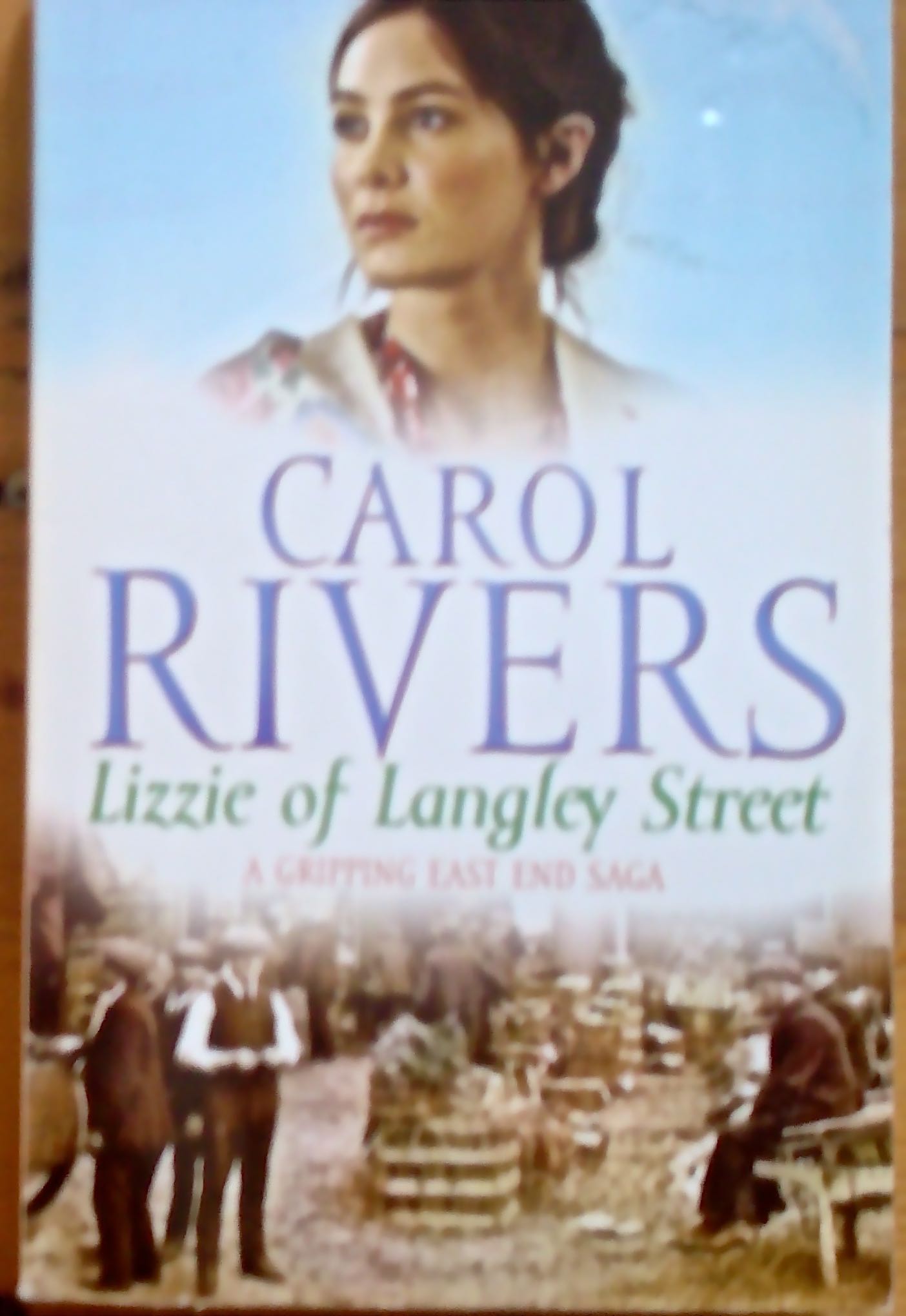 Now, I have nothing against East End Sagas, whether gripping – as it claims – or not. But it was not what I wanted. So I set the returns process in motion and requested they replace it with the book I ordered. They acted with unexpected promptness, dispatching a replacement the same day. Of course, instead of replacing it with a copy of Chronicles of the Star Kings, they replaced it with a copy of Carol Rivers’s gripping East End saga Lizzie of Langley Street.


 Mark Bould