Reading The Great Writers, part two

Reading The Great Writers, part one

A shorter middle bit
Of the 54 titles in The Great Writers series, I had, it turned out, already read 15.

John Bunyan, The Pilgrim’s Progress (1678)
One advantage of aspirational Protestant parents convinced of the value of reading is that abridged and unabridged Pilgrim’s Progresses are put in front of you before you are ten years old.

Lewis Carroll, Alice in Wonderland (1865)
In the first year of junior school, our teacher (Mrs Eaton) would end every day by reading a few pages of Alice in Wonderland to us (I remember someone spotting the caterpillar in the famous illustration was, it transpires famously, the wrong colour). But that was way too slow a pace for impatient little me, so I got a copy of it (and Through the Looking Glass (1871)) out of the village library.

Jonathan Swift, Gulliver’s Travels (1726)
I got an abridged paperback version in a red leatherette-effect cover from Trago Mills in the mid-70s (also The Adventures of Tom Sawyer (1876)) but have no idea (in either case) when in the intervening years I first read it unabridged. But I do remember already having experienced that feeling of relief when you finally get through the Voyage to Laputa, Balnibarbi, Luggnagg, Glubbdubdrib and Japan and wash ashore in the Land of the Houyhnhnms (even if I hadn’t the faintest idea of how to pronounce it).

Mary Shelley, Frankenstein, or the Modern Prometheus (1818)
Again, I remember an abridged version (and of Dracula (1897) in the same imprint) in the mid- 70s. Sadly, though, I remember nothing about their undoubtedly cheap and nasty bindings – or, in either case, of when in the intervening years I first read the book proper.

Arthur Conan Doyle, The Adventures of Sherlock Holmes (1892)
I fell in love with Sherlock Holmes courtesy of Basil Rathbone and, especially, Nigel Bruce, whose mere presence in a film still cheers me up. I remember seeing The Hound of the Baskervilles (1939) and the way too-scary The Scarlet Claw (1944) and being terrified by the Creeper in The Pearl of Death (1944), presumably all part of a late-70s early evening weekday season on BBC2. Somehow there was a copy of Hound in the junior school library, and then around the turn of the decade I got one of those cheap hardback omnibus editions of all the Holmes stories and novels as an Xmas gift, which I devoured.

In fact, I loved Holmes so much back then that one day in 1985 I feigned illness so I could stay home from school to finish reading Cay Van Ash’s Ten Years Beyond Baker Street (1984), which I’d started the night before (it was probably my first brush with Fu Manchu outside of those Christopher Lee films), and the following year I stayed up late watching Holmes vs. Jack the Ripper/Freemasons in Murder By Decree­ (Clark 1979) rather than revising for the next morning’s Biology O-level exam.

HG Wells, The War of the Worlds (1898)
In the first term of my final year at junior school, I read an extract (the protagonist diving underwater to escape the Martian heat rat) for a comprehension exercise – and raced to the school library. But it only had a copy of The Invisible Man (1897); my memory is of a paperback tie-in with the 1975 TV series – just a picture of David McCallum on the cover – but as there was a novelisation of the pilot episode by Michael Jahn I now wonder if I read both and have jumbled them up.

The village library didn’t have a copy of War of the Worlds, either, but Xmas was not far off. Nor was my Jeff Wayne album tie-in copy (which finally fell apart about a decade ago.)

Robert Louis Stevenson, Treasure Island (1883)
I seem to have gone through a nautical phase in the late 70s.  Possibly because of Gulliver’s Travels, the Frankenstein frame story, Ursula K Le Guin’s Wizard of Earthsea (which I did not like and tbh still don’t) or Jules Verne’s Twenty Thousand Leagues under the Seas (1870) and The Mysterious Island (1875) – both of which I’d read in bowdlerised abridged versions – or RM Ballantyne’s The Coral Island (1857), the first chapter of which I doggedly read half a dozen times as a child, without ever getting any further. But it was more likely because of Willard Price’s Southsea Adventure (1952), Underwater Adventure (1954), Whale Adventure (1960) and Diving Adventure (1969), from a series which briefly, but only temporarily, took that special place in my heart reserved for The Three Investigators (1964–87) series, which had already dislodged Enid Blyton’s Famous Five (1942–63) and Adventure (1944–55) series (I never could stand The Secret Seven (1949–63)).

But, my god, the black spot! That really put the willies up me.

Edgar Allan Poe, The Fall of the House of Usher, and Other Stories (1830s–1840s)
I asked for a big paperback omnibus of Poe for my fourteenth birthday (it contained everything except Eureka), and then worked through it a story, poem or chapter of Pym per day (for years, the only bit of Pym I could actually remember was the great big disappearing dog). But it is only since I had a panic attack during an MRI scan in 2020 that I have developed claustrophobia. And although I have never had a nightmare about being buried alive, I did later that year wake up screaming from a dream in which I was trapped in a small space below deck, in full costume, with Ridley Scott filming me as the lead in his grittily realistic live-action Captain Pugwash reboot. I wish I was making this up, but I am also pretty impressed at myself that I don’t have to.

Charles Dickens, A Christmas Carol (1843)
We’d read an abridged version of A Christmas Carol in at secondary school, and I was so offended at being deemed incapable of reading the full text that I got it out of the school library. I think it must have been in the second year, because I had a very combative relationship with our English teacher that year. We got off to a bad start when she selected John Steinbeck’s The Red Pony (1933) for us to read as a class. Everyone hated it (which in retrospect I realise was probably just me and a couple of other little gobshites who joined in). We protested so much, she dropped it and picked something else for us to read. I forget what, but we were heady with victory and could smell blood.

Sometime around then I got into a stupid row with her, which she ended (or so she thought) by saying ‘If you’re so smart, why don’t you read Ulysses?’.

So I got a copy out of the Central Library and did just that. One chapter per day for two-and-a-half weeks, understanding almost none of it. Once I was done, I took it into class, dropped it casually on my desk and asked if she had any other recommendations.

I was fourteen. Forty years later, I am still appalled at what an awful little shit I was.

It is also very difficult to reconcile these memories with the crippling shyness from which I suffered, the frequent terror of speaking, the incomprehension of other people, who were all so fucking weird – either terrifyingly random or so predictable they were even scarier. But I was also a cheeky little bugger, with a tendency to brinksmanship and a self-destructive edge.

The former would probably now be considered social anxiety and fortunately have some apparatus of understanding and support. But alongside the latter, I am more inclined to think of it as class anxiety. The terror of social mobility, of transclass social non-reproduction. Plus puberty.

Aldous Huxley, Brave New World (1932)
I know I had already read Orwell’s Nineteen Eighty-four (1949) and William Golding’s Lord of the Flies (1954) and JB Priestley’s An Inspector Calls (1945) because my brother, a couple of years older than me, was doing his CSEs in 1983 and he bribed and/or bullied me into writing his English Literature coursework essays for him. I remember him being annoyed at having to copy them out long-hand so no one could prove he had cheated. But later he was so delighted to have outwitted his Secondary Modern, which had been so quick to (mis)judge his abilities. Not that this triumph necessarily proved them wrong.

Somewhere in that confluence of events, I read Huxley – probably just to make a smart aside in one of those essays, a foible I still have.

Huxley’s Ape and Essence (1948) and Island (1962) would have followed in pretty short order, and I remember the this-is-not-a-sequel disappointment of Brave New World Revisited (1958). Thanks to an Orwell essay, I’d have read Zamyatin’s We (1924) around the same time, which quickly led me to his The Dragon and Other Stories (coll.1966) and Islanders and The Fisher of Men (coll.1984), which in turn got me to Bulgakov’s The Master and Margarita (1967) not long after.

Geoffrey Chaucer, The Canterbury Tales (1387–1400)
My posh mate Rob was reading one of the Tales, I forget which, for his A-level English, so I picked up a cheap complete Tales and slowly worked my way through it over a couple of years. This long slow read led to a classic autodidact’s lack-of-cultural-capital moment when I was interviewed at Oxford University (the first and possibly still the only pupil from my Comprehensive ever to even apply to Oxford or Cambridge). Asked what I was reading that was not on my A-level syllabus, I mentioned I had recently completed the Tales. Surprised, the interviewer asked whether I was reading it in translation or in ‘Middle English’. I had never even heard of ‘Middle English’ and had no idea how to reply, so he filled the awkward silence by lecturing me, a state school upstart, on how I could not claim to have read Chaucer if I was only reading a translation. His disdain was palpable; I withered beneath it. The interview ground to a halt. I was not offered a place at that College.

However, I had read Chaucer in Middle English! And Sir Gawain and the Green Knight. And Pearl. And Sir Orfeo.

I’m pretty sure this is a case of biting off my own nose to spite my face when I’d rather be punching his, but because of that wanker’s class contempt, I have never voluntarily read any other Middle English, not even Piers Plowman (just a couple of shorter poems I was obliged to read in our first-year survey course at university).

Thomas Hardy, Far from the Madding Crowd (1874)
This is one of those books I saw in Penguin but picked up in a cheaper US paperback (with yellow edges) at my local independent bookstore, In Other Words, on Mutley Plain in Plymouth. Which was also where I bought Russell’s History of Western Philosophy, The Essential James Joyce (containing Dubliners (1914), A Portrait of an Artist as a Young Man (19116) and excerpts from Ulysses (1922) and Finnegans Wake (1939)) and the three omnibus editions of Chandler novels I still have. It was also where I bought my girlfriend Jane a copy of Robin Morgan’s Sisterhood is Global: The International Women’s Movement Anthology (1984), the sequel to Sisterhood is Powerful (1970). I have always been given to big romantic gestures.

I spent a lot of time in that shop. It was a haven during some confusing times. They were always welcoming and kind. And once they noticed how careful I was with books, and how unable to afford them, they were fine with me popping in on my way home from school and reading books in half-hour chunks without buying them. At Xmas, they would give me mulled wine, even though I was clearly underage. It was also one of the places where I started to piece together a political education by reading –  The Communist Manifesto, The Condition of the Working Class in England, Mutual Aid, Bakunin on Anarchism, Anarcho-Syndicalism, A Room of One’s Own, The Dialectic of Sex, The Female Eunuch, Intercourse, The Wretched of the Earth, Notebook of a Return to the Native Land, goodness knows what else – but also just as much by enjoying their generosity, conviviality, community.

Mind you, all I can really remember of Far From the Madding Crowd is finding Bathsheba Everdene really irritating – oh, and the bit about punching holes in sheep to let out trapped wind.

Emily Bronte, Wuthering Heights (1847)
Wuthering Heights was one of our lower-Sixth A-level texts, and I remember being really angry at the implausibility of Nelly being able to witness certain events. I was so furious – don’t ask me to explain the logic, presumably something to do with narrative perspective –  that I was driven by rage to read John Brunner’s Stand on Zanzibar (1968) and then (obvs) John Dos Passos’s USA trilogy (1930–6). I was clearly broken in some way, and not merely in terms of the unthinking misogyny clearly underpinning such a response.

I’d been reading and protesting my way into socialism and anti-racism, and had been hanging out with a bunch of self-proclaimed anarchists from Plymouth Polytechnic. They knew a student I knew from my parent’s church, and had seen me in her company somewhere, so assumed I was way older than actually I was. (Reader, I did not disabuse them.) But any feminist education would still have been a year or so in the future, courtesy of Jane.

I broke with those anarchists over their refusal to do anything in support of the great miners’ strike. There were really just middle-class wankers who liked to sound radical while smoking dope. Jane was a much better influence.

Oh, and I long since changed my mind about Wuthering Heights (it is probably now my favourite Bronte novel, so much more bonkers than anything her sisters ever ventured) and am less convinced of Brunner’s genius (though I still read him, most recently The Great Steamboat Race (1983)), but remain steadfast, forty years later, in my opinion that The 42nd Parallel is the best volume of Dos Passos’s trilogy (it provided, along with a quote from Lenin’s Philosophical Notebooks and another from Billy Zane, an epigraph to my The Cinema of John Sayles: A Lone Star (2009)).

William Shakespeare, Comedies and Tragedies (1590s–1610s)
I have no idea which plays were in these volumes. But in 1986, The Oxford Shakespeare was published and I got a hardback copy as some kind of come-on from a postal book club (I think – I can’t imagine being able to afford it otherwise). But like Ulysses and The Canterbury Tales, I worked through it steadily, a play a week, then some poems until I was done.

In 1991, I took that volume into my finals exam on Shakespeare; it was an open-book exam, and we were supposed to leave our copies of individual plays behind to be checked for notes, but the invigilator took one look at this immense pristine tome I’d lugged up to campus and said not to bother as no one in their right mind deface it by writing notes in it.

But what, you are undoubtedly thinking, of the other 39 titles?
Reading The Great Writers, part three

Paris – mostly revolutionary, mostly morbid, but with a hint of nudity

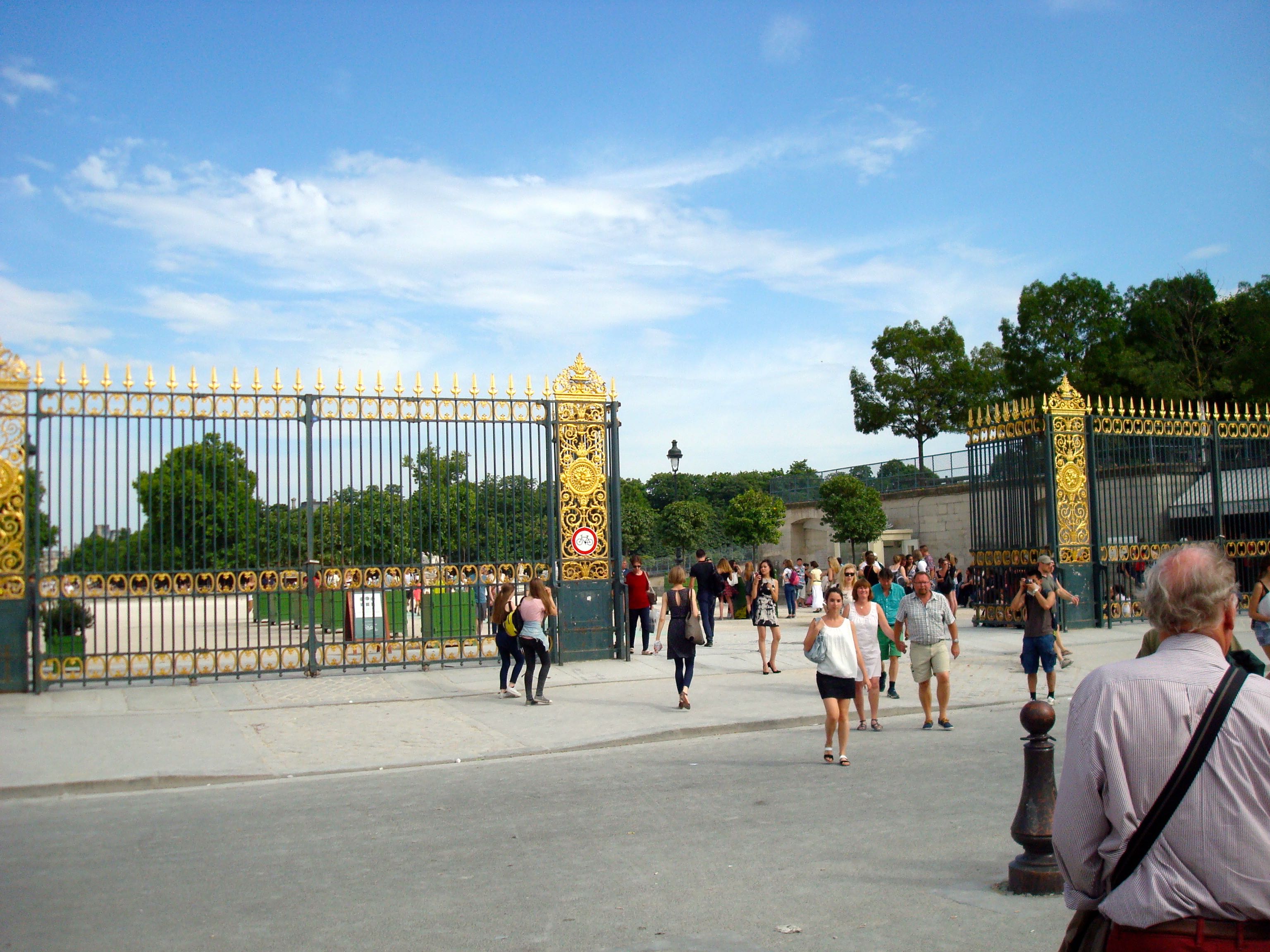
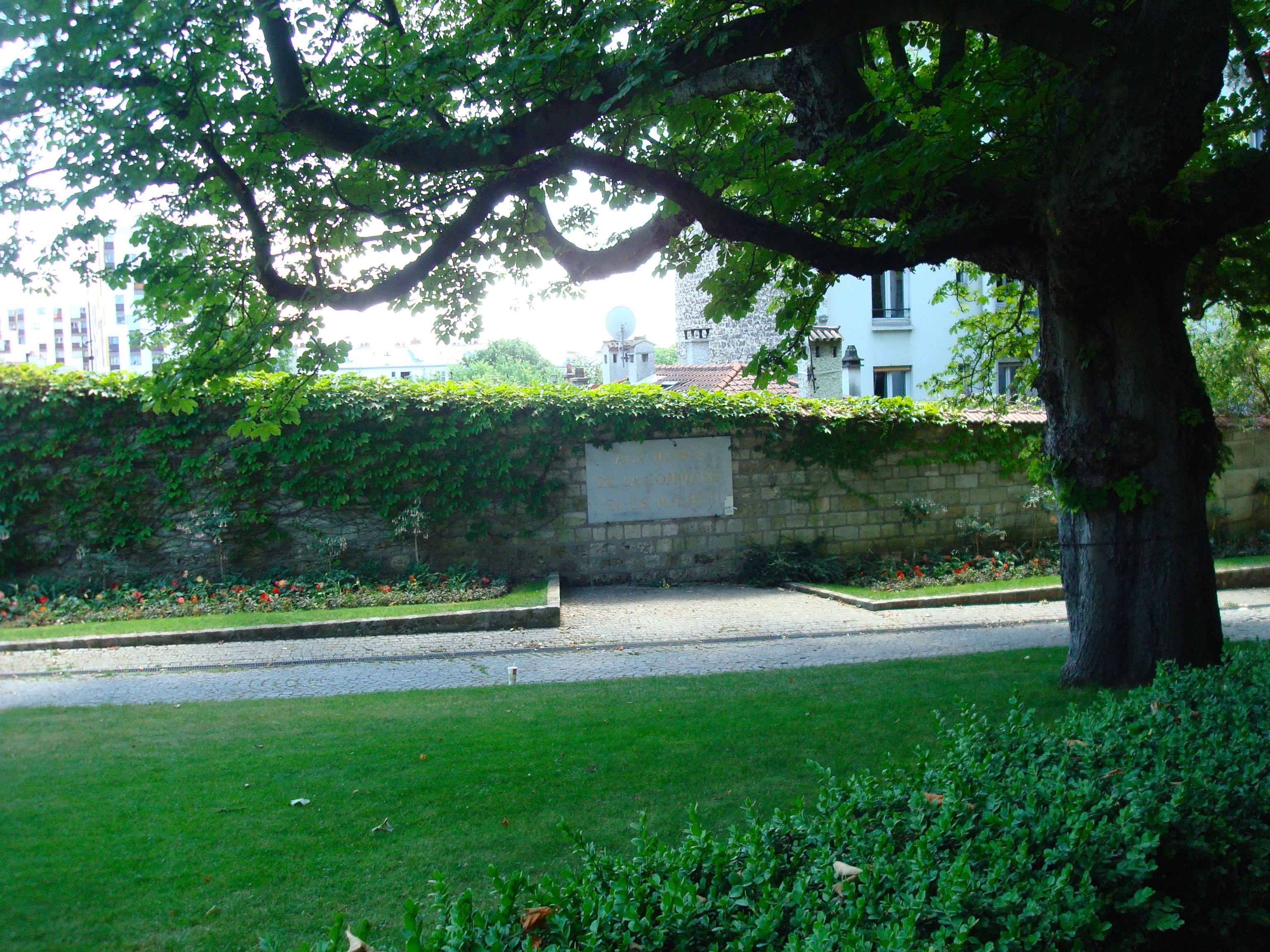
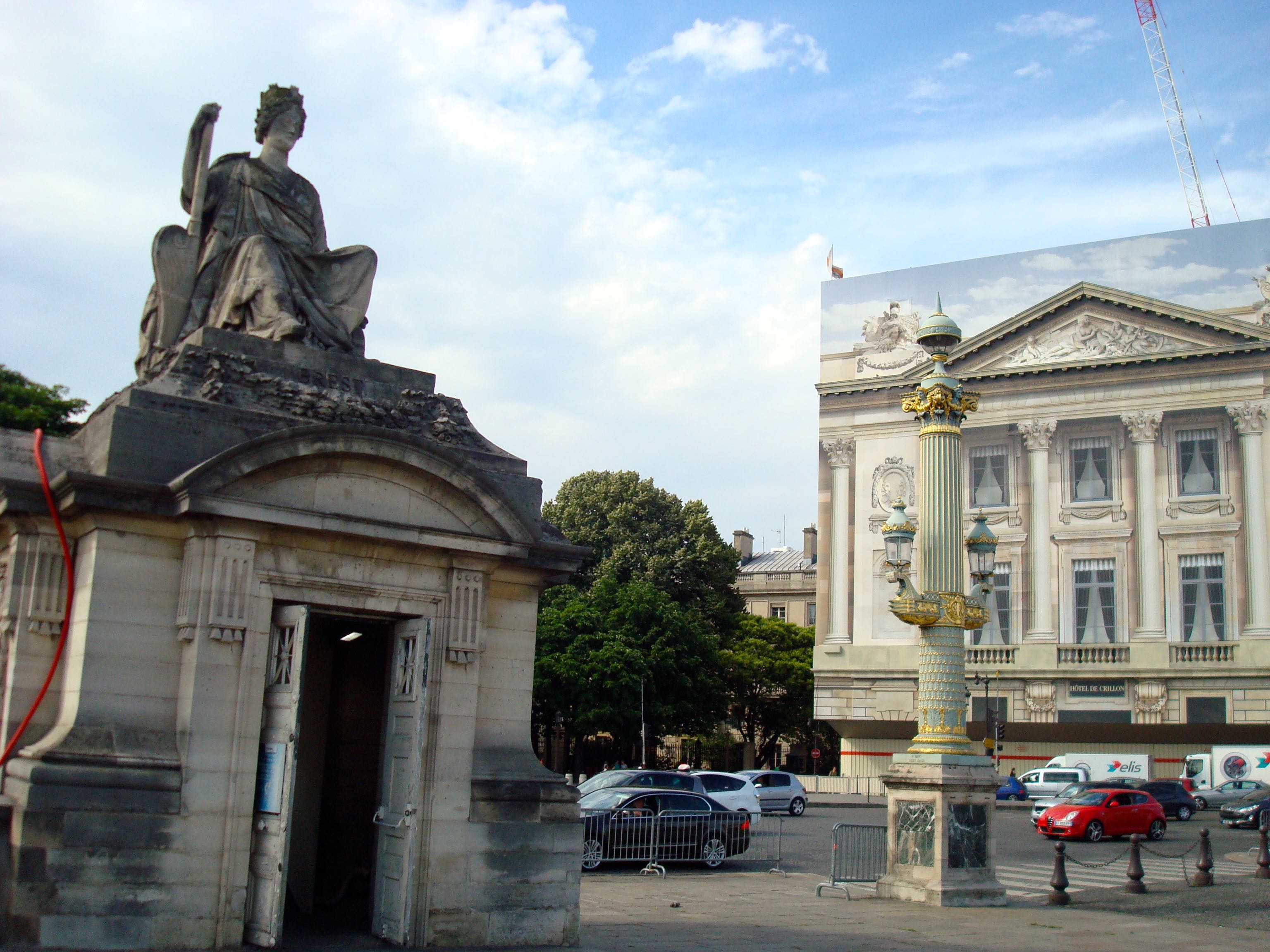
This statue stands on the spot where the guillotine was erected to execute Louis XVI in January 1793. guillotine a Somewhere near these gates, the guillotine was erected to execute Marie-Antoinette in October 1793. guillotine b Jean Sylvain Bailly was an early leader of the French Revolution and the first mayor of Paris. He was guillotined during the Reign of Terror. guillotine In April 1834, a workers uprising broke out against new laws limiting the activities of Republican organisations such as the Society of the Rights of Man. 13,000 police took four days to quell the uprising. On the Rue Transnonain, police massacred all the residents of one apartment building. transnonain Not even a fucking plaque. rue_transnonain_le_15_de_avril_1834 Honoré Daumier’s lithograph Rue Transnonain, le 15 Avril 1834 appeared in the journal La Caricature. When the original was discovered, he was imprisoned for six months. In the the Musée d’Orsay, we found Maximilien Luce’s Une rue de Paris en mai 1871. painting We also, I kid you not, saw a hipster find a portrait of a 19th century man with a similar beard to his own and take a selfie in front of it. The whole city groaned. In spring 1871, the last of the communards hid out in the Père Lachaise cemetery. The victorious Armée versaillaise put one hundred and forty-seven Fédérés up against the wall and shot them and threw their corpses in a trench by the wall. communards communards a Opposite this simple memorial is the grave of Marx’s daughter Laura and her husband Paul Lafargue, who wrote among many other things the excellent The Right to Be Lazy. In old age, they committed suicide rather than be a burden on the revolution. lafargues a     lafargues           Nestor Makno, the Ukrainian anarcho-communist revolutionary was cremated here, too. makhno   I guess I’m wilfully mistranslating/misunderstanding the inscription on this. mistranslation On a cheerier note, this is the bar where Lenin and Trotsky used to hang out in 1915/16 to play chess. lenin I guess it was a little less blandly bourgeois back then. The current management are less inclined to recall Bolshevik grandmasters than to boast that Pierce Brosnan once ate there. Lenin, mind you, can pop up in the least expected places (as, indeed, can Stalin). lenin penis

Out of the Unknown: ‘The Dead Past’ (BBC2 25 October 1965)

Isaac Asimov
Isaac Asimov

This is the first of the series’ six episodes based on the fiction of Isaac Asimov, its most adapted author. The others are ‘Sucker Bait’ (1954; 15 November 1965), ‘Satisfaction Guaranteed’ (1951; 29 December 1966), ‘Reason’ (1941; 1 January 1967 as ‘The Prophet’), ‘Liar!’ (1941; 14 January 1969) and ‘The Naked Sun’ (1956; 18 February 1969). Only the first two episodes survive.1

‘The Dead Past’ was directed by John Gorrie, who had previously worked on Doctor Who, directing ‘The Keys of Marinus’  (1964) and possibly one episode of ‘The Reign of Terror’ (1964), though this seems to be disputed, not least by Gorrie himself.

The adaptation of Asimov’s 1956 Astounding story was by Jeremy Paul, probably best known in sf circles for a pair of original Play for Today (1970-84) teleplays, The Flipside of Dominick Hide (9 Decemeber 1980) and Another Flip for Dominick (14 December 1982). Paul also adapted John Brunner’s ‘The Last Lonely Man’ (1964; 21 January 1969) for Out of the Unknown, and scripted ‘Poor Butterfly’ (9 January 1969), an original Journey to the Unknown (1968-69) teleplay, and Hammer’s Countess Dracula (Sasdy 1971).

Asimov’s story presents a particular set of problems for the adapter in that it typifies both the strengths and weaknesses of his fiction as fiction. Take, for example, the opening scene, around 800 words long, in which Arnold Potterley, a Professor of Ancient History, has an appointment with Thaddeus Araman, head of the Chronoscopy Division, to plead once more for access to a chronoscope so that he can further pursue research into ancient Carthage (primarily to prove that the ancient civilization was not a brutal regime, given to sacrificing its children by fire to appease Moloch in times of adversity, and that this idea is merely a lie spread by the Greeks and Romans). There is a brief description of Potterley’s appearance, but no clues at all as to what Araman looks like or where the scene is set – presumably Araman’s office, since he looks through a folder of papers and has a buzzer (on his desk?) with which to summon his secretary; there is also some sitting down and standing up, implying there are chairs. But overall, there are few visual cues of any kind, and no other appeal to senses whatsoever, just two talking heads expositioning at each other. (Yes, I know it’s not a verb, but at times like this it needs to be.) Readers are left to themselves to fill in as much or as little of this detail as they want.2

Yet somehow it works, probably because Asimov is such an effective writer of exposition – it is why he was drawn to the kind of logic-problem stories typical of both his sf and crime fiction, and it is why he is better as a science populariser (or vulgariser, as I seem to recall him insisting) than a fiction writer. It is also part of his role in the hegemony of Campbellian sf. Asimov’s fiction so very effectively denies human material embodiment, it could not help but appeal to readers of a genre constantly and anxiously constructing its self-image (in opposition to fantasy, horror, the weird, romance, science fantasy) as one of reason and rationality. Presumably, this denial of embodiment, emotionality, irrationality, etc, also appealed to many adolescents and to the core lower-middle-class genre readership of the period, precariously positioned just that little bit higher up the class system than their parents and aspiring to at least remain there.

dead03Of course, television drama – and particular the tradition of single plays – urgently wants to be more than just an interchange of talking heads, and this becomes difficult when depicting a future world on a budget.3 The episodes has just six speaking parts (and three extras), and nine sets, all of them interiors. The only external views are a couple of glimpses of the past on chronoscope screens and the city vista outside of Araman’s office window. Futurity is conveyed through fashion (suit jackets without lapels, collars or pockets; matching waistcoats and trousers revealed in medium and long shot to be one-piece outfits; shirts that fasten up one side rather than centrally; invisible fastenings, and especially no buttons, which seem to have become every bit as disinvented as seatbelts in the Star Trek universe) and some minor technological innovations, such as a small desktop videophone and the chronoscopes’ giant wallscreens. Dialogue can bear some of the weight, but exposition has to be briefer, tighter, sketchier when spoken than when on the page (at least within the magazine sf norms of Asimov’s time).

***

deadPart of the dilemma faced by Arnold Potterley is that he lives in a society in which the boundaries between – and indeed within – disciplines are heavily policed. As he expositions at a junior faculty member Jonas Foster, a physicist who has yet to make his first grant application, which will fix his specialism for his entire career,

Scholars … could be free only if they could freely follow their own free-swinging curiosity. Research … forced into a predesigned pattern by the powers that held the purse strings became slavish and had to stagnate. (15-16)

Actually, Asimov does not even try to stage this as a conversation between people. Foster’s thoughts soon slip into authorial exposition:

No one would advocate running a factory by allowing each individual worker to do whatever pleased him at the moment, or of running a ship according to the casual and conflicting notions or each individual crewman. It could be taken for granted that some sort of centralized supervisory agency must exist in each case. Why should direction and order benefit a factory and a ship but not scientific research?

People might say that the human mind was somehow qualitatively different from a ship or factory but the history of intellectual endeavor proved the opposite. … as knowledge grew, more and more data had to be absorbed before worthwhile journeys into ignorance could be organized. … More and more, the individual researcher gave way to the research team and the research institution. … By 1940, only the government, large industries and large universities or research institutions could properly subsidize basic research.

By 1960, even the largest universities depended entirely upon government grants, while research institutions could not exist without tax concessions and public subscriptions. By 2000, the industrial combines had become a branch of world government and, thereafter, the financing of research and therefore its direction naturally became centralized under a department of the government.

It all worked out naturally and well. Every branch of science was fitted neatly to the needs of the public, and the various branches of science were co-ordinated decently. (15-16)

This resonates with concerns voiced by JBS Haldane and Bertrand Russell in the 1920s, JD Bernal in the 1930s, Robert K. Merton in the 1930s and 1940s, among others, that the industrialization of science by states, especially for military purposes, and by corporations leads not only to secrecy but also distorts the practice of science for purposes of profit and social control. For the contemporary reader, especially if an academic in a UK university, such passages reek of the disastrous consequences – well, some of them – of the RAEs and REFs, and of the reorganization of research councils so as to channel research funding to the already-wealthiest universities and to promote top-down agendas of questionable merit.

OutOfTheUnknown2Potterley goes so far as to claim that the government is actively preventing research using the chronoscopes – time windows, which enable one to see and hear the past – and into neutrinics, the science underpinning the technology. Against his better judgment, Foster is drawn in, and recruits the assistance of his uncle, Ralph Nimmo, a science writer whose job seems to combine science journalism, ghost-writing grant applications and ghost-writing refereed journal articles (I am not sure such a career actually quite exists yet, but again this seems prescient of the significance now given to ‘impact’ in the funding of UK research).

And, of course, once Foster is able to develop a low-cost easy-to-build version of the chronoscope, it turns out that Potterley’s suspicions are well-grounded. In a pretty well-orchestrated escalation, Asimov reveals that chronoscopes can only view the past up until about a century and a quarter previously, after which the noise to signal ration becomes impenetrably high. After some moral-panicking about new media – that people will spend all their time watching this new channel, close themselves off from the world and become obsessed with trying to relive the past – a far more significant point is made. The ‘past’ actually begins a split second ago, which makes the chronoscope a highly effective surveillance device – and one that, thanks to Foster and Nimmo, anyone can now build. It is the end of privacy, the beginning of an utterly new world.

Asimov’s conclusion also includes the suggestion that what Potterley saw as state tyranny was actually the state acting in the best interests of all. This tension runs through a lot of his work – partly a typical American obsession, partly a Wellsian desire for rational management by a benevolent elite, and partly the Technocracy and Michelism, perhaps tinged with debates about radical democracy versus centralised control (Trotsky vs Lenin vs Stalin), picked up in his Futurian days. The story’s abrupt conclusion, its refusal to try to imagine the world that might be created by the widespread use of chronoscopes, is among other things a reiterated terror of the supposedly irrational (and embodied) masses.

The episode does a pretty good job of capturing the various arguments and counter-arguments driving Asimov’s story forward, but sometimes struggles to enliven them, despite a strong cast of character actors and competent direction. The latter sadly fails to transform the sense of confinement produced by the limited sets into the oppressive claustrophobia that would lend more urgency and conviction.. A small but key change to the story comes at the end of the first scene – rather than completely forgetting about Potterley, Araman sets in motion a game of cat and mouse, once more channeling into television sf Orwell’s and Kneale/Cartier’s Nineteen Eight-fours. But even when Araman visits the Potterleys’ house while Foster is working in the basement there is little real sense of tension or suspense.

Solid production design does visually elaborate on the generational gulf between the Potterleys and Foster quite effectively, though, through the contrast between their Victorian house and his one room apartment, and the set-dressing of these spaces, including rather different artworks on the walls. (Foster’s apartment includes an alcove that can be separated from the main room by one of those sliding/concertinaing plastic doors. In the early 1970s we moved to a house with one of those separating the lounge space from the dining space, and even then it seemed so modern and swish. How wrong we were! My dad, being an omnicompetent sort of chap but not an open-plan kind of guy, had by the mid-seventies ripped it out and built a partition wall, and suddenly we had a living room and a dining room. Woo-hoo!)

Oddly, the aspect of the story the episode does not capture particularly well is Asimov’s cod-Freudian attempt to create psychological depth for Potterley. His strong, seemingly irrational, aversion to cigarettes is gradually revealed as a symptom of his guilt over this three-year-old daughter Laurel’s death in a house fire twenty years earlier, for which he may or may not have been responsible. He becomes terrified that his wife, already more or less obsessed with their long deceased child, will use the technology not only to spend all her time watching the infant Laurel but also discover whether or not he caused the fire. There is also the implication – made more explicit in the episode – that this underlies Potterley’s obsession, which he thinks of as a rational cerebral pursuit, with Carthage’s fiery infant sacrifices. It is all rather clunkily schematic and unsophisticated, and the episode has the unenviable task of compressing it while also playing it down.

It is unclear quite how aware Asimov was of the Freudian imagery in his story. A cigarette is not always just a cigarette and the Carthaginian Moloch took

the form of a hollow, brazen idol with a furnace in its belly. (19)

Although the story seems to imply Laurel’s death was the origin of Potterley’s symptom, this imagery points to a more deeply rooted Oedipal trauma, an unresolved castration anxiety and a terror of the archaic mother that includes terror of engulfment, of a lack of separation from others and, once more, of embodiment. This underscored by the final images of Caroline Potterley.

dead05One real strength of the episode is its transformation of the story into a commentary on television as a medium. When it is highlighted that the past is not some fixed distant object but a constantly unfolding present-moment-just-gone, there is a moment of hesitation between archive and stream and a resonance with the transformations of television drama in the post-war period from live broadcast to recorded/edited more or less as-if-live to recorded and edited post-production. Furthermore, in a nice final touch, the episode also considers the role of audivisual media in the constitution of memory, affect and identity. Footage of a younger Potterley playing with Laurel ends with her running into the foreground and freeze-framing – a nod to the final shot of François Truffaut’s Les quatre cent coups (1959), already paid homage by Tony Richardson’s The Loneliness of the Long Distance Runner (1962). But unlike these precursors, the episode then shows this fragment, which recalls home movie footage, several times, revealing Caroline Potterley as its obsessive viewer. It is a complex moment. On the one hand it emphasizes the construction of her character by both Asimov and Paul as consisting entirely of maternal neurosis – a fate shared by both Ripley and Sarah Connor – while repeating a masculine terror of the archaic mother. But it does also suggest how ungrounded that might be since she would rather take joy in seeing her daughter again than pin down her husband’s guilt and punish him.

I have no idea whether or not Bob Shaw was familiar with ‘The Dead Past’, but his Other Days, Other Eyes (1972) reworks an awful lot of this material rather effectively. The first of the stories in his fix-up novel was published in Analog (August 1966) less than a year after the episode was broadcast.

Other things to watch out for
— It is not quite clear where ultimate responsibility lies, but either Dudley Simpson, credited with incidental music, or Brian Hodgson, credited with radiophonics, or their guvnor really needs to lay off the theremin. Don’t get me wrong. I love the theremin. It so brilliantly evokes weird alien otherness, conveys a sense of futurity and even, now, of pastness (this is how the future used to sound). But it is overused in this episode – at least it now sounds overused – and without adequate attention to its connotations. The most hilarious sequence comes when Foster is slaving away, secretly constructing a chronosocope, in the basement of the Potterleys’ home. There is a montage of one or other or both Potterleys rising anxiously as if to go down and see what he is doing. But it now comes across as a couple of dissatisfied parents, whose son has returned from college without a job and is now living in the basement, trying to get up the nerve to go and complain that he is playing his theremin too loud.
— The curious maintenance of Asimov’s US framework, particularly of Foster’s education at MIT, presented as the absolute imprimatur of a properly scientific education. Even though he and everyone else in the story sounds impeccably English, and it perhaps being set in London (is the ancient dome visible among the futuristic skyscrapers from Araman’s window St Paul’s Cathedral?). Does this betray a sense of the future as being American? Of an eye being cast to export markets? Or an inattentive adaptation?

Previous episode, ‘Stranger in the Family’

Next episode, ‘Time in Advance

Notes
1
Irene Shubik had previously script-edited a 75-minute adaptation of The Caves of Steel (1953; BBC2 5 June 1964), written by Terry Nation, directed by Peter Sasdy and starring Peter Cushing and John Carson, for Story Parade (1964-65), and a 60-minute adaptation of ‘Little Lost Robot’ (1947; ITV 7 July 1962) for the Boris Karloff-hosted Out of the This World (1962), starring Maxine Audley as Susan Calvin and directed by Guy Verney, whose many other television credits include Sydney Newman’s early sf serials for ITV Pathfinders in Space (1950), Pathfinders to Mars (1960-61) and Pathfinders to Venus (1961). Only a few fragments of The Caves of Steel survive, while ‘Little Lost Robot’ is the only episode of Out of the World to survive and is available on a BFI DVD (which includes audio recordings of the series’ adaptations of Tom Godwin’s ‘The Cold Equations’ (1954; 14 July 1962), starring Peter Wyngarde (!) and Jane Asher, and of Terry Nation’s adaptation of Philip K. Dick’s ‘Imposter’ (1953; 21 July 1962), and the script for the series opener, an adaptation of John Wyndham’s ‘Dumb Martian’ (1952; 24 June 1962).)

2
This makes me really curious to see ‘Little Lost Robot’, and perhaps even more curious to see the script, since Terry Nation has a reputation for not including details of character or setting, arguing that that sort of things was the job of casting, wardrobe and production design. I’m guessing the director had very little to work with.

3
Asimov’s 2050s seem to have become the 2030s in the television episode, but at one point Asimov’s wording implies a much later date than the story logic demands, and the episode is rather vague about when it is set (an observation, not a complaint).

Sources
Isaac Asimov, ‘The Dead Past’, Earth is Room Enough. London: Panther 1960. 9-50.
Out of the Unknown DVD boxset. BFI, 2014.