Reading The Great Writers, part four

Reading The Great Writers, part three

Another shorter middle bit
While my experience of reading The Great Writers’ novels had always been a little marred by their layout and print, something far worse awaited at university.

Condescension.

Jane Austen, Pride and Prejudice (1813)
This was the very first novel we were required to read on my degree (and one of the very small number by women). I had not read anything quite like it before. Despite my forays into ‘literature’ and ‘literary fiction’, I still mostly read genre fiction. I got through a lot of those 180ish-page sf paperbacks, often at a rate of one or more per day, so I was not at all used to having to keep track of large numbers of characters and their relationships with each other. I remember breaking off after several chapters to jot down their names and draw a diagram mapping how they connected to each other.

I remember a fellow student getting a glimpse of it and laughing.

But mostly I remember being the only student in the seminar without a brand-new Penguin Classic, and the looks on (some of) their faces when they saw my manifestly cheap ‘fancy’ hardback. It was that Oxford interview all over again.

When I was growing up, Plymouth was one of just a handful of places that still retained the 11+ exam, the already archaic post-war system for streaming pre-adolescent children into secondary education at technical schools, secondary moderns or grammar schools. It pretended to neutrality but was really a system for maintaining economic and social class hierarchies while allowing limited social mobility for the ‘worthy’ few. We moved to Plymouth right at the end of 1979 and I started my half year at Hyde Park Juniors on the January day the rest of the class were taking the second part of the 11+. So a couple of months later, after which most school places in the city had already been assigned, I had to take an alternative exam. The outcome was I had done well enough to go to a grammar school but there were no places available, so I could either

  1. commute to the anomalous Southway Comprehensive (which also was not quite a comprehensive, either, since it streamed some subjects) on the northern edge of the city; or
  2. apply for a scholarship to Plymouth College, the public (i.e., private) school less than a ten-minute walk from home, not quite opposite my junior school.

No way was I going endure being patronised and mocked as a scholarship boy!

By not going there or to Oxford, I really thought I’d dodged the bullet of class condescension.

After that Austen seminar, I went back to my room in Mansfield Hall and looked at the reading list we’d been sent in advance and at the shelf of books I’d brought with me. Every one of them was second-hand, and most of them editions which were less than infra dig (a phrase I’d never encountered before, let alone heard being bandied about, and had to look up in a dictionary). And some of them were so embarrassingly bulky and mouldering that I went scouring Reading’s second-hand bookstores for replacements, which of course meant it would probably have been cheaper to buy new editions in the first place.

Anyway, Austen. Took me a while to get it. But then quickly became quite fascinated and read all the novels – except, for some reason, Northanger Abbey (1817), which I only got to maybe five years ago. Predictably, I guess, sarky Emma (1815) was my favourite, but I’ve only ever re-read Mansfield Park (1814) and Persuasion (1817), both for things I was writing. Maybe when I’m through (re)reading the Brontes (and George Eliot), I’ll move Austen into the rotation.

Herman Melville, Moby-Dick (1851)
What can I say? It is an absolute monster of a book. I fell in love immediately. So much so that my first tattoo was very nearly the Penguin edition barcode on the back of my neck. (Again, I wish I was making this up but am also quite delighted by my own ridiculousness. And both relieved and saddened that I never managed to scrape together the cash.)

The tattoo that got away: 0140390847 

For my first essay on my American Literature module – which anthology-wise was thoroughly Norton not Heath, so Ralph Waldo Emerson, Henry David Thoreau, Walt Whitman, Mark Twain, early Henry James and our token woman, Emily Dickinson – I decided to develop an angle on Moby-Dick by holding it up alongside Ernest Hemingway’s The Old Man and the Sea (1952), which I also read for the first time. Quite why I thought Moby-Dick could not sustain a 1500-word critical treatment on its own, I have no idea. Maybe Melville’s encyclopedism was contagious.

I read Moby-Dick half a dozen times over the next decade, a couple of them for teaching. After my MA at Warwick, I returned to Reading for my PhD and a couple of years in a row I taught the same American literature module – literally the same, completely unchanged – I’d studied five or six years earlier. Each time, at some point in the first seminar, I advised the class that it was a really big book but they would only need to read so many pages per day to have it under their belts by the time we got to the two weeks we would spend on it. And each week, I updated the increasing page-count if they were to start from that day. Of the 25 students I taught over those two years, not one of them took my advice. But more than half skipped class during the Moby-Dick fortnight… Their loss.

A few years ago, we went to Inverness for our Xmas/New Year’s break, and I decided to read Moby-Dick for the first time in at least 20 years. Once again, I was utterly smitten. Fortunately, it was fucking freezing outside, and the days were much shorter that far north, so my partner didn’t really mind that I basically sat and read it in 4-or-more-hour chunks.

At the start of lockdown, I decided to read all of Melville. Breezed through Typee (1846) and Omoo (1847), both of which I’d previously read and this time liked even more.  And I finally got through Mardi (1849), which had defeated me several times before, and which this time broke me of Melville for a while. However, I’m determined to bring him into the rotation – Redburn (1849) is cued up for 2024, which means I should get to my Moby-Dick reward-read around 2030 or 2031 (depending on what I do about the short stories and poetry). I seriously cannot wait. Such are the schemes of mice and men.

Mark Twain, Adventures of Huckleberry Finn (1885)
I must have read a version adapted for younger readers at some point, because parts of it were already familiar. I have not reread it since I taught it in 1996 at Exeter University on an American Literature survey course which was very Heath, not Norton, in its orientation. I feel no particular desire to read it again.

Except.

How the hell you abridge Huckleberry Finn. Surely, I can’t be daft enough to track down a children’s version and read it alongside the complete text.

Reader, that’s precisely how daft I can be.

F Scott Fitzgerald, The Great Gatsby (1925)
We read this on the Literature, Film and Television module alongside the 1974 Coppola-scripted, Jack Clayton adaptation, starring Robert Redford. The one good thing about Fitzgerald’s novel is that it is quicker to read than it is to sit through the 1974 Coppola-scripted, Jack Clayton adaptation, starring Robert Redford.

And it turns out, a quarter century later, quicker to read than to sit through Baz Luhrmann’s 2013 adaptation, starring Leonardo DiCaprio. So that’s two good things.

But it is even quicker to watch Elliot Nugent’s 1949 version, starring Alan Ladd, which regardless of the liberties it takes with the novel, but also mostly because of them, makes it way better than Fitzgerald’s effort.

Which is to say, I not only don’t like the novel – the ash heaps and big googly eyes are fine – but am mystified by its critical standing. It’s right down there with JD Salinger’s Catcher in the Rye (1945–6) and that whiny little fuck Holden Caulfield, the literati’s Danny Rand.

Not a still from the 1985 BBC adaptation of Tender is the Night

However, being a dutiful student, I also read Tender is the Night (1934) and re-watched the 1985 BBC mini-series adaptation – I saw the initial broadcast of it because of: a) flailing around re. cultural capital, but also really b) Peter Strauss (i.e., Wolff aka Spacehunter, of Adventures in the Forbidden Zone fame) was in it.

I’d found a cheap paperback Gatsby to switch in for my Great Writers version but did not keep it once we were done with Finals. Of course, a few years later I found myself teaching on an updated version of that module, and equally inevitably, the one bit that had been kept unchanged was the block on Fitzgerald. His estate has made a (very small) fortune from me, and I resent that.

Henry Fielding, Tom Jones (1749)
Our 18th Century Literature module was an intoxicating brew of bawdiness, wit, humanism, misanthropy, scepticism, formal experimentation, moralising, mockery of moralising, refusal to moralise, baby-farming and horse-people. Fortunately John Dryden died in 1700, so there was Alexander Pope instead, with The Rape of the Lock (1712) and The Dunciad (1728). There was Jonathan Swift’s A Tale of a Tub (1704), The Battle of the Books (1704), ‘A Modest Proposal’ (1729) and Gulliver – so I finally learned how to pronounce Houyhnhnms. And for novels, there was Tom Jones, which I liked most of all, with Laurence Sterne’s Tristram Shandy (1759–67) a close second and Daniel Defoe’s Moll Flanders (1722) some way back in third place. Samuel Richardson’s Pamela (1740), trailing the field by quite a distance, was in danger of being lapped. Which makes it all the odder that rather than reading Fielding’s brief spoof, Shamela (1741), or any of his other novels, I voluntarily ploughed through Richardson’s breezeblock response to Fielding, Sir Charles Grandison (1753), and his other doorstop, Clarissa (1748). Of them, I remember nothing beside their immensity.

Thomas Hardy, Tess of the D’Urbervilles (1891)
Our module on The Novel gave us Austen, George Eliot, later Henry James, Conrad, Lawrence and Hardy. See, I told you it was a devotedly Leavisite department!  (Eliot, James, Conrad and Lawrence will return in part five.)  I found Tess a bit meh, not Far From the Madding Crowd meh, but meh nonetheless.  Jude the Obscure (1894–5)  seemed stronger, undoubtedly because Jude’s struggle for and with social mobility struck a chord. Also, pig pizzles being lobbed over hedges always puts me in a cheery mood. But it was The Woodlanders (1887) that won me to Hardy’s corner. That and him not being James or Lawrence. (I eventually got to write about The Woodlanders in The Anthropocene Unconscious: Climate Catastrophe Culture – alongside Groot, Swamp Thing and Man-Thing, because I’m nothing if not classy.)

Virginia Woolf, To the Lighthouse (1927)
This wasn’t actually on my degree. It’s best shot was the Modernism module but, although that somehow (and somewhy) devoted two weeks to Ezra Pound’s Hugh Selwyn Mauberly (1920),  there was only room for one woman, which was Woolf, represented by one novel, which was  Mrs Dalloway (1925), but I liked it so much I read Lighthouse and The Waves (1931), too.

And that was it. My degree was over. More house moves – Plymouth, Coventry, Reading, Reading, Reading, Exeter, Exeter, High Wycombe, High Wycombe, High Wycombe, High Wycombe, High Wycombe, Bristol – and my parents wanting to reclaim some space in their own house (the nerve!) and somewhere in all of that The Great Writers (and many other books) found their way to charity shops.

But there are still 26 titles unaccounted for…

Which I realise is not much of a cliffhanger, but it’s the best I can muster right now.

Reading The Great Writers, part five

Reading The Great Writers, part two

Reading The Great Writers, part one

A shorter middle bit
Of the 54 titles in The Great Writers series, I had, it turned out, already read 15.

John Bunyan, The Pilgrim’s Progress (1678)
One advantage of aspirational Protestant parents convinced of the value of reading is that abridged and unabridged Pilgrim’s Progresses are put in front of you before you are ten years old.

Lewis Carroll, Alice in Wonderland (1865)
In the first year of junior school, our teacher (Mrs Eaton) would end every day by reading a few pages of Alice in Wonderland to us (I remember someone spotting the caterpillar in the famous illustration was, it transpires famously, the wrong colour). But that was way too slow a pace for impatient little me, so I got a copy of it (and Through the Looking Glass (1871)) out of the village library.

Jonathan Swift, Gulliver’s Travels (1726)
I got an abridged paperback version in a red leatherette-effect cover from Trago Mills in the mid-70s (also The Adventures of Tom Sawyer (1876)) but have no idea (in either case) when in the intervening years I first read it unabridged. But I do remember already having experienced that feeling of relief when you finally get through the Voyage to Laputa, Balnibarbi, Luggnagg, Glubbdubdrib and Japan and wash ashore in the Land of the Houyhnhnms (even if I hadn’t the faintest idea of how to pronounce it).

Mary Shelley, Frankenstein, or the Modern Prometheus (1818)
Again, I remember an abridged version (and of Dracula (1897) in the same imprint) in the mid- 70s. Sadly, though, I remember nothing about their undoubtedly cheap and nasty bindings – or, in either case, of when in the intervening years I first read the book proper.

Arthur Conan Doyle, The Adventures of Sherlock Holmes (1892)
I fell in love with Sherlock Holmes courtesy of Basil Rathbone and, especially, Nigel Bruce, whose mere presence in a film still cheers me up. I remember seeing The Hound of the Baskervilles (1939) and the way too-scary The Scarlet Claw (1944) and being terrified by the Creeper in The Pearl of Death (1944), presumably all part of a late-70s early evening weekday season on BBC2. Somehow there was a copy of Hound in the junior school library, and then around the turn of the decade I got one of those cheap hardback omnibus editions of all the Holmes stories and novels as an Xmas gift, which I devoured.

In fact, I loved Holmes so much back then that one day in 1985 I feigned illness so I could stay home from school to finish reading Cay Van Ash’s Ten Years Beyond Baker Street (1984), which I’d started the night before (it was probably my first brush with Fu Manchu outside of those Christopher Lee films), and the following year I stayed up late watching Holmes vs. Jack the Ripper/Freemasons in Murder By Decree­ (Clark 1979) rather than revising for the next morning’s Biology O-level exam.

HG Wells, The War of the Worlds (1898)
In the first term of my final year at junior school, I read an extract (the protagonist diving underwater to escape the Martian heat rat) for a comprehension exercise – and raced to the school library. But it only had a copy of The Invisible Man (1897); my memory is of a paperback tie-in with the 1975 TV series – just a picture of David McCallum on the cover – but as there was a novelisation of the pilot episode by Michael Jahn I now wonder if I read both and have jumbled them up.

The village library didn’t have a copy of War of the Worlds, either, but Xmas was not far off. Nor was my Jeff Wayne album tie-in copy (which finally fell apart about a decade ago.)

Robert Louis Stevenson, Treasure Island (1883)
I seem to have gone through a nautical phase in the late 70s.  Possibly because of Gulliver’s Travels, the Frankenstein frame story, Ursula K Le Guin’s Wizard of Earthsea (which I did not like and tbh still don’t) or Jules Verne’s Twenty Thousand Leagues under the Seas (1870) and The Mysterious Island (1875) – both of which I’d read in bowdlerised abridged versions – or RM Ballantyne’s The Coral Island (1857), the first chapter of which I doggedly read half a dozen times as a child, without ever getting any further. But it was more likely because of Willard Price’s Southsea Adventure (1952), Underwater Adventure (1954), Whale Adventure (1960) and Diving Adventure (1969), from a series which briefly, but only temporarily, took that special place in my heart reserved for The Three Investigators (1964–87) series, which had already dislodged Enid Blyton’s Famous Five (1942–63) and Adventure (1944–55) series (I never could stand The Secret Seven (1949–63)).

But, my god, the black spot! That really put the willies up me.

Edgar Allan Poe, The Fall of the House of Usher, and Other Stories (1830s–1840s)
I asked for a big paperback omnibus of Poe for my fourteenth birthday (it contained everything except Eureka), and then worked through it a story, poem or chapter of Pym per day (for years, the only bit of Pym I could actually remember was the great big disappearing dog). But it is only since I had a panic attack during an MRI scan in 2020 that I have developed claustrophobia. And although I have never had a nightmare about being buried alive, I did later that year wake up screaming from a dream in which I was trapped in a small space below deck, in full costume, with Ridley Scott filming me as the lead in his grittily realistic live-action Captain Pugwash reboot. I wish I was making this up, but I am also pretty impressed at myself that I don’t have to.

Charles Dickens, A Christmas Carol (1843)
We’d read an abridged version of A Christmas Carol in at secondary school, and I was so offended at being deemed incapable of reading the full text that I got it out of the school library. I think it must have been in the second year, because I had a very combative relationship with our English teacher that year. We got off to a bad start when she selected John Steinbeck’s The Red Pony (1933) for us to read as a class. Everyone hated it (which in retrospect I realise was probably just me and a couple of other little gobshites who joined in). We protested so much, she dropped it and picked something else for us to read. I forget what, but we were heady with victory and could smell blood.

Sometime around then I got into a stupid row with her, which she ended (or so she thought) by saying ‘If you’re so smart, why don’t you read Ulysses?’.

So I got a copy out of the Central Library and did just that. One chapter per day for two-and-a-half weeks, understanding almost none of it. Once I was done, I took it into class, dropped it casually on my desk and asked if she had any other recommendations.

I was fourteen. Forty years later, I am still appalled at what an awful little shit I was.

It is also very difficult to reconcile these memories with the crippling shyness from which I suffered, the frequent terror of speaking, the incomprehension of other people, who were all so fucking weird – either terrifyingly random or so predictable they were even scarier. But I was also a cheeky little bugger, with a tendency to brinksmanship and a self-destructive edge.

The former would probably now be considered social anxiety and fortunately have some apparatus of understanding and support. But alongside the latter, I am more inclined to think of it as class anxiety. The terror of social mobility, of transclass social non-reproduction. Plus puberty.

Aldous Huxley, Brave New World (1932)
I know I had already read Orwell’s Nineteen Eighty-four (1949) and William Golding’s Lord of the Flies (1954) and JB Priestley’s An Inspector Calls (1945) because my brother, a couple of years older than me, was doing his CSEs in 1983 and he bribed and/or bullied me into writing his English Literature coursework essays for him. I remember him being annoyed at having to copy them out long-hand so no one could prove he had cheated. But later he was so delighted to have outwitted his Secondary Modern, which had been so quick to (mis)judge his abilities. Not that this triumph necessarily proved them wrong.

Somewhere in that confluence of events, I read Huxley – probably just to make a smart aside in one of those essays, a foible I still have.

Huxley’s Ape and Essence (1948) and Island (1962) would have followed in pretty short order, and I remember the this-is-not-a-sequel disappointment of Brave New World Revisited (1958). Thanks to an Orwell essay, I’d have read Zamyatin’s We (1924) around the same time, which quickly led me to his The Dragon and Other Stories (coll.1966) and Islanders and The Fisher of Men (coll.1984), which in turn got me to Bulgakov’s The Master and Margarita (1967) not long after.

Geoffrey Chaucer, The Canterbury Tales (1387–1400)
My posh mate Rob was reading one of the Tales, I forget which, for his A-level English, so I picked up a cheap complete Tales and slowly worked my way through it over a couple of years. This long slow read led to a classic autodidact’s lack-of-cultural-capital moment when I was interviewed at Oxford University (the first and possibly still the only pupil from my Comprehensive ever to even apply to Oxford or Cambridge). Asked what I was reading that was not on my A-level syllabus, I mentioned I had recently completed the Tales. Surprised, the interviewer asked whether I was reading it in translation or in ‘Middle English’. I had never even heard of ‘Middle English’ and had no idea how to reply, so he filled the awkward silence by lecturing me, a state school upstart, on how I could not claim to have read Chaucer if I was only reading a translation. His disdain was palpable; I withered beneath it. The interview ground to a halt. I was not offered a place at that College.

However, I had read Chaucer in Middle English! And Sir Gawain and the Green Knight. And Pearl. And Sir Orfeo.

I’m pretty sure this is a case of biting off my own nose to spite my face when I’d rather be punching his, but because of that wanker’s class contempt, I have never voluntarily read any other Middle English, not even Piers Plowman (just a couple of shorter poems I was obliged to read in our first-year survey course at university).

Thomas Hardy, Far from the Madding Crowd (1874)
This is one of those books I saw in Penguin but picked up in a cheaper US paperback (with yellow edges) at my local independent bookstore, In Other Words, on Mutley Plain in Plymouth. Which was also where I bought Russell’s History of Western Philosophy, The Essential James Joyce (containing Dubliners (1914), A Portrait of an Artist as a Young Man (19116) and excerpts from Ulysses (1922) and Finnegans Wake (1939)) and the three omnibus editions of Chandler novels I still have. It was also where I bought my girlfriend Jane a copy of Robin Morgan’s Sisterhood is Global: The International Women’s Movement Anthology (1984), the sequel to Sisterhood is Powerful (1970). I have always been given to big romantic gestures.

I spent a lot of time in that shop. It was a haven during some confusing times. They were always welcoming and kind. And once they noticed how careful I was with books, and how unable to afford them, they were fine with me popping in on my way home from school and reading books in half-hour chunks without buying them. At Xmas, they would give me mulled wine, even though I was clearly underage. It was also one of the places where I started to piece together a political education by reading –  The Communist Manifesto, The Condition of the Working Class in England, Mutual Aid, Bakunin on Anarchism, Anarcho-Syndicalism, A Room of One’s Own, The Dialectic of Sex, The Female Eunuch, Intercourse, The Wretched of the Earth, Notebook of a Return to the Native Land, goodness knows what else – but also just as much by enjoying their generosity, conviviality, community.

Mind you, all I can really remember of Far From the Madding Crowd is finding Bathsheba Everdene really irritating – oh, and the bit about punching holes in sheep to let out trapped wind.

Emily Bronte, Wuthering Heights (1847)
Wuthering Heights was one of our lower-Sixth A-level texts, and I remember being really angry at the implausibility of Nelly being able to witness certain events. I was so furious – don’t ask me to explain the logic, presumably something to do with narrative perspective –  that I was driven by rage to read John Brunner’s Stand on Zanzibar (1968) and then (obvs) John Dos Passos’s USA trilogy (1930–6). I was clearly broken in some way, and not merely in terms of the unthinking misogyny clearly underpinning such a response.

I’d been reading and protesting my way into socialism and anti-racism, and had been hanging out with a bunch of self-proclaimed anarchists from Plymouth Polytechnic. They knew a student I knew from my parent’s church, and had seen me in her company somewhere, so assumed I was way older than actually I was. (Reader, I did not disabuse them.) But any feminist education would still have been a year or so in the future, courtesy of Jane.

I broke with those anarchists over their refusal to do anything in support of the great miners’ strike. There were really just middle-class wankers who liked to sound radical while smoking dope. Jane was a much better influence.

Oh, and I long since changed my mind about Wuthering Heights (it is probably now my favourite Bronte novel, so much more bonkers than anything her sisters ever ventured) and am less convinced of Brunner’s genius (though I still read him, most recently The Great Steamboat Race (1983)), but remain steadfast, forty years later, in my opinion that The 42nd Parallel is the best volume of Dos Passos’s trilogy (it provided, along with a quote from Lenin’s Philosophical Notebooks and another from Billy Zane, an epigraph to my The Cinema of John Sayles: A Lone Star (2009)).

William Shakespeare, Comedies and Tragedies (1590s–1610s)
I have no idea which plays were in these volumes. But in 1986, The Oxford Shakespeare was published and I got a hardback copy as some kind of come-on from a postal book club (I think – I can’t imagine being able to afford it otherwise). But like Ulysses and The Canterbury Tales, I worked through it steadily, a play a week, then some poems until I was done.

In 1991, I took that volume into my finals exam on Shakespeare; it was an open-book exam, and we were supposed to leave our copies of individual plays behind to be checked for notes, but the invigilator took one look at this immense pristine tome I’d lugged up to campus and said not to bother as no one in their right mind deface it by writing notes in it.

But what, you are undoubtedly thinking, of the other 39 titles?

Reading The Great Writers, part three

Reading The Great Writers, part one

The lrb; or long, redundant beginning

This spring and summer, I spent several months reading for and writing a chapter on ‘Class and Horror’ for the forthcoming Routledge Companion to Horror. It was the first time I’ve dived deep into critical/theoretical work on class for probably the best part of twenty years. One key shift is the now general acceptance of the need to incorporate Bourdieu (or Bourdieu-like) work into models of class, which meant I found myself thinking a lot more about social and cultural capital. The other key trend was hardly new: marginalising/excluding Marxist traditions of work on economic class, often in favour of Weberian or neo-Weberian approaches, which is odd given how very little Weber actually said about class, but also for other very obvious reasons not remotely odd.

I also found myself baffled (i.e., not remotely baffled but fascinated) by social scientists who present social mobility as an absolutely incontrovertible good (even if the only argument they can muster is that it improves GDP) but are at the same time appalled by the notion of absolute social mobility. Even though it is the obvious end-point of their social mobility enthusiasm, they devote absolutely no words/time/energy to imagining what meaningful equality might look like. Instead, they just brandish terrifying (that is, hilariously clichéd) images of totalitarian states. Harrison Bergeron, eat your heart out! It’s almost as if their main interest is maintaining a slightly tweaked and marginally more palatable status quo (and securing future research income streams from similarly committed funding bodies).

Anyway, the point is, I found myself engaged in autobiographical ponderings about social capital, cultural capital and autodidactism.

I come from a dirt-poor West Midlands working-class family. I was born in Staffordshire but we moved to Devon when I was four years old, which further limited the already negligible social capital to be derived from my now attenuated extended kinship network.

My parents were Methodists (which is why I have absolutely no idea how to gamble although I did, after no struggle whatsoever, overcome teetotalism). And they were aspirational, at least to the extent of wanting a better life for me and my brother and of taking on a crippling mortgage to own a home rather than rent a house (they were so ripe, sadly, for Thatcher). Their new circle of church friends – middle class folks from the wealthier parts of the village – obviously lived in a different world to us and, despite many kindnesses, were defensive of their relative privilege. While my dad left school aged 15 and with no qualifications, they were mostly graduates from middle class families. Thus they had higher levels of economic, social and cultural capital, the latter of which was often deployed against my ‘uneducated’ dad. Especially when he did things like trying seriously to discuss with them that bit in Acts about the early church sharing all things in common. They were really not up for that! (In this mid-1970s context, my dad was quite radical in trying to square a Co-op/Labour upbringing with the evangelicalism into which he had fallen, which was only just then turning from a vaguely countercultural centrism to the pronounced right-wing attitudes that now define it – and which shifted my parents’ politics: they cried when Callaghan lost in 1979 but have voted Conservative ever since, albeit with growing disillusionment over the last decade of unignorable Tory corruption and incompetence.)

So I grew up with no economic capital to speak of, and very little social or cultural capital. But my parents’ aspirationalism bought into the post-war promise of social mobility (I am old enough to have benefitted from those limited openings, which have in real terms been whittled down to nothing since the 1980s) and thus they insisted on the importance of education and of reading. However, the latter, amply supported by school and especially public libraries, took place in something of a vacuum: limited cultural capital meant I had little idea of what to read.

Which I only really began to realise in my mid-teens, thanks to Rob. An extremely middle class friend met through church stuff, he was a couple of years older than me, went to a grammar school and was the most flamboyantly camp person I’d ever met: he ‘simply adored Dickens’ and, he declared, flaunting a Penguin paperback of Dostoevsky’s The Brothers Karamazov (1880), was ‘reading the Russians now’. How did he know about these things? They were simply part of the atmosphere in which he grew up, at home and in school. (He urged Ian McEwan’s The Comfort of Strangers (1981) on me, and something green-covered from Grove Press, but it only very slowly dawned on me that this was a kind of courtship: that he was using books – and cultural capital – to hit on me. Last I heard of him, he moved to South Africa at the turn of the 90s to become a croupier at – unforgivably – Sun City.)

In the absence of such social and institutional networks for inheriting the kinds of cultural capital Rob enjoyed, the only real alternative for me was autodidactism, with all its perils and pitfalls – and potentials for embarrassment: at some point in my mid-teens I asked Plymouth Central Library if they had a copy of ‘Aleksander Solzhenitsyn’s The Gulag Archipelago’ (1973) – I’d read, rather than heard, about it somewhere so only knew how to pronounce one of those five words. (It took a couple of decades before I could start to enjoy mispronouncing ‘archipelago’ as if it were a kind of sausage.)

Plymouth Central Library, the location of my chipolata embarrassment

Autodidactism took many forms:

  • Discovering Anthony Burgess’s Ninety-Nine Novels: The Best in English since 1939 – A Personal Choice (1984) and trying with the aid of the library to work through its list of titles. A quick google of the contents page shows there there are still forty-odd of them I’ve not read. Andrea remains constantly appalled at me for never having read John Kennedy Toole’s A Confederacy of Dunces (1980), as now does my mate Dan since she blabbed to him this summer. But I did finally read Herman Wouk’s The Caine Mutiny (1952) last year in Brazil in the old densely-packed A-format paperback that had travelled tens of thousands of miles in my luggage over the years as my emergency back-up should I be ever stranded in an airport or train station with nothing to read.
  • Watching The Great Philosophers (1987) on TV and reading Brian Magee’s book version and then finally finishing that copy of Betrand Russell’s A History of Western Philosophy I’d got bogged down in a couple of years earlier.
  • Randomly picking up second-hand Penguin classics (or the usually cheaper imported American paperbacks of the same titles).
  • Seeing a Vincent Price movie and setting out to read all of Poe.
  • Hearing Apocalypse Now was based on Heart of Darkness so starting to read Conrad.
  • Watching The Modern World: Ten Great Writers (1988), reading Malcolm Bradbury’s book version and turning them into reading lists….

Lists. All the time lists. And following up those leads in libraries and second-hand bookstores. (New books were things you received as gifts.)

Just in case any of this makes me sound adorably (or agonisingly or absurdly) precocious (or dunderheaded), let me be clear: I had not exactly left childish things behind.

I still regularly re-read my full set of The Incredible Hulk Weekly and my stack of movie novelisations (though some passages in Arthur Byron Cover’s Flash Gordon (1980) were definitely not intended for the younger reader).

And although I stopped buying second-hand Doctor Who novelisations with number 68, Terrance Dicks’s An Unearthly Child (1981), I carried on rereading my until-then complete set. And reading the new ones until, I think, number 113, Terence Dudley’s Black Orchid (1986), even though that entailed humiliating returns to the kids’ section of the library I’d eagerly abandoned half a dozen years earlier (and even though I’d freakishly stumbled upon, read and had the veil of illusion torn away by John Tulloch and Manuel Alvarado’s Doctor Who: The Unfolding Text (1983), the first proper academic book I’d encountered).

I was also, like every adolescent male I knew, although perhaps more assiduously, reading James Herbert and Richard Allen and Sven Hassel, and exercising an even less discerning penchant for Patrick Lee’s Six-Gun Samurai (1981–82) novels and Guy N. Smith (probably more for the knee-tremblers in alleys and doorways than the slime beasts and giant crabs). I’d given up on Agatha Christie after reading all the Marples I could find (I never liked Poirot) but was starting to read Raymond Chandler and Dashiell Hammett by about 1983. I discovered Mick Norman and Mick Farren, as well as Michael Moorcock (except Elric, could never get into Elric) and grumpy oddball Peter Van Greenaway. Curiously, although my mate Stewart was a huge fan, I never got into Stephen King, and I still find his fiction utterly unengaging. But I did get totally into JRR Tolkien in 1980. And out again completely by 1984 or thereabouts, after many re-reads, even of the appendices and The Silmarillion (1977). I gave up on David Eddings and Raymond Feist by 1985, the year I also ditched Frank Herbert: I was sufficiently loyal to slog through Chapterhouse: Dune (1985) but had been bored since at least God Emperor of Dune (1981). But the overlapping and intertwined story of my autodidactic route through sf and fantasy – similarly thrilling-yet-full-of-pathos – is something for another day.

Such omnivorous reading – more accurately described, in my case at least, as flailing around – is I think, characteristic of the autodidact. (By chance this morning, I read Michael Moorcock’s 2011 memoir-essay ‘A Child’s Christmas in the Blitz’ and recognised a little something of my own childhood in his ‘I learned from reading and not knowing what was respectable literature and what was not. I read everything.’) But it also resembles the ability to access both high and low culture now often attributed to middle class privilege, so perhaps this is not a story of autodidactism and cultural capital after all, but of ‘How I Became A Class Traitor’.

My local library was located just across the park on the top floor of Pounds House

The strange thing is, the sense of being an autodidact has never gone away, even though I’ve been in formal education, as student or teacher, every year since the age of five. Apart, that is, from 1987–88, when I took a year off between A-levels and university (because I was so disgusted by what I witnessed during my Oxford interview, but that too is another story). For about 14 months, I toiled as a motor insurance claims handler for the Co-op Insurance Service and the Cornish Mutual Association. I was less than mediocre. I never got beyond processing windscreen claims, and every day I hated that my job mostly consisted of getting claimants to use language that implied their broken windscreen was made of toughened rather than laminated glass, which meant they were liable for the cost of the replacement’s upgrade in quality, even if there hadn’t actually been one (not that this was how my role was described to me). As careers go, it was clearly not for me.

And all these years later, I still don’t drive. Which would have probably undermined my prospects for advancement.

Around that time, Marshall Cavendish published the Great Writers partwork. It was an image-heavy magazine, with broad brush historical context and biographical commentary on that issue’s author(s), accompanied by a hardback edition of a novel or collection or other book-length work. The books came, with no apparent rhyme or reason, in red, navy blue, bright blue, black, brown or green covers. Each bore a vaguely illustrative image and ever so slightly embossed fancy gold writing. They were cheaply produced in Spain. I can’t remember whether it was published weekly for a year or fortnightly for two (either way, there seems to have been 54, rather than 52, issues). I purchased it – but did not read it – diligently.

The magazines and later the books were discarded years ago, during the many moves between rented accommodation familiar to any student and early career academic. But by chance this year I read two of the books included in the series for the first time – Charles Darwin’s The Voyage of the Beagle (1839) and Katherine Mansfield’s Bliss, and Other Stories (1920) – which started me wondering how many of the 54 volumes I’d actually read during the intervening 35 years.

Here, as far as I can reconstruct it, is the complete list of The Great Writers (not in order of publication). As you will see, ‘greatness’ is largely a function of having been dead long enough for your work to be in the public domain (although that does not explain the Bates, Forster, Greene, Hemingway, Huxley, Maugham, Steinbeck, Waugh, Wells or Woolf titles).

  1. Louisa May Alcott, Little Women (1868)
  2. Jane Austen, Pride and Prejudice (1813)
  3. HE Bates, Love for Lydia (1952)
  4. Charlotte Bronte, Jane Eyre (1847)
  5. Emily Bronte, Wuthering Heights (1847)
  6. John Bunyan, The Pilgrim’s Progress (1678)
  7. Samuel Butler, The Way of All Flesh (1903)
  8. Lewis Carroll, Alice in Wonderland (1865)
  9. Geoffrey Chaucer, The Canterbury Tales (1387–1400)
  10. Wilkie Collins, The Woman in White (1860)
  11. Joseph Conrad, Lord Jim (1900)
  12. Charles Darwin, The Voyage of the Beagle (1839)
  13. Daniel Defoe, Robinson Crusoe (1719)
  14. Charles Dickens, A Christmas Carol (1843)
  15. Charles Dickens, Great Expectations (1861)
  16. Charles Dickens, A Tale of Two Cities (1859)
  17. Arthur Conan Doyle, The Adventures of Sherlock Holmes (1892)
  18. George Eliot, The Mill on the Floss (1860)
  19. Henry Fielding, Tom Jones (1794)
  20. F Scott Fitzgerald, The Great Gatsby (1925)
  21. EM Forster, A Passage to India (1924)
  22. John Galsworthy, The Forsyte Saga (probably just The Man of Property (1906)
  23. Elizabeth Gaskell, Cranford (1851–3)
  24. Robert Graves, I, Claudius (1934)
  25. Graham Greene, The Comedians (1966)
  26. Thomas Hardy, Far from the Madding Crowd (1874)
  27. Thomas Hardy, Tess of the D’Urbervilles (1891)
  28. Ernest Hemingway, For Whom the Bell Tolls (1940)
  29. Aldous Huxley, Brave New World (1932)
  30. Henry James, The Portrait of a Lady (1880–1)
  31. Rudyard Kipling, Kim (1900–1)
  32. DH Lawrence, The Virgin and the Gypsy, and Other Stories (1930)
  33. Katherine Mansfield, Bliss, and Other Stories (1920)
  34. W Somerset Maugham, Of Human Bondage (1915)
  35. Herman Melville, Moby-Dick (1851)
  36. Samuel Pepys, The Diary of Samuel Pepys (1825)
  37. Edgar Allan Poe, The Fall of the House of Usher, and Other Stories (1830s/1840s)
  38. Walter Scott, Ivanhoe (1820)
  39. William Shakespeare, Comedies (1590s–1600s)
  40. William Shakespeare, Tragedies (1590s–1600s)
  41. Mary Shelley, Frankenstein, or the Modern Prometheus (1818)
  42. John Steinbeck, The Grapes of Wrath (1939)
  43. Robert Louis Stevenson, Treasure Island (1883)
  44. Jonathan Swift, Gulliver’s Travels (1726)
  45. William Makepeace Thackeray, Vanity Fair (1847–8)
  46. Anthony Trollope, Barchester Towers (1857)
  47. Mark Twain, Adventures of Huckleberry Finn (1885)
  48. Evelyn Waugh, Vile Bodies (1930)
  49. HG Wells, The War of the Worlds (1898)
  50. Oscar Wilde, The Picture of Dorian Gray (1890)
  51. Virginia Woolf, To the Lighthouse (1927)
  52. Anthology of Romantic Poets (early 1800s)
  53. Anthology of the War Poets (1914–8)
  54. Anthology of Fear (twenty ghost stories from 1824–1914)

I had, it turned out, already read 15 of them…

Reading The Great Writers, part two

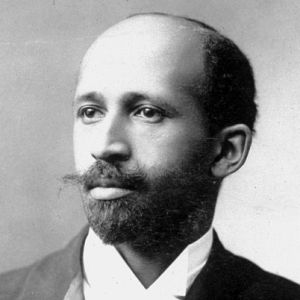
On W.E.B. Du Bois’s ‘The Princess Steel’ – his newly discovered sf/fantasy story

MTE5NTU2MzE2MjA2MDQwNTg3‘The Princess Steel’, a previously unpublished sf/fantasy story by W.E.B. Du Bois, can be found in the most recent issue of the PMLA (130.3: 819-829). It was written some time between 1908 and 1910, and there is an earlier draft called ‘The Megascope: A Tale of Tales’.

The earlier title acknowledges Du Bois’s self-conscious embedding of one tale within another within another. It also shows a clear sense of how the introduction of a science-fictional innovation (not really what Suvin means by the novum) functions as a narratological device to generate fictions. The Megascope shifts the story from one genre/diegesis into another and then into another – or, perhaps more accurately, revises the reader’s expectations of the story as it rewrites the rules of the world in which the story takes place.

‘The Princess Steel’ begins as an apparently realist story in contemporary New York, told with a certain wry humour, as the unnamed protagonist and his wife, in response to a newspaper advertisement, go to witness a scientific demonstration by the sociologist Professor Hannibal Johnson:

Now my wife and I were interested in Sociology; we had studied together at Chicago, so diligently indeed that we had just married and were spending our honeymoon in New York. … it certainly seemed very opportune to hear almost immediately upon our arrival of a great lecturer in Sociology albeit his name, to our chagrin, was new to us. (822)

To their even greater chagrin, Johnson is black (and initially they assume he must be the Professor’s servant). On reflection, however,

One would not for a moment have hesitated to call him a gentleman had it not been for his color. His voice, his manner, everything showed training and refinement. Naturally my wife stiffened and drew back and yet she felt me smiling and hated to acknowledge the failure of our expedition. (822)

This is an intriguing passage in that it is also the one at which we realise that the newly-weds are white. Their studies provide a clue to the likelihood of this, but it is only their assertion of the colour line that definitively places them on one side of it. By making it manifest in this way, Du Bois prepares the ground for a story that will use fantasy so as to imagine some of the determining forces of everyday life that many varieties of realism and naturalism, with their emphasis on surface detail, interpersonal relations and individual psychology, struggle to capture. Like naturalist Frank Norris’s incomplete trilogy of wheat (The Octopus (1901), The Pit (1903)), Du Bois’s first novel, The Quest of the Silver Fleece (1911), is an epic that attempts to map out the complex social relations of a single industry (for Du Bois, cotton); but even Norris, especially in his first novel, bows under the weight of the task and includes weirdly ecstatic visions, as if the real were too complex for mere realism. In this context, one cannot help but also recall the fantastical spirit that imbues Du Bois’s second novel, The Dark Princess (1928), especially when it draws closest to heavy industry in the stunning passage when protagonist Matthew Towns chucks it all in to become a manual labourer digging the subway tunnels:

Lakes and rivers flow … pouring from the hills down to the kitchen sinks with steady pulse beneath the iron street [and] great steel Genii, a hundred feet high, lumber blindly along at out neck and call to dig, lift, talk, push, weep, and swear [and us] houses sag, stagger, and reel … but …do not fall: we hold them, force them and prop them up [even as we] tak[e] away the foundations of the city and leav[e] it delicately swaying on air. (265, 266).

In ‘The Princess Steel’, however, Du Bois approaches the problem from the other side. His broadly realistic opening is just a frame for an exercise in the fantastic, using sf to access the allegorical as a means to draw out the unseen determinants of an exploitative patriarchal-colonial-capitalist modernity and contemporary social life.

Johnson’s library contains volume upon volume of The Great Chronicle – a record he discovered a quarter century earlier of the ‘everyday facts of life but kept with surprising accuracy by a Silent Brotherhood for 200 years’ (823). We learn no more about this surveillant order – perhaps for Du Bois an imaginative precursor to The Dark Princess’s secretive revolutionary Great Central Committee of Yellow, Brown and Black – but their copious records have enabled Johnson to develop the Megascope.

Rather than plunge into directly into allegory or deploy the kind of slippery kind transition into an alternative realm deployed in A Connecticut Yankee in King Arthur’s Court (1889) – I am insufficiently familiar with Du Bois’s biography to know whether he had read Mark Twain’s novel, but it does seem to me to lurk in the background of what is to come – Du Bois turns to scientific innovation, the very stuff of modernity, to investigate modernity. (Foucault scholars will be excited to learn that Du Bois begins with technologies of statistics and surveillance; Hegelians will have to wait a few moments longer for their fix.)

Professor Johnson first shows his visitors a mechanism by which a human deed can be represented in two dimensions on a ‘thin transparent film’ (823). Layering such films one on top of another produces a representation of the ‘history of these deeds in days and months and years’ (823) and, he explains, if

“these planes be curved about one center and reflected to and fro we get a curve of infinite curvings which is—”—he paused impressively—“which is the Law of Life.” (823)

He next reveals the ‘vast solid crystal globe’, ‘fifty feet in diameter’, on which he has spent twenty years plotting the curves of life; and for twenty years he has been thwarted in his quest for the ‘Great Curve … by curious counter-curves and shadow and crossing’ (823). This endless frustration has led him to hypothesise that

Human life is not alone on earth—there is an Over-life—nay—nay I mean nothing metaphysical or theological—I mean a social Over-life—a life of Over-men, Super men, not merely Captains of Industry but field marshalls of the Zeit-geist, who today are guiding the world events and dominating the lives of men. It is a Life so near ourselves that we think it is ourselves, and yet so vast that we vaguely identify it with the universe. (823)

And so he reveals the Megascope, with which he will reveal an Over-Man. First they see

the Curve of Steel—the sum of all the facts and quantities and times and lives that go to make Steel, that skeleton of the Modern World … the Spirit of the wonderful metal which is the center of our modern life, and the inner life of the Over-life that dominates this vast industry— (824)

I love this slightly awkward description of imaginary technology. It beautifully captures the extent to which all language – including and perhaps especially scientific language, for all its pretensions otherwise – is inherently and unavoidably metaphorical. Du Bois transition from more or less mundane descriptions of physical objects

with one more swinging of the lever there swept down before the window a great tube, like a great golden trumpet with the flare toward us and the mouth-piece pointed toward the glit[t]ering sphere; laced round it ran silken cords like coiled electric wire ending in handles, globes and collar like appendages (824)

to the heightened and elusive description of their purpose introduces an ineffable tone that eases the next generic switch.

The great tube’s window displays a vision of New York that transforms before the viewers. The landscape becoming apocalyptically fantastical as the view rushes towards Pittsburg, where steel mills rise like cyclopean castles or ‘the Mills of the Gods’ and between them move obscure and terrifying Things – the ‘Things of this New World, the World of Steel’ (824).

A giant knight emerges. He is the Lord of the Golden Way, a disembodied Voice explains, and then tells in some detail a cod-epic story – part medieval romance, part allegory. (It is only loosely allegorical – there is not the direct one-to-one correspondence between manifest and latent content insisted upon by allegory proper, so it might be more accurate to think of it as a symbolic story, but only so long as you then don’t fall into the trap of expecting each symbol to directly correspond to one specific symbolised thing in a clearly delineated overarching scheme (because that would be allegory proper, horribly reductive and maddeningly dull).)

The Over-Man Sir Guess of Londonton captures the Witch Knowal – the wife of the ogre Evilhood – and she tells him of ‘the dark Queen of the Iron Isles—she that of old came out of Africa’ (825) and who is held captive in the Pits of Pittsburg, along with her enchanted daughter, Princess Steel, fathered by the Sun-God . The Lord of the Golden Way agrees to help Guess rescue the Princess Steel from her enchantment in exchange for her treasure. This leads to inevitable conflict. Guess promptly falls in love with the freed Princess, but the Lord realises her treasure resides in her body:

her hair is silver and her eyes are golden, and … mayhap there be jewels crusted on her heart. (828)

Guess is defeated, and as the Princess watches over her fallen lover, the Lord of the Golden Way begins to spin strands of her hair, which is the steel upon which the modern world is built. The San Franciso and Valparaiso earthquakes of 1906 are signs of her rage at the Lord of the Golden Way and she warns him

I watch and ward above my sleeping Lord till he awake and then woe World! when I shake my curls a-loose. (829)

On this note – presaging the dire consequences of industrial modernity, of capitalist and colonial and gendered exploitation, which include the violent overthrow of such a world – the vision ends.

The wife has seen none of this because, a little troublingly, the megascope ‘was not tuned delicately enough for her’ (829). (Even in The Dark Princess, Du Bois tends to push Princess Kautilya, one of the key members of the revolutionary Committee, into domestic roles.)

The couple make a hasty exit.

In the PMLA, ‘The Princess Steel’ is introduced by Britt Rusert and Adrienne Brown, who are currently co-editing a collection of Du Bois’s sf, fantasy, mystery and crime fiction. The story is locked behind the journal’s pay-wall – but there are bound to be people out there whose universities have institutional access.