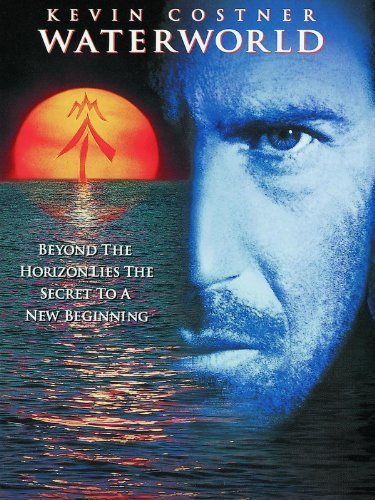
 and so anyway it turns out the best thing about Waterworld (1995) is not that it is intermittently far less terrible than I remember it being, though far too intermittently for me to consider rewatching The Postman (1997), the other Kevin Costner post-apocalyptic epic I also saw at the cinema and swore never to watch again, but that Joss Whedon, in his seven weeks of script-doctoring the movie, somehow managed to not ascribe Costner’s character’s gills, webbed toes, Man from Atlantis swimming style, assorted other almost-superpowers and ambiguous motivations to his inability to be a mother…
Category: One-sentence reviews
The Ultimate Warrior (Robert Clouse 1975)
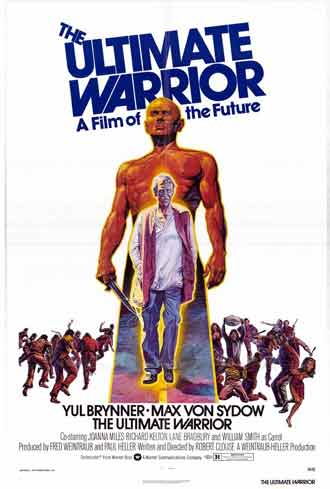 and so anyway it turns out the best thing about The Ultimate Warrior (1975) is not the moment when a young mother, safe within Max Von Sydow’s fortified compound, decides to sneak out into the violent gang-filled streets of post-apocalyptic Manhattan in search of powdered milk rumoured to be hidden in a nearby derelict bakery, nor is it her decision that the best way to do so is to leave via the front door (er, portcullis) with her given-to-squalling infant on her back, but her decision that the best time to do so is under the cover of broad daylight…
Oblivion (Joseph Kosinski 2013)
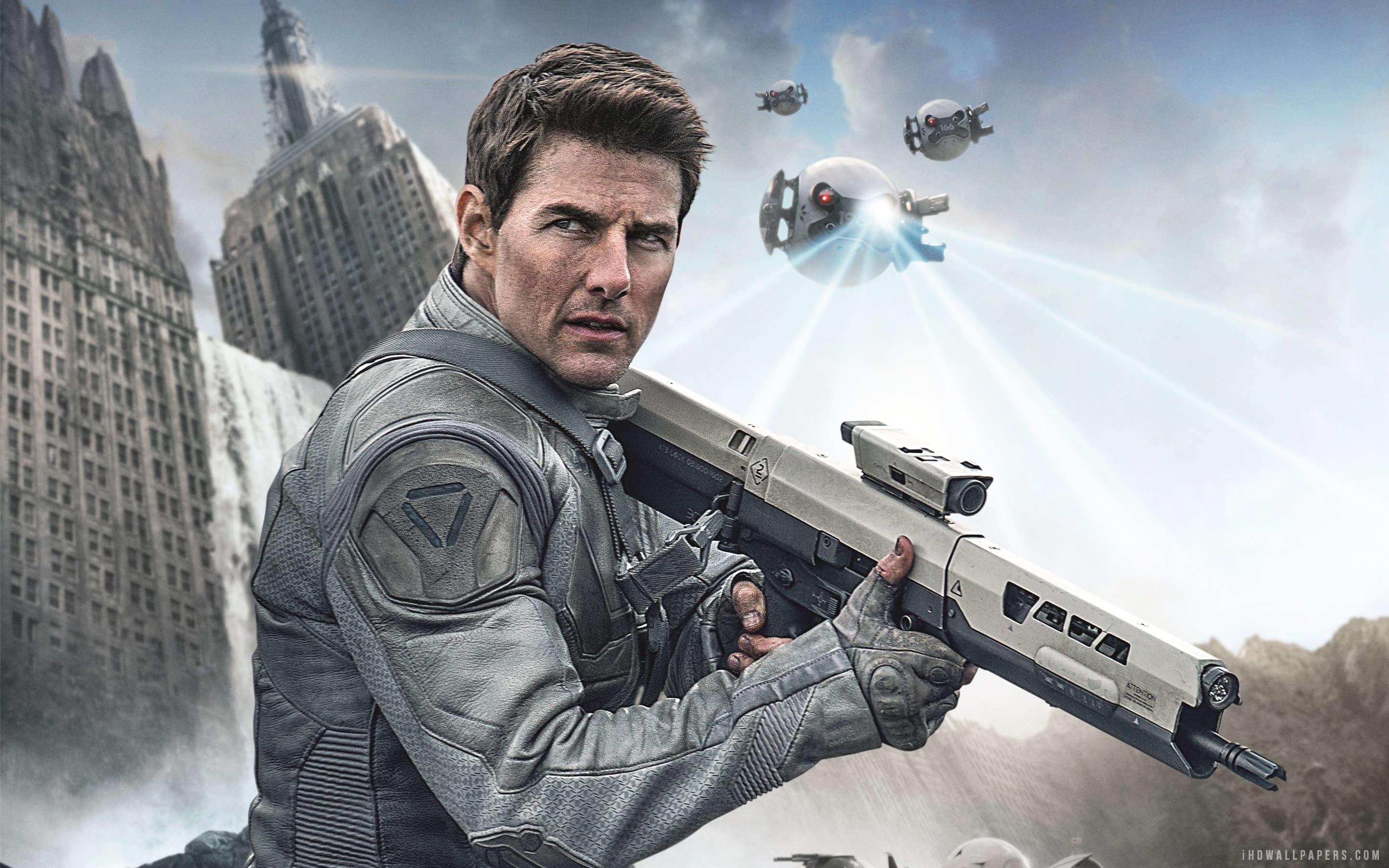 and so anyway it turns out the best thing about Oblivion (2013), a film which patches together bits from every other science fiction film ever, is the way in which flying spherical robot drones manage to combine 2001: A Space Odyssey’s shuttle pods with RoboCop’s ED209 and with The Black Hole’s V.I.N.CENT and Old Bob, though sadly this also brings us to the worst thing about the movie, the way in which a bunch of cowardly philistine corporate suits lacking Joseph Kosinki’s genius and vision refused to have the drones voiced by Windsor Davies, who voiced Sergeant Major Zero in the key sf text of the late twentieth-century, Terrahawks…
The Great Gatsby (Baz Luhrmann 2013)
 and so anyway it turns out that the best thing about The Great Gatsby (2013) is not the way in which it continues the proud tradition, initiated by Jack Clayton and Francis Ford Coppola, of taking longer to watch than it would to read the novel, nor is it the film’s studied visuals that take you back to the 1980s and 1990s and to Aki Kaurismäki’s slyly static camera, nor is it the way the austere mise-en-scene recalls the powerful minimalism of Carl Theodore Dreyer in the 1940s, 1950s and 1960s, but the sheer fact that it is at long last finally fucking over now and I can go to bed…
The Reef (Andrew Traucki 2010)
 and so anyway it turns out the best thing about The Reef (2010), a based-on-a-true-story shark attack movie, is the side betting on the shark’s or sharks’ (it remains unclear) taste in television when it/they eventually show up; will it/they go for the actors who’ve been in Neighbours first, or those who’ve been in Home Away, or the one who has been in both, or the one who has been in neither but was one of McLeod’s Daughters?
Mutant Chronicles (Simon Hunter 2008)
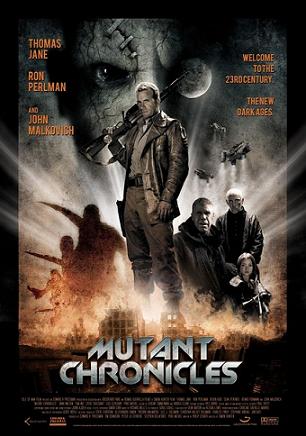 and so anyway it turns out that the best thing about Mutant Chronicles (2008) is not Ron Perlman’s Oirish accent (to be sure), nor is it the film’s unwillingness to leave any cliché unturned in the pursuit of mediocrity; no, the best thing about Mutant Chronicles is Sean Pertwee, for it is one of the fundamental laws of cinema that, regardless of the thing he is in, Sean Pertwee will be the best thing in the thing he is in…and that he will die more horribly and with greater inevitability than Sean Bean…
Hours (Eric Heisserer 2013)
 and so anyway it turns out that the best thing about Hours (2013) – a film in which Paul Walker must hand crank a battery recharger every 3 minutes or less for several days in order to keep his prematurely-born daughter alive in a ventilator while Hurricane Katrina and its aftermath rage outside the deserted hospital – is the bit when Vin Diesel, sporting a prosthetic nose that makes him look like Nicole Kidman, rocks up in an old Detroit muscle car fitted out as a hovercraft to drop off James Franco, who races into the hospital to save father and infant by gnawing off his own arm, though I confess my eyelids did get a little heavy about seventy-five minutes into the movie and so I can’t swear this is exactly how it ended…
Made in Dagenham (Nigel Cole 2010)
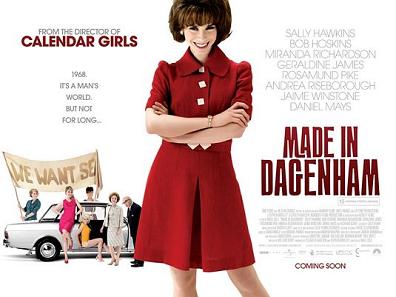 and so anyway it turns out the best thing about Made in Dagenham is not the fact that the film repeatedly has to cgi British industry into the background because there is so little of it actually left (and the destruction of working class lives and communities represented by those weightless images is horrifyingly sad, unlike this tale of plucky proletarian feminists bringing Ford to it knees) but the quiet way in which Bob Hoskins, what a lovely chap, sort of invents second-wave liberal feminism when none of the women are looking…
Uncertainty (Scott McGehee and David Siegel 2009)
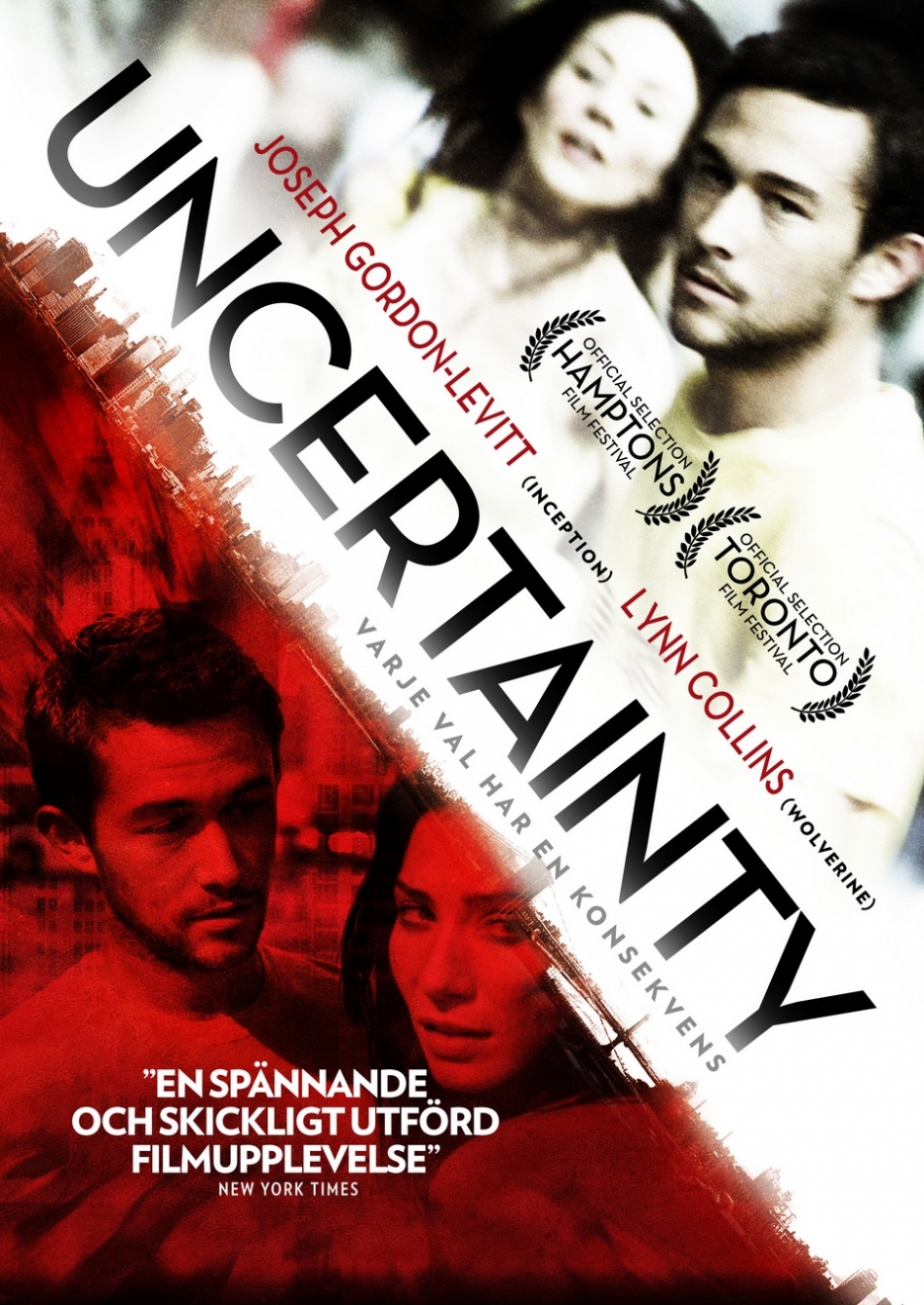 and so anyway it turns out that the best thing about Uncertainty (2009) is, as you would expect from the writers/directors of Suture (1993) and The Deep End (2002), its bold experimentalism – not so much with the narrative structure that attempts to construct the perfect date movie by intertwining two different versions of the same day depending on whether the protagonists decide to go to Brooklyn or Manhahattan and, respectively, into a family melodrama or a conspiracy thriller, while also confirming to each gendered-genre viewer that the other gendered-genre viewer’s preference is lame, but with the valiant – and entirely successful attempt – to outdo Stephen Sommers’ similar effort in G.I. Joe: The Rise of Cobra (2009) to make a film so meh that not even the presence of Joseph Gordon-Levitt (doubled!) can save it…
The Wicker Tree (Robin Hardy 2011)
 and so anyway it turns out that the best thing about The Wicker Tree (2011) is not as I initially thought its ability to transform those memories of the Nicolas Cage Wicker Man remake into fond memories of the Nicolas Cage Wicker Man remake, but its ability to make you realise that they were always fond memories…
 Mark Bould