120 years of sf film, part one: 1895-1914 (links galore!)

2015 marks the 120th anniversary of sf cinema. This is the first part of a year-by-year list of films I’d recommend (not always for the same reasons), and there are a few years where there is little to recommend for any reason.

1895
La charcuterie mécanique/The Mechanical Butcher (Louis Lumière)

1897
L’hallucination de l’alchemiste/An Hallucinated Alchemist (Georges Méliès)
Making Sausages (George A. Smith)

1898
La Lune á une mètre/The Astronomer’s Dream (Georges Méliès)

1899
Un bon lit/A Midnight Episode (Georges Méliès) – first giant bug movie, sort of

1900
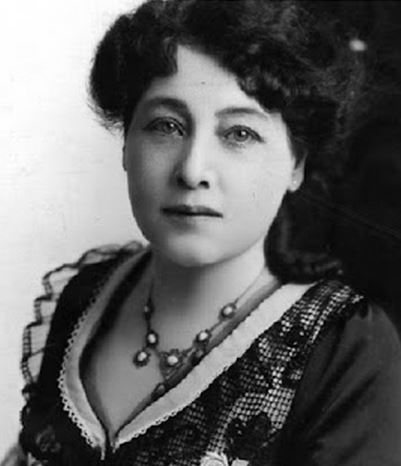
Chapellerie et charcuterie mécanique/Automated Hat-maker and Sausage-Grinder (Alice Guy-Blaché) – the first sf film made by a woman

1901
L’Homme à la Tête en Caoutchouc/The Man with the Rubber Head (Georges Méliès)
An Over Incubated Baby (Walter R. Booth)

1902
Le voyage dans la lune/A Trip to the Moon (Georges Méliès)
Le Voyage de Gulliver à Lilliput et chez les géants/Gulliver’s Travels Among the Lilliputians and the Giants (Georges Méliès)

1904
Le voyage à travers l’impossible/The Voyage Across the Impossible (Georges Méliès)
Dog Factory (Edwin S. Porter)

1905
Le Raid Paris-Monte Carlo en deux heures/An Adventurous Automobile Trip (Georges Méliès)

1906
The ‘?’ Motorist (Walter R. Booth)
Rescued in Mid-Air (Percy Stow)

1907 Le dirigeable fantastique/The Inventor Crazybrains and his Wonderful Airship (Georges Méliès)
Deux cent milles sous les mers/Under the Seas (Georges Méliès) – has almost nothing to do with the Jules Verne novel

1908
Photographie électrique à distance/Long Distance Wireless Photography (Georges Méliès)
El Hotel eléctrico (Segundo de Chomón)
Excursion dans la lune/Excursion to the Moon (Segundo de Chomón) – Méliès knock-off
L’Aspirateur/The Vacuum Cleaner (Segundo de Chomón)

1909
The Airship Destroyer (Walter R. Booth)
Hydrothérapie fantastique (Georges Méliès)
Le voleur invisible (Segundo de Chomón)

1910
Frankenstein (J. Searle Dawley)
The Aerial Submarine (Walter R. Booth)
Matrimonio interplanetario/A Marriage in the Moon (Yambo (Enrico Novelli))

1911
The Automatic Motorist (Walter R. Booth)

1912
À la conquête du pole/The Conquest of the Pole (Georges Méliès)
Onésime horloger/Onesime, Clockmaker (Jean Durand)

1913
A Message from Mars (J. Wallet Waller)

1914
Der Golem (Heinrich Galeen)

Part two, 1915-1934

The first sf film by a woman

Alice Guy-Blaché
Alice Guy-Blaché

I have always semi-relied on Phil Hardy’s Aurum Film Encyclopedia: Science Fiction for a quick guide to early sf films, beginning with the Louis Lumiere’s La charcuterie mécanique/The Mechanical Butcher from 1895. I have also for year known about Alice Guy-Blaché, the first woman filmmaker and the first woman to own and run a studio, who made over a thousand films between 1896 and 1920 (about a third of which survive) and who until recently has been consistently written out of the history of cinema. Being a little slow-witted, it never occurred to me to crash these things into each other to see what would emerge, and yesterday purely by chance while looking for something else entirely I ran into Chapellerie et charcuterie mécanique/Automated Hat-maker and Sausage-Grinder from 1900. It is one of a number of films that play on the same idea as the La charcuterie mécanique, such as George A. Smith’s Making Sausages (1897) and Edwin S. Porter’s Dog Factory (1904). It is possible that one of Alice Guy-Blaché’s earlier films could be considered science-fictional, but Chez le magnétiseur/At the Hypnotist’s (1897) pushes even my broad definition and I don’t think L’utilité des rayons x (1898) has survived – it sounds promising but I’ve yet to find any information on it.

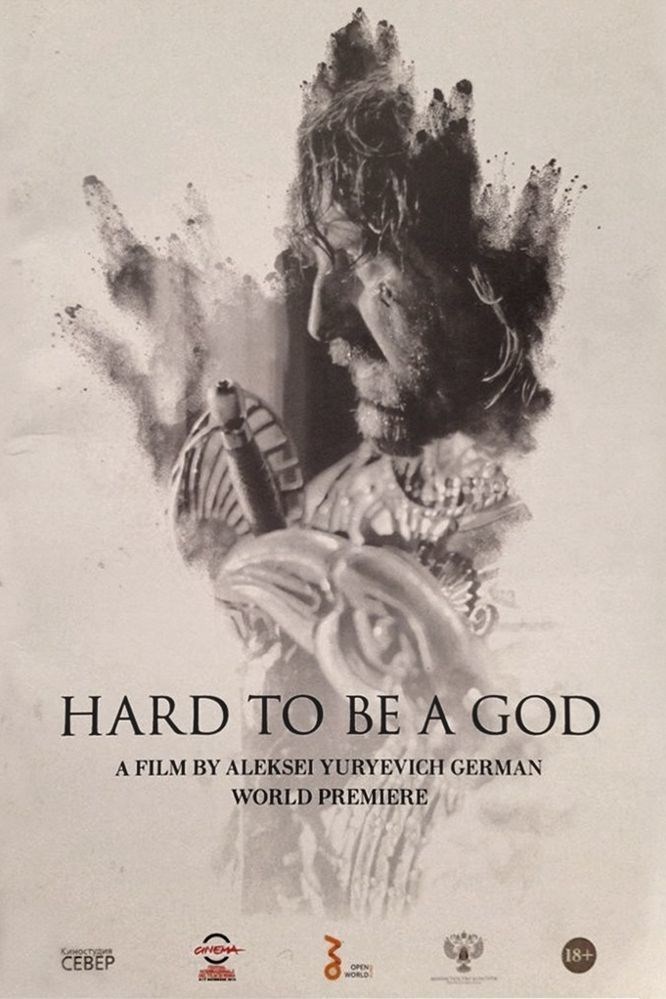
Hard to Be a God (German 2013)

its-hard-to-be-a-god-trudno-byt-bogom.28440Hard to Be a God takes the bare armature of Boris and Arkady Strugatsky’s 1964 novel of the same name – human observers embedded among the population of an alien world, which resembles the terrestrial middle ages and in which the first traces of a Renaissance are being brutally expunged – and does something remarkable with it.

At times it reminded me of Andrei Rublev, of Aguirre, Wrath of God, of Seven Samurai, of Come and See,  of The Seventh Seal or The Virgin Spring, of Tetsuo, of Erasherhead, of Jodorowsky, of A Field in England, of Monty Python and the Holy Grail. And yet it is not remotely like them, or like anything else.

As early as the 1960s, Aleksei German was the Strugatskys’ director of choice, and it only took him half a century to make the film. His earliest attempt was halted when Soviet forces invaded Czechoslovakia in 1968, since a film about a fledgling Renaissance being crushed by an invading totalitarian power was deemed untimely. (German was also briefly involved in Peter Fleischmann’s disastrous 1989 adaptation.) In 2000, he finally began what would become a six-year-long shoot (partly in the Czech Republic), but he died in 2013, leaving his filmmaker son, Aleksei German, Jr., to finalise the edit and the soundtrack.

hardtobe6The Strugatskys’ often comic tale poses a series of ethical questions around the (im)possibility of humanitarian intervention akin to those with which Star Trek’s prime directive narratives feebly wrestle. Are there circumstances in which violence can be used to cut short the violence of others? Is it more cruel passively to observe than it is to step in with an overwhelming force that will turn a society on its head? What is the ethical cost to the observer/intervener? The Strugatsky’s novel can also be understood as an expression of anxiety about the re-emergence of Stalinism as the Khruschev-era Thaw drew to a close.

German transforms this material into something marvellously different.

A black-and-white world of rain and mud and shit and piss and snot and blood. Of raw sewage and rotting carcasses. Of grotesquery and deformity. Of violence and death. Of the idiocy, as Marx might say, of feudal life.

istoriya-arkanarskoy-rezni-aleksei-german-ultimo-film-01The frame is frequently crowded. Depth of field is constantly destabilised. Fog and smoke and pouring rain obscure the distinction between earth and sky, clouding out the horizon and disrupting perspective. Objects repeatedly cross the frame inches from the camera, blocking our view of what we might otherwise assume to be the subjects of the film. Characters repeatedly look straight at the camera, not to break the fourth wall but as if it is not there. Or as if the camera cannot be permitted to be in the world without being part of the world; and in this the camera is like the terrestrial observers. They are not permitted to stay, like a Federation away team, separate from the world they visit. They are immersed in it. Mired. And so are we.

It is like reading Rabelais, or reading Bakhtin’s reading of him; and in its relentlessness, Hard to Be a God is really funny.

The few Anglophone reviews of the film I’ve seen complain about the absence of a clear plot. But narrative obliquity is the point. Life doesn’t have a plot or narrative arcs. We are just in the middle of all this stuff going on all the time. And it is comical and absurd and messy and always in our faces.

If I’d been watching it alone, I’d have turned off the not-that-helpful subtitles.

maxresdefaultHard to be a God is obsessed with the odours of the world it can only disclose  indirectly, and with the textures of the world. It continually uses the limitations of the medium – the gulf between the tactile and the visual – to undercut the fiction of the neutral, uninvolved observer. Despite the often troubling content of the image, the pristine cinematography is often too beautiful to bear. Don Remata’s spotless white clothes and handkerchieves function in a similar manner – in their absurdity, they are reminders of the full and unavoidable intersubjectivity of being in the world.

Hard to Be a God might not be your cup of tea. That is your loss.

The robot dinosaurs of Bristol

During the Triassic period, the parts of Pangaea which now constitute Britain drifted from the equator to more or less its current location. But with the break-up of the prehistoric supercontinent, ‘Britain’, which had spent much of the Permian underwater, dropped below sea-level once more. And although that is where it spent most of the Jurassic and Cretaceous, there were periods when the land was above sea-level, some of which lasted for as many as twenty million years.

And during those dry years, dinosaurs walked the land. Not just any dinosaurs – but, as recent fossil evidence reveals, robot dinosaurs!

dino1

dino2

dino3

dino4


Out of the Unknown: ‘The Fox and the Forest’ BBC2 22 November 1965

1630
Ray Bradbury

This is the first episode not to have survived (apart from its credits sequence). It is an adaptation of Ray Bradbury’s 1950 story, originally published in Collier’s as ‘To the Future’ but collected in The Illustrated Man (1951) as ‘The Fox and the Forest’.

By 1965, Bradbury was already probably the sf writer most adapted for television, and he had begun to branch out into film and television writing: he wrote the screenplay for Moby Dick OOTU Fox LISTING(Huston 1956) and, uncredited, the narration for King of Kings (Ray 1961); and for Alfred Hitchcock Presents (1955-62) he adapted stories by himself and others and wrote an original script, too. This familiarity with the industry might explain why, in addition to the $1000 he was paid for rights to the story, his contract stipulated he would be paid the same every time it was repeated (typically, authors received only 50% for reruns). It might also explain why it was never repeated and thus, maybe, how it did not survive.

It was directed by Robin Midgley, primarily a stage director, although he had already notched up a number of television credits, including several episodes of Z Cars.

Irene Shubik initially commissioned a 75-minute adaptation for Story Parade, but struggled to find the right writer. It was offered to Ken Taylor, and then to Ilona Ference, who turned in an unusable script that had failed to take account of the economics and logistics of shooting a television drama. Next, Terry Nation produced a script that Shubik found vulgar. It was offered to Michael Simpson to revise, but he turned it down. Finally, Meade Roberts, who scripted the previous week’s ‘Sucker Bait’, shortened the teleplay to Out of the Unknown’s 60-minute run time and rewrote Nation’s dialogue.

Bradbury’s name was undoubtedly a draw, and Shubik even at one point considered ‘The Fox and the Forest’ as a potential season opener, but it is difficult to work out why she thought there was an hour of television drama in Bradbury’s story (let alone 75 minutes).

130438The story opens in Mexico in 1938. A tourist couple, William and Susan Travis, seem a little disoriented by it all. Which is not surprising because, it is quickly revealed, they are actually Ann and Roger Kristen, on the lam from an unbearable future. They were born in the middle of the 22nd century,

in a world that was evil. A world that was like a great black ship pulling away from the shore of sanity and civilization, roaring its black horn in the night, taking two billion people with it, whether they wanted to go or not, to death, to fall over the edge of the earth and the sea into radioactive flame and madness. (189)

A time-travel technology has been developed that allows inhabitants of this dismal world of the permanent warfare state to take holidays in the past. Ann and Roger, determined not to return, have gone into hiding. But a Searcher is on their trail. They evade him, and walk right into the rather obvious twist/trap laid for them.

43437By the standards of almost any other sf writer of the period, it is pretty slim. The opening is quite atmospheric, if in that rather vague way Bradbury has; the future world from which the protagonists are fleeing is every bit as vague, just a concatenation of phrases from Bradbury’s usual shorthand dystopianism (nuclear threat, totalitarianism, book-burning); the cat-and-mouse thriller element is not particularly suspenseful, and the action scenes no less perfunctory.  Apparently, the episode follows the story rather closely, but extends it by adding on an opening section in which the protagonists kill the first Searcher sent to track them down. According to the Guardian, the opening quarter of an hour was difficult to follow, while Television Today suggested it was ‘one of the most convincing produced plays in the series’ (Ward 110).

A pre-Alf Garnett Warren Mitchell is in it.

Previous episode, ‘Sucker Bait
Next episode, ‘Andover and the Android

Sources
Ray Bradbury, ‘The Fox and the Forest’, The Illustrated Man (London: Harper Voyager) 184-208.
Mark Ward, Out of the Unknown: A Guide to the Legendary Series (Bristol: Kaleidoscope, 2004)

The first African science fiction short story? Leonard Flemming’s ‘And So It Came To Pass’ (full text)

I’ve had various queries about accessing some of the texts I mention in African SF 101; so here is the complete text of the earliest African sf short story I have been able to locate so far. It appeared in Flemming’s collection, A Crop of Chaff (Pietermaritzburg: Natal Witness 1924) pp. 26-31, which had an introduction by Jan Smuts. There was a second edition the following year, but neither it nor the story seem to have been reprinted since. As far as I know, it is out of copyright.

[26]

AND SO IT CAME TO PASS

A distinguished scientist has made the startling statement that mankind will soon be extinct – that there will not be a single human being left in any part of the world. I was in the middle of my tree-planting when I read this, and it almost made me decide to stop planting trees altogether. What’s the use of it all, I thought, if mankind is to be blotted out of existence soon? But I went on with the job, reckoning that they’d be useful for the monkeys to climb up, anyhow.

No human beings on earth . . . nothing but wild animals . . . . wild life.

*            *            *            *

One day in the future, something like this will be written about the past:-

“The last historians of that period state that the beginning of the end of mankind came when the White races were completely exterminated and the Black and Yellow races ruled.

“Of events in other parts of the world outside South Africa this article is not dealing. The over-running of Europe, Australia, and America by Coloured people, and the total annihilation of the

[27]

Whites is to be read of elsewhere; and though the exact year of the last sign of a White man in South Africa is not certain – some stating it to be 150 years after a fight in Europe in 1914-18; and others believing it to be 250 years after, there is sufficient evidence to show that towards the end of the era of man, the Native races in that country made short work of their one-time White rulers.

“From the meagre information available it would seem that events moved along smoothly enough, even during that epoch, when 50 per cent. of the members of Parliament were Blacks; but when the Native races reached that point where they outnumbered the Whites by 47 to 1, it is said that the White races made a final desperate effort to pull together to save themselves and the country.

“This attempt at unity seems to have failed. The Bill for the Employment of Poor Whites on the Mars air route was apparently the stumbling block. That all the Whites were in a poor way at this time does not seem to have occurred to the majority of the politicians, but it is evident that the pushing of this Bill meant a certain number of votes to one section of the White members of Parliament; and the Native menace, which throughout the years had been put aside in favour of Bills like this, very quietly and quickly sprang into a terrible reality. . . .

“One reads of the marvellous efficiency of the Blacks, their organisation and endurance – the overthrow of the Whites – the Black monarchy – the well-trained armies of countless millions, and so, in the eternal efflux of time, we find history repeating itself,

[28]

and discords and dissension taking place amongst the now ruling Black race, eventually terminating in the Great Black War.

“Before this, conditions, compared to the previous “White” era, appear somewhat extraordinary. Courts were abolished, large distilleries erected, nine-tenths of the arable land of the Union was under Kaffir corn, and every riem had disappeared as if by magic.

“Those whom the Gods wish to destroy they first make mad. Practically the whole of mankind was made by 1924. There is a mass of evidence on the truth of this statement (see Vol. VI., pages 47 to 598). One of the most famous and historical instances, of course, was the objection, by a section of the Whites, to the initiation of a broad, bold, emigration scheme, which might quite easily have been the salvation of South Africa.

“Under the rule of the Blacks, Dingaan’s Day became a day of mourning with trained weepers in every market place, and a great annual festival appears to have taken place in the Government Buildings, Pretoria, on July 27, the date of the massacre of the last White man in South Africa – a one-time prohibitionist member of Parliament who was found hiding in an ant-bear hole.”

It was about this time that I was given a day’s leave from – from the place where I was spending eternity. An excellent arrangement this, giving odd residents 24 hours’ leave on earth at the end of a century or two.

I had chosen a day in midsummer as being one in which I stood less chance of catching cold. A

[29]

private Glidoplane had been put at my disposal – motors had long been obsolete.

I landed in Bloemfontein eventually, feeling very depressed at the sight of thousands of black, and brown, and yellow faces, when, to my joy, I caught sight of a white face inside a funny-looking sort of hut, which on closer examination turned out to be one of the old trackless tramcars.

The man inside proved to be a descendant of my old friend Brones. He wasn’t quite white, but at least he was not so “nativey” as the rest of the inhabitants.

Brones and Mrs. Brones were employed by a Mr. Mopilo Thlatyane as cook and gardener.

“It’s a good job as jobs go for one whose ancestors were white,” said Brones. He talked English with difficulty and with a strong accent of Buzuluto – the universal language now – a sort of native Esperanto.

“Do you mean to say that you and Mrs. Brones are working for a native family?”

“We are,” said Brones, “and very glad of the job too; we have this old tramcar for a house, we spent our spare time during the first six months screwing up the loose nuts, we get enough to eat, Thlatyane gives me his old boots and trousers, and Mrs. Thlatyane gives the wife quite a number of old dresses and things. We’re alright. The people I am sorry for are the descendants of those who were connected with the Police Courts – they have a fiendish time of it – always being run in for something or other and tried by the King – of course you know we have

[30]

a monarchy now with a black King at the head. Only yesterday there was a strong leading article suggesting that the authorities go in more for the death penalty with a lingering kind of death.”

“This particular writer is a chap named P. Pombulo Menletyohae – his grandfather’s name was ‘Sixpence,’ I believe. Of course you know that sending these chaps to English Universities was the beginning of the mischief.”

I listened in horror to the details of life as it was to-day. The native police force was kept solely to deal with the descendants of the Whites. Natives were rarely punished. Sheep stealing was encouraged in order that the old traditional cunning and characteristics of the race should not be entirely lost.

“When a native stole a sheep he at once reported the matter to the police, who, after, satisfying themselves that it was a genuine theft, gave the thief a metal disc. At the end of the year the native who had stolen most sheep was given a Diploma of Merit and a sum of money.”

It was with a feeling of relief that I returned to – to where I was spending eternity. It may be warm, but at least my own race are there and – one does feel safe. . . . .

There came in the course of time the inevitable. Jealousies, spite, hatred, disruption, disunion. Just as these had in another era undermined the power of the White man so did they begin to eat in the power of the Black.

The split occurred when a section of the people headed by one Bolohlomo, a noted psychologist of his

[31]

day, started the “No Education” campaign. It was one of the greatest reforms for the betterment of mankind that had ever been known.

They quoted the downfall of the White man as their chief argument for the abolition of education. “If that is where education brings you,” they said, “we don’t want it.”

So came into being the Pro and the Anti-Education parties. There followed feuds and fights and wars until there came the culminating Great War of the Blacks, in which was used every diabolical means of destruction known to science. Until . . . . man existed no more . . . . there was not one human being on earth . . . . as it was in the beginning. . . .

*            *            *            *

A cold wind swept its way around the world. It was the poor old earth singing, “Thank goodness – relief at last.”

Mutant Chronicles (Simon Hunter 2008)

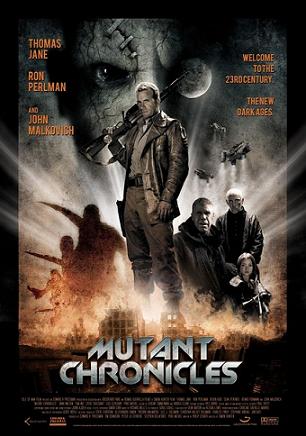
The_Mutant_Chroniclesand so anyway it turns out that the best thing about Mutant Chronicles (2008) is not Ron Perlman’s Oirish accent (to be sure), nor is it the film’s unwillingness to leave any cliché unturned in the pursuit of mediocrity; no, the best thing about Mutant Chronicles is Sean Pertwee, for it is one of the fundamental laws of cinema that, regardless of the thing he is in, Sean Pertwee will be the best thing in the thing he is in…and that he will die more horribly and with greater inevitability than Sean Bean…

Out of the Unknown: ‘Sucker Bait’ (15 November 1965)

05dd3gnThis is the one with the inestimable Burt Kwouk – not the first actor of colour in the series, but the first one with a substantial role. Called upon, it seems, whenever British television or film needed a Chinese, a Japanese, masonan unspecified oriental, he is part of the furniture of my life; I suspect I will be devastated – not Elisabeth Sladen or James Garner devastated, but devastated nonetheless – when he dies. (I seem to have always known that he was born in Warrington, but what I did not know was that he was raised in Shanghai, his family only returning to Britain during the Chinese revolution; in my mind’s eye, I see him in the streets of thirties Shanghai, running into a young JG Ballard –  only to appear 50 years later as Mr Chen in Empire of the Sun (1987).)

This is also the one – actually the first of three – directed by Naomi Capon, one of just two female directors at the BBC at the time (the other, Paddy Russell, directed the previous episode, ‘Come Buttercup, Come Daisy, Come…’ .) British-born, Capon worked on American television before returning to the UK to commence, in 1951, a twenty-year career as a director and producer, almost exclusively of drama. She also directed ‘The World in Silence’ (17 November 1966), based on John Rankine’s 1966 ‘Six Cubed Plus One’, and ‘The Prophet’ (1 January 1967), based on Asimov’s ‘Reason’ (1941), one of the stories collected in I, Robot (1950). Capon’s set designer has clearly learned the dangers, so evident in ‘Time in Advance’, of signifying futurity through shiny surfaces. If the spaceship interiors are not quite as impressive as those in ‘The Counterfeit Man’, the multilevel set becomes impressive when you realise it contains an actual elevator, rather than trickery, to move between levels (although the bridge set then looks quite silly because it involves climbing up ladders to reach the door). Videoscreens and oscilloscopes abound, accompanied by some groovy radiophonics.

After ‘The Dead Past’, it is the second of six episodes based on stories by Isaac Asimov. It was adapted by Meade Roberts from Asimov’s 1954 Astounding story, ‘Sucker Bait’, collected in The Martian Way and Other Stories in 1955 (published in the UK by Dennis Dobson in 1964). The adaptation was originally commissioned as a 75-minute drama, presumably for Story Parade. (Roberts also adapted the following episode from Ray Bradbury’s ‘The Fox and the Forest’ (1950).)

OOTU Sucker bait articleAs with ‘The Dead Past’, this is a story built around the problem of specialisation – the idea that as knowledge develops, scientists will increasingly specialise, leading to a potential hazardous compartmentalisation of information and ideas. In Asimov’s future – distant enough in time for humanity to have colonised 83,200 worlds but still be feeling population pressures, and for the ‘2755 para-measles epidemic’ to be an historical event akin to ‘the 1918 influenza epidemic, and the Black Death’ (163) – specialisation has reached the point that it has become necessary to institute an experimental method of education in order to produce individuals capable of remembering every fact and idea they encounter, regardless of discipline. The teenage Mark Annuncio is one of the first hundred such ‘Mnemonics’.

The Trojan planet Troas, which is in a stable orbit around the differently coloured binary stars Lagrange I and II, was long ago the site of attempted colonisation. But after the entire colony, more than 1300 people, died, apparently of a disease, the world was forgotten until Mark discovered an account of it in the archives. He is included as part of the scientific expedition to investigate the world, to find out what destroyed the colony and whether it is habitable by humans. The expedition consists of single scientists from individual disciplines who accept without question each others’ views – one simply does not query specialists in different disciplines. Character names suggest that they are rather a multicultural bunch, but the only exception to their whiteness seems to be

Miguel Antonio Rodriguez y Lopez (microbiologist; small, tawny, with intensely black hair, which he wore rather long, and with a reputation, which he did nothing to discourage, of being a Latin in the grand style as far as ladies were concerned). (156)

The crew of the spaceship, however, know nothing of the mission, and knowledge of the failed colony and the possibility of fatal disease is deliberately kept from them.

out-of-the-unknown-sucker-bait-1965-001-men-and-telescopes_0The story chugs along, readable enough but distinctly minor Asimov, until Mark, ostracised by the specialists, must take desperate action to save the expedition from the same fate that befell the colony – something only he can discern, thanks to his disregard for disciplinary boundaries and his amazing powers of recall (and his chance reading of an old book some years before).

The dilemma Mark faces once he solves the mystery is very Asimovian – like those faced by robots and computers who know what is best for humanity, but must proceed indirectly and find ways to circumvent the rules constraining their action. Mark’s solution is a little surprising since, like the Book People of Bradbury’s Fahrenheit 451 (1953), he is such a curiously passive figure. If he is in some way intended to serve as an argument in favour of generalists, of inter- and trans-disciplinary thinkers and processes, of more efficient and effective communication between disciplines, it might have been an idea to allow him some kind of creative or imaginative role, rather than casting him as a cross between a database, a search-engine and a sulky teen.

Indeed, in the adaptation, Mark (Clive Endersby) mostly comes across as an argument for sending sulky teens to their rooms without any dinner.

The main point of interest in Asimov’s story comes in the way in which it can be used to map claims for the relationship between science and sf. There are various infodumps, showing off the time Asimov has put into designing Troas as a plausible planet, including two pages (153-155) in which

Boris Vernadsky (geochemist; dark eyebrows, wide mouth, broad face, and with an inveterate tendency to polka-dot shirts and magnetic clip-ons in red plastic) (133)

belabours the atmospheric composition. Most of the information is unnecessary, other than that it situates the story within the hard-sf norms developed at Astounding and provides both a plausible framework and essential camouflaging for a latter tidbit of information, the relevance of which only Mark can realise. I honestly cannot tell whether the clue that is thus slipped into the story – and hidden by it – was ever enough for a reader to beat Mark to the solution. (It involves beryllium, which is just not used in this future universe, although the reasons for abandoning it have been long forgotten; they would perhaps have been quite fresh in the minds of many of the story’s early readers.)

HG Wells, Gwyneth Jones, China Miéville and others have argued that the relationship between sf and science does not depend upon the accuracy of the scientific knowledge being drawn upon, but on the persuasiveness with which scientific-sounding discourse can be deployed and manipulated by the writer (in Carl Freedman’s terms, sf is not about cognition per se, but about the creation of particular kinds of cognition effect). And of course this relationship is always a relative, not an absolute, one. Different authors and readers bring different levels and kinds of knowledge, different desires to persuade and different desires to be adequately persuaded. The nature and degree of that adequacy shifts depending on circumstances, not least because sf is far from monolithic. Claiming superiority for sf stories because of their greater scientificness is merely an attempt to impose a particular hierarchy of taste. Often reversing the polarities can be perfectly adequate and is not at all necessarily inferior. The most intriguing sequence in Asimov’s story is concerned with these ideas.

In an attempt to persuade Cimon, the mission commander, to allow Mark to accompany the expedition onto the surface of Troas, Dr Sheffield attempts blackmail. This involves using the professional protocols around specialisms so as, over the course of several pages, to trick Cimon, and then threatening to release an illicit recording of him making a fool of himself. Going into the scene, we know nothing of this scheme.

Sheffield suggests that the combined effect of the planet’s two suns – one of which casts blue-green shadows, the other red-orange – and of the light reflected from its moon could

exert a deleterious effect on mental stability [resulting in] chromopsychosis [that] could reach a fatal level by inducing hypertrophy of the trinitarian follicles, with consequent cerebric catatonia. … red-green chromopsychosis has been recorded to exhibit itself first as a psychogenic respiratory infection. … Surely you must be noticing just a small inflammation of the mucus membrane of the nose, a slight itching in the throat. Nothing painful yet, I imagine. Have you been coughing or sneezing? It is a little hard to swallow? (174-175)

sucker-02This is, of course, all nonsense, as Sheffield admits once he has panicked Cimon. But it does cut to the core of the issue of persuasion and persuasiveness. At what point does the reader or viewer spot what Sheffield is doing? This is more complex than it might sound, because the discursive register is more or less identical here as in the other passages of exposition which Asimov wants/needs the reader to accept. There is time in these few pages to wonder whether Asimov genuinely intends to extrapolate future ailments – chromopsychosis and psychogenetic symptoms – that might lie in wait for humans who travel to alien worlds. And to wonder what he might jeopardise his act of persuasion with a term as clumsy as ‘trinitarian follicles’. And, to be surprised at how it got past his editor, John W. Campbell.

I am pretty certain that when I read this story as a kid, thirty-odd years ago, I would not have spotted Sheffield’s trick until he admitted it. (I know I read the collection, but I had absolutely no memory of this story until rereading it this week.) This time around, Sheffield sounded suspicious from the get-go. But if the solution to the mystery did lie in chromopsychosis, I would have probably cut Asimov some slack – since this is a minor story, it would not have been surprising that the exposition was also weak in places.

The adaptation gives a really interesting version of this scene, thanks largely to John Meillon’s softly-spoken performance as Sheffield. He begins with a kind of boisterous uncertainty, as if to test whether he is going to get away with it, but also signalling to the audience that something is amiss with what he is going to say. This caution disappears as he quietly concatenates and escalates the threat. He ends with the claim that chromopsychosis can also affect the hearing. And as he asks whether Cinam (David Knight) is experiencing such a symptom, he drops his voice just a little. It is a delightful touch, something Asimov could not have conveyed.

Other things to watch out for
— The giant playing cards from ‘The Counterfeit Man’  put in another appearance, as does a game of multidimensional chess – well before Star Trek
— The table-top model positioned in the foreground so as to make the studio-bound planet’s surface look much bigger than it is

Previous episode, ‘Come Buttercup, Come Daisy, Come…

Sources
Isaac Asimov, ‘Sucker Bait’, The Martian Way (London: Granada, 1981), 123-203.
Out of the Unknown boxset. BFI, 2014.
Marlow Moss and the Martian Invasion of Cornwall

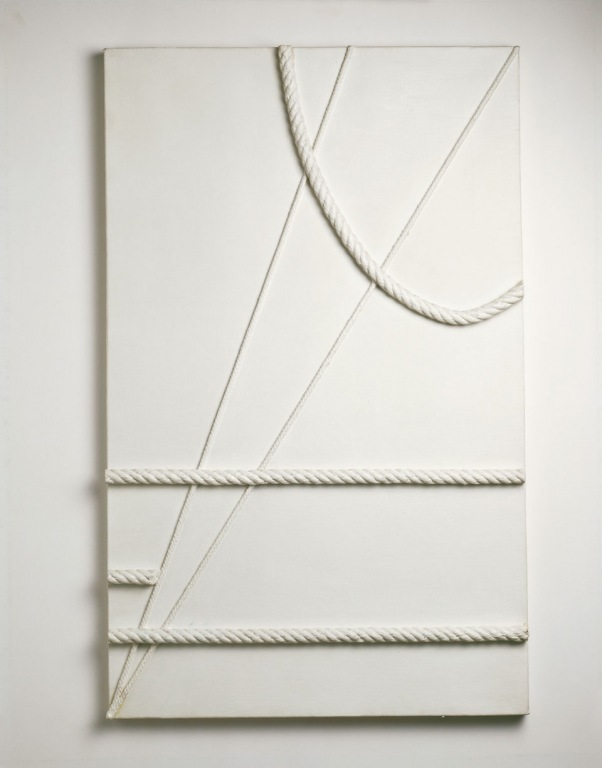
A detail from White, Black, Yellow and Blue, 1954, by Marlow MossNever heard of the British Constructivist painter and sculptor Marlow Moss? Neither had I until I stumbled across a rather hidden-away room at the Tate last weekend.

Marlow Moss was born Marjorie Jewel Moss in Kilburn on 29 May 1889 to master hosier/clothier Lionel Moss and Frannie Jacobs. Defying her parents’ wishes, she attended the St John’s Wood School of Art in 1916–17 and then the Slade School of Fine Art until 1919. She is said to have left because of a nervous breakdown. She recovered in Cornwall, returned to London, returned to Cornwall to study sculpture at the Penzance School of Art, returned to London to set up a studio. In 1926, she changed her name to Marlow and adopted a masculine appearance for the rest of her life.

Marlow Moss, circa 1937

In 1927, Marlow moved to Paris, and met lifelong partner AH ‘Nettie’ Nijhoff, the writer-wife of Dutch poet Martinus Nijhoff. At the Académie Modern, Marlow studied under Fernand Léger and Amédée Ozenfant, but was influenced by Piet Mondrian. Marlow was a founder member of the Abstraction-Création group, which included Ben Nicholson and Barbara Hepworth.

Marlow’s paintings in this period are akin to Mondrians’s neo-plasticism, but the mathematically-minded Marlow is also believed to have influenced his more instinctual work (Marlow introduced parallel double-gridlines into paintings in 1931, marlowmosssomething Mondrian did not do until his 1932 Composition with Double Line with Yellow). In the 1930s, after visiting Athens, Marlow started to make all-white reliefs of wood, rope and string.

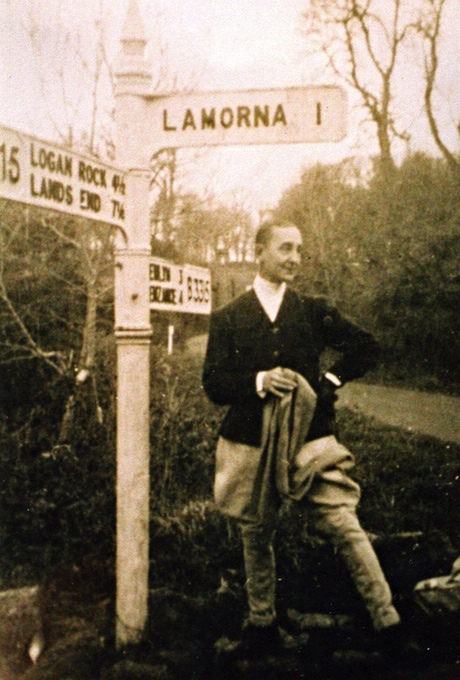
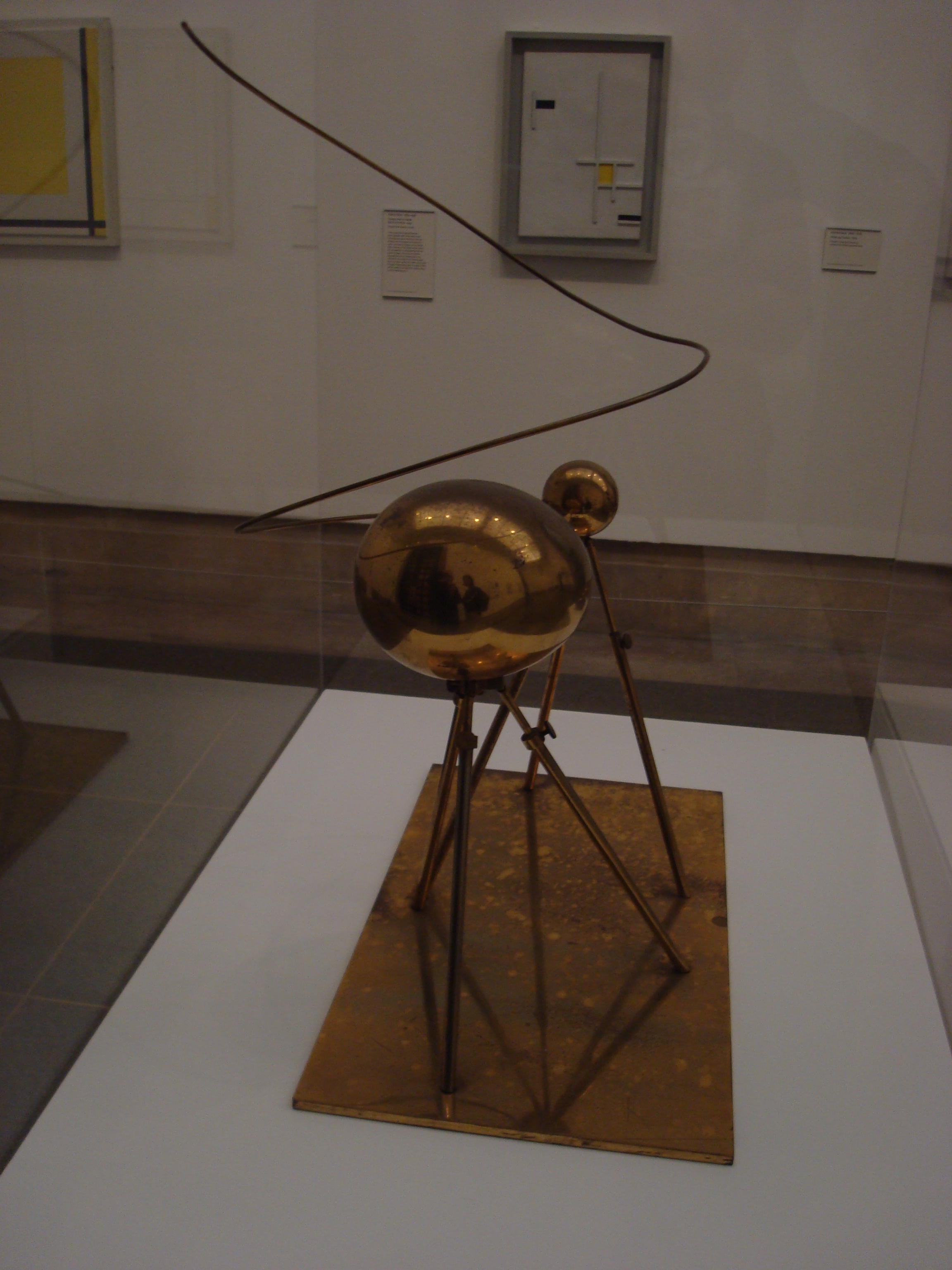
Nearly all Marlow’s pre-war work was destroyed in 1944 when the Normandy chateau Marlow and Nijhoff had rented was bombed by Germans; but Marlow had already escaped from Nijhoff’s Zeeland home when Holland fell in May 1940 and returned to Cornwall. Studying architecture at the Spatial-Construction-in-S-002Penzance School prompted a turn to sculptural work. Living in Lamorna Cove, Marlow was now a neighbour of the St Ives-based Nicholson and Hepworth. Marlow twice wrote to Nicholson suggesting they meet for tea, but never received a reply. Henry Moore also seems to have been less than supportive.

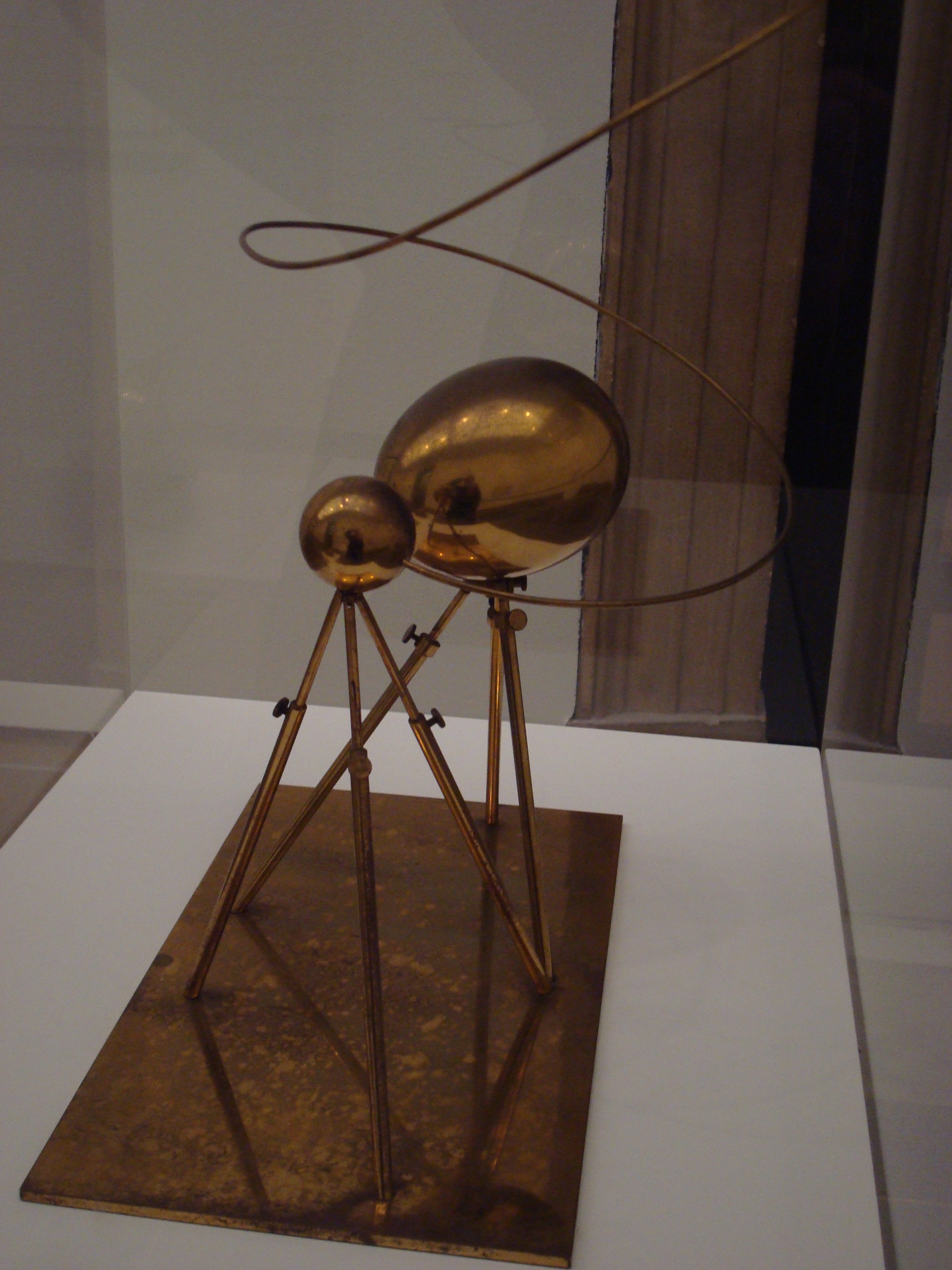
Marlow died of cancer on 23 August 1958. The current, single-room exhibition at the Tate is Marlow’s first solo exhibition in the UK. It includes paintings, reliefs, and sculptures, including two pieces, Balanced Forms in Gunmetal on Cornish Granite (1956-7) and Construction Spatial (1953), inspired by the Martian cylinder that crashed near Truro at the turn of the century, and the war machine that emerged from it.

DSC02606 DSC02607 DSC02608 DSC02610 DSC02601 DSC02605 DSC02603 DSC02604

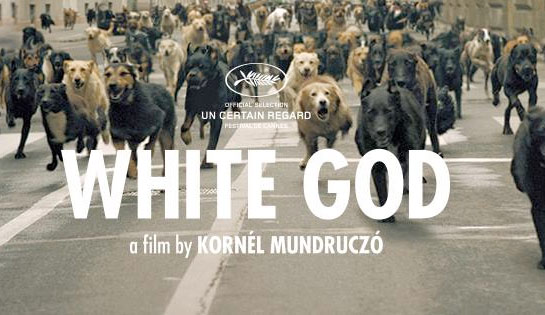
Fehér isten a.k.a. White God (Kornél Mundruczó Hungary 2014)

whitegodIf you like dogs, and you like revolution…

If Jupiter Ascending has whetted your appetite for films in which a girl and her dog fight against tyranny and longueurs…

Trailer

White God begins with a beautifully composed aerial shot of a major Budapest intersection. The streets are deserted. A tiny figure cycles up onto the flyover.

It has a familiar eeriness to it – like the deserted Waterloo Bridge near the start of 28 Days Later…, but without the graininess, the obvious digital compositing. And, shot from so far above, it is as much about the construction of urban spaces and the ways they channel us as it is about the shocking emptiness of this particular space at this moment.

The cyclist – a young girl, Lili, maybe thirteen years old – passes an abandoned car, its doors wide open, and descends into the city streets. Through intersection after intersection. Patient, determined. As if searching, cautiously and with trepidation.

Then the dogs appear.

Dozens of them.

Running.

Not from something, but toward something. With purpose.

They barely even notice her.

The film leaps back a few weeks. Lili’s mother and her partner are off to Australia for three months, so she is left with her father – once a professor, now a meat inspector at an abattoir, dishevelled and disgruntled. (He is inspired by David Lurie, the protagonist of JM Coetzee’s Disgrace (1991)). Lili insists on taking her dog, Hagen, with her.

The tension between estranged father and daughter soon focuses on the dog, culminating in Hagen being abandoned by a busy roadside.

The film then follows two paths.

white god-feher isten-zsofia psotta-hagenAn oh-so-arthouse mildly prurient exploration of the occasionally sexualised Lili’s pubescent struggles – with her father, with older teenagers from the orchestra in which she plays trumpet – as she tries to find Hagen and ultimately reconciles with her father.

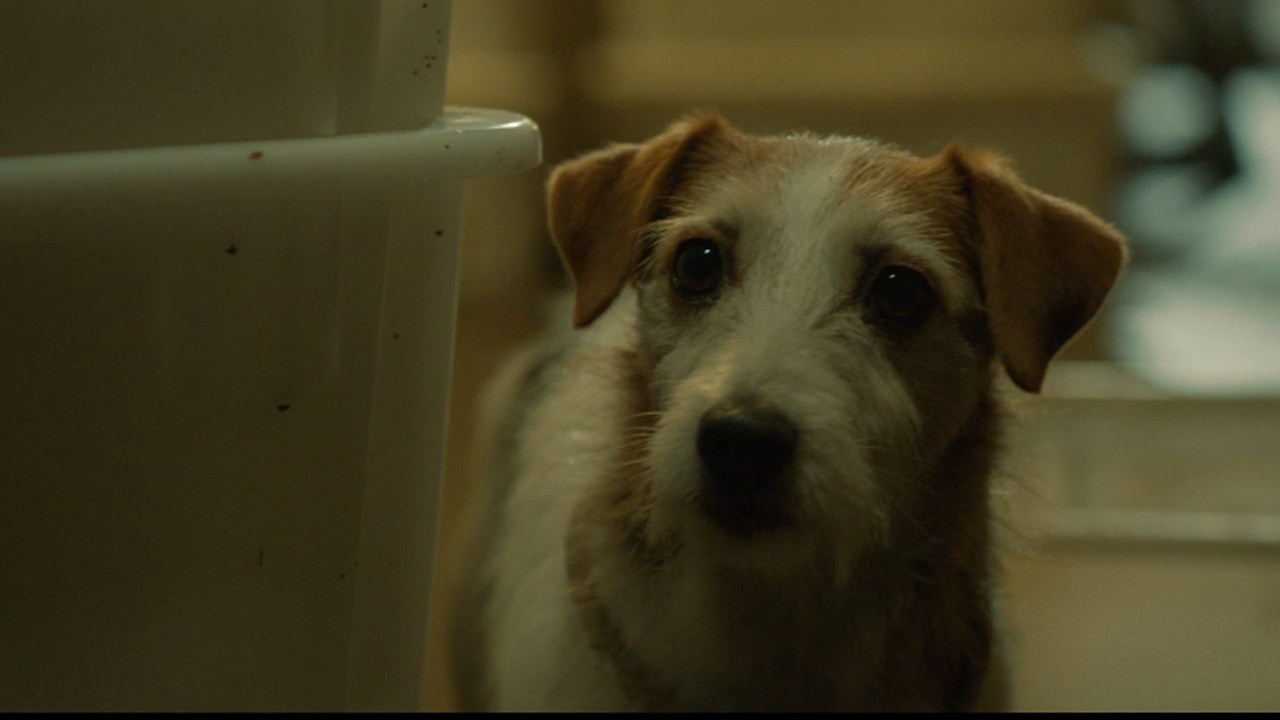
And the story of Hagen’s life as a stray. He is befriended by a dog_THUMB-1418155236944scruffy terrier, who teaches him about life on the streets, how to find food and water and shelter. How to avoid the city dogcatchers. Le barkour. But Hagen is eventually caught and sold into the world of dogfighting.

In the arena he quickly learns the horrible cost of this so-called sport.

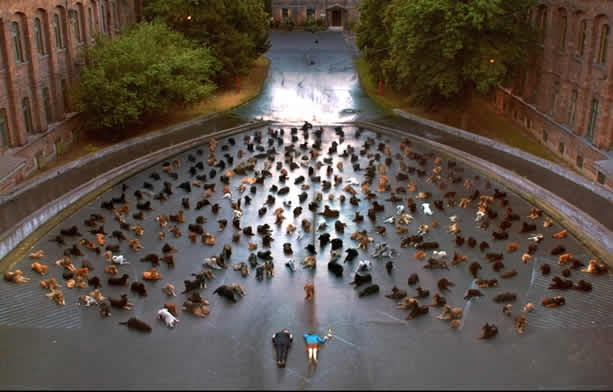
Soon, Hagen finds himself in the dog pound, facing a lethal injection. He rebels, rather bloodily, and frees the other dogs.

He is Barktacus; they have nothing to lose but their chains.

The canine uprising has begun.

A lot of the criticism the film faced after winning the Un Certain Regard prize at Cannes last year has to do with the supposed murkiness of its metaphor. This is typical of critics who don’t quite get how fantasy works, and who are incapable of finding value in the fantastic until they have translated it into the mundane. What exactly do the dogs stand for? They don’t have to stand for anything. Let them just be dogs; they will accrue meaning(s) regardless.

In complaining about the purported failure of White God‘s symbolism to symbolise some particular thing clearly, critics unwittingly clamour for an unambiguous one-to-one allegorical correspondence between manifest and latent content. Which is precisely what they would complain about if the film actually did do something so lunkheaded. That would be like  valuing Orwell’s Animal Farm (1945) so highly solely because it is a roman à clef of the Bolshevik revolution and the emergence of Stalinism, rather than because it is also much richer and more ambiguous than that.

Kornél Mundruczó has cited a range of sf influences – Alien, Blade Runner, Terminator – although his film probably comes closer to Conquest of the Planet of the Apes (1972). He inevitably mentions Bresson’s Au hazard Balthazar (1966), and more surprisingly the films of Fassbinder and of Sirk:

For me, White God and All That Heaven Allows is the same story. Both discuss how society confines and forces people to behave.

The genius of Sirk’s film is to move between the constraints faced by a middle-aged widow and the repressiveness of an entire society. Mundruczó’s film is perhaps less successful, but the alternation between the two narrative strands creates a similar critical resonance. It is about race and about immiseration and about state power and about the tyranny of free markets; about family, gender and generation; about species; about surviving and providing and being better than the unhomely world we daily build will allow.

It is also about crossing The Incredible Journey (1963) with The Birds (1963) with Zéro de conduite (1933) or, better yet, Hue and Cry (1947), and throwing in a little Pied Piper of Hamelin, so as to rework, as its anagrammatical title suggests, Sam Fuller’s White Dog (1982).

Does it work? Not quite. But that did not keep me from enjoying loads of it, mostly the doggy parts.

Some might complain about the film’s typical liberal substitution of a vague warm fuzzy feeling for the coherent revolutionary politics it is incapable of imagining. But it is a film that functions primarily on an affective level. There is so much simple joy to beb9114194-0ea0-4e19-8aa1-312cd5d19455-460x276 found in seeing dozens of dogs, all different sizes and shapes and colours, running freely together, in fast motion and slow, that the image of revolution undergoes a quite radical transformation – it is violent and scary, but it is also comical and energetic and charming and delightful, as any worthwhile revolution must surely be.

And almost incidentally it does have some good politics in the mix. According to dog-trainer Teresa Miller, the two dogs playing Hagen don’t quite understand that they are dogs, and so simply did not get that they were supposed to be leading the pack. So although Hagen runs near the front of the pack, he never leads it. He is no Bane, which helps keep the canine rebels from becoming some clumsy reactionary representation of Occupy or Indignado or Tahrir or Syntagma, and which helps keep him unmuzzled. white-godAnd the film ends in media res, not with a Butch Cassidy and the Sundance Kid (1969) memorialisation of an already foreclosed future but, like The Birds, with the future still open … and if Hagen and his dogged comrades can just get to the horses, the cows, the sheep, the birds….

Note While leaving the cinema, I was momentarily thrown by the end credit I thought read ADDITIONAL CATS.