Memory Palace

Kunzru1

From 18 June to 20 October 2013, the Porter gallery in London’s Victoria and Albert Museum was home to Memory Palace. Sponsored by Sky Arts Ignition, it is the first graphic arts exhibition at the venue in over a decade. It features one eponymous novella by Hari Kunzru (published separately) and twenty installations by as many artists or studios, and attempts to see “how far [you can] push the format and still call it a book,” to provide “an experiential reading format for a story,” to “create an exhibition that can be read’ (Newell and Salazar, “Curating a Book,” Memory Palace 84, 85). It is also a work of sf.

Curators Laurie Britton Newell and Ligaya Salazar commissioned Kunzru to outline a story that would then be developed in collaboration with the artists, who would be co-creators rather than mere illustrators: Abäke, Peter Bil’ak, Alexis Deacon, Sara De Bondt studio, Oded Ezer, Francesco Franchi, Isabel Greenberg, Hansje van Halem, Robert Hunter, Jim Kay, Johnny Kelly, Erik Kessels, Na Kim, Stuart Kolakovic, Frank Laws, Le Gun, CJ Lim, Luke Pearson, Stefanie Posavec, Némo Tral, Henning Wagenbreth, Mario Wagner, and Sam Winston. This process is recounted in Hunter’s dialog-free, short graphic comic, “Making Memory Palace,” appended to Kunzru’s novella.

The British-Indian Kunzru, a former magazine journalist, who wrote about travel, music, culture, and technology, is, like David Mitchell, one of that generation of authors relatively untroubled by genre-policing. His second novel, Transmission (2005), is about a computer virus, and reads like a slimmed-down, nearer-future version of Ian McDonald’s River of Gods (2004) spliced together with one of William Gibson’s Bigend novels; his fourth and most recent novel, the historically-sprawling Gods without Men (2012), includes UFOs and aliens, kinda. A rather trendy literary author, his first novel, The Impressionist (2003), attracted a £1 million+ advance, and he has won several major awards and prizes. The central concerns of his particular brand of popular, not exactly demanding postmodernism, sometimes described as “hysterical realism” or “translit,” are non-linearity and connectivity. Kunzru’s commissioning by Sky Arts is, then, relatively unsurprising (especially as he also used to be a presenter on The Lounge, Sky TV’s own electronic arts program).

His co-creators are rather less well known. Intriguingly, in their brief biographies at the end of the Memory Palace book, not one of them self-describes as an artist. They are all graphic designers, graphic artists, typographers, illustrators, comics artists, book designers, creative directors, art directors, editors, and/or architects. One is left with a strong sense of a smug and slightly shadowy commercial world of professionals, talented but perhaps a bit glib, for whom this is just another commission to be turned in on budget and on time. This perhaps explains why the exhibition’s satirical attack on neo-liberal hegemony and state-imposed regimes of austerity and amnesia is so muted.

Kunzru’s novella, Memory Palace, is set in a post-apocalyptic London. A magnetic storm destroyed the global information infrastructure and brought the Withering, a post-literate Dark Age of totalitarian theocracy, in which Westminster is known as Waste Monster, and other moderately amusing sub-Riddley Walker (1980) wordplay thrives. The Thing (as the council of leaders is known) wants to bring about the Wilding, a future in which the remnants of humanity will live in harmony with nature. The Thing has outlawed writing and recording, thereby criminalizing the Memorialists, those who are devoted to collecting and recollecting the past, whom they now hunt. Appropriately, then, the story, while nicely written and more than competent, stirs with faint echoes: of post-apocalyptic fiction by John Wyndham, John Christopher, and Walter M. Miller; of the television series Survivors (UK 1975-1977) and the coda to the film Threads (Jackson UK/Australia/US 1984); of M. John Harrison’s seedy bedsit entropy, China Miéville’s rejectamentalism, and Evan Calder Wood’s salvagepunk.

The book version of Memory Palace is, as one would expect from such a project, a gorgeous object, lavishly illustrated with selected work from the exhibition and pictures of the physical and electronic installations. If you have read the book, though, the exhibition itself is a little disappointing (I cannot gauge what it would be like to see the exhibition before, or without, reading the book). Le Gun’s life-size model of what someone from the post-apocalypse imagines an ambulance to have looked like – part medicine show, part museum of curiosities, drawn by wolves and driven by a Día de Muertos cross between Baron Samedi and the Child Catcher – is impressively detailed,kunzru2 as is Jim Kay’s reliquary cabinet devoted to Milord Darwing, the author of Origin of the Species (1859), who is misremembered as a rogue GM scientist. In contrast, Oded Ezer’s eight short films, looped on eight separate screens, are all concept with little art, and Erik Kessel’s enormous temple built from bundles of newspapers and advertising fliers, recalling the pre-apocalyptic religious ritual of aakgo9fm2Recycling, has even less art and barely even a concept. The more straightforward illustrations – whether blown up on large light boxes (Tral), arranged in a narrative thread on a white wall so you have to move to follow them (Pearson), or presented on zinc letterpress plates (Winston) – do benefit from exhibition. And it is quite pleasing – after all the corporate profligacy, the privatization and militarization of public spaces, the peonage of cleaners and others, the jingoism and spitefulness, that the London Olympics involved – to see the stadium reduced to slums (Tral) and Anish Kapoor and Arups’ 115-meter tall ArcelorMittal Orbit, a kind of flying spaghetti Eiffel Tower, being ceremonially burned to the ground (Greenberg).

Newell and Salazar write that “Unlike reading a printed book, visiting an exhibition is not usually a linear experience” (85). In this case, however, the layout of the space, and the clearly marked entrance and exit, do produce a linear exhibit, whereas reading the book, with its out-of-order narrative and illustrations that tempt one to flick back and forth between them, is more successfully non-linear. Consequently, I would recommend the book over the exhibition, especially as it is available from online stores for less than £10, and unless you live in South Kensington (or “South Keen Singtown,” as it will be known during the Withering), getting to and seeing the exhibition will cost you more than that.

A version of this review appeared in Science Fiction Studies 121 (2013), 596–8.

South Wales is weird. And fantastical.

We had some time to kill before the Thee Faction and Helen Love (and others for We Shall Overcome) gig in Newport, so we nipped over to Caerleon to see the amazing Roman ruins. We did not expect to find this:

wales 1

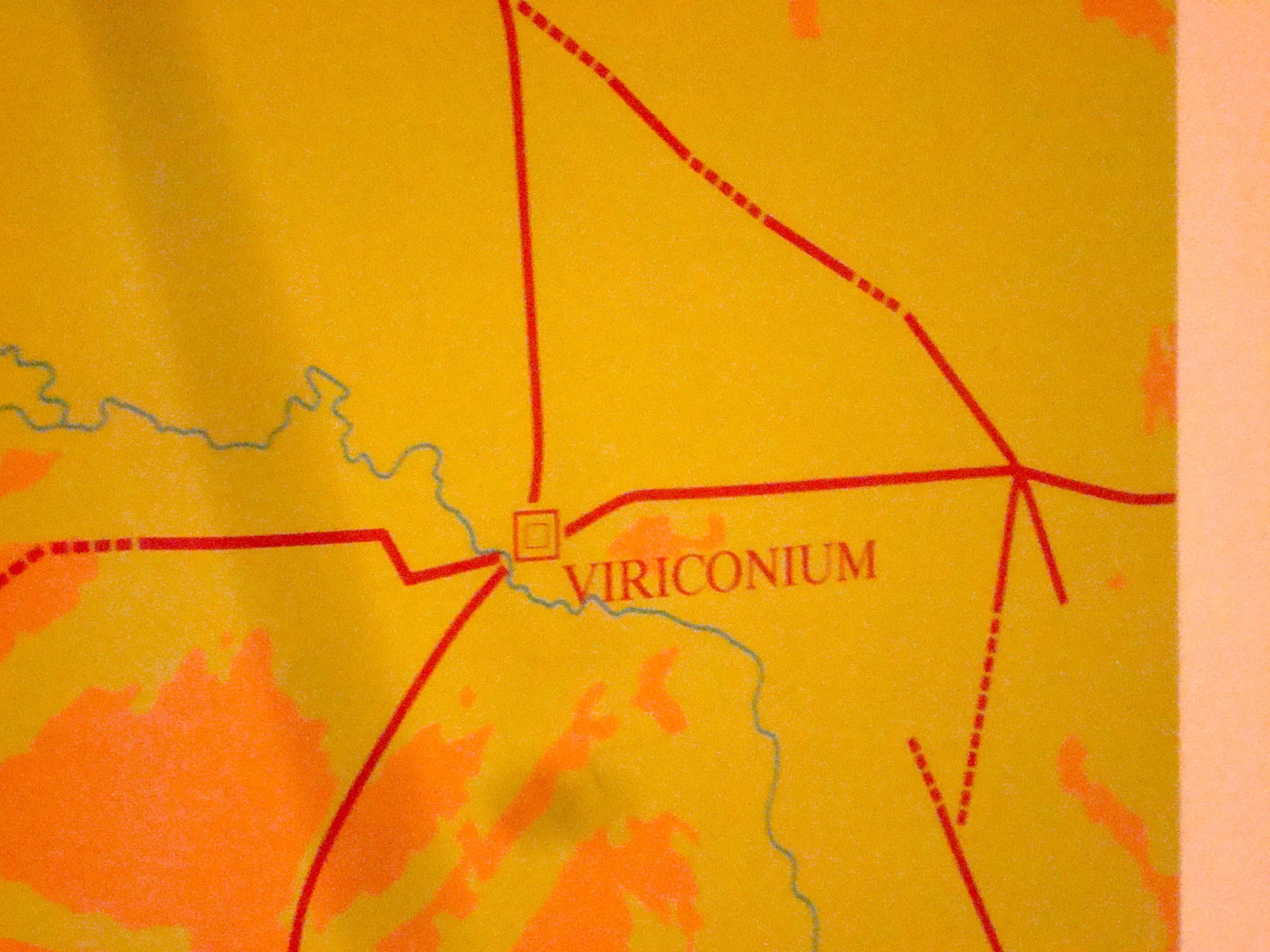
Or, on a map in the museum, to find this:

wales 2

To be honest, this was probably a different guy by the same name:

wales 3

Few things are more weird, though, than putting up a plaque to remember resistance to the Chartists:

wales 4

Before leaving for our walk back to Newport, we thought we’d have a pint. Not expecting the pub we ended up in to be one where this once happened:

wales 5

A lovely afternoon full of surprises. And the gig was even better. Once Thee Faction got on the stage. And then Helen Love.


China Miéville, The Scar (London: Macmillan, 2002)

200px-TheScar(1stEd)[A version of this review appeared in Foundation 86 (2002), 132–4]

The Scar returns to Perdido Street Station’s Bas Lag, but it is not a novel about return: it is about departure and loss. Part of that loss is the sense that the author, with his bold opening move of denying New Crobuzon, has learned all he can from Mervyn Peake; and consequently it wobbles, or seems to wobble, in the first 60 pages.

Peake has often been criticised for leaving Gormeghast in the final volume of his trilogy – a criticism with which Miéville does not necessarily agree but to which he has clearly paid attention. New Crobuzon, that brilliant invention and potential albatross, does not appear in The Scar. For the reader wanting a consolatory return, New Crobuzon has become like M. John Harrison’s Egnaro; indeed, an alternative title for the novel might have been ‘A Young Man’s Journey to New Crobuzon’. Miéville is too ambitious to serve up just more of the same, and that is why the novel wobbles at the start (or seems to: I am not exempt from wanting consolation), why the world seems a little thin to begin with, why the visit to Salkrikaltor City seems skimped, curtailed. The opening pages reek of impatience. Like the protagonist Bellis Coldwine, the author needs to depart, to move on, and through her he transforms his refusal to return to New Crobuzon into part of his thematic complex about a mature regard for the universe and the compassionate identification with others that it demands of ethico-political beings.

Which is not to say that those pages are not full of the restless invention, exemplary prose and visualisation we have so quickly come to expect from Miéville. And even when Bas Lag does not seem as dense and filled as it might, there is still the sense of a dense, full world lurking out of sight, of whole other volumes that can only be hinted at. On the very first page we read that ‘Presences something between molluscs and deities squat patiently below eight miles of water’; and on the next page that ‘There is heroism and brute warfare on the ocean floor, unnoticed by land-dwellers. There are gods and catastrophes’. But that is all we are told.

Forced to flee New Crobuzon, Bellis (a former lover of Perdido’s Isaac Dan der Grimnebulin) plans to settle for a while in the colony of Nova Esperium, but her journey is interrupted, diverted, hi-jacked. She finds herself caught up in the plans of the Lovers, the sado-masochistic and megalomaniac rulers of Armada, and in the conspiracies and counter-conspiracies of Silas Fennec (aka Simon Fench), a secret agent, and Uther Doul, the Lovers’ right-hand man. She witness scab-mettlers fight in the mortu crutt style and displays of stamp-fighting; she walks upon Machinery Beach; she eavesdrops upon the Lovers sexualised scarifications; she is courted by Doul and hears him play the Perhapsadian; she learns about oceanic megafauna, the Ghosthead Empire and possibility mining. And she is used, and punished, and used some more.

But that is a mere fraction. There is the magnitude of the Lovers’ hubristic designs for Armada; the resistance of the Brucolac, the ab-dead vampir ruler of Dry Fall; the grindylows’ pursuit of Fennec; the story of Crawfoot and the Conch Assassins; the Remaking of Tanner Sack; Bastard John, the dolphin; the education of Shekel and his romance with the Remade Angevine; the peculiar adventure of the cactacae Hedrigall; awkward friendships and alliances; there is a none-too-secret message hidden in the open, an extraordinarily bad pun (471) involving the Maguffin which drives one strand of the action, and an obscure joke about the author’s doctoral thesis (417–21), which he was completing alongside the novel. There are moments of great tenderness (Bellis teaching Shekel to read; Sack repairing Angevine’s boiler) and tremendous set-pieces (the attack of the she-anophelii; the Brucolac’s revolt and punishment; breaking into the Compass Factory; Hedrigall’s vision). And there is the anxiety of influence, manifested in numerous allusions to The Matrix (a character called Carrianne, Uther Doul’s sword-fighting in bullet-time) and to other nautical fantasies (the Aronnax Lab, the Pinchermarn, Tintinnabulum, Captain Princip Cecasan of the Morning Walker, a godwhale). There are various echoes of Bruce Sterling’s Involution Ocean and a game of pitch and toss borrowed from Tim Powers’s The Stress of Her Regard.

And, most importantly, there is a sustained critique of colonialism. The anophelii, isolated and under military guard, are remorselessly exploited by the Samheri cactacae, their access to information tightly circumscribed and their intellectual labours expropriated without reward. There are questions about who are the real slaves and who are the real pirates. There is a clear-headed explication of the mercantile motivation of exploration, and a revelation that changes our perspective on the grindylow. There is Machinery Beach, a complex image of ruination and potential, of the colonised world as both dumping ground and source of commodities:

Some way off were shapes she had taken to be boulders, huge things the size of rooms, breking up the shoreline. They were engines. Squat and enormous and coated with rust and verdigris, long-forgotten appliances for unknown purposes, their pistons seized by age and salt.
There were smaller rocks too, and Bellis saw that these were shards of the larger machines, bolts and pipework junctions; or finer, more intricate and complete pieces, gauges and glass work and compact steampower engines. The pebbles were gears, cogs, flywheels, bolts and screws … thousands of minuscule ratchets and gearwheels and ossified springs, like the innards of inconceivably tiny clocks. … The beach was an imitation, a found-sculpture mimicking nature in the materials of the junkyard. Every atom from some shattered machine. … She imagined the seafloor around the bay – reclaimed reef of decaying industry, the contents of a city’s factories allowed to collapse, pounded by waves and sun, oxidizing, bleeding with rust, breaking into their constituent parts and then into smaller shards, thrown back by the water onto the island’s edge, evolving into this freakish shore. … This is the flotsam Hedrigall meant, she realized. This is a graveyard of dead devices. There must be millions of secrets mouldering here into rust-dust. They must sift through it, and scrub it clean, and offer the most promising bits for trade, two or three pieces picked randomly from a thousand piece-puzzle. Opaque and impenetrable, but if you could put it together, if you could make sense of it, what might you have? (274-5)

And most of all there is the Lovers’ plan for Armada, in which they convince and cajole many to believe, regardless of its tremendous environmental and human consequences, because it might just bring wealth and power.

The Scar represents a further maturation of Miéville as a writer. If the novel lacks some of the profligacy which made Perdido Street Station such a joy it is made up for by a more disciplined approach to narrative and tighter control over intertextual riffs. His emotional and affective range has expanded, without abandoning the eyeball-kicks.

The Scar is the best nautical fantasy since John Calvin Batchelor’s The Birth of the People’s Republic of Antarctica and the most important one since B Traven’s The Death Ship.

It is arguably the first major novel of the anti-capitalist movement, and as I’ve said elsewhere, it makes Moby Dick look like a big fat book about whales.


China Miéville, Perdido Street Station (Macmillan 2000)

PerdidoStreetStation(1stEd)[A version of this review appeared in Foundation 79 (2000), 88–90. Which I think makes it the first thing on China to appear in an academic journal. Yay me!]

Vivid as a comic book, Miéville’s King Rat (1998), with its funky London and splendid conceit, and its passages of grace, charm and glee, was one of the most assured fantasy debuts of the 1990s. Like the bass beneath the treble, its narrative momentum and crafter prose danced the enchanted reader past the slipperiness of plot logic and duration. His second novel, Perdido Street Station, dwarfs King Rat – in words, weight, ambition, invention, accomplishment. It is a garuda to the former’s wyrman, and eagle to its flying monkey. Let me explain.

North of Myrshock, Shankell, Perrick Nigh and the Mandrake Islands; north-east of the Cacatopic Stain and the Shards; east of Bered Kai Nev, the Swollen Ocean, Gnur Kett and the Jheshull Islands; at the confluence of the rivers Tar and Canker, where they become the Gross tar: there lies the city of New Crobuzon, magnificent and squalid, powerful and corrupt, home to humans and others. A mysterious figure approaches. Isaac Dan der Grimnebulin, outcast scientist and corpulent dilettante, receives an unusual commission, as does his khepri partner, a renegade spit-artist. And so connections begin. Evil, irresponsibly cultivated, is accidentally unleashed. A company – neither quite a Seven Samurai nor a Dirty Dozen – gathers, although they do not all meet. Things emerge: winged rippers, artificial intelligence, the dancing mad god, class consciousness. Chaos theory is transmuted into crisis science. Dirigibles and aerostats criss-cross the troubled sky. The identity of a serial killer is slyly revealed. A vigilante steps in when it counts. Decisions, ethical and otherwise, are taken. People change and changed. Some die. All suffer.

The story told is a familiar one, yet different. It grips and exhausts. The birds, spiders, sewers, rooftops and hybrids of King Rat reappear exfoliated, as do the city’s alternative architectures, the shared worlds existing within but different from the built environment. The appetite for language that occasionally strained the earlier novel has grown to remarkable proportions but is disciplined by the clarity and efficiency of Miéville’s tempered prose; he delineates characters and settings with precision and compassion, building layers of texture rather than ornamentation. Some have suggested that New Crobuzon itself is the novel’s main achievement, but it is difficult to separate city from novel. Their fabric is intertwined and full of echoes: Gormenghast and Viriconium are here, and Cinnabar, Cirque, Dhalgren, Lankhmar, Malacia. London, too, both steampunk and contemporary; and where the lived music of King Rat captured coming-of-age in the late 1980s and 1990s, Perdido Street Station evokes the dark days of Thatcher, Major and Blair. Amid the ghettos and squalor, poverty and the appearance of difference are used as tools of state oppression. Secretive paramilitary forces who police ‘by decentralised fear’ (269) brutally suppress a strike and redefine it as a riot. Government, big business and organised crime are in cahoots. Military funding perverts scientific research and education. A suffrage lottery preserves privilege, and evil resides in a dome built on rubble-strewn wasteground.

Comparisons to Mervyn Peake and M. John Harrison are inevitable – Miéville acknowledges them both and even sneaks in ‘a storm of wings’ (159) – so here are some others. Miéville’s obsessive invention rivals William Gibson and Bruce Sterling, and, like Neal Stephenson, he wants to tell use everything (but for more important reasons). He writes with the compassion of Philip K. Dick at his best but without his misogyny and crude moral certainty. His gorgeous, tainted images match those of Elizabeth Hand, Storm Constantine and Poppy Z. Brite, but without the cloying atmosphere or swamping effect on narrative that sometimes mars their work. He depicts and art-world as well-realised as Misha’s, but more concrete and lacking in preciosity. He places the maimings and torments one expects to find only in Tim Powers within a political and ethical rather than mythopoeic framework. And he writes better prose than any of them.

He also mock the anxieties of sf’s ‘scientific’ patter and hand-waving, essays political doggerel and children’s songs, pastiches political journalism, satirises Judaeo-Christian despite for women, lampoons academic doublespeak, nods to Jonathan Swift and Ursula Le Guin, canonises the Jabberwocky – and still that is not all.

In King Rat, when the protagonist, Saul, briefly takes up with Deborah, a young homeless woman, he instructs himself not to patronise her but to treat her as a real person; and because the London Saul has come to inhabit is a fantastical one, this passage, with its conscious effort to bridge between textual and extratextual worlds, seems clumsy, a touch too didactic. Noentheless, it provides an important key to understanding the ethical fiction is attempting to construct. Similar moments, lacking in overt trans-diegetical moves and more smoothly executed, occur in Perdido Street Station: a brothel full of Remade whores and an act of betrayal offer mutual understanding; a trip to a freakshow, undertaken after some ninety pages of astonishments, refuses to conjure still more fabulous grotesques but instead portrays degradation, misanthropy and complacency. The nature of Perdido Street Station is such that it cannot gain King Rat’s purchase, however, awkward, on the extratextual world. Instead, these ethical and empathic moments occur within networks of interconnection. The key metaphor is provided by Isaac’s crisis science, which sees through consensual reality to the perpetual moment of crisis, to a precarious potential energy with which to drive revolutionary engines. It is, therefore, no coincidence that it is the striking vodyanoi dockers whose watercræft draws, albeit unconsciously, on this power. There are connections, Miéville insists, and in those connections, in shated being, there is hopeful energy; and, as Isaac, disgusted by the attitudes of other people at the freakshow, is reminded by a radical friend, ‘It turns … It turns quickly’ (88).

Of course the novel has flaws – some might find the Alien movies cast too large a shadow, or that Isaac’s mourning seems skimped (but not without reason), or that Miéville cares too much about his characters (whatever the hell that means), or that the reader is left as battered and drained as the company – but make no mistake: Perdido Street Station is the rich hallucinogenic dreamshit of genre, mutating into socialist fiction.

Wake up and smell the ordure.

EE ‘Doc’ Smith’s, The Skylark of Space (co-written with Mrs Lee Hawkins Garby)

Back in the mists of time, around a decade ago, there was a plan for an ever-expanding online collection of short critical essays on key works of the fantastic. The plan fizzled and died, but not before I wrote nine pieces for it (which I just found). This is another of them.

eeds_theskylaWritten: 1915–1920
First published: Amazing Stories, August-October 1928
First edition: Providence, Rhode Island: Buffalo Book Co., 1946
Edition used: London: Panther, 1974 (revised text of 1958)

Richard Seaton accidentally discovers the ability of ‘X’, a hitherto unknown metal,

to liberate and control the entire constituent energy of metallic copper. (17)

This

pure and total conversion of matter to controllable energy [with] no radiation, no residue, no by-products (17)

062provides the key to space travel. Seaton and his millionaire chum, M Reynolds Crane, set out to exploit this source of virtually free energy. An attempt by rival scientist, Marc ‘Blackie’ DuQuesne, to hold Seaton’s wealthy fiancée, Dorothy Vaneman, ransom in exchange for X goes awry. DuQuesne’s starship is flung across space at an incredible speed. Seaton and Crane pursue them in the eponymous starship. They rescue Dorothy, DuQuesne and another hostage, Margaret Spencer, from the grip of a dead star. On the low-gravity planet Osnome, they take sides in (and win) a genocidal war, before returning to Earth.

Smith was neither the first to write space opera (Robert W Cole’s 1900 The Struggle for Empire is a more likely contender), nor the first American author of space opera (that distinction probably belongs to Ray Cummings), nor indeed the best of the subgenre’s first flourishing in the American pulps (Edmond Hamilton, John W Campbell, Jr and Jack Williamson consistently wrote less infelicitous prose and demonstrated a better grasp of the potential of sf). But Smith’s work remains the best-remembered. Undoubtedly, this is partly a result of being the-skylark-of-space-fffamong the first pulp sf to be reissued in hardback editions in the late 1940s and 1950s, and of the 1960s and 1970s paperback editions finding a substantial following among the fantasy readership created/uncovered by the US paperback editions of JRR Tolkien’s The Lord of the Rings. Although Smith’s space operas often seem excruciatingly naïve by the standards of more contemporary authors (Iain M Banks, Samuel R Delany, Colin Greenland, Ursula Le Guin, M John Harrison, Ken MacLeod, Alastair Reynolds), the continued popularity of the Star Wars movies indicates that juvenile sf of this sort is still attractive; and while it is tempting to read Smith’s sf as camp, this can only partly (if, presumably, increasingly) account for its appeal.

One of Smith’s central achievements is to capture something of the scale of the universe while also rendering it safe, conquerable, human-sized. Despite postulating new technologies and travelling thousands of light years from Earth, the characters and plotting of The Skylark of Space are firmly rooted in familiar romance conventions. Seaton is a working class boy made good, a scientist and athlete

over six feet in height, broad-shouldered, narrow-waisted. (12)

He can withstand higher acceleration than any of his crew, and exercises his super-strength to great effect in Osnome’s low gravity.

Crane,

the multi-millionaire explorer-archaeologist-sportsman’ (12)

is also a businessman, an engineer and

a rocket-instrument man second to none in the world. (13)

Seaton’s love for Dorothy and Crane’s for Margaret is pure, assured, eternal. DuQuesne is

utterly heartless and ruthless, so cold and scientific (90)

003yet strangely honourable in his villainy. And in a world dominated by global corporations, it falls to such individuals to discover, create, explore. Despite such unrealistic characterisations, the very familiarity of these types works to domesticate the universe in which they adventure.

Moreover, the vastness and strangeness of space is also contained by Smith’s repeated failure to depict it. As the crew whiz around the galaxy, they observe it almost entirely through instrument readings, and the few descriptions of what can be seen through the Skylark’s viewports possess a curious contradictory quality:

For the blackness of the black of the interstellar void is not the darkness of an earthly night but the absolute absence of light–a black besides which that of platinum dust is merely gray. Upon this indescribably black backdrop there glowed faint patches which were nebulae; there blazed hard, brilliant, multi-colored, dimensionless points of light which were stars. (88)

In addition to the clumsy simultaneous presence and absence of light in this view, there is blackness to be recognised through its dissimilarity to the blackness with which the reader is familiar.[1] A more telling failure to depict an external view of space comes in the passage in which Crane realises his love for Margaret. Staring out

into infinity, each felt as never before the pitiful smallness of the whole world they had known, and the insignificance of human beings and their works. (91)

As their ‘minds reached out to each other in understanding’, Crane considers Margaret:

He looked up quickly and again studied the stars; but now, in addition to the wonders of space, he saw a mass of wavy black hair, high-piled upon a queenly head; deep brown eyes veiled by long, black lashes; sweet, sensitive lips; a firmly rounded, dimpled chin; and a beautifully formed young body. (91 and 92)

This description[2] displaces that of the view that so enraptures Margaret and prompts her to say

‘How stupendous . . . how unbelievably great this is . . . […]. How vastly greater than any perception one could possibly get on Earth . . . and yet . . . […] doesn’t it seem to you, Mr. Crane, that there is something in man as great as even all this? That there must be, or Dorothy and I could not be sailing out here in such a wonderful things as this Skylark, which you and Dick Seaton have made?’ (92)

This bathetic descent contains and constrains the capacity of the sublime to disorientate and estrange.

Throughout the novel, Smith demonstrates little interest in the implications of his conceits. For example, when a mechanical educator accidentally gives Seaton and Dunark, Kofedix of Kondal, perfect knowledge

down to the finest detail […] of everything that the other had ever learned (117)

it is merely a convenient plot device, enabling Seaton to justify his collaboration with the fascistic social-Darwinist Kondalians against the treacherous Mardonalians (who ‘are the scum of the universe’ (120)).

ill-613Again and again, The Skylark of Space promises novelty but delivers mere novelties.

And herein must lie whatever appeal it has: there is no terrible abyss, just space waiting to be filled should anyone ever look out of the window.

The other eight entries I wrote were:
Voltaire, Candide
Godwin, Caleb Williams
de Maistre, Voyage Around My Chamber
France, Thais
London, The Iron Heel 
Gernsback, Ralph 124C 41+
Schuyler, Black No More
Sturgeon, Venus Plus X

Notes
[1]
This practice of describing the indescribability of a phenomenon rather than the phenomenon itself reaches its glorious nadir in the explosion of a charge of X:

There was a blare of sound that paralyzed their senses, even inside the vessel and in the thin air of that enormous elevation. There was a furiously-boiling, furiously expanding ball of . . . of what? The detonation of a Mark Ten load cannot be described. It must be seen; and even then, it cannot be understood. It can scarcely be believed. (105)

[2]
It is, of course, equally telling of Smith’s lack of interest in his female characters that not only should Margaret be so beautiful as to distract Crane but also so eminently reducible to a list of clichéd fragments. Elsewhere, she champs at the bit to be a secretary (92).

William Godwin’s Things As They Are, or The Adventures of Caleb Williams

Back in the mists of time, around a decade ago, there was a plan for an ever-expanding online collection of short critical essays on key works of the fantastic. The plan fizzled and died, but not before I wrote nine pieces for it (which I just found). This is another of them.

Caleb Williams.2-1Originally published: 1794
Edition used: Caleb Williams (Penguin, 1988) edited and introduced by Maurice Hindle

Of humble origin, Caleb Williams, orphaned at the age of 18, is taken into the household of the local squire, Ferdinando Falkland. One day, he stumbles upon his master behaving in a secretive manner; on perceiving Caleb, Falkland becomes violent. Falkland’s steward explains the curious chain of circumstances that saw Falkland recently accused of murder and then vindicated, after which his personality underwent a profound change. Caleb begins to suspect Falkland is actually guilty of the murder and let others be executed for his crime. Falkland eventually confesses to Caleb, secure that no one will believe a servant over his master. When Caleb tries to flee the tyranny with which Falkland circumscribes his daily existence, he is framed for robbery. Awaiting trial, Caleb escapes, and from that moment on his life becomes a miserable series of disguises and upheavals as Falkland’s agents dog his steps, never allowing him to settle.

Things As They Are is an intriguing test case for where the boundaries of the fantastic lie. A ‘political Gothic’, there is nothing of the fantastic in it – not even of the apparently supernatural that is later revealed to have a mundane explanation. M John Harrison argues that the problem with much sf is that it has become addicted to the mediating metaphor – the whole paraphernalia of future societies, other worlds, monsters and spaceships, and the grab-bag of technical and rhetorical tools – rather than deploying such image-furniture and techniques to establish a metaphoric relationship between text and world. Much the same can be seen to happen in the flowering of the Gothic in the second half of the 18th century and its subsequent permutations.

While the Gothic imagined terrible incarcerations in crumbling vaults and subterranean dungeons, Godwin turned to the reality of the contemporary judicial and penal systems as described in The Malefactor’s Register; or the Newgate and Tyburn Calendar (1779) and Howard’s 1777 report on The State of Prisons, and as witnessed on visiting Newgate prison and in the treatment of fellow radicals such as Joseph Gerrald and Maurice Margarot.

While the Gothic generally used such torments to thrill its readers with the depiction of sensibilities under distress, Godwin – who was not above such things – also turned his Gothic imagination to an elaboration of the prison as a model of the social world.

Falkland-discovering-Caleb2-e1300118099300While much Gothic fiction can be read as a kind of sadomasochistic proto-feminist expression of the internalisation of particular historical restrictions on female experience, Caleb stands as a kind of typical subject for whom the whole world is carceral.[i] The ‘paranoid’ depiction of society as a prison-house becomes an important fantastic metaphor in Nathaniel Hawthorne’s The Scarlet Letter (1850), Charlotte Perkins Gilman’s ‘The Yellow Wallpaper’ (1892), Daniel Paul Schreber’s Denkwürdigkeiten eines Nervenkranken/Memoirs of My Nervous Illness (1903), Yevgeny Zamyatin’s My (1924), Franz Kafka’s Der Prozess/The Trial (1925), B Traven’s The Death Ship (1934), George Orwell’s Nineteen Eighty-four (1949), Samuel Beckett’s Le Depeupleur/The Lost Ones (1971), Joanna Russ’s The Female Man (1975), Marge Piercy’s Woman on the Edge of Time (1976), Margaret Atwood’s The Handmaid’s Tale (1985), throughout Philip K Dick’s work and in countless other fantastic and dystopian fictions.

But at what point does one judge the metaphor to have become sufficiently concretised in the diegetic world to make it a fantastic world?[ii]

One particular moment is worth considering in this light. Hiding out in London, Caleb encounters a hawker peddling a fictionalised account of his life:

Here you have the MOST WONDERFUL AND SURPRISING HISTORY AND MIRACULOUS ADVENTURES OF CALEB WILLIAMS: you are informed how he first robbed, and then brought false accusations against his master; as also of his attempting divers times to break out of prison, till at last he effected his escape in the most wonderful and uncredible manner; as also of his travelling the kingdom in various disguises, and the robberies he committed with a most desperate and daring gang of thieves; and of his coming up to London, where it is supposed he now lies concealed; with a true and faithful copy of the hue and cry printed and published by one of his Majesty’s most principal secretaries of state, offering a reward of one hundred guineas for apprehending him. All for the price of one halfpenny. (278)

Robbed of his liberty, Caleb is now stripped of his identity as other characters take this popular account for the truth about him. And it does indeed contain some superficial truths – he has escaped prison, been sheltered by a gang of thieves (although committing no crimes himself), become expert at disguise and made his way to London – but not the truth, especially not what has forced him into this behaviour. But this virtual self becomes a doppelganger, permitting him no rest, even as Falkland’s exercise of arbitrary power takes on a life of its own separate from and outside of his control. Elsewhere, much is made of the difference of justice as it exists on paper and as it is experienced by those subjected to its institutional practices – a long time before Borges or Baudrillard, Godwin observes not only the distinction between map and territory but also the supersession of the territory by the map.

Ultimately, even if Caleb’s misadventures are not judged to be fantastical, they nonetheless pose important questions about how we conceptualise fantasy. If M John Harrison’s Things That Never Happen (2004) collects the fiction of a fantasist working to strip the fantasy out of fantasy, Godwin’s Things As They Are seems to tackle the same problem from the other side.

220px-CalebWilliamsIt should also be noted that Caleb provides a template of sorts for the creature in Mary Shelley’s Frankenstein, or the Modern Prometheus (1818) – Shelley was, of course, Godwin’s daughter – and that like Shelley’s novel Things As They Are cries out for queer reading.

The other eight entries I wrote were:
Voltaire, Candide
de Maistre, Voyage Around My Chamber
France, Thais
London, The Iron Heel 
Gernsback, Ralph 124C 41+
Smith, The Skylark of Space
Schuyler, Black No More
Sturgeon, Venus Plus X

Notes
[i]
This is not to imply that female characters cannot be typical subjects, nor that male experience should be normalised as in anyway typical.
[ii]
Things As They Are bears some obvious similarities to such noirish crime movies as I Am a Fugitive from a Chain Gang (LeRoy 1932) and The Big Clock (Farrow 1948), itself a possible prototype for Dick’s A Scanner Darkly (1977); and a similar question about the boundaries of fantasies is posed by the heady and tortured prose typical of Cornell Woolrich’s crime fiction.

Four or Five Things About China Miéville

[Just stumbled across this old thing I wrote for the Wiscon 17 Programme Booklet in 2003, when China and Carol Emshwiller were GOHs]

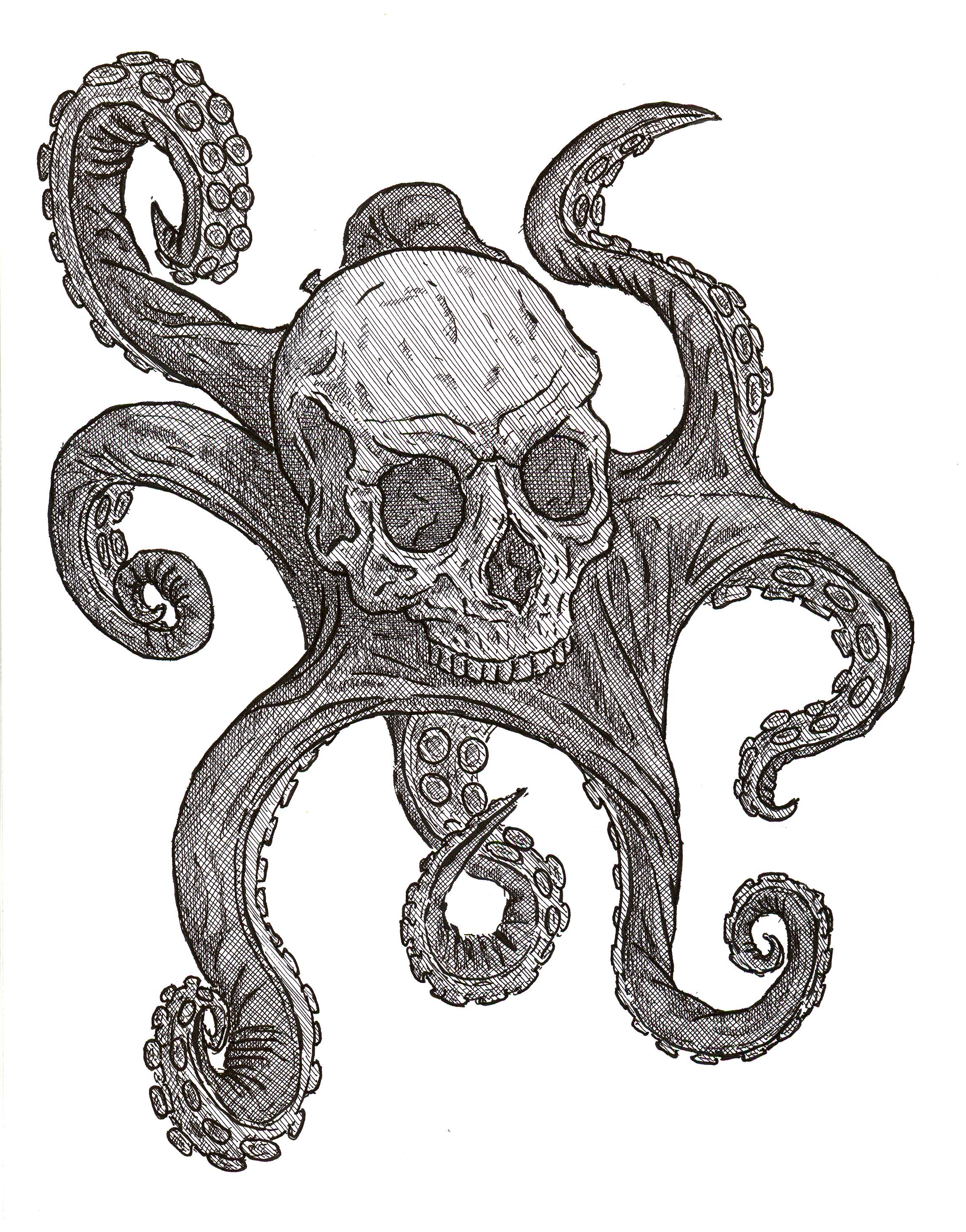
Skulltopus011 Saturday September 28th 2002 was a bright and clear day in London. Which was just as well, because China and Emma were late. A group of us had arranged to meet at the National Film Theatre’s Café on the South Bank of the Thames at 12.30. From there, we would cross the river to the Embankment to join the protest march against war on Iraq and for a free Palestine.

In a way, though, the delay didn’t matter. Despite early police claims that there were only 40,000 protestors, it was clear there were ten times that number. It’s not like anyone would have noticed if we were late.

But coffee had been drunk and impatience was setting in and the crowd on the opposite bank was swelling and China wasn’t answering his mobile phone.

Suddenly, in the distance, a sighting.

Arms were waved. Watches were pointed at extravagantly. Tutting noises were made.

China and Emma arrived. China was breathless, not from rushing but from excitement. ‘Sorry we’re late, but you won’t believe what we’ve just seen. We had to stop and watch. We were walking through the park, and there was this pelican. Fucking huge, and it just swooped down and ate a pigeon. It was gross. You could see the pigeon struggling in its gullet.’

China was right. Nobody believed him.

Not that the story was completely implausible. It’s just that impish Mike Harrison had already started the rumour that en route they had popped into John Lewis – an irredeemably bourgeois department store – to buy some things for their new flat.

To this day, nobody believes China’s story about the pelican and the pigeon. But for some reason everybody seems to take a special delight in preferring to believe Mike’s version of events.

***

One of China’s favourite passages of our sf explanation is to be found in Eric Flint’s 1632. It goes like this:

So that’s about it folks … Somehow – nobody knows how – we’ve been planted somewhere in the middle of Germany almost four hundred years ago. With no way back.

It seems like this passage might soon occupy that special place in China’s heart once reserved for a line from the underrated Prince of Darkness:

Nothing anywhere ever should be able to do what it is doing.

***

China’s taste in movies is a bit hit-and-miss.

He’s right about Prince of Darkness – it is underrated. He’s right about Being John Malkovich – the more you think about it the worse it becomes. He’s right about Donnie Darko – it is a little too knowing for its own good. And he’s right about Daredevil – even it if was identical in every other respect, it would have been massively improved by casting Eric Stoltz instead of Ben Affleck.

But he will insist on the genius of the first five minutes of X-Men.

And that Fight Club is a great movie.

***

One of China’s favourite comic book panels is to be found in an old Trigan Empire strip from Look and Learn. It is night-time. On a roof in a city an old man and a young lad are stargazing. Suddenly there is a noise. They both look alarmed.

What was that?

say the old man. The boy replies:

It sounded like a large party of men rushing stealthily down the alley!

***

Last autumn, I was diagnosed with Hodgkins lymphoma. We got home from my first session of chemotherapy about 3.30pm on Friday 15th November. Around 4.00pm the doorbell rang. China and Emma had sent me a huge bouquet of flowers with a hope-it-went-okay kind of message. Later that evening I phoned to thank them, and the first thing China did was apologise in case receiving flowers from a male friend made me feel awkward.

It was a rugged, ironic, manly thing to do; but, in truth, I’d never before received flowers from a male friend and I’d no idea feeling awkward about it was even an option.

***

Perhaps these tidbits, incidents and events will provide a future biographer with things around which to drape some insights into China’s character. But I will leave it to you to decide what it all might mean.

[A sort of sequel piece can be found here.]