Back at the start of July, I was awarded the Science Fiction Research Association’s Pilgrim Lifetime Achievement Award for Critical Contributions to the Study of Science Fiction and Fantasy (which is its full title, I think). Here is the text of what I said, or what I meant to say, or something like that – it was all a bit blurry. (Also available in the the SFRA Review 317.)
 Thank[1] you. I’m astonished, humbled and honoured and, to be honest, a little freaked out.
Cory McAbee is currently touring a show, Small Star Seminar, in which he plays a singing motivational speaker who encourages us to recognise and embrace our limitations.[2] Occasionally, he breaks character to talk about the ‘romantic sciences’,[3] especially transdimensionality, which is concerned with the way we often slip between multiple parallel dimensions without necessarily realising it. He introduces it by asking three simple questions. Have you ever lost something and then later found it in a place where you’ve already looked? Have you ever continued an argument after the other person has left? Have you ever fallen in love with a cartoon character?
Despite answering in the affirmative to all three, I remained sceptical. Until, well, have you ever had an email from Craig Jacobsen saying you’re being given the Pilgrim Award?
When that happens, you become aware of transdimensional slippage, and it is profoundly disorientating, and now I seem to be stuck over here in this weird place with you guys… Don’t get me wrong, y’all are lovely people, and I don’t mean to sound ungrateful, but as I said in my beautifully crafted reply to Craig, it was really quite gracious and elegant: ‘Fuck. Are you sure?’[4]
There are so many people I need to thank who I’ve worked with, and by whom I’ve been influenced, guided, helped and tolerated. So many people, from Patrick Parrinder, who taught me as an undergraduate and then invited me back to do a PhD with him, and foolishly one day entrusted to my care a visiting scholar called Istvan Csicsery-Ronay Jr., through to Gerry Canavan, who recently joined us as an editor of Science Fiction Film and Television, or to Rhys Williams, back then a cocky young postgrad who asked if he could borrow my name to help get funding for a symposium on M. John Harrison symposium – and then discovered large pots of money he could apply for at his university, which enabled us to do the SF/F Now conference, the SF Now issue of Paradoxa, the MJH collection that is currently behind schedule but we’re getting there, honest…
But there are three people, for various reasons not here tonight, who I want to thank in particular – they have been absolutely central to my life and work since that first article fifteen years ago – and then later a fourth person, who is here tonight.
Kathrina Glitre, my friend and colleague in Film Studies at UWE. We’ve worked together for about fifteen years; sometimes I’ve been her boss, sometimes she’s been mine, currently we’re both each others, depending on what we’re doing. Our research is mostly in different fields – she wrote the single best book on classical Hollywood romantic comedy you will ever read[5] – but without her constancy and genuinely terrifying organisational abilities, I would not have survived the day job this long, let alone had time to research or write or edit.
China Miéville, who was my first article editor (narrowly beating my good friend Andrew M Butler to that dubious distinction), and thus the first editor to remonstrate with me over my inability to write conclusions (and thus, albeit inadvertently, the author of the most quoted passage I’ve ever ‘written’). He’s also the first person to recruit me to an editorial board, my first co-editor, my first fiction editor, my mate, my comrade, a constant inspiration, a huge political and critical influence – plus a handy source of the occasional paying gig. He is currently engaged in a nautical adventure so secret that now I’ve told you about it I will have to kill you.
Sherryl Vint, my main collaborator over the years, with whom I’ve co-written and co-edited so much. It’s not all been plain sailing. For example, she led the revolt among my co-editors against the suggestion that we dedicate Fifty Key Figures in Science Fiction to ‘all the reviewers incapable of spotting the title doesn’t contain a definite article’. She may have been helping me be my better self, but as anyone who’s read the reviews will agree, I’m the one vindicated by history. None of the work we’ve done together could I have done on my own, and that’s not just about productivity. I have learned so much from her about science studies, animal studies, biopolitics – work that is genuinely reshaping our field. Mostly I think what she has learned from me is to let Mark do the proof-reading, ’cos he gets cranky about that shit. A huge piece of this award really belongs to her.
Just three people out of so many.
But realising that helped me to figure out why this award is freaking me out so much. It’s not about getting old.[6] It’s because the award is presented to an individual.
I cannot begin to calculate how many people have edited my work or written reader’s reports on it or responded to it in some way, or the amount of people I’ve edited, reported on or responded to in some way, let alone identify them. It’s even more impossible to count the work I’ve read or heard delivered, the conversations I’ve had, let alone the acts, large and small, of kindness, generosity, critique, support, care, compassion. Yet all of these things are collaborations. Whatever’s been achieved in the work that has my name on it is a product of these co-operative, collective efforts, of this mutual aid.
So this award is not just for me but for all of us (and that is not the lame platitude it sounds like now I’ve said it aloud).
The neoliberal agenda is destroying universities and learning, turning higher education into a machine for making profit. The UK now has the most costly public universities in the world, funded through a fees system that is more expensive to the tax-payer than free education would be, and that is deliberately creating indebtedness among students, graduates and their families on an industrial – and thus profitable – scale. Academic salaries are worth roughly sixty percent of what they were back when I started, with probably 25,000 academics on zero hours contracts. At the same time, workloads have increased to such an extent that we work on average two extra, unpaid days a week, and there is a massive increase in stress, anxiety, depression and other work-related health problems. There are universities whose workload model assigns a mere handful of weeks for research activity, never mind that it is often impossible actually to find those weeks among increasing teaching and administrative loads; and there are managers who would respond to one of their managees receiving an accolade such as this not with congratulations but with, ‘does it bring any funding with it?’
This is why this award is not for me, but for us.
Not just for the people with whom I’ve worked directly or indirectly, one way or another, but for all of us.
For most of us, most of the time, just as the calculation of labour-power does not care about actual labourers, so the job does not care about the work – whether that work is our students or our research. But here, at moments like this, and whenever our community or parts of it gather together, the job takes the backseat. This is about the work, about our art – about the thing we build together.
And we must make that work count.
It has to matter.
In this field, we know other worlds are possible.
We also know that some worlds are more likely than others: worlds of unchecked anthropogenic climate change; worlds in which a global economic system impoverishes, immiserates and kills people in vast numbers every day; worlds in which new forms of bloody imperialism reign, and in which the right, misogyny, homophobia and racism are resurgent. Unless we work to build better worlds – in our imaginations and our art and our work, and in this our community, and in our jobs, and through our shoddy excuses for democracy, and in the streets, and by whatever means necessary.
China ends his essay in the latest issue of Salvage with these words:
Is it better to hope or to despair? Do you want to create better art, or do you want a better world in which to create? Are you an artist or an activist?
Yes.
[Pause for an even more abrupt change of direction than those which have thus far characterised this speech.]
Finally, I want to thank Andrea Gibbons, author of the best book you will ever read on the ways in which race and segregation continue to shape the ways our cities are developed.[7] For her uncanny knack of picking up books I am trying to work on, thus relieving me of the burden of precise detail. For always being there to point out that once more I forgot to do a conclusion. For persuading me that this is not the place to tear off my shirt and claim I am Chuck Tingle and crowdsurf a Spartacus-like wave of No, I am Chuck Tingles as it sweeps the room.
But mostly for reminding me that there is life outside of the job and even, sometimes, outside of the work, for making me take days off and go out and enjoy the world. And for repeatedly telling me that, as well as being astonished, humbled and honoured to receive the Pilgrim, I should also be happy about it rather than just freaked out.
Which I am.
Finally.
Sort of.
Thank you.
Notes
[1] It was around this point that the recipient began to speak through choked back emotion. [Ed.]
[2] All 17 songs are available here
[3] He also mentions deep astronomy, emotional mathematics and blink time, but you can invent your own romantic sciences. For example, psychogeology, which is a lot like psychogeography, but slower and, well, deeper; or mountain-nearing, which is about getting up real close to sublime objects in order to discover their mundanity, but that’s probably one to talk to M John Harrison about.
[4] At this juncture, the recipient made what was widely considered the best, and certainly the last, of the many Brexit jokes at SFRA 2016. It addressed the insensitivity of serving as dessert another Eton Mess. This joke has proven sufficiently popular to appear in a meme in everyone’s FB feed. But the recipient made it first. [Ed.]
[5] Hollywood Romantic Comedy: States of the Union, 1934–1965. Manchester University Press, 2006.
[6] The recipient is, after all, among the youngest twenty per cent of Pilgrim winners. He should know. He did the maths. Twice, just to make sure. [Ed.]
[7] Land, Privilege, Race: something something something. Available from Verso in 2017.
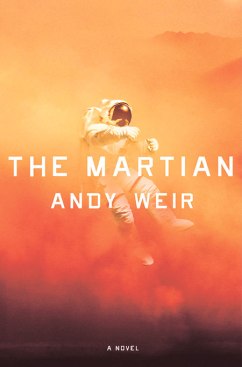 and so anyway it turns out that reading The Martian – Andy Weir’s nostalgic utopia about a world in which when things are broken you can just pop the hood, roll up your sleeves and fix them – is a lot like reading someone else’s to-do lists, with none of the how will I ever get all of this done? thrills and suspense of your own to-do lists and without any of the satisfaction of being able to cross things off…
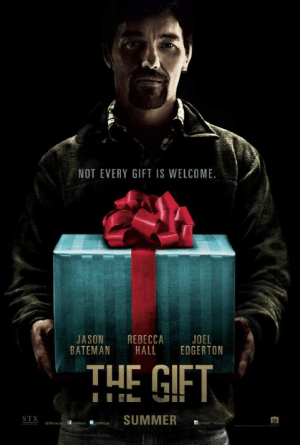 That any two guys, no matter how big the differences between them – say, decades ago, back in high school, one of them lied about the other being gay, which resulted in endless bullying and the poor kid nearly being killed by his own father – can learn to get along. Even if the former victim must drug, rape and impregnate the wife of his former tormentor to make him confront the truth about the past and the flaws within himself.
 When you have led a successful revolution and deposed a tyrant, you should not unnecessarily reveal that you intend merely to replace the tyrant and keep his system of state terror in place, nor, when subsequently presiding over the public execution of the former tyrant, should you elect to do so from a platform that, however elevated, is nonetheless in front of the firing squad, even if the firing squad is just a girl with a bow and arrow…
 that it is not in any way at all gratuitous when, from Metropolis (1927) onwards, robots in films are given the appearance of sexy ladies, but actually serves a genuinely vital purpose – as the sinister head (Denis Lawson) of a shadowy organisation notes, when one of his genius scientists (Toby Stephens) gives their robot the external appearance of the recently deceased sexy lady genius scientist (Caity Lotz), ‘glad that we give her tits … we could have had some confused lady-boy robot on our hands’.
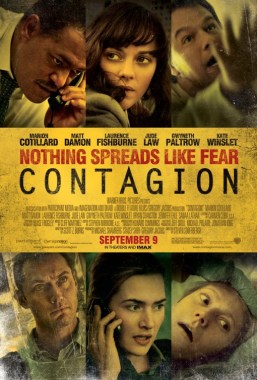 that we are all at risk from capitalist-globalisation, from world-spanning connections of commercial networks, over-extended food supply chains and international jet travel, from Jude Law’s teeth, bananas, vampire bats, vampire piglets and asian cuisine, but not as much at risk as we are from Gwyneth Paltrow’s vagina – even though at the time she was married to Chris Martin, and Coldplay surely pose an immeasurably greater threat to us all…
 and so anyway it turns out the best thing about Apocalypto (2006) is not the sensitive, respectful and not-at-all-made-up way Mel Gibson, the mullet-toting Donald Trump of 80s action cinema,
 Something is amiss in Bristol.


 and so anyway it turns out that the best fackin’ thing about Child 44 (2015) is not all the proper fackin’ swearing Tom “fackin'” Hardy does, cos there is no fackin’ swearing in it, nor is it the unbearably cute juxtaposition of Tom “fackin'” Hardy and a puppy, cos there’s no fackin’ puppy in it either, even though Tom “fackin'” Hardy and his MGB goons raid the apartment of a fackin’ vet, nor was it Gary Oldman’s ridiculous fackin’ overacting because for once there is very fackin’ little of that either, which I guess leaves Tom “fackin'” Hardy’s fackin’ accent as the best fackin’ thing in Child 44 cos of the way it wanders right the fackin’ way across the Soviet Union, from the fackin’ Ukraine to fackin’ Vladivostok to South fackin’ Africa, which was, I fackin’ swear, secretly part of the Soviet fackin’ Union…

 Mark Bould