The Hogs of Haddon Hall

In Haddon Hall, the seat of the Duke of Rutland, which dates back to Tudor times and beyond, there is a recurring porcine motif. I took these pictures intending to write about the ancient Peak District custom of once a year dressing up your prize pig as Shakespeare – a practice outlawed by an unamused Queen Victoria following an outbreak of Hamlet jokes during her visit to nearby Bakewell.

pig 1

250px-Hw-shakespearepig 3


Then the light caught this chap just right and instead I planned to write about the Duke of Rutland’s unholy cross-breeding of William Hope Hodgson’s swine-things with China Miéville’s skulltopus.

pig 2

But after #piggate #Hameron #swine/11 , there is nothing left to do but post the pictures and wonder quite how long that sort of thing has been happening, how widespread it is and how high it goes.

pig 4

PS There was also this rather cool monkey and a strange flying ukulele-playing bagpipe monster painted on one of the walls.
monkey

bagpipe

The Real Magic of Glastonbury

I admit I have always been sceptical of the place, all the crystals and shit. Back when I worked the festival circuit as a steward all those years ago, Glastonbury was the one I’d always skip, and although I’ve lived just a short bus drive away for more than a decade I’ve never felt the inclination to go.

But then – through some complex alchemy of rail repairs and the inability to think of an alternative – that is where we went.

The key is to leave the centre, with its shops full of crystals and wind-chimes, questionable displays of ‘ethnic’ clothes and accoutrements, King Arthur merchandise. The key is to get away from the strangely accented American who ‘can see the energy vortexes, although they are much smaller than [he] expected’.

Be gracious – permit him the uglier plural form of ‘vortex’ – and move on!

It is out beyond the town, away from the commercialisation and tourism, that you really begin to sense what it is that draws so many people.

There is some inexplicable energy or power about the place.

You can feel it in the air.

Down there, among the huddled boxes that cower, their backs turned to the grim periphery of builders’ yards and struggling industrial parks, in pathetic denial,

glas barrats

their UPVC conservatories lolling like pallid dry tongues, too enervated even to lap sustenance from the perpetual drizzle that fills the air.

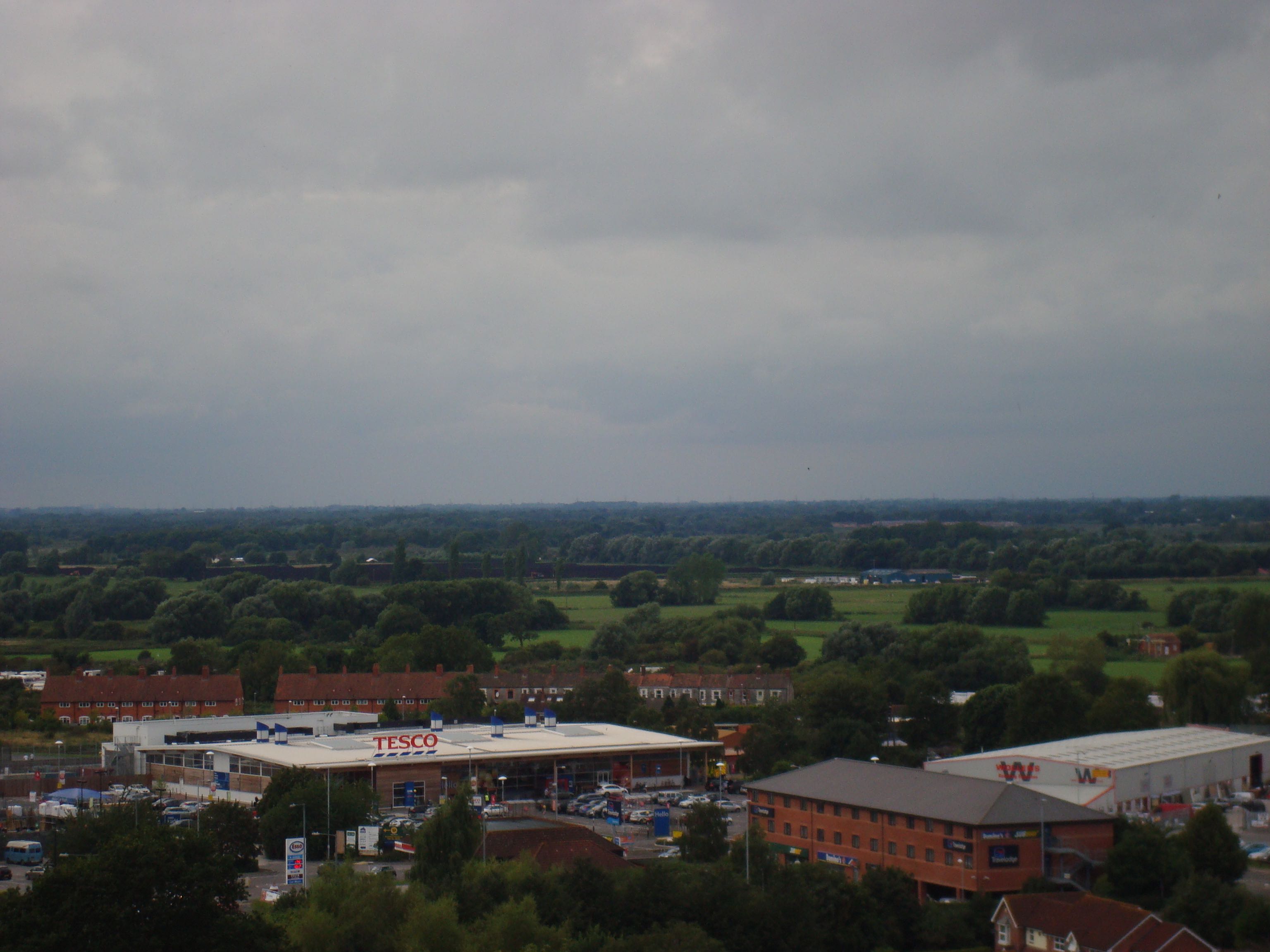
Down there, cowering in the scant shelter their Tesco and their Wickes can offer from the louring sky, empty now of gods.

glas tesco

Down there, gnawing on chicken bones behind their KFC and then casting them in a desperate cleromancy.

glas kfc

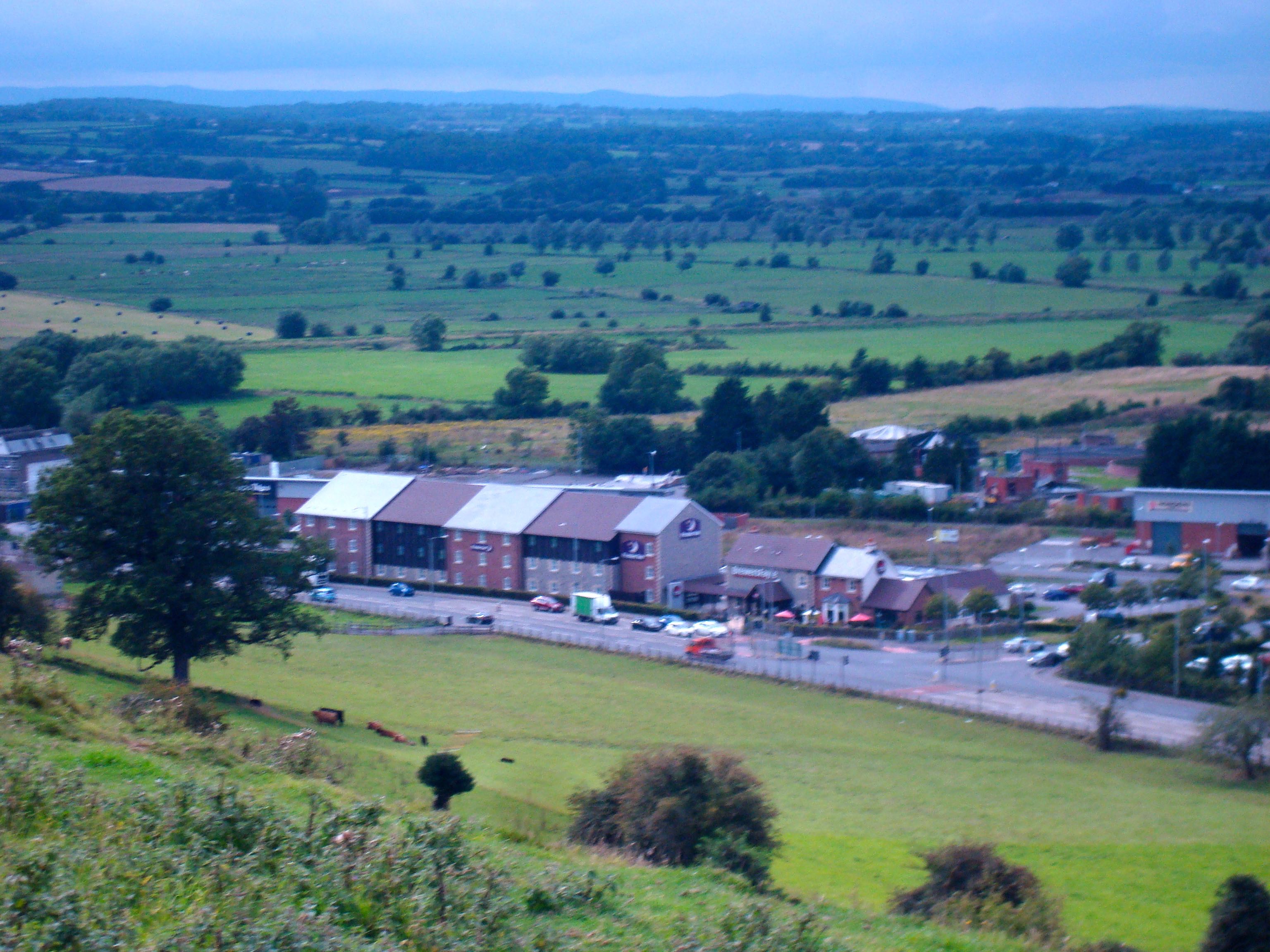
Down there, in their antiseptic hostelries, practicing their antic anomie, their idiot sex magick.

glas premier

Down there, where they dream of a different world.

glas garages

Down there, among the detritus of their strange rituals…

glas magick

…their fevered incantations…

glas incantation

…their sacrifices…

glas leg

Down there, among their baubles, their pitiable comforts…

glas garden

…there is something terrifying and unerring.

Some scurfish divinity.

Some tawdry pleroma.

Some filthy backwash of the sublime.

Angry Tourist at Gentrification Ground Zero

I should have been prepared for it. The bus journey to the start of our walk had given us plenty of warning. Weaving through the steep-sided Matlock Bath, we could make out big new houses being constructed on the surrounding hilltops so that rich folks could look out onto the Peak District and down on the strange old resort village.

To be honest, it is easy to look down on Matlock Bath – thanks to a comment by Byron, it was once known as ‘little Switzerland’ and was later dubbed ‘the Venice of the North’, when in reality it is more like the Paignton of the North on a rainy out-of-season weekday when most everything is shut – but at least I feel no urge to transmute my metaphorical disdain into architectural form. (Technically, this is the moral high ground, but it is not very high at all. Or particularly moral.)

It was only when we got onto the open moorland that it became clear how far this gentrification had advanced. Everywhere yougentrification look, noble dignified proletarian grasses and ferns and gorse are being swept away by a tide of purple sprouting broccoli, advancing inexorably like the Martian red weed.

gentrification 1Our long looping walk brought us onto the Chatsworth estate, home to the Dukes of Devonshire. In the 18th century, the 4th Duke reoriented the house and decided he wanted a clear prospect – to provide a startling first view of the house for approaching visitors, and to give himself a nice view of the grounds. In order to achieve this, he demolished the village of Edensor, where estate workers and others lived, and relocated them to a newly built village hidden from his view.

gentrification 2There are several striking things about his new Edensor. First, it is dominated by the Estate’s massive church – just to remind the residents who exactly is in charge. Just because they are out of his sight now, they have not escaped his power.

gentrification 3Second, no two buildings are alike. The Duke is said to have gone through a book of architectural pictures and picked out the ones he liked. The buildings are all rather sturdy and may well have been a significant improvement in some gentrification 4respects for the workers  who moved into them.

I really wanted to hate the place, but it is so fucking picturesque that at first it is quite difficult.

But the picturesqueness is part of the reason to be really angry at this obscene display of wealth. Fucking furious at the arrogance of the man.

It is not just the social cleansing – people seeing their homes demolished and being forcibly relocated just so someone could have a pretty view – but also that, having removed these workers from his prospect, the Duke then turned them into some kind of entertainment spectacle for his family and household and guests on their way to the Estate church. And no way did he not at other times just take his chums along to marvel at the absurd village he built and the amusing people who lived there. To him, they were no more people than the plants and trees in his garden.

I guess I should calm down. After all, my sole remaining career goal is to retire and be hired by one of these hereditary parasites as an ornamental hermit. And at least the struggle goes on, as the good people of nearby Bakewell demonstrate with their proletarian commitment to not ‘fusion’ but ‘portmanteau’ cuisine.

gentrifcation 5

My Cardigan is My Kronstadt!

Since discussing the importance of footwear in building the mass movement that will propel Jeremy to power in 2020, thus laying the foundation of the coming socialist republic, I have been wary of issuing any further statements for fear of Fleet Street distortion and misreporting, but thankfully since Jeremy became leader the press has been acting with characteristic restraint. However, the mailbag has swollen with letters from revolutionary cadre asking for clarification and advice on the knitwear issue which prevented me from joining the shadow cabinet. I do not have time to reply to them all individually, but I hope this example – from Thee Faction propagandist Babyface – will address many of your concerns.

Fraternal salutations, comrade!

A friend of mine, a gentleman of about your age, is about to plunge into cardigan-wearing. You’ve long worn them, and have retained your punk rock and hard left credentials, not to mention your cultural commentator status. Any advice for him on picking out a cardigan that lets you hang on to this stuff? Or is it all in the attitude?

Up the workers!

That I have received so much correspondence of this sort in the last two days indicates the magnitude of the issue. At the same time, that my good comrade is reduced to such transparent pretence – asking on behalf of ‘a friend’ – demonstrates how far-reaching in its effects is the Blairite virus and its on-message Stalinism.

I replied thus:

It is of course almost entirely a matter of attitude. It is also important to stubbornly persist in buying the same cardigan – or close enough that the uninitiated cannot tell – for decades. For off the shelf cardigans, Marks & Spencer’s plain black or very dark grey are good starting points, especially if you can find one where the wool is coated in teflon – this prolongs its life, helps a little in rainy circumstances, and enables you on occasion to refer to it as your ‘NASA space cardigan’. It is imperative, though, to cut out the labels so no one knows you bought it at M&S.

On the whole wool vs. blended fabric question, I have my own very clear preference, but at the core of my disagreement with Jeremy is my belief in a genuine broad church that welcomes diversity.

Is it permissible for knitwear entryists to photoshop their cardigan into old pictures on their social media? That is a matter of individual conscience.

All this takes me back a number of years to that odd period a decade or so ago when, at various leftist events, Alex Callinicos would flirt with me. Knowing that I was not a member of his party, but might be of use to it, he would lavish me with fleeting attention, coyly pretending to not quite remember who I was. However, I knew from comrades who had succumbed to his blandishments, that as soon as the seduction was over he would ignore me, and no amount of paper sales would ever win his affections. Even in those days, I did not really sense how toxic his party’s version of democratic centralism would prove, but our not infrequent discussions of couture soon revealed an immovable obstacle – any discussion with other cadre of the revolutionary and dialectical significance of the cardigan would be treated as an attempt to form a faction, resulting in my summary expulsion. There were, it seems, still some sticks that could not be bent.

Now I do not want to risk conjuring up a nightmare image of Jeremy on his Mao-ist bicycle, leading us into a future in which drab hand-knitted sweaters have become not just a re-education tool but a uniform foisted upon all. That, after all, is why we have a free and impartial press.

But it is clear to me that Jeremy’s claims about the superiority of the jumper, even when quoted in context, are irrational, mystificatory and profoundly undialectical.

This issue must be addressed.

And I say to him, as I said to Callinicos all those years ago, my cardigan is my Kronstadt! ¡No pasarán!

Comrade Bould
Cardiganista Corbynista

Why I Will Not Serve in Jeremy Corbyn’s Cabinet

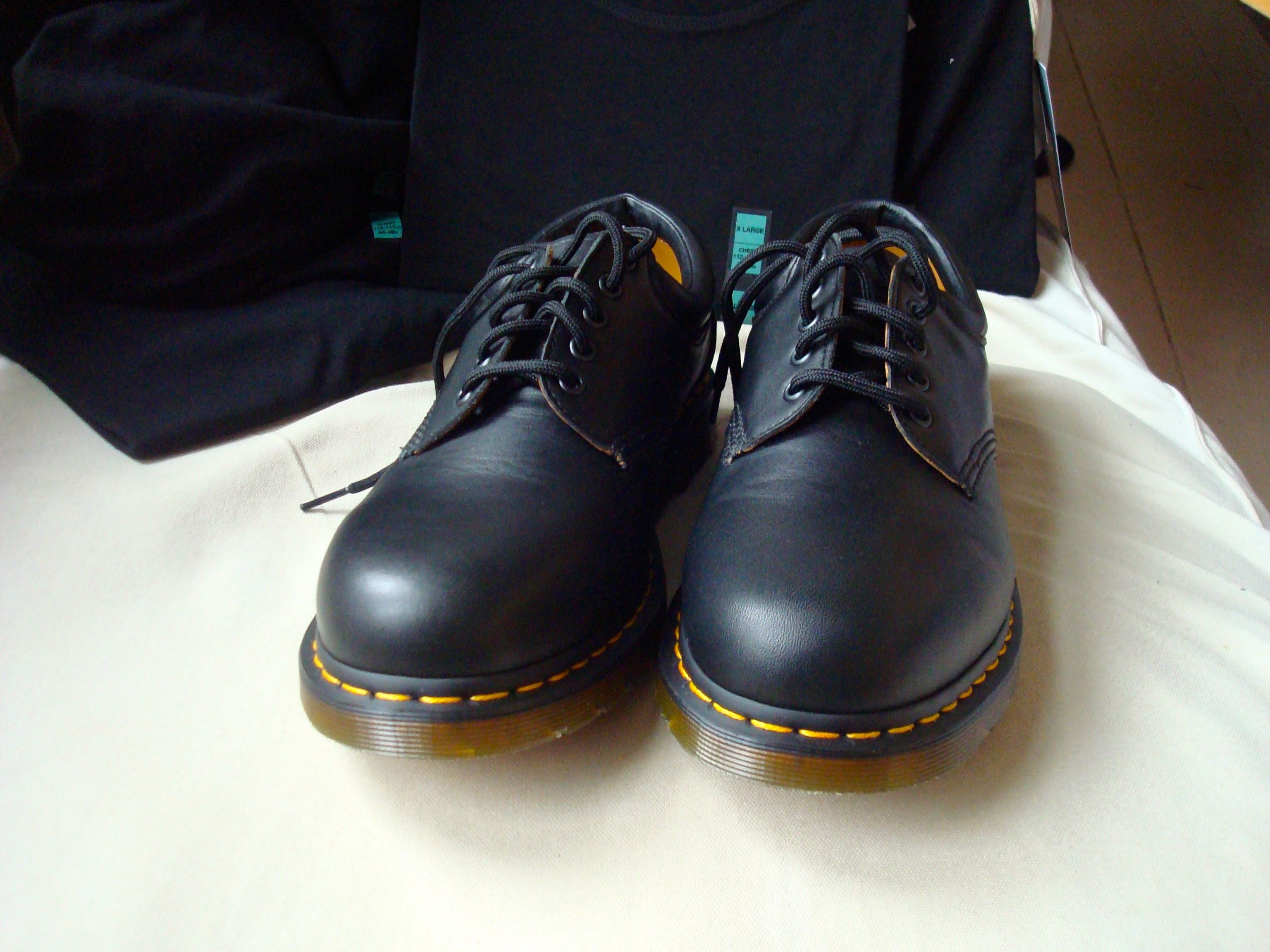
Overcome with Corbynista euphoria, as so may others have been in the last 48 hours, I popped into town this morning to buy some new shoes. To welcome the first signs of the coming socialist republic, I didn’t just buy new shoes – for the first time since Michael Foot was party leader, I bought an entirely new style of shoe. This symbolic shift from the three-hole hard leather to the five-hole soft leather Doc Marten represents not – as my critics have claimed – that the shop did not have any of the former in stock in the right size but the deeply-held belief, shared by Jeremy and I, that the labour movement is a broad church. Co-operation requires concessions, and it is incumbent upon us all to welcome diversity and change.

corbyn shoesHowever, after lengthy discussions over the weekend, it became clear that our new leader was utterly intransigent on the question of home-knitted sweaters and would never embrace our revolutionary comrade, the noble cardigan. This is a key point of difference on policy which I believe it would be dishonest to deny exists. If Jeremy’s clear victory on Saturday demonstrated anything, it was a desire for politicians to be true to what they believe – I want to abide by this. Given this difference, I would find it difficult to abide by the collective responsibility that comes with serving in the shadow cabinet.

Furthermore, I must denounce as groundless rumour the vile calumny, being circulated by disgruntled Blairites and the Tory press, that I intend to cease wearing black t-shirts to everything – as hopefully today’s other new purchases in the backdrop of the above picture make clear.

Mark

My Holiday in the Peak District, final day

Dark-clouds-over-Chrome-landscapeDay 1234am4pm71117, 21.

I should never have…

I have his dreams, I see the ancient temple beneath the rocks, I see where the face is

was

it is no longer there

later
Peering out of the windows at what my watch assures me must be noon – even in this thick caul of fog there is some light out there, though it is diffused, lacks direction, is too ambient even to cast a shadow – there is nothing but a luminous watery haze. Something moves out there. Not the black dog nor the white hare, their duty of prolepsis is long over and they have fled. What moves out there is vast and inhuman.

Sometimes I think I am the bottom of an alien ocean and above me a leviathan courses through the deeps, pursuing elephantine prey with a stately grace born of its immensity. Sometimes I feel its shadow fall on this narrow house. Terror turns to hope. How can something as miniscule as a human life even be noticed by a being so colossal?

I know this is just idle fancy.

The thing outside is terrene, mineral. Asperous. It moved so slowly for millennia that it appeared to be without life. Perhaps its liveliness was twisted out of sight in another dimension. But now it walks the Earth again.

later
It is coming for me. I know that, though not how I know that. I can only surmise that hidden in the words of the codex by some ancient steganography were words, curled up like a virus, waiting to be woken, words that infiltrated my mind, replicating and replacing neurons, wiring themselves into me. And that by some strange conjunction of influences, I was drawn here. And they leapt again, from me to the even older text Charteris unearthed, and activated something within it.

later
I see I have become quite mad.

later
What we think of as madness is really knowledge, perhaps even a kind of truth. I see the world differently now, and it is twisting me, making me other. Who knows what I will have become by the time my rescuers arrive?

But I am not so delusional as to expect rescue any more, or respite.

The thing out there is quartering the ground. It is drawing close.

It will not be long until it finds me.

later
It’s in the trees! It’s coming!

***

Fin

My Holiday in the Peak District, day 21

Dark-clouds-over-Chrome-landscapeDay 1234am4pm711, 17.

It is now ten days since we last ate. Even the honey with which I rendered the bitter tea palatable has run out. I suspect Charteris of stealing tiny amounts each day, and whenever I am now forced to drink such amaroidal stuff I must quell a rage that swells in my chest and throat. I fear it is not part of me but that thing within me that was summoned here, and that as I grow weaker it grows stronger.

Trapped in this Cimmerian gloom, I struggle to recall what daylight looks like. All there is is lethargy and a sense of inevitable withering.

The thin and desperate cries of Dyson and MacReady have fallen silent now.

Something is moving around out there.

Charteris shambled fitfully around the cottage, regressing into the very likeness of a villager, his hands becoming awkward appendages, capable only of clenching and clutching. Occasional moments of lucidity interrupted his constant mumbling occasionally, but it was clear his sentience was fading. He slept a lot, but restlessly. He tossed and turned as if animated by some idiot cosmic puppeteer, his strings badly tangled. He would, with persistent dull regularity, awake screaming in terror. When I tried to quiet him, he muttered over and over that ‘It is gone, it is gone’. After several days of such obscure maunderings, I realised that he had been dreaming about the crypt, about the stone face in the wall. He has infected my imagination. Even now, when I try to recall that strange grotto, I can visualise it perfectly, but the face is no longer there.

The odd thing about going so long without food is that I am too exhausted to do anything, yet too exhausted to sleep. My face is the colour of bruises. There is a rash spreading on my left arm. I found a patch of that fungus there and scrubbed at it too hard with a toothbrush. Cleansing my flesh, I broke the skin and gave it a way inside me. I scratch at it without realising until blood coats my arm.

Each day I press on slowly with my work on the printout of the writing on the tablets. My head is too blurry. The script remains elusive, dancing just outside the reach of my stumbling intellect. It taunts me.

I would not have done it.

It was not me that did it. It was that thing that he brought here inside me.

Several days ago, Charteris started wandering up to me at random moments and shaking me violently, interrupting my concentration. He kept claiming I was in a trance, incanting the ancient words on the sheets before me. He would not understand that it was impossible for me to do so, that there was no way for me to pronounce a language that had not been uttered on this world in millennia.

He will never understand now.

But as I sit here, alone at last, I cannot help but wonder whether he was speaking some kind of truth. My mind has not always been as focused as I claimed. With my disrupted sleep, it is no wonder I sometimes drift off a little while poring over these archaic texts. Perhaps in a state of hypnagogic liminality my consciousness slips, and whatever it is inside me that was summoned here gains egress from the realm in which it has been confined and some tendril of its dreadful being possesses me.

That would explain it.

That would explain how Charteris came to be lying at my feet, his head not merely bludgeoned but crushed – caved in, as if by the exertion of some monstrous pressure on skull.

It would explain how his blood came to be mingled with mine on my hands and arms.

At least I need no longer go hungry.

Final day

My Holiday in the Peak District, Day 17

Dark-clouds-over-Chrome-landscapeDay 1234am4pm7, 11.

Mankind’s greatest folly is, it seems, to hope.

The fog has neither lifted nor even retreated.

Charteris and MacReady have twice now tried to reach the farm. Both times they returned empty-handed and clearly shaken.

Dyson can barely even bring himself to look in the direction of the orchard, yet as another day dawns without the prospect of food, it is he who suggested trying to make our way through the fog to the village.

At first I resisted taking part their expedition but, as they equipped themselves to leave, the prospect of being abandoned here filled me with a dire foreboding. They had the decency not to comment on the haste with which I join their preparations. We roped ourselves together as best we could with belts and ties, with Charteris in the lead position. He handed each of us a heavy duty flashlight. ‘We need to preserve the batteries,’ he said, ‘just in case, so let’s see how far we can get with just my torch.’

The fog was like a shroud. I could feel it tightening around us, almost. I could barely make out Charteris ahead of me, or Dyson behind me. MacReady brought up the rear, invisible to me.

Charteris set a careful pace, occasionally straying from one side of the lane to the other, and pressed doggedly on.

Time descended upon us like a cerement.

I have no idea how long we had been walking when Charteris abruptly halted. We clumsily concertinaed together. A car angled across the road blocked our way, its front doors wide open. It took a few moments for us to recognise it as the one in which Dr Raymond had driven off in search of a phone signal.

‘Why are both doors open?’ MacReady asked. ‘Did he have a passenger?’

The answer was not long in coming.

We snaked cautiously around the obstruction. The irriguous grass at the edge of the road was slippery underfoot; waterlogged nettles and stubby branches reached out of the hedgerow to sting and graze.

The fog blunted Charteris’s torch-beam, diffusing and curtailing its reach, but even in its feeble glow we could see the bodies lying in the road. Sprake, who the doctor must have found shortly after leaving us, his pasty body now almost blue, his skin mottled with the strange fungus that contaminated everything in this damned valley, and Raymond himself, as naked as his erstwhile charge, his jaundiced flesh bruised and bleeding. The broken corpses were arranged, as if by some seedy maniacal godling, in a sordid tableau of joyless copulation.

Nausea and unreason swept through me, unhinging me briefly.

Sickened as the others were, they were all for pressing on towards the village, but nothing could compel me to take another step in that direction. MacReady bristled and, when I would not bow to his threats of violence, he urged Charteris and Dyson to just leave me there in the road. ‘Let him keep the cadavers company,’ he snarled.

Eventually, Charteris agreed to return with me to the cottage while MacReady and Dyson continued on in search of help or haven.

That was four days ago.

The fog remains impenetrable, the transitions between day and night almost indiscernible in the gloom. Sometimes I imagine our timepieces running down, and I am filled with trepidation at the thought of being trapped here with no certain way to measure the passage of time.

‘They will return,’ Charteris says several times each day. ‘They will bring food. We will be rescued.’

Such pathetic hopefulness makes him seem small. He is shrinking in significance.

I have not told him that sometimes, through the fog, I hear Dyson and Macready calling out. Begging for us to help them find their way back to this paltry shelter.

They are lost.

Their voices are the voices of the damned, and with each hour that passes they grow weaker.

Day 21

My Holiday in the Peak District, day 11

Dark-clouds-over-Chrome-landscapeDay 1234am4pm, 7.

Sprake has returned!

I fear what it portends.

Lower Wirklesworth is one of those villages that nowadays must share its vicar with three or four others in his parish. When he gave Charteris access to the church, it was on the understanding that we would not intrude on the days when services – which rotate between the villages – were being held there. Today is such a day. There is a wedding, I gather, though it is difficult to imagine any of his shambling parishioners seeking a religious blessing upon their unseemly propagation.

Finding it hard to concentrate on my work while the others began to stir, I happened to glance out of the window, and there, in the mist that shrouded the orchard this morning, I saw him. Sprake.

Naked, apart from a cape he seemed to have fashioned by reversing one of those hospital gowns that do not fasten up the back, he eagerly stroked at his tumescent manhood.

I rose, stunned, and the others followed my gaze.

Sprake spilled his seed onto the bark of a stunted apple tree, and danced away out of sight.

‘Bacchus and Priapus,’ Charteris laboriously quipped, ‘we should not be surprised to find him playing Pan, now should we?’

The other morning, when Charteris had sent us to our tasks, found a shovel and a supply of bin bags, collected and disposed of the animal debris ringing the cottage, even found a hose somewhere to wash away the blood and feathers and fragments of bone, I found myself for the first time ever beginning to admire him. He did it quietly, fastidiously, without any fuss, neither commenting on it nor expecting our gratitude. But today, as he mocked Sprake and seemed disinclined to aid him, any hint of approbation and esteem I might have felt died.

‘He’s out there, in this weather with no clothes,’ I said. ‘He’ll die of exposure if we don’t do something.’

Charteris stared at me, puzzled, as if seeing something for the first time, then ordered us to quarter the orchard for any trace of the poor bewildered man.

After a fruitless hour, we regrouped at the cottage. The mist was turning to fog, and we had still not breakfasted. Shortly after Dyson left for the farm to collect our supplies, a car pulled up. It was Dr Raymond, as sallow as ever. He had come to tell us of Sprake’s escape, and to see if he had returned here. ‘I didn’t inform the police yet, as I thought it might be resolved without any fuss,’ he explained. ‘You keep searching, I’ll drive out of the valley and call the rescue services once I can get some reception on this damn phone.’

Ten minutes later Dyson’s cries for help reached us through the thick and sodden air, ringing like a gong. The fog had become so thick he could not find his way back. Charteris and I went to make tea, while MacReady stood outside, calling at regular intervals to guide Dyson back.

He stumbled into the kitchen, empty-handed and clearly shaken.

‘I can’t find the farm,’ he explained.

I am the only one who never goes to there – I dread finding myself alone with any of the locals, whose unfocused physiognomies and hobbling brute forms I confess disturb me deeply – but I understand the path to it is straight and unbroken, with no junctures or offshoots that might mislead one, and Dyson has a level-head and steady nerve. I cannot make sense of his perturbation. He says he did not stray from the path, that it seemed to shift beneath him, like some inhuman sentience drawing him into its bosky tentacular embrace, sprouting ligneous ungulae to catch in his hair and clothes.

The farm, he insists, is no longer there.

The fog is growing heavier, killing the light. I can no longer see the trees, though I sense them drawing closer – the spawn, perhaps, that Sprake returned to grubbily fertilise?

Day 17
My Holiday in the Peak District, day seven

Dark-clouds-over-Chrome-landscapeDay 1, 2, 3, 4am, 4pm.

It is some time since I have had the opportunity to write. There has been so much to do, and the days have blurred into one another. My mind has been pre-occupied not only with that strange subterranean drumming – an incessant thrum that now seems to accompany me everywhere – and that monstrous visage, but also with the task which Charteris has set me. In order to pursue it, I have set aside, albeit temporarily and with much anguish, my translation of the codex.

You see, around the walls of that chamber are arranged twelve tablets, spaced equidistantly. The writing carved in each of them is in a language predating the text recorded in the codex, but clearly (I think) an ancestor to it. If MacReady and Dyson are correct, it dates from before the well-known proto-Elamite script and the controversial Dispilio Tablet, and even before the Vinča and Jiahu symbols that only a canting professional courtesy dares call ‘writing systems’.

My unease disappeared as I pored over the antediluvian writing, clumsily attempting to transcribe it while holding a torch. ‘We already have complete 3-D scans of them,’ Charteris said. I put  my pen and pad away and just spend time taking in this wondrous find.

Each day I return to the chamber for a while to read the actual characters, but most of my time is now spent with a print-out of the scans, familiarising myself with this most ancient of tongues, beginning the laborious process of comparison, hypothesis and deduction, all of it tentative, most of it destined to being discarded. Charteris, not seeming to grasp that this is a life’s work, urges me on to premature and incautious attempts at rendering the script in English.

For all that my days now possess a common pattern, I continue to be disturbed and agitated. The scratching within the walls now follows me throughout the house. The squirrel continues to feed whatever it is in her nest. That dark shape lurks on in the orchard, and at the edge of my vision that white creature flits away before I can take it in. I realise I do not know the difference between stoats and ferrets and weasels and mink – could it be one of them? According to local miners’ superstition, a white hare is an ill-omened creature, presaging catastrophe. They say something similar about seeing a large black dog. I try not to think about it.

The rain is incessant now. It hangs in the air like a shroud.

Each morning as I focus on the ancient text, I become lost in concentration. MacReady and Dyson have both essayed repetitions of Charteris’s prank. On consecutive days, one or other of them stood over over me with a concerned expression on his face as if he had just woken me from an unearthly possession and dire incantations. Charteris brushed them away, making it clear I will not be chaffed in this way, but he too looks at me oddly.

This morning they are unable to continue such foolishness. When they come down from their beds, they find me pacing the kitchen floor in deep distress.

I had arisen early, as is my wont, and thrown back the curtains in my room. The squirrel was squatting there, just outside my window, as if waiting for me. I swear she looked directly at me, her rheumy eyes glaring coldly, as she raised her paws to her mouth and began to eat. Whatever she held was still alive, wiggling, screeching in pain as she gnawed at it. Once it ceased to move, she discarded it, and darted back to her nest. Just as I began to make out the form of her prey, she returned and repeated the performance. She did this six times. I watched in horror as she killed, partially consumed her young and scattered their corpses indifferently around her.

Sweetened tea was unable to quell the sickness mounting within me.

As I told the others about it, MacReady put on his coat and boots and set out to the farm for the day’s supplies. Within moments he returned, more pallid and shaken I suspect than even I had been this morning. ‘You have to come and see this. All of you.’

Outside, surrounding the cottage in a nearly perfect circle there is a ring of dead animals and birds, torn out of shape, ragged and distended, shattered; many are beyond even the most rudimentary of identifications.

We do not even try to formulate explanations.

We are stranded on an island in a blood-thirsty sea, our high-water mark limning the outline of some indiscriminate biological pogrom. The air reeks of a desperate foreshadowing.

Day 11