 and so anyway it turns out the best thing about Big Ass Spider! is not, as you might assume, its title, which, like Eight Legged Freaks (2002), no film could possibly live up to, nor is it the pleasure of seeing Lombardo Boyar, playing the offensively-written comedy ethnic sidekick, steal every scene he is in, because sadly that is not really much of an accomplishment, nor is it the unexpected Lloyd Kaufman cameo, no, the very best thing about Big Ass Spider! is that they seem to have brought it in on time and budget, more or less, I guess…
Author: markbould
The Mad Maxathon, part two: The Road Warrior (1981) mostly
 Part one, part three, part four
Road Warrior might be punk’s Sistine chapel, but it is not without problems.
To be punk at all it has to have problems.
Many of them come from its dependence on colonial adventure narratives, particularly Westerns. There is an enclave of ‘white’ civilisation in the wilderness – a fortress, circled wagons – surrounded by aggressive and highly mobile ‘savages’, who are darker and more ‘tribal’ (some even sport Mohicans), and who rape and murder one of the ‘white’ women.
And as if this racial othering is not enough, many of them also dress as sexual dissidents.
To be honest, I am not sure whether it is because I have cherished this movie since adolescence that I tend to overlook these problems, or whether it is genuinely more complex than this reductive account suggests. Certainly such colonial imagery can be used in different ways. For example, when Starship Troopers (1997) uses the fort under siege scenario, it does so to parody imperialist military aggression. Unlike, say, Zulu (1964), in which post-imperial melancholy works hard to mythologise yet another shabby episode in the history of British imperialism. And unlike the final section of X-Men: The Last Stand (2006), in which Brett Ratner, once more putting the idiot into idiot savant, slanders San Francisco’s queer counterculture.
And Road Warrior does do some interesting things with its colonial set-up.
 Three of the key ‘white’ people are so white as to become parodic, including their bleached blond leader Pappagallo (Mike Preston, who back in the late 50s recorded ‘Dirty Old Town’ and ‘Whispering Grass’, long before The Pogues and Windsor Davis/Don Estelle). This excess at least suggests a self-consciousness at work, and although it might not be very articulate, it is far more convincing than the post-hoc claims that the Rutger Hauer’s Roy Batty (in that film from the following year about the police flying around over Los Angeles deciding who counts as human) is some kind of ‘ironic Aryan’. (The absence of any actual Aboriginal people helps deracinate the situation, I guess.)
 Related to this is the transition from Mad Max’s Tom of Finland coppers to the accoutrements of sexual dissidence worn by the ‘natives’: the studded leather pants, wristbands and harness of The Humugus (Kjell Nilsson), and his Jason Voorhees take on an enclosure mask; the buttocks-flashing chaps of Wez (Vernon Wells) and the cutaway bondage gear of his bleached boytoy, etc, etc. However, I think this works a little differently to Toecutter’s stereotypically jealous (but, come to think of it, not really demonised) blond second-in-command in Mad Max.

Yes, the ‘natives’ are queer (except perhaps for the misleadingly credited ‘Tent Lovers’), but they are also charismatic and alive in a way the ‘white’ folks are not.
In Doomsday, the natives’ Glaswegian equivalents – and who would have thought that thirty years after the zombie apocalypse there would be quite so much pristine bondage gear stockpiled in Glasgow? – bear a very specific resonance, as evidenced by the music Sol (Craig Conway) plays to the crowd before they cook and eat Sean Pertwee. Adam and the Ants’ ‘Dog Eat Dog’, the Fine Young Cannibals ‘Good Thing’, Siouxsie and the Banshees’ ‘Spellbound’ and Areil Rechtshaid’s knock-off of Bad Manners’ ‘The Can-Can’ are all part of the anti-Thatcher eighties, and so it comes as no surprise that during the Road Warrior-like climactic chase, we get Frankie Goes to Hollywood’s ‘Two Tribes’. Displaced into the future, this is a culture of political and sexual dissidence being celebrated.
In Road Warrior, the celebration is perhaps less clear, but the film does not despise its ‘natives’. Miller, like Milton, is secretly of Satan’s camp.
And the opposition between the ‘civilisation’ and ‘natives’ is not as secure as one might think. Max lives in the wilderness and only crosses into ‘civilisation’ so he can leave again. The same is true of the Gyro Captain (Bruce Spence). He eventually chooses to stay, but only as ‘civilisation’ begins its long trek through the wilderness. The Feral Kid (Emil Minty) is raised in ‘civilisation’ but looks like one of the ‘natives’, grunts and growls a lot and behaves like some kind of monkey-dog; his finger-slicing boomerang is as close as we get to Aboriginal culture. And of course the opening narration turns out to have been spoken by him in his old age, long after the events of the movie, when he has become the chief of the Great Northern Tribe – a rank and social structure that suggests some retreat from ‘civilisation’.
 The bondage gear also provides Humungus’s motivation for besieging the fortified refinery. Clearly, from the way his crew race around everywhere, they are not short of fuel. But in that dry hot sandy environment, leather and rubber are gonna get uncomfortable. They’re gonna chafe. So it is not gasoline Humungus is after. It is some other petroleum-based product. Like, I dunno, vaseline.
Mad Max’s key cinematic innovation was setting the racing cameras so close to the ground. Road Warrior added a couple more things to the language of contemporary cinema.
First, is the long final action sequence. Films did not used to do that, and now they do. Without Road Warrior, the runway during the climax of Fast and Furious 6 (2013) – a runway so long you begin to suspect they are just gonna drive all the way to the destination airport – would have been a whole lot shorter and much less would have happened on it.
Second, is the radical electro-surgery George Miller performed on the muscles under Mel Gibson’s face, so that in this film it actually moves. Sadly, this experimental procedure was not entirely successful, dooming Gibson to decades of shit-eating glibness and peculiar gurning.
One time it even turned his face blue.
The Mad Maxathon, part one: Mad Max (1979) mostly

Part two, part three, part four
Waking up in post-apocalyptic Britain last Friday, and with only a week to go until Mad Max: Fury Road, it was time to get back up to speed. Thus did the Mad Maxathon commence!
Back in my Plymouth teens, one of the local free papers had a competition to win cinema tickets and related goodies. Most weeks I entered and – not having enough pocket money or, later, paper-round wages to waste on a postage stamp – would deliver it in person (in a reused envelope) to their offices. The only things I ever won were a pair of tickets for a double bill of Ghoulies and Trancers (I suspect no one else entered that competition) and, a year later, a pair of tickets for Mad Max Beyond Thunderdome, a film my girlfriend did not want to see, especially after the preceding year’s fiasco. Oh, and along with the tickets came a Thunderdome t-shirt, which I had to collect in person and, being poor, could not just throw away despite the embarrassment of advertising a film I hated. It became a winter garment, always worn under something else, until eventually it faded and fell apart. This may well be the origin of my dislike for clothing with writing on it. And of white t-shirts.
I forget when or where I first saw the previous movies – presumably on video at a friend’s house. So something good did come of those free tickets. They enabled me to reassess my opinion that Mad Max, despite holding the world record cost-to-profit ratio for twenty years, was the weakest film in the series. (The Road Warrior was always, in the words of JG Ballard, ‘punk’s Sistine Chapel’.) While I have watched the first two multiple times over the years, I have only seen Thunderdome twice – and not since it was first broadcast on television. So how do they hold up?

Mad Max starts off as a properly sleazy ozploitation flick: a tubby copper in leather spies through rifle sights on a couple having sex in a field; an insane car chase ensues. There will be more bare bums in the franchise (and car chases).
Mad Max was one of the first Australian films to be shot using widescreen anamorphic lenses but George Miller’s real innovation was to mount the cameras on speeding cars and motorbikes so very close to the ground. It does not sound like a lot, but it was, and remains, breathtakingly perilous to watch.
 Accounts of the film often take note of Miller’s work as an emergency room doctor, and of several incidents during the OPEC crisis when – in full Ballardian mode – regular folks queuing for fuel violently turned on each other. Clearly some kind of autogeddon was in the ozploitation air (see also: Peter Weir’s The Cars that Ate Paris (1974), one of the earlier Australian films to use widescreen anamorphic lenses, whose spikey Volkswagen is homaged in Fury Road; Ian Barry’s Chain Reaction (1980), which stars Mad Max‘s Steve Bisley, Hugh Keays-Byrne and, as an uncredited bearded mechanic, Mel Gibson; Brian Trenchard-Smith’s Dead End Drive-In (1986), based on Peter Carey’s story; and, in a slightly different vein, Richard Franklin’s Road Games (1981)).
I was not surprised to hear that for Fury Road, George Miller presented Tom Hardy with a 300-page ‘comic’ made up of storyboards, rather than a conventional screenplay because Mad Max – with its generic mix of AIP biker movie, backwoods Straw Dogs/Deliverance rape-revenge narrative, lone gunfighter/sheriff/samurai seeking revenge/justice, rogue cop brought out of retirement one last time and this time its personal – comes across increasingly like a 2000AD strip. This connection with the other Sistine chapel of punk comes full circle, first in Neil Marshall’s underrated Doomsday (2008), which riffs off The Road Warrior but also in its final shots gives Rhona Mitra a Carlos Ezquerra/Mike McMahon big boots look, and then in Fury Road, co-written by Brendan McCarthy, who started working on 2000AD in the late 70s and then, inspired by Road Warrior, co-created the post-apocalyptic surfer comic Freakwave (1983). Some consider Freakwave to have been plagiarised by Waterworld (1995), which was dubbed ‘Road Warrior on water’ back in the day. ‘All at sea’, more like.
Mad Max’s melodramatic transitions in particular have something comic-book about them – foreshadowing Sam Raimi’s more obviously comics-inspired Darkman (1990) – and, to be honest, much of the dialogue would probably work better as speech bubbles. The stand-out dialogue scene is the one in which Mel Gibson, with his oddly immobile face, emotes, trying to say something incomprehensible to his wife about his feelings for her in terms of feelings he had for his dad but never expressed. Or something like that. Wisely, to shut him up, she kisses him. And considering how unwise kissing Mel Gibson actually is, we should thank her. She may be overly taken with the idea that running right down the middle of the road is the best way to flee murderous bikers, but right then, at that snoggy moment, she takes one for the team.
 Mad Max is only Gibson’s second film and, although he has yet to become completely insufferable, the construction of his image of physically battered masculinity – the shirtlessly electrocuted resistant-to-electrocution Martin Riggs getting his ass handed to him by the mighty Gary Busey in Lethal Weapon (1987), the shot-to-pieces Martin Riggs annoyingly not dying in Danny Glover’s arms in Lethal Weapon 2 (1989), the hammer-to-the-toes justifiably tortured hardly-Lee-Marvin of Payback (1999), culminating in all those unpleasant things people do to Jim Caviezel in The Passion of the Christ (2004) – is already gearing up as he (somewhat ineptly) wreaks his revenge.
Given Gibson’s occasional homophobic outbursts, I vividly recall being delighted to discover that, at least in the olden days, he used to have a big enough gay following to provide one of the case studies for Michael DeAngelis’s Gay Fandom and Crossover Stardom: James Dean, Mel Gibson and Keanu Reeves (2001). I am however quite mystified as to the source of this, or indeed any hetero, attraction. Sure, in Mad Max, he is young and pretty and wears tight black leather and does not yet have a mullet. Is it that? Or is it his later tendency to be as shirtless as Matthew McConaughey while wrestling in the rain with Gary Busey or otherwise taking physical punishment? A suffering that in some ways maps onto his Judy Garland-like life of dislocation and addiction and abuse (although admittedly he is the abuser, not the abused)? Please tell me it is not the mullet.
Oh, and Main Force Patrol? Come on, people, that is not what MFP stands for.
American Hustle (David O Russell 2013)
 and so anyway it turns out the best thing about American Hustle (2013) is its teasing revelation that the whole Christopher Nolan Batman trilogy thing was merely laying the groundwork for Christian Bale to perform the most
  remarkable yet of his many physical transformations, of which the drastic weight loss for The Machinist (2004) and Rescue Dawn (2006) are the most renowned but which hardly presage and count as nought compared to his metamorphosis
 into Adam West…
EE ‘Doc’ Smith’s, The Skylark of Space (co-written with Mrs Lee Hawkins Garby)
Back in the mists of time, around a decade ago, there was a plan for an ever-expanding online collection of short critical essays on key works of the fantastic. The plan fizzled and died, but not before I wrote nine pieces for it (which I just found). This is another of them.
 Written: 1915–1920
First published: Amazing Stories, August-October 1928
First edition: Providence, Rhode Island: Buffalo Book Co., 1946
Edition used: London: Panther, 1974 (revised text of 1958)
Richard Seaton accidentally discovers the ability of ‘X’, a hitherto unknown metal,
to liberate and control the entire constituent energy of metallic copper. (17)
This
pure and total conversion of matter to controllable energy [with] no radiation, no residue, no by-products (17)
 provides the key to space travel. Seaton and his millionaire chum, M Reynolds Crane, set out to exploit this source of virtually free energy. An attempt by rival scientist, Marc ‘Blackie’ DuQuesne, to hold Seaton’s wealthy fiancée, Dorothy Vaneman, ransom in exchange for X goes awry. DuQuesne’s starship is flung across space at an incredible speed. Seaton and Crane pursue them in the eponymous starship. They rescue Dorothy, DuQuesne and another hostage, Margaret Spencer, from the grip of a dead star. On the low-gravity planet Osnome, they take sides in (and win) a genocidal war, before returning to Earth.
Smith was neither the first to write space opera (Robert W Cole’s 1900 The Struggle for Empire is a more likely contender), nor the first American author of space opera (that distinction probably belongs to Ray Cummings), nor indeed the best of the subgenre’s first flourishing in the American pulps (Edmond Hamilton, John W Campbell, Jr and Jack Williamson consistently wrote less infelicitous prose and demonstrated a better grasp of the potential of sf). But Smith’s work remains the best-remembered. Undoubtedly, this is partly a result of being  among the first pulp sf to be reissued in hardback editions in the late 1940s and 1950s, and of the 1960s and 1970s paperback editions finding a substantial following among the fantasy readership created/uncovered by the US paperback editions of JRR Tolkien’s The Lord of the Rings. Although Smith’s space operas often seem excruciatingly naïve by the standards of more contemporary authors (Iain M Banks, Samuel R Delany, Colin Greenland, Ursula Le Guin, M John Harrison, Ken MacLeod, Alastair Reynolds), the continued popularity of the Star Wars movies indicates that juvenile sf of this sort is still attractive; and while it is tempting to read Smith’s sf as camp, this can only partly (if, presumably, increasingly) account for its appeal.
One of Smith’s central achievements is to capture something of the scale of the universe while also rendering it safe, conquerable, human-sized. Despite postulating new technologies and travelling thousands of light years from Earth, the characters and plotting of The Skylark of Space are firmly rooted in familiar romance conventions. Seaton is a working class boy made good, a scientist and athlete
over six feet in height, broad-shouldered, narrow-waisted. (12)
He can withstand higher acceleration than any of his crew, and exercises his super-strength to great effect in Osnome’s low gravity.
Crane,
the multi-millionaire explorer-archaeologist-sportsman’ (12)
is also a businessman, an engineer and
a rocket-instrument man second to none in the world. (13)
Seaton’s love for Dorothy and Crane’s for Margaret is pure, assured, eternal. DuQuesne is
utterly heartless and ruthless, so cold and scientific (90)
 yet strangely honourable in his villainy. And in a world dominated by global corporations, it falls to such individuals to discover, create, explore. Despite such unrealistic characterisations, the very familiarity of these types works to domesticate the universe in which they adventure.
Moreover, the vastness and strangeness of space is also contained by Smith’s repeated failure to depict it. As the crew whiz around the galaxy, they observe it almost entirely through instrument readings, and the few descriptions of what can be seen through the Skylark’s viewports possess a curious contradictory quality:
For the blackness of the black of the interstellar void is not the darkness of an earthly night but the absolute absence of light–a black besides which that of platinum dust is merely gray. Upon this indescribably black backdrop there glowed faint patches which were nebulae; there blazed hard, brilliant, multi-colored, dimensionless points of light which were stars. (88)
In addition to the clumsy simultaneous presence and absence of light in this view, there is blackness to be recognised through its dissimilarity to the blackness with which the reader is familiar.[1] A more telling failure to depict an external view of space comes in the passage in which Crane realises his love for Margaret. Staring out
into infinity, each felt as never before the pitiful smallness of the whole world they had known, and the insignificance of human beings and their works. (91)
As their ‘minds reached out to each other in understanding’, Crane considers Margaret:
He looked up quickly and again studied the stars; but now, in addition to the wonders of space, he saw a mass of wavy black hair, high-piled upon a queenly head; deep brown eyes veiled by long, black lashes; sweet, sensitive lips; a firmly rounded, dimpled chin; and a beautifully formed young body. (91 and 92)
This description[2] displaces that of the view that so enraptures Margaret and prompts her to say
‘How stupendous . . . how unbelievably great this is . . . […]. How vastly greater than any perception one could possibly get on Earth . . . and yet . . . […] doesn’t it seem to you, Mr. Crane, that there is something in man as great as even all this? That there must be, or Dorothy and I could not be sailing out here in such a wonderful things as this Skylark, which you and Dick Seaton have made?’ (92)
This bathetic descent contains and constrains the capacity of the sublime to disorientate and estrange.
Throughout the novel, Smith demonstrates little interest in the implications of his conceits. For example, when a mechanical educator accidentally gives Seaton and Dunark, Kofedix of Kondal, perfect knowledge
down to the finest detail […] of everything that the other had ever learned (117)
it is merely a convenient plot device, enabling Seaton to justify his collaboration with the fascistic social-Darwinist Kondalians against the treacherous Mardonalians (who ‘are the scum of the universe’ (120)).
 Again and again, The Skylark of Space promises novelty but delivers mere novelties.
And herein must lie whatever appeal it has: there is no terrible abyss, just space waiting to be filled should anyone ever look out of the window.
The other eight entries I wrote were:
Voltaire, Candide
Godwin, Caleb Williams
de Maistre, Voyage Around My Chamber
France, Thais
London, The Iron Heel
Gernsback, Ralph 124C 41+
Schuyler, Black No More
Sturgeon, Venus Plus X
Notes
[1]
This practice of describing the indescribability of a phenomenon rather than the phenomenon itself reaches its glorious nadir in the explosion of a charge of X:
There was a blare of sound that paralyzed their senses, even inside the vessel and in the thin air of that enormous elevation. There was a furiously-boiling, furiously expanding ball of . . . of what? The detonation of a Mark Ten load cannot be described. It must be seen; and even then, it cannot be understood. It can scarcely be believed. (105)
[2]
It is, of course, equally telling of Smith’s lack of interest in his female characters that not only should Margaret be so beautiful as to distract Crane but also so eminently reducible to a list of clichéd fragments. Elsewhere, she champs at the bit to be a secretary (92).
Monday morning in Cameron’s wasteland
Sadly, just when we need them most, five years of austerity – based on a huge lie designed to redistribute wealth in entirely the wrong direction – have hit even our heroes hard. Pity the fools.

Hugo Gernsback’s Ralph 124C 41+: A Romance of the Year 2660
Back in the mists of time, around a decade ago, there was a plan for an ever-expanding online collection of short critical essays on key works of the fantastic. The plan fizzled and died, but not before I wrote nine pieces for it (which I just found). This is another of them.
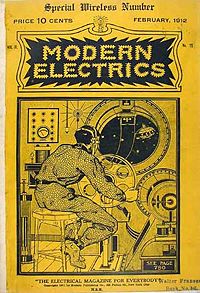 First published: Modern Electrics, April 1911-March 1912
First edition: Boston: The Stratford Company, 1925
Edition used: Lincoln: University of Nebraska Press, 2000
In the year 2660, when the world’s population has reached 90 billion people, Ralph 124C 41+ is
one of the greatest living scientists and one of the ten men on the whole planet earth permitted to use the Plus sign after his name. (9)
 In the opening chapter, a serendipitous malfunction with his Telephot system and some quick thinking enable him to save Alice 212B 423 from an avalanche thousands of miles away. When Alice and her father travel to New York to thank him, Ralph and Alice fall in love. During an extended guided tour of the magnificent future city Alice is kidnapped, rescued and then kidnapped again by Fernand 60O 10. Before Ralph can rescue her, she is again abducted, this time by the Martian Llysanorh’ CK 1618. When Llysanorh’ realises Ralph is about to capture him, he kills Alice. In a desperate gamble, Ralph performs an experimental procedure on her to preserve her body until he can return to Earth and revive her. A week after the emergency operation, Ralph visits his recovering sweetheart:
‘Dearest,’ she said, ‘I have just found out what your name really means.’
Ralph twined a little tendril of her hair around one of his fingers.
‘Yes?’ he asked with a quizzical smile.
‘Well, you see,’ and the lovely color deepened to rose, ‘your name is going to be my name now, so I keep saying it over to myself–’
‘My darling!’
ONE TO FORESEE FOR ONE.
( 1 2 4 C 4 1 ) (293)
As the above plot description suggests, Gernsback’s fix-up novel is deficient as fiction and frequently unspeakably banal. It is nonetheless a major text in the development of the modern American pulp-and-paperback tradition of sf – although arguably more for what it signifies than for what it achieves. As an editor, Gernsback famously advocated a variety of
‘scientifiction’ … the Jules Verne, HG Wells and Edgar Allan Poe type of story – a charming romance intermingled with scientific fact and prophetic vision. (Amazing Stories, 1 (April 1926): 3)
Ralph 124C 41+, written over a decade before the launch of Amazing Stories, is perhaps best understood as an earlier effort by Gernsback to describe that formula. The naïvely-depicted romance between Ralph and Alice, and the various rescues and abductions, alarums and excursions, are the very stuff of Romance, if conceptualised and presented in a cack-handed, juvenile manner.  Interspersed among the narrative elements are plenty of scientific facts, pseudo-scientific information, and scientific-sounding patter – including diagrams and footnotes about experiments. And the future New York offered by Gernsback constitutes prophetic vision.
One of the most obvious failings of Gernsback’s prophetic vision is his inability to extend imagined social developments beyond the realm of the technological, to allow for changes in human institutions and ideologies. Thus we get a condemnation of industrial action understood merely in terms of workers’ alleged greed and irresponsibility:
our governor had some trouble with the four weather-engineers of our district, some months ago, and they struck for better living. They claimed the authorities did not furnish them with sufficient luxuries, and when their demands were refused, they simultaneously turned on the high-depression at the four Meteoro-Towers and then fled, leaving their towers with the high-tension currents escaping at a tremendous rate. (18)
The adulation Ralph receives, and that which is lavished upon the ‘light-picture of the Planet Governor’ (118), indicates that for all the supposed improvements that technological advancement has brought to humanity, society remains deeply hierarchical. Also, the central action of the novel is concerned with Alice being exchanged between men and avoiding miscegenation, culminating in her swapping her father’s name (212B – ‘to want to be’?) for Ralph’s.
This inability to imagine human relationships lies behind not only Gernsback’s utilisation of a debased Romance narrative, but also behind the characters’ suppressed sexuality. This is most obvious in the opening chapter, in which Ralph finds Alice alone, about to be engulfed by an avalanche. Throughout this chapter and its aftermath, we find the kind of fascist body imagery analysed by Klaus Theweleit.[1] Ralph has
a physique much larger than that of the average man of his times and approaching that of the huge Martians. His physical superiority, however, was as nothing to his gigantic mind. (9)
His phallic body is matched by his phallic house,
a round tower, six hundred and fifty feet high, and thirty in diameter, built entirely of crystal glass-bricks and steelonium, … one of the sights of New York. (33)
His body is subordinated to the will of the state, and he demonstrates no interest in the crowd of well-wishers, either individually or collectively. Fluid and tempestuous nature often operates as a metaphor for female sexuality. It is  significant then that Ralph uses all his rational-technological powers to spurt energy from his aerial to melt the tide of snow and ice threatening to overwhelm Alice. This sexual displacement is made obvious (and ridiculous) by Alice’s father simultaneously racing home to ensure nothing untoward befalls her, and by Ralph’s tactful withdrawal when he burst in.
In this context, it is important to take account of the primary characteristic shared by the many inventions, techniques and marvels Ralph shows Alice: flawless steelonium streets, liquidised food, perfect climate control, floodlit sportsfields, the bacillatorium, giant double-glazed geothermically-heated greenhouses, artificial milk produced direct from the grass without having to pass through a cow, a city floating in the sky, an antigravity circus. In all of these, it is possible to see Gernsback’s vision of science as a means of abstracting people from nature, and interposing technology between them so as to keep them  separated. This finds an obvious resonance with the lengths to which Gernsback goes to distance his hero from physical intimacy with Alice, even killing her off so as not to leave her alone with Ralph in a spaceship together for fifty days – she is only permitted to recover when it is possible to banish intimacy beyond the end of the novel.
The other eight entries I wrote were:
Voltaire, Candide
Godwin, Caleb Williams
de Maistre, Voyage Around My Chamber
France, Thais
London, The Iron Heel
Smith, The Skylark of Space
Schuyler, Black No More
Sturgeon, Venus Plus X
Notes
[1]
See Klaus Theweleit, Male Fantasies, volume 1: Women, Floods, Bodies, History (1977; trans. 1987) and Male Fantasies, Volume 2: Male Bodies: Psychoanalyzing the White Terror (1978; trans. 1989).
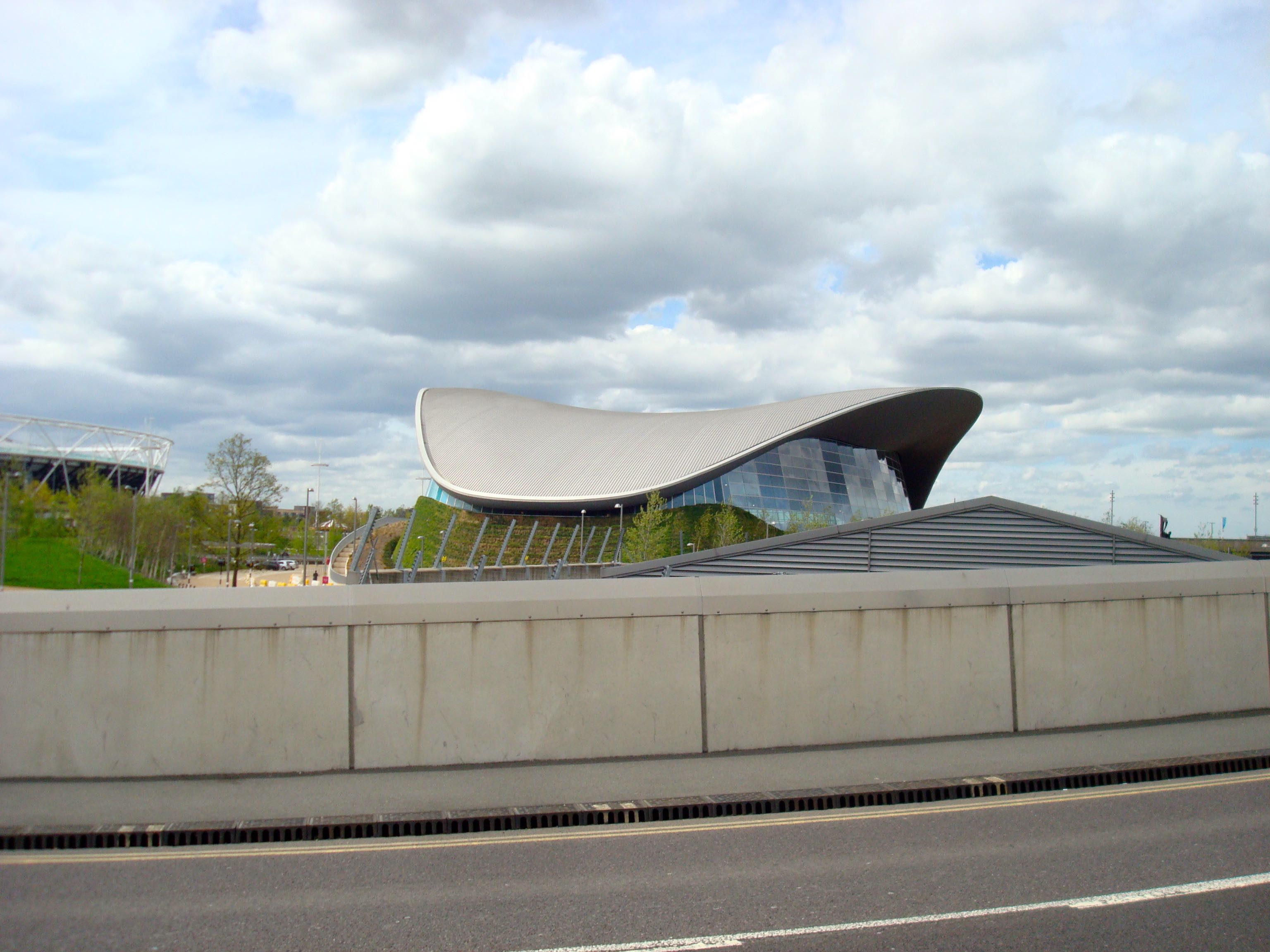
The giant evil mecha burrowing owl of Stratford emerges from its lair to lay (further) waste to East London, plus the saucy cheesecake monkey for kids





Jack London’s The Iron Heel
This wasn’t due to go up until tomorrow, but with the fucking Tories somehow re-elected this morning…
Back in the mists of time, around a decade ago, there was a plan for an ever-expanding online collection of short critical essays on key works of the fantastic. The plan fizzled and died, but not before I wrote nine pieces for it (which I just found). This is another of them.
 First editions: New York: Macmillan, 1907; London: Everett, 1907
Edition used: Edinburgh: Canongate Books (Rebel Inc. Classic), 1999
The Iron Heel is the incomplete memoir of Avis, written in 1932, on the eve of the Second Revolt. It recounts how, in 1912, she and her wealthy father met the revolutionary socialist, and her future husband, Ernest Everhard, and were won to his cause. Within a year, their lives are in disarray as the capitalist interests who dominate institutions and an increasingly tyrannical government seize complete control of America. This plutocratic oligarchy – dubbed ‘the Iron Heel’ by Ernest – forces the socialists underground. The novel ends with horrific descriptions of the destruction of Chicago in the failed First Revolt, and breaks off abruptly, leaving no account of the subsequent fifteen years. The memoir is introduced and edited by Anthony Meredith, writing in the year 409 B.O.M. (Brotherhood Of Man), the socialist era that follows three centuries of the Iron Heel.
 In the first issue of Amazing Stories, Hugo Gernsback described the sf story as ‘a charming romance intermingled with scientific fact and prophetic vision’. To his list of exemplars – Jules Verne, H.G. Wells, Edgar Allan Poe – Gernsback could have added Jack London. The Iron Heel reworks the ‘guided tour’ typical of the utopian novel: Avis, her father and Bishop Morehouse enter a new world – that of the immiserated, impoverished working class – and Ernest, their guide, explains in detail its logic and inner workings. The novel also anticipates the hard-sf which emerged from the pulp tradition (and which can still, arguably, be defined in Gernsback’s terms). The science in question is not, however, physics or astronomy but London’s idiosyncratic version of scientific socialism. The near-future events of the novel are predicated on a (vulgar) Marxist analysis of the process of capital accumulation and the cyclical crises it inevitably produces.
London’s extrapolative premises and technique are most obvious in the chapter ‘The Mathematics of a Dream’. Beginning with the ‘ABCs of commerce’ (108) – the production of value by labour and the extraction of surplus-value (profit) by the capitalist – Ernest takes his audience step-by-step through the logic of capital accumulation which leads to periods of overproduction and mass unemployment. His satiric proposal – that destruction of surpluses would be an effective way to deal with cyclical over-production, as in Frederik Pohl’s ‘The Midas Plague’ (1954) – is dismissed as absurd. But in a world in which, for example, agricultural subsidies are paid for deliberate underproduction to stabilise prices and ‘surplus’ crops are routinely destroyed (while people elsewhere starve), The Iron Heel’s prophetic value is difficult to ignore.
A curious aspect of the novel, and of its socialism, is the treatment of the all-but-absent proletariat. Avis’s conversion commences with an investigation into the fate of Jackson, a man who lost his arm in an industrial accident. The machine that maimed him is revealed to be part of a much larger apparatus, an economic and social system which – through coercion, collusion, corruption and conspiracy – denies him justice and subordinates and perverts other ‘slaves of the machine’. Years later, Avis meets a foreman who dishonestly testified against Jackson in order to protect his own job and provide for his family, and is now a member of a group of fanatical assassins. This is not to avenge his dead wife and daughters, he declares, but
‘’tis revenge for my blasted manhood’. (206)
Thus Avis’s career as a revolutionary is circumscribed by images of castrated workers. And when she describes one worker who has been a socialist for over twenty years, it is as
phlegmatic, stolid to such a degree that one could not but wonder how the Revolution had any meaning to him at all … He could obey orders. (198)
 This denial of agency to the working class is indicative of the peculiar type of socialism, blended with aspects of Friedrich Nietzsche and with Herbert Spencer’s ‘survival of the fittest’ misunderstanding of evolution, advocated by London (who puts at least one of his own speeches/essays, ‘Revolution’, into Ernest’s mouth).
As his name suggests, Ernest Everhard possesses a phallic intensity of focus and purpose. He physically overwhelms Avis. When she first mentions him by name, he is linked to images of penetration, engorgement and assimilation (6). Her fantasies and desires are ripe with the language of domination (22). Her feelings pulsate with attraction and repulsion, until she is swept off her feet
by the splendid invincible rush of him. (55)
She conceives of him as a messiah – he is an eagle, a lamb, a lion, ‘the spirit of regnant labour’ (63), Christ – and longs to melt before him, to merge her ‘life completely into his’ (138). When they are on the run, Avis learns to take on a completely different appearance through controlling her body whereas Ernest requires cosmetic surgery to transform him: she is fluid, he is hard.
Avis, then, despite her origins, exemplifies what London’s socialism requires of the working class, ‘the People of the Abyss’.[1] In the Chicago uprising, they are not only depicted as dumb beasts but as an inundation, a surging fluid mass. Without form or identity, they are to be shaped or sacrificed by the revolutionary party.
 This system of images – rigidly armoured male bodies; women and the feminised masses as a threatening flood – is typical of the literature produced by the German Freikorps in the 1920s, many of whom later played significant roles in the SA and SS.[2] And so at the heart of this ‘small folk Bible of scientific socialism’ we find a form of fascism.
Or perhaps not.
London’s novel depicts failed revolutions. This suggests an anxiety about the revolutionaries’ terroristic vanguardism, and the novel does not claim that the final revolution is of that ilk. Rather, the post-revolutionary editorial framework emphasises Ernest’s relative insignificance, Avis’s ‘errors of interpretation’ (1), the ‘equal futility’ of the First and Second Revolts and the
many Revolts, all drowned in seas of blood, ere the world-movement of labor should come into its own. (4)
North America and Asia are beneath the Iron Heel of the Oligarchs for 300 years, but as early as 1912 a wave of socialist revolutions swept the world, inspired and empowered by the general strike which prevented a war between the US and Germany. Perhaps it is such collective action and international solidarity that leads to the Brotherhood of Man.
The other eight entries I wrote were:
Voltaire, Candide
Godwin, Caleb Williams
de Maistre, Voyage Around My Chamber
France, Thais
Gernsback, Ralph 124C 41+
Smith, The Skylark of Space
Schuyler, Black No More
Sturgeon, Venus Plus X
Notes
[1]
This expression, which London also used as the title of his 1903 book of reportage on the London poor, is borrowed from HG Wells’s Anticipations of the Reaction of Mechanical and Human Progress upon Human Life and Thought (1901).
[2]
See Klaus Theweleit, Male Fantasies, volume 1: Women, Floods, Bodies, History (1977; trans. 1987) and Male Fantasies, Volume 2: Male Bodies: Psychoanalyzing the White Terror (1978; trans. 1989).
Waterworld (Kevin Reynolds 1995)
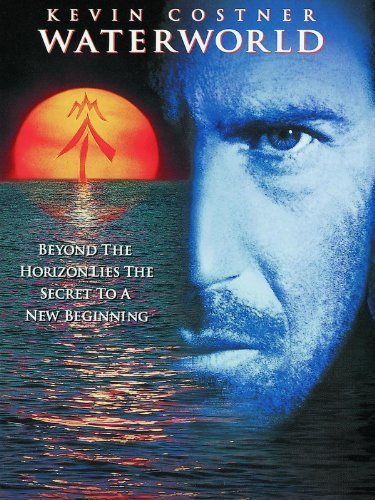 and so anyway it turns out the best thing about Waterworld (1995) is not that it is intermittently far less terrible than I remember it being, though far too intermittently for me to consider rewatching The Postman (1997), the other Kevin Costner post-apocalyptic epic I also saw at the cinema and swore never to watch again, but that Joss Whedon, in his seven weeks of script-doctoring the movie, somehow managed to not ascribe Costner’s character’s gills, webbed toes, Man from Atlantis swimming style, assorted other almost-superpowers and ambiguous motivations to his inability to be a mother…
 Mark Bould