My top 31 books of 2018

This year I have read 258 books, 234 for the first time. Of those 234, these are my top 31 books of 2018
61kUJty1grL._SX328_BO1,204,203,200_Novels
Leo Tolstoy, War and Peace (1869)
Thomas Mann, The Magic Mountain (1924)
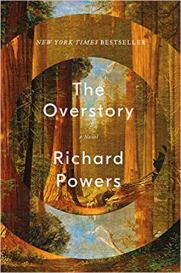
Richard Powers, The Overstory (2018)
George Eliot, Felix Holt: The Radical (1866)
Sesshu Foster, Atomik Aztex (2005)
Paul Kingsnorth, The Wake (2013)
Luther Blissett, Q (2000)
Kim Stanley Robinson, New York 2140 (2017)
Hari Kunzru, White Tears (2017)
Caitlín R. Kiernan, The Drowning Girl (2012)
Eden Robinson, Monkey Beach (2000)Screen_Shot_2018-07-26_at_11.56.41
Carola Dibbell, The Only Ones (2015)
Paul Kingsnorth, Beast (2016)
William T. Vollmann, The Royal Family (2000)

Novellas
Roy De Carava and Langston Hughes, The Sweet Flypaper of Life (1955)
Tade Thompson, The Murders of Molly Southbourne (2017)
Stephen Graham Jones, Mapping the Interior (2017)81cOosPO8-L

Comics
Gene Luen Yang, American Born Chinese (2006)
Gene Luen Yang and Sonny Liew, The Shadow Hero (2014)

Poetry
Danez Smith, Don’t Call Us Dead (2017)

 Non-fiction
Andrea Gibbons, City of Segregation: One Hundred Years of Struggle for Housing in Los Angeles (2018)
Annie McClanahan, Dead Pledges: Debt, Crisis, and Twenty-First-Century Culture (2017)51TBLRhw+5L
Mike Davis, Late Victorian Holocausts: El Niño Famines and the Making of the Third World (2001)
CLR James, Beyond a Boundary (1963)
Anindita Bannerjee and Sonja Fritzsche, eds, Science Fiction Circuits of the South and East (2018)
Amitav Ghosh, The Great Derangement: Climate Change and the Unthinkable (2016)
Allyson Nadia Field, Jan-Christopher Norak and Jacqueline Najuma Stewart, eds, L.A. Rebellion: Creating a New Black Cinema (2015)
Roger Luckhurst, The Mummy’s Curse: The True History of a Dark Fantasy (2012)
David McNally, Monsters of the Market: Zombies, Vampires and Global Capitalism (2011)
Mark C. Jerng, Racial Worldmaking: The Power of Popular Fiction (2018)
Louis Chude-Sakei, The Sound of Culture: Diaspora and Black Technopoetics (2016))

For anyone intereseted, here is the full list
James Agee and Walker Evans, Cotton Tenants: Three Families (2013)
Michelle Alexander, The New Jim Crow: Mass Incarceration in the Age of Colorblindness (2010)
Sherman Alexie, Flight (2008)
Zainab Amadahy, Resistance (2013)
Jonathan Ames, You Were Never Really Here (2013)
Stephen Amidon, Human Capital (2004)
Isaac Asimov, Asimov’s Mysteries (1967)
Margaret Atwood, Payback: Debt and the Shadowside of Wealth (2008)
Jane Austen, Persuasion (1817)

JG Ballard, High-Rise (1975)
–. Miracles of Life: Shanghai to Shepperton, An Autobiography (2008)
Anindita Bannerjee and Sonja Fritzsche, eds, Science Fiction Circuits of the South and East (2018)
Andy Beckett and Roger Luckhurst, The Disruption (2018)
Jordan Belfort, The Wolf of Wall Street (2007)
Madison Smartt Bell, Waiting for the End of the World (1985)
Luther Blissett, Q (2000)
Ray Bradbury, The Illustrated Man (1952)
–. Fahrenheit 451 (1953)
Emily Brontë, Wuthering Heights (1847)
Gwendolyn Brooks, In the Mecca (1968)
Wendy Brown, Undoing the Demos: Neoliberalism’s Stealth Revolution (2015)
Tobias S. Buckell, Arctic Rising (2012)
–. Hurrican Warning (2014)
Edward Bunker, Mr Blue: Memoirs of a Renegade (1999)
Octavia E. Butler, Fledgling (2005)
Monica Byrne, The Girl in the Road (2016)

Ramsey Campbell, The Nameless (1981)
John Carnell, ed., New Writings in SF 1 (1964)
–, New Writings in SF 2 (1964)
Angela Carter, Several Perceptions (1968)
–. Love (1971)
–. Fireworks (1974)
–. Black Venus (1985)
Erica Cazdyn, The Already Dead: The New Time of Politics, Culture, and Illness (2012)
Michael Chabon, The Yiddish Policemen’s Union (2007)
Peter Chapman, Jungle Capitalists: A Story of Globalisation, Greed and Revolution (2007)
Deborah Chasman and Joshua Cohen, eds, Evil Empire: A Reckoning with Power (2018)
Paolo Cherchi Usai, The Death of Cinema: History, Cultural Memory and the Digital Dark Age (2001)
Brigid Cherry, Horror (2009)
Wesley Chu, The Lives of Tao (2013)
–. The Deaths of Tao (2014)
–. The Rebirths of Tao (2015)
Louis Chude-Sakei, The Sound of Culture: Diaspora and Black Technopoetics (2016))
Daniel and James Clarke, Kariba (2018)
James S.A. Corey, Leviathan Wakes (2011)
–. Caliban’s War (2012)
–. Abaddon’s Gate (2013)
André Couvreur, Une Invasion des Macrobes/An Invasion of Macrobes (1909)
Alex Cox, 10,000 Ways to Die: A Director’s Take on the Spaghetti Western (2009)
Jim Crace, Continent (1986)
Paul Crosshwaite, Peter Knight and Nicky Marsh, eds, Show Me the Money: The Image of Finance, 1700 to the Present (2014)

Mark Z. Danielewski, House of Leaves (2000)
Edwidge Danticat, Claire of the Sea Light (2013)
Mike Davis, Late Victorian Holocausts: El Niño Famines and the Making of the Third World (2001)
Ashley Dawson, Extinction: A Radical History (2016)
Roy De Carava and Langston Hughes, The Sweet Flypaper of Life (1955)
Don DeLillo, Cosmopolis (2003)
Eça de Queríoz and Ramalho Ortígão, The Mystery of the Sintra Road (1870)
Carola Dibbell, The Only Ones (2015)
Philip K. Dick, Do Androids Dream of Electric Sheep? (1968)
Cédric Durand, Fictitious Capital: How Finance Is Appropriating Our Future (2014)

Reni Eddo-Lodge, Why I’m No Longer Talking to White People About Race (2017)
Junius Edwards, If We Must Die (1963)
George Alec Effinger, The Nick of Time (1985)
–. The Bird of Time (1986)
David Eggers, The Circle (2013)
George Eliot, Felix Holt: The Radical (1866)
JG Farrell, The Siege of Krishnapur (1973)
Jack Fennell, ed., A Brilliant Void: A Selection of Classic Irish Science Fiction (2018)
Allyson Nadia Field, Jan-Christopher Norak and Jacqueline Najuma Stewart, eds, L.A. Rebellion: Creating a New Black Cinema (2015)
Eric Flint, 1636: The Ottoman Onslaught (2017)
Eric Flint and Griffin Barber, 1636: Mission to the Mughals (2017)
Eric Flint and Walter H. Hunt, 1636: The Cardinal Virtues (2015)
John Bellamy Foster and Fred Magdoff, The Great Financial Crisis: Causes and Consequences (2009)
Sesshu Foster, Atomik Aztex (2005)
Karen Joy Fowler, The Science of Herself, Plus… (2013)
–. We Are All Completely Beside Ourselves (2013)
Matthew Freeman, Historicising Transmedia Storytelling: Early Twentieth-Century Transmedia Storyworlds (2017)

John Gardner, Grendel (1971)
Amitav Ghosh, The Hungry Tide (2004)
–. The Great Derangement: Climate Change and the Unthinkable (2016)
–. The Shadow Lines (1988)
Andrea Gibbons, City of Segregation: One Hundred Years of Struggle for Housing in Los Angeles (2018)
Ryan Gilbey, It Don’t Worry Me: Nashville, Jaws, Star Wars and Beyond (2004)
Peter Grandbois, Wait Your Turn and The Stability of Large Systems (2014)

Gideon Haigh, Mystery Spinner (2000)
Ann Halam, Dinosaur Junction (1992)
Mohsin Hamid, Exit West (2017)
Marybeth Hamilton, The Queen of Camp: Mae West, Sex and Popular Culture (1995)
Colin B. Harvey, Fantastic Transmedia: Narrative, Play and Memory across Science Fiction and Fantasy Storyworlds (2015)
Owen Hatherley, The Chaplin Machine: Slapstick, Fordism and the Communist Avant-Garde (2016)
Nalo Hopkison, The New Moon’s Arms (2007)
–. Sister Mine (2013)
Ted Hughes, The Iron Woman (1933)
Kameron Hurley, The Stars are Legion (2017)
Zora Neale Hurston, Their Eyes Were Watching God (1937)

Takuji Ichikawa, Be With You (2003)

Shirley Jackson, The Haunting of Hill House (1959)
CLR James, Beyond a Boundary (1963)
Mark C. Jerng, Racial Worldmaking: The Power of Popular Fiction (2018)
Matthew Jones, Science Fiction Cinema and 1950s Britain: Recontextualizing Cultural Anxiety (2018)
Stephen Graham Jones, The Bird is Gone: A Monograph Manifesto (2003)
–. Mapping the Interior (2017)

Richard Kadrey, Sandman Slim (2009)
Frigyes Karinthy, Voyage to Faremido (1917)
James Patrick Kelly and John Kessel, eds, The Secret History of Science Fiction (2009)
Ray Kiely, Empire in the Age of Globalisation: US Hegemony and Neoliberal Disorder (2005)
Caitlín R. Kiernan, Agents of Dreamland (2017)
–. Black Helicopters (2018)
–. The Drowning Girl (2012)
Paul Kingsnorth, The Wake (2013)
–. Beast (2016)
Mikel J. Koven, La Dolce Morte: Vernacular Cinema and the Italian Giallo Film (2006)
Hari Kunzru, White Tears (2017)
Andrey Kurkov, The Case of the General’s Thumb (1999)
Henry Kuttner, Mutant (1953)

George Lamming, The Pleasures of Exile (1960)
Nella Larsen, Passing (1929)
Ursula Le Guin, The Dispossessed (1974)
Yoon Ha Lee, Ninefox Gambit (2016)
Stanislaw Lem, Mortal Engines (1977)
Edan Lepucki, California (2014)
Michael Lewis, The Big Short: Inside the Doomsday Machine (2011)
John Ajvide Lindqvist, Let the Right One In (2004)
Cixin Liu, The Three-Body Problem (2006)
–. The Dark Forest (2008)
–. Death’s End (2010)
Karen Lord, The Best of All Possible Worlds (2013)
H.P. Lovecraft, H.P. Lovecraft Omnibus 3: The Haunter in the Dark and Other Tales (1985)
Michael Löwy, Ecosocialism: A Radical Alternative to Capitalist Catastrophe (2015)
Roger Luckhurst, The Mummy’s Curse: The True History of a Dark Fantasy (2012)

Rose Macaulay, What Not: A Prophetic Comedy (1918)
John D MacDonald, The Deep Blue Goodbye (1964)
Andreas Malm, The Progress of This Storm: Nature and Society in a Warming World (2018)
Nick Mamatas, Starve Better: Surviving the Endless Horror of the Writing Life (2011)
Emily St. John Mandel, Station Eleven (2014)
Thomas Mann, The Magic Mountain (1924)
Christian Marazzi, The Violence of Financial Capitalism (2011)
Andrew Marvell, Three Men Make a World (1939)
Paul Mason, Meltdown: The End of the Ageof Greed (2009)
Annie McClanahan, Dead Pledges: Debt, Crisis, and Twenty-First-Century Culture (2017)
Martin McDonagh, The Beauty Queen of Leenane (1996)
–. A Skull in Connemara (1997)
–. The Lonesome West (1997)
–. The Lieutenant of Inishmore (2001)
–. The Pillowman (2003)
David McNally, Global Slump: The Economics and Politics of Crisis and Resistance (2011)
–. Monsters of the Market: Zombies, Vampires and Global Capitalism (2011)
Herman Melville, Moby-Dick; or, The Whale (1851)
Gavin Miller, Science Fiction and Psychology (2019)
Greg Mitchell, The Campaign of the Century: Upton Sinclair’s Race for Governor of California and the Birth of Media Politics (1992)
Gladys Mitchell, The Devil at Saxon Wall (1935)
Laura J. Mixon, Glass Houses (1992)
Mary Anne Mohanraj, The Stars Change (2013)
Silvia Moreno-Garcia, Signal to Noise (2015)
Toni Morrison, Beloved (1987)
Walter Mosley, Folding the Red into the Black; or, Developing a Viable Untopia for Human Survival in the 21st Century (2016)
Bill V. Mullen, W.E.B. DuBois: Revolutionary Across the Color Line (2016)
Pablo Gómez Muñoz, A Better World? Cosmopolitan Struggles in Twenty-First Century Science Fiction Cinema (2018)
Mynona, The Creator: A Fantasy (1920)

Linda Nagata, Vast (1998)
David Nickle, Eutopia: A Novel of Terrible Optimism (2011)
Kari Marie Norgaard, Living in Denial: Climate Change, Emotions, and Everyday Life (2011)
Richard Nowell, Blood Money: A History of the First Teen Slasher Film Cycle (2011)

Tolu Olowofoyeku and Ziki Nelson, eds, Kugali Anthology 01 (2018)
Deji Bryce Olukotun, After the Flare (2017)
Amy Abugo Ongiri, Spectacular Blackness: The Cultural Politics of the Black Power Movement and the Search for a Black Aesthetic (2010)
Rebecca Ore, The Illegal Rebirth of Billy the Kid (1991)
Kwanza Osajyefo, Tim Smith 3 and Jamal Igle, Black 1–6 (2017)

Dexter Palmer, The Dream of Perpetual Motion (2010)
Thomas Love Peacock, Headlong Hall (1815)
–. Nightmare Abbey (1818)
Anette Pedersen, 1635: The Wars for the Rhine (2016)
Otto Penzler, ed., Pulp Fiction: The Villains (2007)
Pornsak Pichetshote, Aaron Campbell, Jose Villarrubia and Jeff Powell, Infidel (2018)
Eric A. Posner, Last Resort: The Financial Crisis and the Future of Bailouts (2018)
Richard Powers, The Overstory (2018)

Tom Reiss, The Black Count: Napoleon’s Rival, and the Real Count of Monte Cristo – General Alexandre Dumas (2012)
Burt Reynold and Jon Winokur, But Enough About Me (2015)
Jean Rhys, Good Morning, Midnight (1939)
Walt and Leigh Richmond, Poppa Needs Shorts (1964)
Alain Robbe-Grillet, Jealousy (1957)
Adam Roberts, Publishing and the Science Fiction Canon: The Case of Scientific Romance (2018)
Michael Roberts, The Long Depression: How it Happened, Why It Happened, and What Happens Next (2016)
Eden Robinson, Monkey Beach (2000)
Kim Stanley Robinson, New York 2140 (2017)
–. Red Moon (2018)
Jane Rogers, The Testament of Jessie Lamb (2011)

Ahmed Saadawi, Frankenstein in Baghdad (2012)
JD Salinger, The Catcher in the Rye (1951)
Bradley Schauer, Escape Velocity: American Science Fiction Film, 1950–1982 (2017)
Stanley Schmidt and Martin H. Greenberg, eds, Unknown Worlds: Tales from Beyond (1988)
George S Schuyler, Black No More (1931)
Leonardo Sciascia, The Day of the Owl (1961)
A.O. Scott, Better Living Through Criticism: How to Think About Art, Pleasure, Beauty, and Truth (2016)
Adam Scovell, Folk Horror: Hours Dreadful and Things Strange (2017)
Girish Shambu, The New Cinephilia (2014)
Ntozake Shange, for colored girls who have considered suicide/when the rainbow is enuf (1975)
Steven Shaviro, The Universe of Things: On Speculative Realism (2014)
Katy Shaw, Crunch Lit (2015)
Mary Shelley, Frankenstein; or, The Modern Prometheus (1818)
Clifford D. Simak, Cemetery World (1973)
–. A Choice of Gods (1973)
Georges Simenon, Maigret Meets a Milord (1931)
–. Maigret and the Hundred Gibbets (1931)
–. Maigret and the Enigmatic Lett (1931)
James Edward Smethurst, The Black Arts Movement: Literary Nationalism in the 1960s and 1970s (2005)
Danez Smith, Don’t Call Us Dead (2017)
Tracy K. Smith, Life on Mars (2011)
Zadie Smith, On Beauty (2005)
–. NW (2012)
Tobias Smollett, The Expedition of Humphrey Clinker (1771)
Arnold Stead, Always on Strike: Frank Little and the Western Wobblies (2014)
Neal Stephenson, Seveneves (2015)
Mark Steven, Splatter Capital: The Political Economy of Gore Films (2017)
Robert Louis Stevenson, Strange Case of Dr Jekyll and Mr Hyde (1886)
Joseph Stiglitz, Freefall: Free Markets and the Sinking of the Global Economy (2010)
Per Espen Stoknes, What We Think About When We Try Not To Think About Climate Change: Toward A New Psychology of Climate Change (2015)
Shelley Streeby, Imagining the Future: World-Making through Science Fiction and Activism (2018)
Theodore Sturgeon, The Complete Short Stories of Theodor Sturgeon, volume XI: The Nail and the Oracle (2007)
Theodore Sturgeon, The Complete Short Stories of Theodor Sturgeon, volume XII: Slow Sculpture (2009)
Theodore Sturgeon, The Complete Short Stories of Theodor Sturgeon, volume XIII: Case and the Dreamer (2010)

Matt Taibi, Griftopia: Bubble Machines, Vampire Squids, and the Long Con That Is Breaking America (2010)
Arseny Tarkovsky, Life, Life: Selected Poems (2000)
Genndy Tartakovsky, Stephen DeStefano, Scott Wills and Bill Wray, Cage! (2017)
Steve Rasnic Tem, Ubo (2017)
Jeet Thayil, Narcopolis (2012)
Jim Thompson, The Nothing Man (1954)
Tade Thompson, The Murders of Molly Southbourne (2017)
John Timberlake, Landscape and the Science Fiction Imaginary (2018)
JRR Tolkien, The Fellowship of the Ring (1954)
–. The Two Towers (1954)
–. The Return of the King (1955)
Leo Tolstoy, War and Peace (1869)
Adam Trexler, Anthropocene Fictions: The Novel in a Time of Climate Change (2015)
Kenneth Turan, Sundance to Sarajevo: Film Festivals and the World They Made (2002)

William T. Vollmann, Rising Up and Rising Down: Some Thoughts on Violence, Freedom and Urgent Means (2004)
–. The Royal Family (2000)
Sabrina Vourvoulias, Ink (2012)

Rosie Warren, ed., Salvage 5: Contractions (2017)
–. Salvage 6: Evidence of Things Not Seen (2018)
Claire Vaye Watkins, Gold Fame Citrus (2015)
Spencer R. Weart, The Discovery of Global Warming (2003)
Orson Welles (ghostwritten by Maurice Bessy), Mr Arkadin (1956)
H.G. Wells, The Time Machine: An Invention (1895)
–. The War of the Worlds (1898)
Donald Westlake, The Ax (1997)
–. What’s So Funny? (2007)
Ethel Lina White, Someone Must Watch (1933)
Rhys Williams and Mark Bould, eds, M. John Harrison: Critical Essays (2018)
Jack Williamson, The Collected Stories of Jack Williamson, volume one: The Metal Man and Others (1999)
–. One Against the Legion (1939/1967)
Stanislaw Ignacy Witkiewicz, Vahazar, or The Uplands of Absurdity (A Non-Euclidean Drama in Four Acts (1921)

Taicha Yamada, Strangers (1987)
Gene Luen Yang, American Born Chinese (2006)
–. and Sonny Liew, The Shadow Hero (2014)
Yoss, Super Extra Grande (2012)

On re-reading Lord of the Rings for the first time in 35 years, part one

The Fellowship of the Ring (1954)

The_Fellowship_of_the_Ring_coverBlimey, the idiocy of rural life.

Blimey, the misogyny of rural life.

Blimey, Tom Bombadil. What a twat.

Blimey, this is pedestrian. And I don’t just mean all the walking.

Blimey, these elves are even more insufferable than I remembered.

Blimey, Gandalf’s dead. Or is he?

Blimey, these elves are even more insufferable than the last lot.

So Rivendell is Granta and Lorién The New Yorker?

Jajajajajajaja. Wetwang.

Blimey, Orcs shoot bows the way Imperial Stormtroopers fire blasters.

Blimey, that Boromir’s a wrong ’un.

Well, that whole fellowship thing didn’t last long, did it?


(For my last adventure in rereading Tolkien, start here, though this is the best of those posts.)

My top 31 books of 2017

In 2017, I read 247 books, 214 of them for the first time. My top 31 in categories and then roughly in order are:

300738Novels

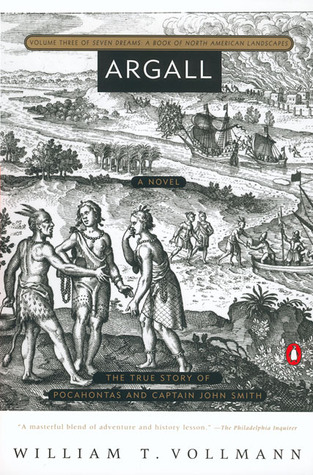
  1. William T. Vollmann, Argall: The True Story of Pocahontas and Captain John Smith (2001)
  2. Kim Stanley Robinson, Aurora (2015)
  3. Zora Neale Hurston, Their Eyes Were Watching God (1937)
  4. Henrietta Rose-Innes, Nineveh (2011)
  5. Claude McKay, Home to Harlem (1928)
  6. Edwidge Danticat, Breath, Eyes, Memory (1994)
  7. Mohammad Rabie, Otared (2016)
  8. Thomas Pynchon, Bleeding Edge (2013)
  9. Shirley Jackson, The Sundial (1958)
  10. Gwyneth Jones, Proof of Concept (2017)
  11. Karen Lord, Redemption in Indigo (2010)
  12. Amir Tag Elsir, Telepathy (2015)
  13. William T. Vollmann, Europe Central (2005)
  14. Richard House, The Kills (2013)
  15. Wu Ming, Manituana (2009)

Short stories

  1. Sherman Alexie, The Lone-Ranger and Tonto Fistfight in Heaven (1993)
  2. M. John Harrison, You Should Come With Me Now (2017)

Comics

  1. David F Walker, Sanford Greene, Flaviano, Lee Loughridge, John Rauch, Power Man and Iron Fist: The Boys Are Back In Town (2016)
  2. Keziah Jones and Native Maqari, Captain Rugged (2014)
  3. Ta-Nehisi Coates, Brian Stelfreeze, et al., Black Panther: A Nation Under Our Feet, books 1–3 (2016–17)

Poetry

  1. John A. Williams, Safari West: Poems (1998)

Non-fiction

  1. China Miéville, October: The Story of the Russian Revolution (2017)
  2. Andreas Malm, Fossil Capital: The Rise of Steam Power and the Roots of Global Warming (2015)
  3. WReC, Combined and Uneven Development: Towards a New Theory of World-Literature (2015)
  4. Dan Hassler-Forest, Science Fiction, Fantasy and Politics: Transmedia Worldbuilding Beyond Capitalism (2016)
  5. Donna J. Haraway, Staying with the Trouble: Making Kin in the Anthropocene (2016)
  6. Anna Lowenhaupt Tsing, The Mushroom at the End of the World: On the Possibility of Life in Capitalist Ruins (2015)
  7. Allyson Nadia Field, Uplift Cinema: The Emergence of African American Film and the Possibility of Black Modernity (2015)
  8. Mark Fisher, The Weird and the Eerie (2016)

2017 Portnoy compliancy figures
Titles by straight white men writing in English = 97
Titles by all of the rest of the world except straight white men writing in English = 124 (including just 54 titles by women)
Titles by multiple authors which thus do not fit these distinctions = 25

The full list of 2017’s 247 titles
Chinua Achebe, Arrow of God (1964)
–. No Longer at Ease (1960)
–. Things Fall Apart (1958)
Sherman Alexie, The Lone-Ranger and Tonto Fistfight in Heaven (1993)
Dorothy Allison, Bastard Out of Carolina (1992)
Charlie Jane Anders, All the Birds in the Sky (2016)
Emily Apter, Against World Literature: On the Politics of Untranslatability (2013)
John Arcudi, Brian Michael Bendis, Mike Benson, Adam Glass, Pepe Larraz, Frank Miller, Dalibir Talajic, Billy Tan, Herb Trimpe, Lenil F Yu, Luke Cage: Avenger (2016)
Isaac Asimov, ed., More Soviet Science Fiction (1962)

Angela Baldassarre, Reel Canadians: Interviews from the Canadian Film World (2002)
Amiri Baraka, Dutchman (1964)
–. The Slave (1964)
Julian Barnes, England, England (1998)
Stephen Baxter, Voyage (1996)
Paul Beatty, The Sellout (2015)
Lauren Beukes, Dale Halvorsen, Ryan Kelly and Eva De LA Cruz, Survivors’ Club (2015–16)
Franco ‘Bifo’ Berardi, After the Future (2011)
–. The Uprising: On Poetry and Finance (2012)
Adolfo Bioy Casares, The Adventures of a Photographer in La Plata (1985)
Alexander Bogdanov, Red Star (1909)
Roberto Bolaño, Monsieur Pain (1999)
Arna Bontemps, Sad-faced Boy (1937)
Ray Bradbury, Fahrenheit 451 (1953)
Christopher Brookmyre, Quite Ugly One Morning (1996)
Claude Brown, Manchild in the Promised Land (1964)
John Edward Bruce, The Black Sleuth (1907–09)
Paul Buhle and David Wagner, A Very Dangerous Citizen: Abraham Lincoln Polonsky and the Hollywood Left (2001)
Andrew M Butler, Eternal Sunshine of the Spotless Mind (2014)

Terry Carr, ed., Universe Three (1973)
Pascale Casanova, The World Republic of Letters (1999)
Fidel Castro and Che Guevara, To Speak the Truth (1992)
Shadreck Chikoti, Azotus the Kingdom (2015)
Timothy Clark, Ecocriticism on the Edge: The Anthropocene as a Threshold Concept (2015)
JM Coetzee, Foe (1986)
Joseph Conrad, Heart of Darkness (1899)
Ta-Nehisi Coates and Brian Stelfreeze, Black Panther: A Nation Under Our Feet, book one (2016)
–. Black Panther: A Nation Under Our Feet, book two (2017)
Ta-Nehisi Coates, Brian Stelfreeze, Chris Sprouse, Jonathan Hickman and Valerio Schiti, Black Panther: A Nation Under Our Feet, The People’s Revolution (2017)
Joseph Conrad, The Secret Agent (1907)
Iver P. Cooper, 1636: Seas of Fortune (2014)
James Crumley, The Wrong Case (1975)
–. The Last Good Kiss (1978)
–. Dancing Bear (1983)
Barry Curtis, Dark Places: The Haunted House in Film (2008)
George F. Custen, Twentieth Century’s Fox: Darryl F. Zanuck and the Culure of Hollywood (1997)

Edwidge Danticat, Breath, Eyes, Memory (1994)
Kamel Daoud, The Meersault Invertigation (2013)
Rjurik Davidson, Unwrapped Sky (2014)
Junot Díaz, Drown (1996)
-. ed., Global Dystopias (2017)
Philip K. Dick, Do Androids Dream of Electric Sheep? (1968)
Wai Chee Dimock and Lawrence Buell, eds, Shades of the Planet: American Literature as World Literature (2007)
Frederick Douglass, The Narrative of the Life of Frederick Douglas, an American Slave (1845)
Sonya Dorman, Planet Patrol (1978)
Rachel Dwyer, Bollywood’s India: Hindi Cinema as a Guide to Contemporary India (2014)

Ralph Ellison, Invisible Man (1952)
Scott Eyman, The Speed of Sound: Hollywood and the Talkie Revolution, 1926–1930 (1997)

John M. Faucette, The Age of Ruin (1968)
–. Black Science Fiction (2002)
–. Crown of Infinity (1968)
–. Disco Hustle (1978)
–. Siege of Earth (1971)
–. The Warriors of Terra (1970)
Jessie Redmon Fauset, Plum Bun (1928)
James Felder, Jaime Campis, John Ostrander, Roger Stern, Joe Bennett, Pasqual Ferry, Stephen Jones and Gabe Alberola, Luke Cage and Iron Fist and Heroes for Hire, volume 1 (2016)
Ellen Feldman, Scottsboro (2008)
Allyson Nadia Field, Uplift Cinema: The Emergence of African American Film and the Possibility of Black Modernity (2015)
Audrey Fisch, The Cambridge Companion to the African American Slave Narrative (2007)
Mark Fisher, The Weird and the Eerie (2016)
Rudolph Fisher, The Walls of Jericho (1928)
F. Scott Fitzgerald, The Great Gatsby (1925)
Eric Flint and David Carrico, 1636: The Devil’s Opera (2013)
Eric Flint and Andrew Dennis, 1635: A Parcel of Rogues (2016)
Eric Flint and Charles E Gannon, 1635: The Papal Stakes (2012)
Eric Flint and Charles E Gannon, 1636: Commander Cantrell in the West Indies (2014)
Eric Flint, Gorg Huff and Paula Goodlett, 1636: The Viennese Waltz (2014)
John Bellamy Foster, Richard York and Brett Clark, The Ecological Rift: Capitalism’s War on the Earth (2011)
Peter Frase, Four Futures: Life After Capitalism (2016)

Ed Guerrero, Do The Right Thing (2001)

Julian Jason Haladyn, Boredom and Art: Passions of the Will to Boredom (2015)
Edmond Hamilton, The Hidden World (1929)
–. The Other Side of the Moon (1929)
–. Return to the Stars (1968)
–. The Star Kings (1949)
Ian Hamilton, Writers in Hollywood, 1915–1951 (1990)
Lorraine Hansberry, A Raisin in the Sun (1959)
–. The Sign in Sidney Brustein’s Window (1964)
Donna J. Haraway, Staying with the Trouble: Making Kin in the Anthropocene (2016)
Nick Harkaway, Tigerman (2014)
Charlaine Harris, Dead Until Dark (2001)
M. John Harrison, You Should Come With Me Now (2017)
Dan Hassler-Forest, Science Fiction, Fantasy and Politics: Transmedia Worldbuilding Beyond Capitalism (2016)
Richard Heinberg, Peak Everything: Waking Up to the Century of Decline in Earth’s Resources (2007)
DuBose Heyward, Porgy (1925)
Adam Hochschild, King Leopold’s Ghost (1998)
Gerald Horne, Paul Robeson: The Artist as Revolutionary (2016)
Richard House, The Kills (2013)
Langston Hughes, Not Without Laughter (1930)
–. The Ways of White Folks (1933)
Zora Neale Hurston, Their Eyes Were Watching God (1937)
Aamer Hussein, Turquoise (2002)
George Hutchinson, ed., The Cambridge Companion to the Harlem Renaissance (2007)

F Abiola Irele, ed., The Cambridge Companion to the African Novel (2009)
Kazuo Ishiguro, The Remains of the Day (1989)

Julian Jackson, La Grande Illusion (2009)
Shirley Jackson, The Haunting of Hill House (1959)
–. The Sundial (1958)
Harriet A Jacobs, Incidents in the Life of a Slave Girl, Written by Herself (1861)
Fredric Jameson, The Political Unconscious: Narrative as a Socially Symbolic Act (1981)
Tove Jannson, The Moomins and the Great Flood (1945)
NK Jemisin, The Broken Kingdoms (2010)
–. The Kingdom of Gods (2011)
–. The Killing Moon (2012)
–. The Shadowed Sun (2012)
–. The Awakened Kingdom (2014)
–. The Fifth Season (2015)
–. Shades in Shadow (2015)
–. The Obelisk Gate (2016)
–. The Stone Sky (2017)
Gwyneth Jones, Proof of Concept (2017)
James Weldon Johnson, The Autobiography of an Ex-Colored Man (1912)
Keziah Jones and Native Maqari, Captain Rugged (2014)

William Melvin Kelley, A Different Drummer (1959)
–. A Different Drummer (1959)
–. dem (1967)
Rachael King, The Sound of Butterflies (2006)
Naomi Klein, This Changes Everything (2014)
Elizabeth Kolbert, The Sixth Extinction: An Unnatural History (2014)

Paul Lafargue, The Right to Be Lazy, and Other Studies (1883)
Nella Larsen, Quicksand (1928)
–. Passing (1929)
Victor LaValle, Big Machine (2009)
The Ballad of Black Tom (2016)
John Le Carré, The Looking Glass War (1965)
Ann Leckie, Ancillary Mercy (2015)
David Levering Lewis, When Harlem was in Vogue (1979)
David Levering Lewiss, ed., The Portable Harlem Renaissance Reader (1994)
John Ajvide Lindquist, Let the Right One In (2004)
Ivy Litvinov, She Knew She Was Right (1971)
Ania Loomba, Colonialism/Postcolonialism (2002)
Karen Lord, Redemption in Indigo (2010)
James Lovelock, The Revenge of Gaia: Why the Earth is Fighting Back – and How We Can Still Save Humanity (2006)
Roger Luckhurst, Zombies: A Cultural History (2015)
Roger Luckhurst, ed., Science Fiction: A Literary History (2017)

Graham McCann, Bounder! The Biography of Terry-Thomas (2008)
Ian McEwan, The Child in Time (1987)
Jimmy McDonough, Big Bosoms and Square Jaws: The Biography of Russ Meyer (2005)
Tom McDonough, ed., Boredom: Documents of Contemporary Art (2017)
Claude McKay, Home to Harlem (1928)
Marc McLaurin, DG Chichester, Gregory Wright, Scott Benefiet, Paris Cullins, Brian Pelletier, Richard Pace, Kirk Van Wormer and Steven Butler, Luke Cage: Second Chances, volume two
Shawn Malley, Excavating the Future (2018)
Andreas Malm, Fossil Capital: The Rise of Steam Power and the Roots of Global Warming (2015)
George Marshall, Don’t Even Think About It: Why Our Brains are Wired to Ignore Climate Change (2014)
Pamela Marvin, Lee: A Romance (1997)
Mark Maslin, Global Warming (2014)
Stephenie Meyer, Twilight (2005)
China Miéville, London’s Overthrow (2012)
–. October: The Story of the Russian Revolution (2017)
Timothy Mitchell, Carbon Democracy: Political Power in the Age of Oil (2011)
George Monbiot, How Did We Get Into This Mess? Politics, Equality, Nature (2017)
Michael Moorcock, The Brothel on Rosenstrasse (1982)
Toni Morrison, Beloved (1987)
Oliver Morton, The Planet Remade: How Geoengineering Could Change the World (2015)
Haruki Murakami, Underground: The Tokyo Gas Attack and the Japanese Psyche (2000)

Kim Newman, Quatermass and the Pit (2014)
Ngũgĩ wa Thiong’o, Decolonising the Mind: The Politics of Language in African Literature (1986)
Rob Nixon, Slow Violence and the Environmentalism of the Poor (2011)
Flora Nwapa, Efuru (1966)

Geoffrey O’Brien, Hardboiled America: Lurid Paperbacks and the Masters of Noir, expanded edition (1997)
Tim O’Brien, The Things They Carried (1990)
Nnedi Okorafor, Binti: Home (2017)
–. Lagoon (2015)
John Ostrander, Joe Edkin, Pasqual Ferry, Scott Kolins, Martin Egeland, Mary Mitchell, Derece Aucoin and Chris Renaud, Luke Cage, Iron Fist and the Heroes for Hire, volume 2 (2017)

Alison Peirse, After Dracula: The 1930s Horror Film (2013)
Andrew Pulver, Night and the City (2010)
Thomas Pynchon, Bleeding Edge (2013)
Mohammad Rabie, Otared (2016)
Ali Rattansi, Multiculturalism (2011)
Eric Rhode, Tower of Babel: Speculations on the Cinema (1966)
Kim Stanley Robinson, 2312 (2012)
–. Aurora (2015)
–. The Wild Shore (1984)
Henrietta Rose-Innes, Nineveh (2011)
Rainer Rother and Annika Schaefer, eds, Future Imperfect: Science Fiction Film (2017)

Carl Sagan, Contact (1985)
Sofia Samatar, A Stranger in Olondria (2013)
William W Savage, Jr., Commies, Cowboys, and Jungle Queens: Comic Books and America 1945–54 (1990)
George S. Schuyler, Black No More (1932)
–. Black No More (1932)
Sam Selvon, The Lonely Londoners (1956)
Ousmane Sembene, God’s Bits of Wood (1960)
–. Tribal Scars (1975)
Ntozake Shange, for colored girls who have considered suicide/when the rainbow is enuf (1974)
Steven Shaviro, Digital Music Video (2017)
–. Discognition (2016)
Patrick F Sheeran, The Informer (2002)
A Sivanandan, A Different Hunger: Writings on Black Resistance (1982)
Zadie Smith, The Autograph Man (2002)
John Steinbeck, Of Mice and Men (1937)
Theodore Sturgeon, Baby Is Three: The Complete Stories of Theodore Sturgeon, volume 6 (1999)
–. A Saucer of Loneliness: The Complete Stories of Theodore Sturgeon, volume 7 (2001)
–. Bright Segment: The Complete Stories of Theodore Sturgeon, volume 8 (2002)
–. And Now the News…: The Complete Stories of Theodore Sturgeon, volume 9 (2003)
–. The Man Who Lost the Sea: The Complete Stories of Theodore Sturgeon, volume 10 (2005)
Lars Svendsen, A Philosophy of Boredom (1999)
Imre Szeman, Jennifer Wenzel and Patricia Yaeger, eds, Fueling Culture: 101 Words for Energy and Environment (2017)
Amir Tag Elsir, Telepathy (2015)
Jim Thompson, Bad Boy (1953)
Tade Thompson, Rosewater (2016)
Wallace Thurman, The Blacker the Berry (1929)
Lavie Tidhar, A Man Lies Dreaming (2014)
John Timberlake, Landscape and the Science Fiction Imaginary (2018)
Peter Toohey, Boredom: A Lively History (2011)
Jean Toomer, Cane (1923)
Anna Lowenhaupt Tsing, The Mushroom at the End of the World: On the Possibility of Life in Capitalist Ruins (2015)

Peter Van Greenaway, Judas! (1972)
–. A Man Called Scavener (1978)
Verso editors, The Right to the City: A Verso Report (2017)
William T. Vollmann, Argall: The True Story of Pocahontas and Captain John Smith (2001)
–. Europe Central (2005)

Alice Walker, The Color Purple (1982)
David F Walker, Sanford Greene, Flaviano, Lee Loughridge, John Rauch, Power Man and Iron Fist: The Boys Are Back In Town (2016)
David F walker, Flaviano, Sanford Greene and Scott Hepburn, Power Man and Iron Fist 2: Civil War II (2017)
David F Walker, Nelson Blake II and Marcio Menyz, Luke Cage: Sins of the Father (2017)
Cheryl A. Wall, The Harlem Renaissance (2016)
Kenneth W. Warren, What Was African American Literature? (2011)
Robert Penn Warren, All the King’s Men (1946)
Rosie Warren, ed., Salvage 4 (2017)
Haydn Washington and John Cook, Climate Change Denial: Heads in the Sand (2011)
HG Wells, Kipps: The Story of a Simple Soul (1905)
Donald E. Westlake, The Comedy is Finished (2012)
Walter White, The Fire in the Flint (1924)
Colson Whitehead, The Underground Railroad (2016)
John A. Williams, Safari West: Poems (1998)
Harriet E. Wilson, Our Nig, or Sketches from the Life of a Free Black (1859)
WReC, Combined and Uneven Development: Towards a New Theory of World-Literature (2015)
Wu Ming, Manituana (2009)

Sol Yurick, The Warriors (1965)

David Zindell, The Broken God (1992)
–. The Wild (1995)
–. War in Heaven (1998)
Slavoj Žižek, Violence: Six Sideways Reflections (2008)
Slavoj Žižek, ed., An American Utopia: Dual Power and the Universal Army (2016)


The sentence Edmond Hamilton ultimately could not resist

sk1Those of you who followed the gripping tale of my comical endeavours  to pick up a cheap copy of the omnibus edition of Edmond Hamilton’s Star Kings novels will be delighted to hear that it was really not worth the effort.

Or, at least, it would not have been were it not for a single sentence on page 89 of Return to the Stars (1968).

In The Star Kings (1949), the protagonist, John, bored with life in contemporary New York is contacted telepathically from the future by ‘Zarth Arn, prince of the Mid-Galactic Empire’. Zarth wants to swap consciousnesses with John so he can study the Earth from 200,000 years in his past. Drowning in ennui, John agrees, and on waking in Zarth’s body finds himself propelled into the centre not only of a complex love triangle – with Zarth’s morganatic[1] wife, Murn, and Princess Lianna, who he must marry to strengthen an interstellar alliance – but also of a Galactic civil war fomented by the treacherous Shorr Kan.[2] Breakneck action – palace intrigues, space battles, perilous worlds – ensues in a peristaltic narrative made up of successive cliffhangers. But John wins the day, and the princess, before having to return to his own body and time.

In Return to the Stars, Zarth  has found a way to transport bodies through time and invites John to join him in the future. John, desperate to return to Lianna, agrees, though without really thinking it through: she will look exactly the same to him, but she will not recognise him at all. Romantic complications ensue, and another peristaltic story, as aliens from beyond the galaxy foment another civil war. John finds himself teaming up with his former and it-turns-out-not-at-all-dead nemesis Shorr Kan to save the galaxy once more. There are palace intrigues, space battles, perilous worlds, and even though the novel was written in the 1960s it once again feels like a comic strip from the 1930s. A point Hamilton, unable to keep a straight face any longer, eventually acknowledges.

You see, John’s surname is Gordon. And on page 89 of Return to the Stars, Hamilton writes:

In a flash, Gordon knew.

sk2(Now I suppose I should read Carol Rivers’ gripping East End Saga, Lizzie of Langley Street for whatever small crumb of pleasure can derived from it before it goes to the charity shop.)


Notes
[1] Hamilton seems especially proud to have discovered this word, using it at every opportunity.
[2] Who is in no way a tiger.


The things you learn while researching something entirely unrelated #1

anna-karenina-ekaterina-pozdniakovaand so anyway it turns out that the Anna Karenina Principle, which never having read Guns, Germs and Steel: The Fates of Human Societies I had not even heard of until today, does not – as it should – mean:
sooner or later you are bound to throw yourself under a train

I cannot believe the contortions Jared Diamond puts the opening of Tolstoy’s novel

Happy families are all alike; every unhappy family is unhappy in its own way

through to make it means what he wants it to mean. But kudos, I guess, for coming up with a forced literary allusion rather than naming it after himself, because as Principles go, it is far from being a Diamond one.

See also: the Principle of Fragility of Good Things (which is not something I just made up).


You’ll never guess what arrived in the post today

sk1You probably think getting hold of an old omnibus of Edmond Hamilton’s Star Kings books is not much of an accomplishment. Nothing to boast about.

But you are wrong.

Here, in full, is the epic story of an improbable quest. All it lacks are those certain elements you need to market a film successfully: suspense, laughter, violence, hope, heart, nudity, sex, happy endings, especially happy endings.

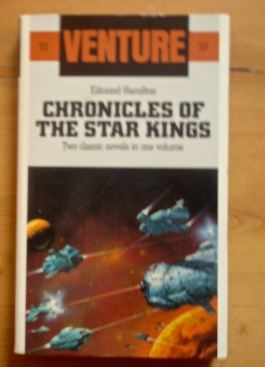
Call me Bibliophile. Some months ago –  never mind how long precisely – having little or no money in my purse, and nothing particular to interest me on shore, I thought I would order a copy of Edmond Hamilton’s Chronicles of the Star Kings. Reading old space operas is a way I have of driving off the spleen and regulating the circulation. Whenever I find myself growing grim about the mouth; whenever it is a damp, drizzly November in my soul; whenever I find myself involuntarily pausing before coffin warehouses, and bringing up the rear of every funeral I meet; and especially whenever my hypos get such an upper hand of me, that it requires a strong moral principle to prevent me from deliberately stepping into the street, and methodically knocking people’s hats off – then, I account it high time to get me some Hamilton or Williamson or early Simak, some Brackett, perhaps, or some Moore, even some Dickson or early Brunner, as soon as I can.

Why Chronicles of the Star Kings? I was working on something tangentially related so it seemed an ideal opportunity to pick up the cheapest copy I could find of this omnibus volume that I repeatedly looked at on the shelf but never bought back in my teens (I was having too much fun devouring all the Philip E. High published in the same series). So I checked amazon marketplace sellers and abebooks. Amazon was way cheaper so I ordered a copy. Little did I suspect I  was merely ordering my first copy.

The parcel arrived on 11 September. My eager little hands tore it open and found inside:
sk2Now, I have nothing against East End Sagas, whether gripping – as it claims – or not. But it was not what I wanted. So I set the returns process in motion and requested they replace it with the book I ordered. They acted with unexpected promptness, dispatching a replacement the same day. Of course, instead of replacing it with a copy of Chronicles of the Star Kings, they replaced it with a copy of Carol Rivers’s gripping East End saga Lizzie of Langley Street.

So I set the returns process in motion again, advised them of the glitch in their inventory system, requested a refund and checked for the next cheapest copy. Which again was from amazon. I ordered it, and waited.

And waited; and waited.

Then a week or so later got an email telling me it had been damaged in the post and returned to the seller. They could not provide me with another copy so gave me a refund.

I checked for the next cheapest copy. Which again was from amazon. And this time was next day delivery. I ordered it, and waited.

But nothing happened.

I left it an extra day but still nothing happened.

I checked the online tracking. Apparently it had been delivered.

Only it hadn’t.

A trip to the local sorting office ensued. The guy there explained that he could not search for the parcel without the notification card I had been left by the postman. Only I hadn’t been left a notification card, which is so unlike Colin, my lovely postman, that I knew something was rotten in the state of Denmark. (Rottenness! thy name is Barry, the lazy substitute postman! But I’m getting ahead of myself.) The best the guy could offer to do was organise a redelivery, and hope that would magic my parcel into being.

The mention of Colin’s name, however, prompted the woman behind the desk to leap into action. Colin would not make that kind of mistake. She asked if I had the tracking number – I did – and after a couple of minutes on the computer was able to confirm that indeed my parcel was lost in some peculiar back-eddy of the postal system. She went to check out back to see if the parcel was there – it wasn’t, but even if it had been, she wouldn’t have been able to hand it over since I did not have a notification card. “I’ll have a word with Colin when he gets in,” she said. “He’ll know what happened.”

A brief aside on Colin. He has been my postman since I moved here fifteen years ago, and somehow he has survived the deliberate sabotaging of the post office by successive governments – running down its services, forcing them to deliver mail below cost for the private carriers competing with them for business, prioritising business deliveries over private mail, etc, etc –  as they sought to privatise it, which they eventually achieved a few years ago, since when £500,000 per day has been paid out in dividends to hedge funds and city shareholders. Somehow, through all this, Colin has retained a sense of the role of the postman in the community, as part of the glue that holds a place and its people together. We are not just streets and doors and letterboxes to him. In this, he reminds me of my milkman grandad. Unlike lazy Barry.

Later that morning, Colin knocks on my door.

“Oh,” he says, ‘it was Wednesday. Barry did the route on Wednesday. He’s dead lazy. If it’s not at the sorting office, he’s left it with a neighbour. Won’t be any more than two houses away. I’ve got a couple of packages, so I’ll ask at those houses. If I have no luck, I’ll catch up with him later, and come back after my shift to tell you what he did with it.”

That’s Colin for you.

No way he needs to come back after his shift; he can let me know tomorrow. In the meantime, once I’ve finished my coffee, I’ll knock on some neighbours’ doors.

Colin was right. It was with a neighbour two doors down. I sought out Colin to let him know. Went home. Poured another cup of coffee and opened my parcel. To find within it a copy of:

sk2

So the glitch in the inventory was definitely an amazon problem, not an individual seller’s problem. I begin the returns process, ask for a refund, and this time inform amazon rather than merely the seller of the problem. And by good fortune, a couple of cheaper copies of Chronicles of the Star Kings have appeared on abebooks, so I order one.

And nothing happens.

Except the last amazon marketplace seller tells me to not bother returning Carol Rivers’s gripping East End saga Lizzie of Langley Street – and in addition to refunding me, they will try to locate a copy of Chronicles of the Star Kings in their warehouse for me, free of charge, for all the comical inconvenience to which I have been put. So for a moment there it looks like I might end up with three books in total, rather than the single one I first ordered back in the mists of time, around the dawn of man.

But phew! they can’t find a copy.

But I don’t fucking believe this! my parcel containing – at last, I hope – Chronicles of the Star Kings has been damaged in the post and returned to the abebooks seller, who arrange a refund as they do not have a replacement copy in stock.

Back to abebooks. A sixth attempt to buy this fucking book.

And today this arrives:

sk1The only problem is, I no longer have any fucking clue what I wanted it for in the first place.

So, no, despite appearances, not even a happy ending.

Holiday reading 3: what I read on my holiday

books2books1

What I didn’t read on my holiday:

books

Poor Caine Mutiny has now traveled over 20,000 miles in my luggage since December and is still unread. Maybe next time.

What only got as far as Manchester because the case was too heavy when Andrea selfishly packed her stuff in it:

books1

And, okay, the books I bought in Malta:

books2In my defence, they were both remaindered, I’ve never seen a copy of the Lotz, and the Winslow was because when we were mis-sold bus travel credit, they refused to refund but would exchange, then mis-sold us different bus travel credit but on leaving the shop we checked online what they’d straight out lied to us about, and still they refused to refund, so we bought the correct bus travel credit and then spent ages finding a bunch of things we did not really want for them to have to ring up on the till (though, that said, the Winslow sounds like a great piece of trash, and so no doubt it will find itself packed in the luggage for another trip some time. But not until I’ve finally read The Caine Mutiny).

Holiday reading 2: making the cut – some guidelines

There were some changes.
books

Guidelines:

  1. Nothing bigger than B format (goodbye, for now, The Book of Night WomenFour Hands and Plowing the Dark)
  2. Only one book larger than your head (hello The Kills)
  3. One book that is vaguely related to work so that when you start to fret about work you can read it until the feeling goes away even though it is not really work (hello When Harlem was in Vogue, even if you do break guideline 1 by about 5mm)
  4. At least one Eric Flint, cos he writes the buggers quicker than you can find time to read them even though they are quick reads
  5. At least one omnibus (hello Crumley), cos if you start one at home you only ever get through the first book in it and put it aside to read something else and then a year later find it looking rather forlorn under a stack of other books (also,  you can count it as reading three books if you are at all competitive about that kind of thing, like Andrea is)
  6. No book that might start a fight if someone sees you reading it in public (so no Dick Gregory autobiography (he called it Nigger then dedicated it to his mum, saying that whenever she the heard the word she could imagine it was just someone advertising her son’s book))
  7. At least one biography (hello Pamela Marvin’s book on Lee, because guideline 6.)
  8. At least one book you have been meaning to read since you bought it 25 or more years ago (hello Madison Smartt Bell)
  9. The final volume of the trilogy you don’t exactly like but don’t dislike either and have been reading during long flights this year just so it is done with (hello Zindell)
  10. An old thriller you’ve now carried on several trips because it is densely packed and you only had hand luggage (hello Wouk) but never got round to reading cos the other books under 9 were kinda longer than you thought
  11. At least one book by that author you really like but who you kinda stopped reading several years ago when you kinda hated the middle volume of his last trilogy (and then the last volume too when you finally made yourself plough through it)
  12. A fat collection of short stories cos you never read those thing when you are at home, well, you start off meaning to read one story a day or something like that and then manage to keep it up
  13. Several others
  14. Something by Peter Van Greenaway
  15. The book Andrea has been nagging you for a couple of years to dig out of whatever box it was stored in (hello Luther Blissett, now Wu Ming)
  16. The smallest book you own not written by Mao or published on Bible paper


Ballard’s Cinema: Notes for a Retrospective – Track 12 (Joseph Losey 1967)

JG-Ballard-photographed-i-006Frustrated at repeatedly missing out on the chance to film one of Ballard’s novels, Stanley Baker optioned a number of his short stories through his production company Oakhurst Productions, including ‘Track 12’ (1958). Of the intended anthology picture, only one, the 22-minite ‘Track 12’, was completed, shot by Joseph Losey from a script by Harold Pinter, during a break in production on Accident (Losey 1967). 

bf65b22ea58a62662420952923502ec196986099Dirk Bogarde is chilling as the diffident biochemist, Sheringham, avenging his cuckolding by Baker’s robust Maxted. An unbilled Julie Christie was persuaded by Bogarde, who had worked with her on John Schlesinger’s Darling (1965), to provide the glimpsed fragments of Susan Sheringham’s face and body – and the overwhelming, screen-filling kissing lips of the film’s startling conclusion, an image that had a profound influence on David Cronenberg’s Videodrome (1983).

Christie would, of course, go on to co-star in Losey’s Palme d’Or-winning The Go-Between (1971), his fourth and final collaboration with Pinter; and Ballard later scripted the contemporary sequences that saved Pinter’s adaptation of John Fowles’s 1969 The French Lieutenant’s Woman, directed by Karel Reisz in 1981, from mere historical pictorialism.

Other films in the retrospective
Apocalypse Now (Francis Ford Coppola 1979)
Carry On Getting It Up (Gerald Thomas 1977)
The Drowned World (J. Lee Thompson 1974)
The Drowned World: The Director’s Cut (J. Lee Thompson 2015)
El Dorado (BBC 1992-93; 156 episodes)
Gale Force (Val Guest 1967)
Jodorowsky’s Burning World (Frank Pavich 2013)