By all accounts, although ‘Stranger in the Family’ was one of the three episodes already completed when the Irene Shubik and Sydney Newman were deciding upon the series opener, neither of them seems really to have considered David Campton’s original drama as a serious contender. Newman wanted the big name appeal of John Wyndham; Shubik, who would have preferred the Alan E. Nourse adaptation despite the relative littleness of his name, seems to have been more concerned with establishing Out of the Unknown as incontrovertibly science-fictional. Which is a shame, as whatever the merits of its competitors, ‘Stranger in the Family’ is easily the strongest drama of the three, its quiet menace well suited to the intimacy of television viewing. This should come as no surprise.
Some of this can be attributed to Alan Bridges, probably the most experienced of the first three directors to work on the series.1 He makes effective use of possibilities for location shooting provided by the story’s contemporary London setting – opening shots overlooking the flight exhibition at the Science Museum, sequences in the streets of (I think) Hammersmith and Fulham and along the south bank of the Thames by Southwark, the potent juxtaposition of a Victorian pub with a new tower block. Although lacking the overtly science-fictional images of the first two episodes, Bridges’ location shooting is a far more effective way to open up a drama than could be provided by their studio-bound extraterrestrial settings. Bridges also offers us several striking (really) high- and low-angle shots, but in the studio, especially, his careful direction works to let the story flow and a sense of threat to build.
But the real reason for the episode’s success is David Campton’s script. One of the first British practitioners of the Theatre of the Absurd, his The Lunatic View (1958) is often considered – alongside Harold Pinter’s The Birthday Party (1957) – as the foundational example of the ‘comedies of menace’, a term taken from its subtitle. He was primarily a playwright – he ‘discovered’ Alan Ayckbourn – but he was active for about five years as a television writer. When Shubik commissioned ‘Stranger in the Family’, the first original piece for the series, Campton already had a couple of genre pieces to his credit. In 1966, he adapted Edgar Allan Poe’s ‘The Fall of the House of Usher’ (1839) for Mystery and Imagination (1966-70), starring Denholm Elliott and Susannah York as Roderick and Madeleine. In 1968, he adapted H. Russell Wakefield’s ‘The Triumph of Death’ (1949) for Late Night Horror, directed by Rudolph Cartier and starring Claire Bloom. Shubik would later commission him, in 1966 and 1969 respectively, to adapt Frederik Pohl’s ‘Tunnel under the World’ (1955) and Isaac Asimov’s ‘Liar!’ (1941) for Out of the Unknown. ‘Stranger in the Family’ was remade in 1969 as an episode of Journey into the Unknown (1968-69), with an entirely different cast including Janice Rule, Gerald Sim and Glynn Edwards.
The eighteen-year-old Boy (Richard O’Callaghan) flees from the Science Museum, tailed by the purposeful Hall (Joby Blanshard). Boy eventually confronts him, ordering his stalker to get away from him. Hall steps into the road and is killed by a van. But by the time Boy gets back to the flats where he lives with his ageing parents, Charles (Peter Copley) and Margaret (Daphne Slater) Wilson, another anonymous figure has him back under surveillance. The next-door flat has a new occupant, too, a man called Brown (John Paul) who makes no real effort to conceal his interest in Boy. The troubled family contemplate the need to move on – yet again – to evade their pursuers. They have clearly done this many times before and at some personal cost – Charles once worked at Harvard, but is now a lab assistant at a secondary modern school.
Boy does not want to leave, though. He has fallen for an actress/model, Paula (Justine Lord), and believes she is genuinely interested in him.
More deaths follow. And they are not the first in which Boy has played a part.
For he is a mutant. His sensorium perceives the world differently, something he struggles to express in words. He is telepathic. And he is able to force others to do his will.
‘Stranger in the Family’ is a worthy addition to those British tales of an emerging posthumanity, exemplified by JD Beresford’s The Hampdenshire Wonder (1911) and Olaf Stapledon’s Odd John (1935). It recalls Wyndham’s The Midwich Cuckoos (1957) and its adaptation, Village of the Damned (Wolf Rilla 1960), and its quiet delineation of state surveillance and hinted-at machinations adds something of the underrated Children of the Damned (Anton M. Leader 1963) and the remarkable The Damned (Joseph Losey 1963) into the mix. Despite the melodramatic incidents around which the story is articulated, it remains ominously understated. Agendas compete, shift according to circumstance. Some motives are obvious, others remain ambiguous. When the boss of the surveillance team finally talks to Boy’s parents, he speaks reassuringly of the state intervening merely to keep such exceptional individuals safe and to observe their further development. He speaks of a new species that will end war and supplant homo sapiens entirely, and he seems pleased with the former and unfazed by the latter. But he is an agent of the state, and there is absolutely no reason to believe anything he says.
Other things to look out for One of the pleasures of these shows is recognising the actors, many of whom were never stars but had long careers on British television, appearing in an episode here and there of pretty much everything. The reason Justine Lord looks familiar is that she is Sonia, the girl who was death, in the Prisoner episode ‘The Girl Who was Death’ (1968). Hall, in the opening sequence .. . is it? … yes, it’s Colin from Doomwatch. Hold on, I recognise that voice, that’s John Hall, Spencer Quist from Doomwatch! (Peter Copley and Bay White also each did a Doomwatch.) Copley was also Dr Warlock in Doctor Who’s ‘The Pyramids of Mars’ (1975), and other cast members appeared in ‘The Sea Devils’ (1972), ‘The Invasion’ (1968) and ‘The Space Pirates’ (1969). Jack May, who was in the last of these, was also in A for Andromeda (1961) and was the protagonist’s butler in Adam Adamant Lives! (1968-69). And so on. Other genre shows crop up in more than one cast member’s credits: The Avengers, The Champions, Department S – as well as less fantastical dramas and soaps. Oh, and if Richard O’Callaghan looks familiar, he is the son of Patricia Hayes – and the actor who was brought in when Jim Dale quit the Carry On… series (see him in …Loving and …at Your Convenience).
Notes 1 In 1966, Bridges would direct the Robert Holmes-scripted sf movie, Invasion, and although he continued to work primarily in television, his other films include The Hireling (1973), Age of Innocence (1977), The Return of the Soldier (1982), The Shooting Party (1985) and Apt Pupil (1987).
(Transcript of the pilot episode of Jason Wyngarde’s Mysterious World, which was cancelled mid-season 2023.)
The last time Nicolas Cage, the financially-troubled star of the National Treasure franchise, was incontrovertibly among us was late in April 2011. He has not been seen since, nor has his body been found.
Good evening, I am Jason Wyngarde, and this is my mysterious world – our mysterious world.
In the opening months of 2011, Cage was in New Orleans, shooting Simon West’s thriller Stolen, a film which famously could only be completed with groundbreaking synthespian software. Following a street argument with Alice Kim, his third wife and the mother of his youngest son, Kal-El, Cage was arrested on Saturday 16 April on suspicion of domestic abuse, breach of the peace and public drunkenness. He was bailed out by reality TV star Duane ‘Dog the Bounty Hunter’ Chapman, and returned to work the following Monday. Reports from the set that he was becoming increasingly pensive and introspective were initially taken to indicate embarrassment, contrition, perhaps even genuine soul-searching. But when he failed to return home on the eve of his court appearance, scheduled for May 31, his creditors’ suspicions that he was in fact planning to abscond were apparently confirmed.
Chapman, who at the time insisted that posting Cage’s bail was merely part of his day job and had nothing to do with his TV show, was just one of many who took part in the ensuing – and completely unsuccessful – manhunt. The footage he shot was never broadcast, although some of it eventually surfaced in James Franco’s nine-hour documentary about Cage, ninja guru shaman superhero, a decade later.
Reports of Cage’s illegal flight prompted an internet wildfire of rumours, speculations and reported sightings. There were at least eight incidents involving a man dressed as a bear punching a nun. In each case, the assailant later claimed in court that ‘Nicolas Cage made me do it’, a phrase that swept the world for a fortnight that summer as the search for the missing star intensified.
As shown in Werner Herzog’s Cage of Forgotten Dreams, at least one Christian sect was thrown into acrimonious disarray – resulting in rifts, suicides and shootings – by the possibility that the Rapture had happened and God had seen fit to take only one man.
All of this was small comfort to Kal-El Cage, who in one of ninja guru shaman superhero’s most poignant sequences revealed to Franco that he grew up pretending that his absent father had just flown away for a few days to the solitude of his arctic Fortress and would be back home tomorrow.
However, sifting through the evidence and hypotheses, a pattern does begin to emerge in the testimony of those who were closest to Cage during the months before his disappearance. Many of their comments indicate that the Oscar-winning star was growing increasingly anxious about his acting. In one of his last interviews, he spoke of being absolutely overwhelmed by Casey Affleck’s pseudo-documentary I’m Still Here, colourfully describing Joaquin Phoenix’s faked breakdown as
the fucking quintessence of Nouveau Shamanic performance. It’s an acting style I’ve been perfecting since I was an extra in Brubaker, and out of nowhere, he’s zen-mastering it like a motherfucker.
Even at the time, this prompted a rumour that the Elvis-loving Cage, who was married to Lisa Marie Presley for 108 days in 2002, dropped out of sight to undertake a secret art project of his own, touring the world incognito, faking Elvis sightings. Implausible as this may seem, the twenty-eight months after his disappearance did coincide with a massive increase in reported sightings of the long-dead King of Rock’n’Roll.
Mark Neveldine and Brian Taylor, co-directors of the Crank movies and Gamer, spoke of a sense of melancholy that began to affect Cage during the final days of shooting Ghost Rider: Spirit of Vengeance in early 2011. Neveldine at first suspected it was prompted by yet another article on ‘this sequel no-one wants to a film no-one wanted’ and the kinds of movies Cage was making (he had just signed up for National Treasure 3). But Taylor dates Cage’s mood-change to the night the three of them went to see Drive Angry 3D together:
Nic’s always known some pretty way out people, not just comic book fan weird, but really weird: kabalists, chaoticians, numeromancers, edge-scientists. And let’s face it, Nic always acted in 3-D even when the film was in 2-D. He told me he’d taken on Drive Angry just to see what would happen when the technology raised everyone else’s thespian chops to the level of his own multidimensional acting kata. I thought he was joking, but after seeing the film he just went really quiet for a couple of days. One night he wandered off into the hills with a couple of bottles of mescal; and when he came back, he had this crazed look in his eye, like he’d just glimpsed the edge of something, something profound, sublime. He was a little manic and over the top for the last couple of days shooting, constantly on the phone, texting and emailing between takes. But then we were done, and that was that.
Neveldine adds:
He was on fine form at the wrap party, but the next morning was the last time I saw him. Last thing he said to me, was ‘I’ve seen the next step, the way through this, through all this. And I think my guys have cracked it. Could be scary, should be cool’. But he wouldn’t explain what he meant.
On the night of his disappearance, Cage left a message on the phone of his recently-married son Weston, lead singer of Eyes of Noctum, saying only ‘When they ask, tell them “dimensional quadrature”’.
It was while researching this peculiar phrase – it is a mathematical term, concerned with numerical integration – that I met Professor Peter King, and the pieces of the puzzle of Nicolas Cage’s disappearance finally fell into place.
King is the world’s leading authority on incunabula and rejectamentalia. He’d contacted me about archiving my papers at the Miskatonic Institute of Technology.
He explained that the term ‘dimensional quadrature’ is usually attributed to H.G. Wells but actually originates in Charles Eric Maine’s 1955 novel Timeliner: A Story of Time and Space. Maine apparently adopted it to describe a method of time-travel because of the popular misconception, perpetuated by Wells’ 1895 The Time Machine, that time is the fourth dimension. This is not the case, and scientists at MiskaTech have recently demonstrated experimentally that the fourth dimension is a physical plane intersecting our own and a number of other dimensions.
They can tell us little about the nature of the fourth dimension, this phantom zone, other than that it is very different to the world we know. And that once you open up a portal to it, if you listen carefully – very, very carefully – you can just make out what sounds like a single, solitary human voice. Distorted, crying. Shouting and raging. Consuming the very walls that imprison it.
I have now heard it on two occasions.
Is it the voice of Nicolas Cage?
I cannot definitively say.
But could it really be anyone else?
Who else would have pushed so hard? Burned with such intensity? Broken on through to the other side?
Who else could or would have taken acting, literally, to another dimension?
I am Jason Wyngarde, and this is my mysterious world – our mysterious world. Join me again next week, when we hunt, south of the border, for Chupacabra and Peuchen. Thank you and goodnight.
You know how sometimes an editor or peer-reviewer points out a shortcoming in something you’ve written but you really can’t be bothered to fix it because it would actually involve quite a lot of work and even if you could be bothered you can’t remember the last time you had any time?
And so instead you make the problem part of the framing of the piece? You turn the flaw into a feature by writing something like ‘in order to focus on x I must reluctantly neglect the nonetheless important question of y’?
Jules Verne has you beat hands down.
Just over halfway through The Sphinx of the Ice Realm (SUNY Press 2012), his sequel to Edgar Allan Poe’s The Narrative of Arthur Gordon Pym, justafter the startling revelation – to no one’s surprise ever – that the secretive crewman Hunt is in fact Pym’s old companion Dirk Peters travelling incognito, Verne, never a master of labyrinthine plotting, writes:
I’ve included enough clues in my yarn for readers to have spotted Hunt as Peters many pages back, so it wouldn’t surprise me if they’d expected this plot twist, in fact I would be amazed if they hadn’t. (148)
To be honest, I’d forgotten there was a new Fantastic Four movie coming out until the trailer appeared yesterday.
My memory was lagging behind in other ways, too. For the life of me I could not figure out why they’d cast Michael B. Jordan as Ben Grimm/The Thing.
I mean, he’s so skinny.
My mistake. They’ve actually cast Jamie Bell, and I’m good with that.1 Jordan is playing Johnny Storm/Human Torch. There was, tediously and of course and now dimly remembered, some kerfuffle about the casting of an actor of colour in a role of pallor. The usual racist bullshit tweeting and trolling. It seemed to die down pretty quickly, especially after Jordan, caught off guard, snapped back ‘You’ll all come see it anyway’. Which is not quite a Neil Patrick Harris well, duh moment, but not bad on the fly.
My confusion about who was cast as who does actually make a kind of sense. Because the Thing – although perhaps not quite as obviously as The Hulk – was always one Marvel’s black buck stereotype superheroes.
The Hulk is inspired by Dr Jekyll and Mr Hyde, and Hyde is clearly racialised in Robert Louis Stevenson’s short novel from 1886, and even more so in the 1932 adaptation starring Fredric March, in which Hyde clearly signifies some kind of simian negritude. (It is always worth remembering that the multiple trials of the Scottsboro boys – a case more typical than exceptional – were dragging on through the first half of the 1930s, even as Dr Jekyll and Mr Hyde,King Kong, James Whale’s Frankenstein, Erle C Kenton’s Island of Lost Souls and other fantastical American racial fantasies were appearing in cinemas.)
The Thing builds more obviously on the combination of buck stereotype and proletarian image with which Whale imbues Mary Shelley’s creation (building on her description of Frankenstein’s apocalyptic vision of his creations breeding and producing a new posthuman race that will displace aristocratic privilege and white hegemony) and which he explicitly and sympathetically develops in Showboat when Paul Robeson sings ‘Ol’ Man River’.
Jack Arnold’s Creature from the Black Lagoon is a close relation. The appearance of this archaic fishman can easily be interpreted in terms of racist caricatures of African/Afrodiasporic peoples. Something of his melancholy aquatic courtship of Kay, her whiteness emphasised by her dazzling white swimsuit, is carried forward into the sequence in The Fantastic Four (2005) when Ben’s engagement is called off. The racist imagery of the black buck as sexual monster/monstrously sexual it evokes – his finger is just so big he can’t get it into the tight little engagement ring – falls somewhere between unfortunate and hilarious.
And of course, early in his comics career Luke Cage, Power Man – later spoofed, a little unfairly, by Milestone Comics as Buck Wild, Mercenary Man – subbed for the Thing in the Fantastic Four, and soon after had his own side adventure in Latveria with Doctor Doom.
So like I said, my confusion makes a kind of sense. But nonetheless, I am curious about my own unreflective assumption that Jordan was playing the Thing, while also profoundly untroubled by him playing Johnny Storm, a character with plenty of potential (as Chris Evans showed, albeit whitely) to be just another ‘one of those Tom Slick brothers that think you can get by on good looks, a wink and a smile’ (as BlackDynamite‘sGloria might put it).
The one thing I dread however – partly because over the years I have seen so much awkward, straight-to-video exposition justifying Jean-Claude Van Damme’s Belgian accent to American ears – is the painful scene explaining how come Johnny’s sister, Sue, is white.
I mean, deep down there is a part of me that does actually want to see it, and be appalled by it. But we really could do without it.
It’s not like this is Pleasantville out here.
1
Someone somewhere please, in an alternate universe if not this one, cast him in the other FF franchise, post-Paul Walker, to take up the whiteboy slack alongside Lucas Black.
Queen Kong. Goddess of utopian desire. Will work for peanuts.Mr Atomic. Powerful, if unconvincingly so to look at.Clockbot. Battery flat. Nonetheless, unlike other gods, he is right about something every day. Twice.Shrine. Evidence of ancestor worship. And wishful thinking.Luke Cage. Guaranteeing sweet Christmases since 1972. Cf. the Man, god of sticking it to.Wile E. Coyote. Spirit animal.The Darth Vader corkscrew. Not a household god or deity of any kind. Just a Darth Vader corkscrew. Photographic evidence thereof, because no one believes me. A Christmas present. A nice try. A miss that is every bit as good as a mile.
The second episode broadcast was actually producer/story-editor Irene Shubik’s preferred series opener, but she was overruled by Sydney Newman, the Head of Drama. Presumably, Shubik encountered Alan E. Nourse’s story, first published as ‘Counterfeit’ in Thrilling Wonder Stories (August 1952), when Brian Aldiss included it in the More Penguin Science Fiction Stories (1963) anthology. Only Nourse’s third story (he debuted in 1951), it is a rather clunky knock-off of John W. Campbell’s ‘Who Goes There?’ (1938),1 without any of the humour or incipient paranoia of Philip K. Dick’s similar-ish ‘Beyond Lies the Wub’, published in Planet Stories (July 1952).2
Nourse is one of those generally competent writers with whose work, some of which is available for free on Project Gutenberg, I am not overly familiar. I remember in my early teens encountering ‘Brightside Crossing’ (1956) in at least one general anthology of stories for schools, and my PhD reading did include his The Bladerunner (1974) and its adaptation by William S. Burroughs as Blade Runner (A Movie) (1979), neither of which have any connection to Ridley Scott’s film other than he acknowledged them both in the credits for the use of their title.
The expedition to Ganymede, the first to explore a moon of Jupiter, has been a bust. As Captain Jaffe moans to Doctor Crawford:
Nothing. A big black heap of boulders. No atmosphere. No life forms. No valuable minerals. Nothing. For three months we explore, take pictures, write reports, and it all adds up to a big fat zero. (15)
But something is afoot. Crawford’s routine medical examination of the crew reveals that one of the eighty men on board has no blood sugar, and a follow up test shows he has one hundred and thirty-five milligrams of creatinine per hundred ccs of blood (ten would mean massive kidney failure, and twenty-five would mean the subject was dying of uremia). It is a nice and relatively underplayed point – this is not an anomaly, it is literally impossible for a human with these characteristics to live. Crawford ran the tests again, and found the subject now had normal human blood. While the doctor is explaining this to Jaffe, navigator Donnie Shaver keels over and dies. Jaffe assumes that whatever the test results meant, the matter is resolved, but Crawford is quick to correct him – the results were those of another crewman, Roger Westcott, and since there is no way Shaver could have been exposed to contamination on Ganymede, this must mean that was is loose on the ship is not a disease but a shapeshifting alien.
So let’s also suppose that these life forms had no particular rigid anatomy … Perhaps they were just some sort of jelly-like protoplasm, capable of changing to fit whatever conditions they might meet. Perhaps they could copy anything they wanted to copy, and sat watching us right under our noses, looking like rocks, looking like sand, like ammonia snow – maybe even looking like men. … Maybe one of them killed Roger Westcott, out there in the rocks somewhere, and came aboard this ship, looking like him, copying his appearance, copying his reactions … Maybe he couldn’t know, at first, just how the blood chemistry of a human being was supposed to balance. Maybe it took time for him to change and copy, so he came aboard with a nice, convincing outer shell all completed but with the inside still mixed up and uncertain … It could be a flawless copy. It would look like the man, act as he would, react just as he would react, down to the last cell. The creature would be that man except for a fragment of alien mind persisting, thinking, holding fast to an alien identity, moving with alien motives. (17-18)
Crawford’s breakneck page and a half of hypothesising – in which he also suggests this alien killed Shaver as a distraction, a way of tricking them into wasting the journey back to Earth searching for a non-existent extraterrestrial disease – is a strangely liminal, and very science-fictional, piece of text. Building such an edifice on a single piece of ambiguous evidence is hugely implausible, and yet for the experienced sf reader rendered plausible, or at least undisbeliavable, by three things: the fact that that those test results are impossible, combined with the pleasures of the extrapolative process and the memory of/resonance with Campbell’s story. In any case, Captain Jaffe is convinced:
A creature like that would have to be evil, wouldn’t it? To do something like this, treacherous, and sly, and evil. (18)
His leap into morality – and his blindness to terrestrial colonial endeavours in the face of a potential alien invasion of Earth – is stunning in its typicality. (The obvious reworking of Campbell reminded me of Ivan Yefremov’s ‘Cor Serpentis’ (1958), which reworks Murray Leinster’s ‘First Contact’ (1945), but sadly, unlike Yefremov’s spaceship crew, at no point do Nourse’s characters get a copy of the earlier story from the ship’s library and subject it to much-needed ideology critique.)3
Crawford comes up with a plan to confirm his (frankly wild) speculations before they reach Earth. He does not explain it, but it involves semi-framing Westcott for stealing the money the crew collected for Shaver’s widow, creating an atmosphere of escalating tension for the remainder of the journey home.
And it is just as well he does not explain it until near the end of the story.
Because it is really really silly.
Even more silly than the moment when the alien-Westcott, tricked into a pressure chamber by being ordered to clean it, sets about
scrubbing down the metal deck with a brush and soapy water. (29)
Surely that there is his not-human tell. Swabbing the decks. Why draw out all the air to kill him? Why not just make him walk the space-plank? (This is the kind of rapidly produced commercial sf that has no room for cultural speculation, so social structures merely imitate existing ones and sometimes unthinking cliché just plain takes over.)
Extrapolating from the alien’s earlier physiological error, Crawford concludes that although it
copied Westcott’s neural circuits … and [thus] assumed the proper conscious reactions to whatever situations arose [,] he couldn’t possibly follow unconscious human reactions and get them right. … There was one thing the alien missed that no human nervous system would have missed. The monster tripped himself up because he didn’t know enough about the function of the model he was copying. The counterfeit man didn’t have one thing that every other man on the whole ship had before this thievery business had run its course. … He didn’t have indigestion. (31)
Fortunately, Nourse has already set a secondary plot in motion.
Crawford suspects there is more than one alien on board, something Nourse has already confirmed for the reader, so before anyone can question the doctor’s decision to kill a man because he doesn’t have wind, he is busy disabling the shuttles and zooming off to Earth to ensure the ship and its crew are placed in quarantine.
There are two or three ways the story can go from here. Either Crawford is the alien and does not realise it, which is what PKD would have likely done, or when he heads back on board the deserted ship to collect his notes he will run into the alien and either kill it or be replaced by it.
Nourse opts for the latter, and I suspect this is one of the things that attracted Shubik to the story, because although Nourse kind of fluffs it, Crawford turning around and finding himself face-to-face with himself is a promisingly visual moment.
Sadly, the adaptation kind of fluffs it, too. The build up – canted Dutch angles, a roaming alien eye point-of-view shot that recalls the 2D version of the 3D alien povs in Jack Arnold’s It Came from Outer Space (1953) – is one of several visually and aurally striking sequences in the episode. But Crawford’s (Alexander Davion) hysterical screaming is prolonged and overdone. And the waters are a little muddied by the make-up effects on his charred corpse after he is shot, which too closely resemble the first stage of the make-up effects when Westcott (baby David Hemmings!) dies – effects that remain pretty effective, as his skin cakes and crumbles and his dessicated corpse melts and oozes.
The adaptation by Philip Broadley – who among other original scripts and adaptations, wrote episodes of Danger Man, The Champions, Department S and Jason King, so I am predisposed to liking his work – makes some very sensible decisions. It retains but downplays the guff about the alien’s inevitable evilness. It drops some useful hints about Crawford’s plan involving the unconscious mind and an increasing human need to dream when under stress. It has Westcott checking electronic equipment rather than scrubbing the floor. And it avoids any mention of indigestion – though this also presents a genuine problem, in that it remains a little unclear how Crawford’s strategy of tension actually reveals anything.
A nice early touch is to have Shaver’s (Peter Fraser) collapse preceded by him uttering lyrical and oddly broken memories of the greenness of Earth. Language collapses, he says something about the ‘egg of orang’ just before his words become disconnected, nonsensical. Is he possessed by an alien, too? Nourse himself is unclear on this point, as is Broadley’s script. But it is a well-written, disorientating, creepy moment.
The acting throughout is also pretty good – less theatrical and portentous, more naturalistic, than in ‘No Place Like Home’, with overlapping dialogue4 suitable to a self-consciously modern ‘quality’ television drama with an extremely mobile camera and a dynamic use of close-ups. This sense of modernity is emphasised in a couple of wordless montage sequences, combining superimposed images and a camera that roams the ship’s deserted bridge, accompanied by a strident score that combines percussive noises and strings with electronic sounds, as alien-Westcott lies in his bunk, unsleeping, compulsively squeezes a stress ball/rag until a strange goo leaks out of his hand. It helps that, even when young and pretty, David Hemmings never looked convincingly human.
In part, the mobility of the camera is related to the design of the spaceship’s bridge – a large open space dotted with equipment and consoles, but also clearly a studio space, if not on the scale of the one in Mario Bava’s Terrore nello spazio/Planet of the Vampires (1965).4 There are some nice bits of futuristic design, too. It is intriguing to see a representation of an expedition disavowing its own colonialism crewed entirely by white men with brushed forward blond hair, as if they have sprung fully formed from the loins of Midwich or UFO’s Commander Straker (Ed Bishop). Their uniforms look like some kind of space pyjamas, fastening down one side of the chest, with a Nehru-ish collars on each of which there is a two or three digit number – presumably indicating rank. Palm plates open silent sliding doors – no Star Trek whoosh, here. Oversize playing cards no longer have any images on them; the nine of hearts, for example, is just a paperbacks-ized card with 9H written on it in an old-fashioned futuristic font.
Overall, I think Shubik was right. This would have been a much better series opener than ‘No Place Like Home’. Sure, Nourse would not have been the draw Wyndham was, but ‘The Counterfeit Man’ actually often feels like cutting edge television drama. Less stagey. Pacier.
Broderick Crawford, who isn’t in this
And the adaptation genuinely transforms – and improves upon – the original story. Though I wish it would have changed some character names. When I read the story I was
Sam Jaffe, who also isn’t in this
distracted by what I assume was an instance of Nourse reaching for character names and, consciously or not, coming up with traces of Hollywood character actors when it came to the captain and the doctor
Other things to watch out for — Alexander Davion’s tendency, when shot from a low angle, to look like James Mason
— Charles ‘Bud’ Tingwell as Captain Jaffe. He seems to have been in an episode of everything ever made, so it took me a while to work out that it was not Breaker Morant (1980) I most recognised him from but Neighbours, Home and Away, A Country Practice, The Flying Doctors and Prisoner Cell Block H (of which he also directed some episodes).
— The rubber outfitted security guards right at the end, one of whom is Derek Martin – Alex from Eldorado and EastEnders’ Charlie Slater.
1
Already adapted as The Thing (from another world) (1951), it had at that point, as far as I can tell, only been reprinted in J. Francis McComas and Raymond Healy’s Adventures in Time and Space (1946), so Shubik may well have been unfamiliar with it. On the other hand, she was evacuated to Canada in 1939, and later, after gaining an MA at University College London, settled for a while in the US, living first with a brother in Princeton, and then with another brother in Chicago, so she might have encountered the Campbell story in the US but settled for the variant at hand. It would probably have been cheaper and easier to get the rights, too. But this is all speculation.
2
Dick’s story was not reprinted until his The Preserving Machine (1969).
4 There is, however, a mismatch between this space and the design of the spaceship. The opening effects shot shows the craft to be a donut-ring design, with a giant central array, but it is the array, not the torus, that revolves. The implication is that the bridge is in the torus since the starry backdrop visible through its windows – a blackened studio wall with some lights on it representing stars – remains motionless. But where, then, does its artificial gravity come from? And why does the array revolve if not to produce artificial gravity?
Sources
Alan E. Nourse, ‘The Counterfeit Man’, in The Counterfeit Man. London: Corgi, 1965. Out of the Unknown DVD boxset. BFI 2014.
Junot Díaz’s The Brief Wondrous Life of Oscar Wao topped the poll. And, leaving aside for one moment the obvious and complete bullshitness of the question, I had no problem with that. I like the novel an awful lot. And Junot very generously blurbed the Africa SF collection and contributed an extraordinary long interview to the SF Now collection, extracted here, so I’m very happy for him personally. But none of that helps when I’m jonesing for affront.
The situation was redeemed a little by one of the judges comparing Oscar Wao to Philip Roth’s Portnoy and John Updike’s Rabbit. What the fuck? At last some provocation! Such pedestrian taste! How benevolent of white literary culture to elevate Díaz to such company! The unsavoury reek of appropriation, not only of Dominican/Latino culture, but of geekdom, too! Who dared to say such a thing?
I clicked on the link, and was once more robbed. The journalist is paraphrasing Greg Barrios’ interview with Díaz in the Los Angeles Review of Books, in which the comparison – which also mentions James T Farrell’s Studs Lonigan – is really just an attempt to explain the structure of the series of Oscar Wao stories Díaz once contemplated writing.
Maybe the other 19 titles in the poll’s top twenty would offer some enormity, some better shots at genuine WTF moments.
Of the other books, I have read only three.
Michael Chabon’s The Amazing Adventures of Kavalier & Clay (number 6) has been sitting on the shelf for years. I finally overcame the potential embarrassment of being seen not to have read it yet, and got through it in one long sitting on two trains and two planes (serially, not simultaneously) en route to the US. A thoroughly enjoyable romp, full of geek-stroking moments, and I get why people like it so much. But all the way through I was troubled by how comfortable it was. How comforting to imagine twentieth-century American history so utterly free from any anti-Semitism whatsoever. It just seemed dishonest. Good, but a long way short of great. On the whole, I probably rate Jonathan Lethem’s vaguely comparable Fortress of Solitude more highly. (By coincidence, my partner, sat next to me on one of the trains and both of the planes, read Hilary Mantell’s Wolf Hall (number 3), and had a kind of mehhh response. Neither book made the return journey.)
A professional obligation recently required me to read Zadie Smith’s NW (number 18). It took me completely by surprise. A genuinely compelling page-turner, if ultimately also just a bit too comfortable in its rather bourgeois worldview. I promptly bought White Teeth (number 11), but have not had chance to read it yet.
Cormac McCarthy’s The Road (number 17) utterly mystifies me. It is flimsy and trite and I really cannot see what anyone sees in it. But people damn well keep on seeing something in it.
Three others are in the to-read pile or, rather, one of the to-read piles, ‘cos this place is becoming unmanageable again. There is a looming happy convergence of personal interest and work which will hopefully get me to Edward P Jones’s The Known World (number 2) and Chimamanda Ngozi Adichie’s Half of a Yellow Sun and Americanah (numbers 10 and 13) within the next year.
Jeffrey Eugenides’s Middlesex (number 12) has been flickering in and out of a similar indeterminate space for a few years now, but every time I decide this time I really do need to read it I realise I don’t actually have a copy.
Roberto Bolaño’s 2666 (number 19) would be in a to-read pile but I am determined to read one of these shorter books of his I have lying around before committing to such a sizeable tome. I mean, over there in the corner, there’s a small mountain range comprised of the evergrowing proportion of William Vollmann that remains unread. Surely I should do something about that first?
I confess to finding the whole idea of Jonathan Franzen (The Corrections, number 5) baffling. At least he only provokes indifference.
But Ian McEwan? (Atonement at number 9). Genuine ire.
I have not managed to get past the first chapter of anything McEwan has written since, I dunno, Black Dogs or possibly Enduring Love, though I can recall nothing about either of them. (I remember quite liking The Cement Garden and The Comfort of Strangers, and the two early story collections, which is why I stuck with him as long as I did, but I was fifteen or sixteen when I read them, so I doubt it is worth going back.)
Nothing on the rest of the list provoked a thing. Least of all interest.
I don’t know which are the greatest novels of the millennium so far. Not least because is it such an obviously and completely bullshit idea. But here is my list of the books published so far this millennium that I rate most highly. My criteria boil down to this: I could not wait to finish them so I could force my copies on other people to read. Which is unusual for me since, despite my enthusiasms, I am not by nature enthusiastic.
In date order:
2002 Kim Stanley Robinson, The Years of Rice and Salt
2003
Ahmadou Kourouma, Waiting for the Wild Beasts to Vote (this is cheating a little, since it was published in France in 1998)
Nalo Hopkinson, The Salt Roads 2003-4 Neal Stephenson, The Baroque Cycle 2004 Gwyneth Jones, Life – I also rate her Rock and Roll Reich series (2001-14) very highly; it is becoming increasingly prescient. 2005 Geoff Ryman, Air: Or, Have Not Have
2006 Shelley Jackson, Half Life
Anthony Joseph, The African Origins of UFOs Thomas Pynchon, Against the Day
Ngũgĩ wa Thiong’o, Wizard of the Crow 2007 Junot Díaz, The Brief Wondrous Life of Oscar Wao
Hari Kunzru, My Revolutions 2009 China Mieville, The City & the City – or perhaps Iron Council (2004), actually, the whole Bas Lag trilogy (Perdido Street Station, The Scar) 2010 Nnedi Okorofor, Who Fears Death Karen Tei Yamashita, I Hotel 2011 Andrea Hairston, Redwood and Wildfire John Sayles, A Moment in the Sun 2012 Zadie Smith, NW
Writing a hard-sf story is not easy. I should know – I tried it once.
After careful study, I ripped not one but two ideas from that week’s top science stories and combined them for extra unpitying induracy. For a little dazzle, I structured the whole thing around an allusion to a canonical story. Then one of the two science stories at the core of the endeavour promptly fell apart.
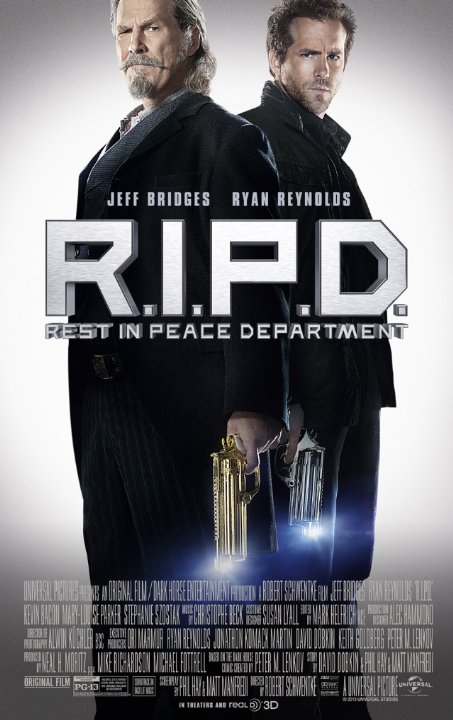
and so anyway it turns out the best thing about R.I.P.D. (2013) is that you get to indulge in all the pork based humour you can muster for almost ninety minutes thanks to the thoughtful casting of Kevin Bacon alongside piggy-eyed charisma vacuum Ryan Reynolds,…
Zombie narratives try to make us side with the worst of us against the most of us. (Accumulation by) dispossession shall be the whole of the law.
Zombies are the twenty-first century’s bomb-throwing anarchists, its beardy dirigibilists raining incendiary terror from the air. Destroy destroy destroy so a new world will rise from the ashes. But, as always, the destruction is welcomed by the architects of perpetual immiseration. Ultimately, the zombies work for them.
Zombies who struggle to retain or regain their humanity lack ambition. When zoe is all you are, why settle for the same old bios?
Zombies are metaphors, and zombie metaphors hang around long after they should have been shot in the head. Beat ’em or burn ’em, they go up pretty easy.
 Some of this can be attributed to Alan Bridges, probably the most experienced of the first three directors to work on the series.1 He makes effective use of possibilities for location shooting provided by the story’s contemporary London setting – opening shots overlooking the flight exhibition at the Science Museum, sequences in the streets of (I think) Hammersmith and Fulham and along the south bank of the Thames by Southwark, the potent juxtaposition of a Victorian pub with a new tower block. Although lacking the overtly science-fictional images of the first two episodes, Bridges’ location shooting is a far more effective way to open up a drama than could be provided by their studio-bound extraterrestrial settings. Bridges also offers us several striking (really) high- and low-angle shots, but in the studio, especially, his careful direction works to let the story flow and a sense of threat to build.
 The eighteen-year-old Boy (Richard O’Callaghan) flees from the Science Museum, tailed by the purposeful Hall (Joby Blanshard). Boy eventually confronts him, ordering his stalker to get away from him. Hall steps into the road and is killed by a van. But by the time Boy gets back to the flats where he lives with his ageing parents, Charles (Peter Copley) and Margaret (Daphne Slater) Wilson, another anonymous figure has him back under surveillance. The next-door flat has a new occupant, too, a man called Brown (John Paul) who makes no real effort to conceal his interest in Boy. The troubled family contemplate the need to move on – yet again – to evade their pursuers. They have clearly done this many times before and at some personal cost – Charles once worked at Harvard, but is now a lab assistant at a secondary modern school.
 Boy does not want to leave, though. He has fallen for an actress/model, Paula (Justine Lord), and believes she is genuinely interested in him.
 One of the pleasures of these shows is recognising the actors, many of whom were never stars but had long careers on British television, appearing in an episode here and there of pretty much everything. The reason Justine Lord looks familiar is that she is Sonia, the
  girl who was death, in the Prisoner episode ‘The Girl Who was Death’ (1968). Hall, in the opening sequence .. . is it? … yes, it’s Colin from Doomwatch. Hold on, I recognise that voice, that’s John Hall, Spencer Quist from
  Doomwatch! (Peter Copley and Bay White also each did a Doomwatch.) Copley was also Dr Warlock in Doctor Who’s ‘The Pyramids of Mars’ (1975), and other cast members appeared in ‘The Sea Devils’ (1972), ‘The Invasion’ (1968) and ‘The Space Pirates’ (1969). Jack May, who was in the last of these, was also in A for Andromeda (1961) and was the protagonist’s butler in Adam Adamant Lives! (1968-69). And so on. Other genre shows crop up in more than one cast member’s credits: The Avengers, The Champions, Department S – as well as less fantastical dramas and soaps. Oh, and if Richard O’Callaghan looks familiar, he is the son of Patricia Hayes – and the actor who was brought in when Jim Dale quit the Carry On… series (see him in …Loving and …at Your Convenience).


 Mark Bould