 and so anyway it turns out the best thing about Bait (2012) – the film in which a bunch of young Aussies, most of whom, according to a half-assed imdb search, seem to be stuntmen from Neighbours (!), and that bloke who used to be in Charmed (not the pudding-faced one, the other one) get stranded in a flooded post-tsunami supermarket along with a couple of great white sharks – is the sequence in which one of the kids constructs a shark cage cum body armour out of shopping trolleys and baskets so he can make his way underwater to do something or other (to be honest, I’d stopped paying attention and couldn’t be bothered to rewind it) only to find that his makeshift airtube is too short and he must spit it out in order to reach that little bit further and do that thing, whatever it was, only to then find, when he swims to the surface to breathe in the gap between the water and the ceiling, that the shopping basket over his head is too big and so he drowns, which the film tries to make noble and tragic, and to be honest you would need a heart of stone not to wet yourself laughing….
Category: Film
The Mad Maxathon, part four: Mad Max: Fury Road (2015)

Part one, part two, part three
Let there be no doubt. Mad Max: Fury Road is without question the very best film I saw yesterday (the other one was La momia azteca contra el robot humano (1958)).
It is also the very best Mad Max movie since Road Warrior. And like Road Warrior, it needs to be seen on the big screen (albeit for slightly different reasons, which I will get into below).
I can see George Miller’s pitch even now: Ice Cold in Alex (1958) meets Pumzi (2009), but faster. And we’re gonna steal all that crazy shit about pregnant women and bags of seed from The Ultimate Warrior (1975). And just one more thing from Island of Lost Souls (1932). And Dune (1984) was set on a desert planet, too, so we’ll throw in some of the unsavouriness of the Harkonnens, but without the obvious homophobia.
And, the executives asked, will there be an unexpected homage to Duran Duran and fellow ozploitation alumnus Russell Mulcahy?
You betcha, said George.
But even more unexpected than that there will be, when Max comes to desert after the big sandstorm scene, a tribute to Derek Zoolander’s friends who died in a freak gasoline-fight accident.
Except with supermodels.
Pregnant supermodels.
And water, not guzzle-een. We’ll save the tanks of wet-nurse milk for later. When Max has to wash blood off his face.
But don’t worry, it’s not his blood.
There has been a lot of commentary about how Fury Road gets it right by mostly eschewing CGI in favour of actually staging the action with real vehicles and actual stuntmen. Which is both true and a little misleading. There is quite a bit of CGI, albeit more judiciously deployed than one would expect in a $150 million movie, and there is an awful lot of compositing and post-production digital enhancement. (This is why you need the big screen – not so much for the profilmic car-crunching of Mad Max and Road Warrior, but for the setting of similar action in massively spectacular landscapes.)
There is also – and this is what most people seem to be missing – a lot of attention paid to classical conventions of spatial construction. Unlike in a Christopher Nolan movie, spaces actually make coherent sense, and thanks to John Seale’s camera being held that little bit further from the action and Margaret Sixel’s less-rapid editing you can, unlike in a Michael Bay movies, always tell who is doing what to whom and where they are in relation to each other and their setting.
 Don’t get me wrong, this coherence does not necessarily lead to suspense – Fury Road is no Wages of Fear (1953) or Hell Drivers (1957) or even, though it pains me to say it, Duel (1971) – but it is able to produce an awful lot of tense moments. And this tension stems from the careful thinking-through of the action sequences, from the small scale stuff (Max fighting Furiosa, while he is chained to both a broken-off car door and the unconscious Nux and suffering from the interference of the pregnant supermodels) upwards.
 Is it one long chase sequence? Not exactly. There are moments of pause, moments when the audience can catch their breath, but Miller does something inspired with them. They are character scenes, but so perfunctory – so hilariously badly written, so utterly lacking in the cheesy charm of the Fast and Furious movies – that you are happy for these layovers to be shortened and the chase to start back up again.
The only thing missing is Jerry Reed singing ‘East Bound and Down‘.
Is it the feminist movie those “Men’s Rights” folks seemed so terrified of? (Assuming all that bullshit wasn’t an ingenious piece of viral marketing.)
The answer really depends on how you define feminism. I think it passes the Bechdel test, but there is so little conversation in the movie it is hard to tell.  Charlize Theron, an actress who normally makes me go meh, is implacable as Furiosa and handles a big share of the action every bit as well as the always adorable Tom Hardy. The pregnancy/supermodel/ lactation/seeds conjunction recalls something of that old school hippy female-essentialist feminism. The ageing desert warrior women are just plain brilliant – not exactly 70s lesbian separatists but, in a future where all the men are such dicks, who wouldn’t be in favour of a little wimminz separatism? There is also at times a curious overlaying of female voices, often too quiet to make out many of the words, which made me think of the Kristevan chora –‘Although the chora can be designated and regulated, it can never be definively posited: as a result, one can situate the chora and, if necessary, lend it a topology, but one can never give it axiomatic form’ – which seemed to be pointing towards something interesting to do with desert spaces and, in this company of women, the pre-symbolic (and to pick up on Max’s traumatic flashback instants to events similar, but not identical, to things that happened in the trilogy).
Do these things make it feminist?
Frankly, you’re having a laugh. It is just less intolerant of women than many other movies made on this scale.
But they do give the movie some powerful and intriguing cross-currents and textures. I will have to see it a few more times to even begin to figure it out.
Does Max have a mullet? That would be spoilers.
Is it worth seeing? Absolutely.
Especially if you can dodge the inflation of ticket prices by distributors/exhibitors manipulating 2D and 3D screenings. My local cinema only had the 3D version at £15+ a ticket. The big-ass fancypants cinema in town was charging less for 3D, but had put the 2D version in the “director’s hall”, which made tickets even more expensive than the local 3D. Fortunately, the third-rate cinema in town was showing the 2D at a price which meant two of us could see it for a fraction more than one of us could have seen the local 3D or the fancypants 2D. It is like a temporally-compacted version of classical Hollywood’s system of ‘runs’ is being reintroduced.
And sadly the cinema we saw it in was just a sanitised pathetic relic of its former self, rather than the grunge pit in which ozploitation, however gussied up, should be seen.
The Mad Maxathon, part three: Mad Max Beyond Thunderdome (1985)

This is the one that broke the franchise.
It is the one with the audacity to have a character claim, early on, that ‘We’re dealing with subtlety here’. And the bravery, moments later, to let Aunty (Tina Turner) ask, ‘You can shovel shit, can’t you?’
It is the one featuring the Goonies outback adventure. It is Max Rockatansky’s Kindergarten Cop. His Mr Nanny, his Pacifier, his Game Plan. It is Dad Max.
It is the one that makes Waterworld look not so very terrible after all.
It is a poxalypse, full of pain.
It begins with a drum-machine, for chrissakes.
It is full of other terrible 80s things, such as a shockingly ill-judged Maurice Jarre soundtrack and a dreadful saxophone that, for a moment, fills you with dread  that Aunty will be played not by Tina Turner – whose chainmail shoulderpads are even more awesome now than they were thirty years ago – but by Al Jarreau.
Beyond Thunderdome lays bare the insidious effects of LucasSpielbergianism.
Costing five times as much as the first two films added together, it made rather less than them added together. But a bigger budget meant a drop in the certificate. Which meant replacing innovation with competence. Which meant abandoning crude, robust, imaginative and often very skilful filmmaking in order to imitate the less-than-stellar Indiana Jones and the Temple of Doom. Badly.
It nicks sequences and gags and ideas from HG Wells’s The Island of Doctor Moreau and Island of Lost Souls (1932), from Russell Hoban’s Riddley Walker (1980) but sadly not from William Golding’s Lord of the Flies (1954), from episodes six and seven of Flash Gordon (1936) and episode one of Bret Maverick (1981), from Star Wars (1977) and Apocalypse Now (1979) and Raiders of the Lost Ark (1981) and Mad Max and a whole bunch of westerns. Badly.
 It reworks the climactic chase from Road Warrior.
Badly.
As if Health and Safety finally caught onto some of the crazy shit George Miller was doing.
It is like some Spacehunter: Adventures in the Forbidden Zone (1983) knock off.
While Tina Turner is fabulous as the same-sex-yet-somehow-cross-dressing Aunty, it is disappointing to see the queerness of this future has been muted in the fifteen years since the events of Road Warrior. (I have no idea how the scantily-clad musclemen cranking Bartertown’s elevator managed to sneak unnoticed through the straightening of the post-apocalypse, but I’m glad they made it and are thriving.)
Although there are plenty of stereotypical signifiers of non-white ethnicities – Max’s burnoose and camels, the didgeridoos on the soundtrack early on, Maurice Jarre’s delusion that he is scoring Taras Bulba (1962), the plane-crash-surviving kids’ version of Aboriginal art and make-up – it remains a fairly pallid future in which whitey has learned almost nothing from these cultures about practical fashions for desert environments. One can only assume that Bartertown is built in a quarry (some of the time) because they are mining for sunblock. And talc. And, of course, vaseline.
 When the movie came out, Roger Ebert, who loved it, raved about the Thunderdome fight sequence, calling it ‘the first really original movie idea about how to stage a fight since we got the first karate movies’ and ‘one of the great creative action scenes in the movies’. It was never that good and doesn’t really hold up that well. But it can be made fabulous by taking the time to set up a second screen so you can synch it to the Peter Pan scene from 21 Jump Street (2012).
Much was also made of the alternative Riddley Walker-lite English spoken by the kids who grew up in isolation without any adults around. This linguistic drift, which has none of the post-apocalyptic horror of the final minutes of Threads (1984) either, would have perhaps seem more innovative if a few minutes earlier it hadn’t been revealed that in Bartertown the meaning of the word ‘gulag’ had shifted to mean ‘to be driven into the desert to die while sitting backwards on a horse with a giant papier-mache head on your head’.
So, besides Tina Turner, is there anything good about Beyond Thunderdome?
Well, it provides an opportunity to admire some of the early work by Terese Willis from Neighbours, formerly Sophie Simpson from Home and Away.
It was nice to see Bruce Payne return, playing a character indistinguishable from the one he played in Road Warrior but definitely intended by Miller to be a different character, which doesn’t quite explain how Max recognises him, unless it is a version of that joke in the A-Team title sequence when Face recognises a Cylon.
And it was nice to see the sarlacc pit get work again, even if it never did manage to break free of the way it was typecast by Return of the Jedi…
Oh, and the first thing the kids do after rescuing Max is cut off his mullet. Which at least puts it ahead of Steel Dawn (1987), at the conclusion of which Patrick Swayze is permitted to stride off into the sunset, mane uncropped.
Big Ass Spider! (Mike Mendez 2013)
 and so anyway it turns out the best thing about Big Ass Spider! is not, as you might assume, its title, which, like Eight Legged Freaks (2002), no film could possibly live up to, nor is it the pleasure of seeing Lombardo Boyar, playing the offensively-written comedy ethnic sidekick, steal every scene he is in, because sadly that is not really much of an accomplishment, nor is it the unexpected Lloyd Kaufman cameo, no, the very best thing about Big Ass Spider! is that they seem to have brought it in on time and budget, more or less, I guess…
The Mad Maxathon, part two: The Road Warrior (1981) mostly
 Part one, part three, part four
Road Warrior might be punk’s Sistine chapel, but it is not without problems.
To be punk at all it has to have problems.
Many of them come from its dependence on colonial adventure narratives, particularly Westerns. There is an enclave of ‘white’ civilisation in the wilderness – a fortress, circled wagons – surrounded by aggressive and highly mobile ‘savages’, who are darker and more ‘tribal’ (some even sport Mohicans), and who rape and murder one of the ‘white’ women.
And as if this racial othering is not enough, many of them also dress as sexual dissidents.
To be honest, I am not sure whether it is because I have cherished this movie since adolescence that I tend to overlook these problems, or whether it is genuinely more complex than this reductive account suggests. Certainly such colonial imagery can be used in different ways. For example, when Starship Troopers (1997) uses the fort under siege scenario, it does so to parody imperialist military aggression. Unlike, say, Zulu (1964), in which post-imperial melancholy works hard to mythologise yet another shabby episode in the history of British imperialism. And unlike the final section of X-Men: The Last Stand (2006), in which Brett Ratner, once more putting the idiot into idiot savant, slanders San Francisco’s queer counterculture.
And Road Warrior does do some interesting things with its colonial set-up.
 Three of the key ‘white’ people are so white as to become parodic, including their bleached blond leader Pappagallo (Mike Preston, who back in the late 50s recorded ‘Dirty Old Town’ and ‘Whispering Grass’, long before The Pogues and Windsor Davis/Don Estelle). This excess at least suggests a self-consciousness at work, and although it might not be very articulate, it is far more convincing than the post-hoc claims that the Rutger Hauer’s Roy Batty (in that film from the following year about the police flying around over Los Angeles deciding who counts as human) is some kind of ‘ironic Aryan’. (The absence of any actual Aboriginal people helps deracinate the situation, I guess.)
 Related to this is the transition from Mad Max’s Tom of Finland coppers to the accoutrements of sexual dissidence worn by the ‘natives’: the studded leather pants, wristbands and harness of The Humugus (Kjell Nilsson), and his Jason Voorhees take on an enclosure mask; the buttocks-flashing chaps of Wez (Vernon Wells) and the cutaway bondage gear of his bleached boytoy, etc, etc. However, I think this works a little differently to Toecutter’s stereotypically jealous (but, come to think of it, not really demonised) blond second-in-command in Mad Max.

Yes, the ‘natives’ are queer (except perhaps for the misleadingly credited ‘Tent Lovers’), but they are also charismatic and alive in a way the ‘white’ folks are not.
In Doomsday, the natives’ Glaswegian equivalents – and who would have thought that thirty years after the zombie apocalypse there would be quite so much pristine bondage gear stockpiled in Glasgow? – bear a very specific resonance, as evidenced by the music Sol (Craig Conway) plays to the crowd before they cook and eat Sean Pertwee. Adam and the Ants’ ‘Dog Eat Dog’, the Fine Young Cannibals ‘Good Thing’, Siouxsie and the Banshees’ ‘Spellbound’ and Areil Rechtshaid’s knock-off of Bad Manners’ ‘The Can-Can’ are all part of the anti-Thatcher eighties, and so it comes as no surprise that during the Road Warrior-like climactic chase, we get Frankie Goes to Hollywood’s ‘Two Tribes’. Displaced into the future, this is a culture of political and sexual dissidence being celebrated.
In Road Warrior, the celebration is perhaps less clear, but the film does not despise its ‘natives’. Miller, like Milton, is secretly of Satan’s camp.
And the opposition between the ‘civilisation’ and ‘natives’ is not as secure as one might think. Max lives in the wilderness and only crosses into ‘civilisation’ so he can leave again. The same is true of the Gyro Captain (Bruce Spence). He eventually chooses to stay, but only as ‘civilisation’ begins its long trek through the wilderness. The Feral Kid (Emil Minty) is raised in ‘civilisation’ but looks like one of the ‘natives’, grunts and growls a lot and behaves like some kind of monkey-dog; his finger-slicing boomerang is as close as we get to Aboriginal culture. And of course the opening narration turns out to have been spoken by him in his old age, long after the events of the movie, when he has become the chief of the Great Northern Tribe – a rank and social structure that suggests some retreat from ‘civilisation’.
 The bondage gear also provides Humungus’s motivation for besieging the fortified refinery. Clearly, from the way his crew race around everywhere, they are not short of fuel. But in that dry hot sandy environment, leather and rubber are gonna get uncomfortable. They’re gonna chafe. So it is not gasoline Humungus is after. It is some other petroleum-based product. Like, I dunno, vaseline.
Mad Max’s key cinematic innovation was setting the racing cameras so close to the ground. Road Warrior added a couple more things to the language of contemporary cinema.
First, is the long final action sequence. Films did not used to do that, and now they do. Without Road Warrior, the runway during the climax of Fast and Furious 6 (2013) – a runway so long you begin to suspect they are just gonna drive all the way to the destination airport – would have been a whole lot shorter and much less would have happened on it.
Second, is the radical electro-surgery George Miller performed on the muscles under Mel Gibson’s face, so that in this film it actually moves. Sadly, this experimental procedure was not entirely successful, dooming Gibson to decades of shit-eating glibness and peculiar gurning.
One time it even turned his face blue.
The Mad Maxathon, part one: Mad Max (1979) mostly

Part two, part three, part four
Waking up in post-apocalyptic Britain last Friday, and with only a week to go until Mad Max: Fury Road, it was time to get back up to speed. Thus did the Mad Maxathon commence!
Back in my Plymouth teens, one of the local free papers had a competition to win cinema tickets and related goodies. Most weeks I entered and – not having enough pocket money or, later, paper-round wages to waste on a postage stamp – would deliver it in person (in a reused envelope) to their offices. The only things I ever won were a pair of tickets for a double bill of Ghoulies and Trancers (I suspect no one else entered that competition) and, a year later, a pair of tickets for Mad Max Beyond Thunderdome, a film my girlfriend did not want to see, especially after the preceding year’s fiasco. Oh, and along with the tickets came a Thunderdome t-shirt, which I had to collect in person and, being poor, could not just throw away despite the embarrassment of advertising a film I hated. It became a winter garment, always worn under something else, until eventually it faded and fell apart. This may well be the origin of my dislike for clothing with writing on it. And of white t-shirts.
I forget when or where I first saw the previous movies – presumably on video at a friend’s house. So something good did come of those free tickets. They enabled me to reassess my opinion that Mad Max, despite holding the world record cost-to-profit ratio for twenty years, was the weakest film in the series. (The Road Warrior was always, in the words of JG Ballard, ‘punk’s Sistine Chapel’.) While I have watched the first two multiple times over the years, I have only seen Thunderdome twice – and not since it was first broadcast on television. So how do they hold up?
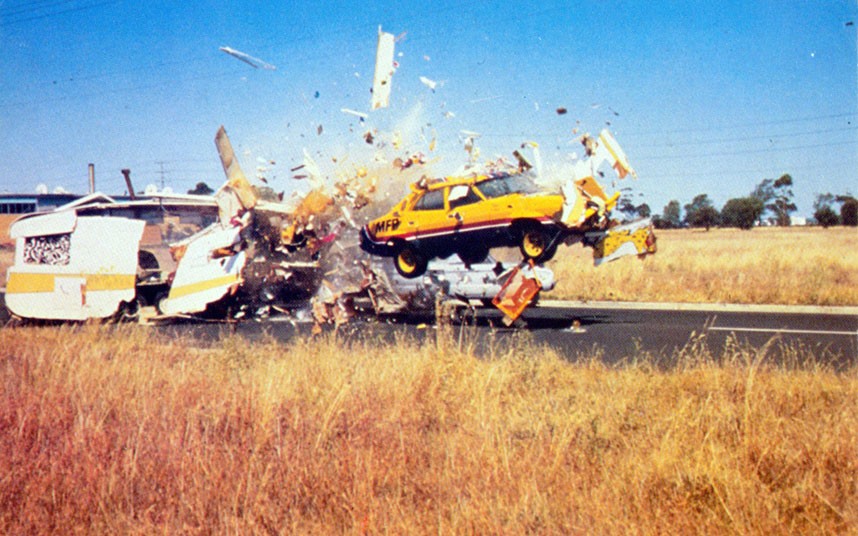
Mad Max starts off as a properly sleazy ozploitation flick: a tubby copper in leather spies through rifle sights on a couple having sex in a field; an insane car chase ensues. There will be more bare bums in the franchise (and car chases).
Mad Max was one of the first Australian films to be shot using widescreen anamorphic lenses but George Miller’s real innovation was to mount the cameras on speeding cars and motorbikes so very close to the ground. It does not sound like a lot, but it was, and remains, breathtakingly perilous to watch.
 Accounts of the film often take note of Miller’s work as an emergency room doctor, and of several incidents during the OPEC crisis when – in full Ballardian mode – regular folks queuing for fuel violently turned on each other. Clearly some kind of autogeddon was in the ozploitation air (see also: Peter Weir’s The Cars that Ate Paris (1974), one of the earlier Australian films to use widescreen anamorphic lenses, whose spikey Volkswagen is homaged in Fury Road; Ian Barry’s Chain Reaction (1980), which stars Mad Max‘s Steve Bisley, Hugh Keays-Byrne and, as an uncredited bearded mechanic, Mel Gibson; Brian Trenchard-Smith’s Dead End Drive-In (1986), based on Peter Carey’s story; and, in a slightly different vein, Richard Franklin’s Road Games (1981)).
I was not surprised to hear that for Fury Road, George Miller presented Tom Hardy with a 300-page ‘comic’ made up of storyboards, rather than a conventional screenplay because Mad Max – with its generic mix of AIP biker movie, backwoods Straw Dogs/Deliverance rape-revenge narrative, lone gunfighter/sheriff/samurai seeking revenge/justice, rogue cop brought out of retirement one last time and this time its personal – comes across increasingly like a 2000AD strip. This connection with the other Sistine chapel of punk comes full circle, first in Neil Marshall’s underrated Doomsday (2008), which riffs off The Road Warrior but also in its final shots gives Rhona Mitra a Carlos Ezquerra/Mike McMahon big boots look, and then in Fury Road, co-written by Brendan McCarthy, who started working on 2000AD in the late 70s and then, inspired by Road Warrior, co-created the post-apocalyptic surfer comic Freakwave (1983). Some consider Freakwave to have been plagiarised by Waterworld (1995), which was dubbed ‘Road Warrior on water’ back in the day. ‘All at sea’, more like.
Mad Max’s melodramatic transitions in particular have something comic-book about them – foreshadowing Sam Raimi’s more obviously comics-inspired Darkman (1990) – and, to be honest, much of the dialogue would probably work better as speech bubbles. The stand-out dialogue scene is the one in which Mel Gibson, with his oddly immobile face, emotes, trying to say something incomprehensible to his wife about his feelings for her in terms of feelings he had for his dad but never expressed. Or something like that. Wisely, to shut him up, she kisses him. And considering how unwise kissing Mel Gibson actually is, we should thank her. She may be overly taken with the idea that running right down the middle of the road is the best way to flee murderous bikers, but right then, at that snoggy moment, she takes one for the team.
 Mad Max is only Gibson’s second film and, although he has yet to become completely insufferable, the construction of his image of physically battered masculinity – the shirtlessly electrocuted resistant-to-electrocution Martin Riggs getting his ass handed to him by the mighty Gary Busey in Lethal Weapon (1987), the shot-to-pieces Martin Riggs annoyingly not dying in Danny Glover’s arms in Lethal Weapon 2 (1989), the hammer-to-the-toes justifiably tortured hardly-Lee-Marvin of Payback (1999), culminating in all those unpleasant things people do to Jim Caviezel in The Passion of the Christ (2004) – is already gearing up as he (somewhat ineptly) wreaks his revenge.
Given Gibson’s occasional homophobic outbursts, I vividly recall being delighted to discover that, at least in the olden days, he used to have a big enough gay following to provide one of the case studies for Michael DeAngelis’s Gay Fandom and Crossover Stardom: James Dean, Mel Gibson and Keanu Reeves (2001). I am however quite mystified as to the source of this, or indeed any hetero, attraction. Sure, in Mad Max, he is young and pretty and wears tight black leather and does not yet have a mullet. Is it that? Or is it his later tendency to be as shirtless as Matthew McConaughey while wrestling in the rain with Gary Busey or otherwise taking physical punishment? A suffering that in some ways maps onto his Judy Garland-like life of dislocation and addiction and abuse (although admittedly he is the abuser, not the abused)? Please tell me it is not the mullet.
Oh, and Main Force Patrol? Come on, people, that is not what MFP stands for.
American Hustle (David O Russell 2013)
 and so anyway it turns out the best thing about American Hustle (2013) is its teasing revelation that the whole Christopher Nolan Batman trilogy thing was merely laying the groundwork for Christian Bale to perform the most
  remarkable yet of his many physical transformations, of which the drastic weight loss for The Machinist (2004) and Rescue Dawn (2006) are the most renowned but which hardly presage and count as nought compared to his metamorphosis
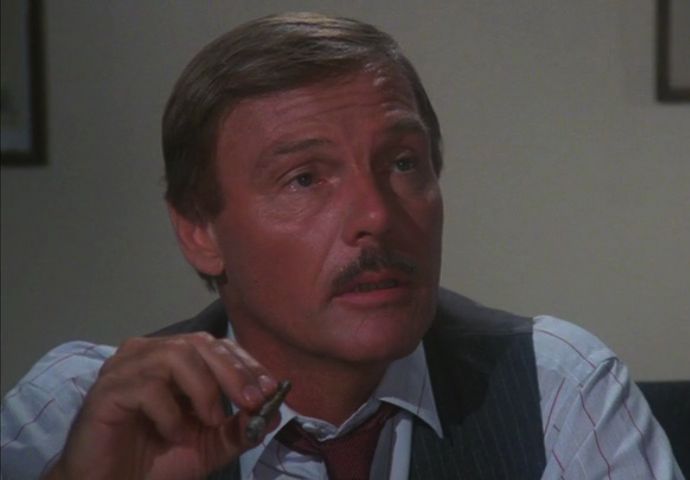 into Adam West…
Waterworld (Kevin Reynolds 1995)
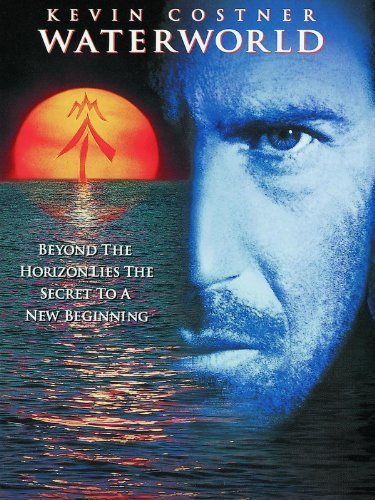 and so anyway it turns out the best thing about Waterworld (1995) is not that it is intermittently far less terrible than I remember it being, though far too intermittently for me to consider rewatching The Postman (1997), the other Kevin Costner post-apocalyptic epic I also saw at the cinema and swore never to watch again, but that Joss Whedon, in his seven weeks of script-doctoring the movie, somehow managed to not ascribe Costner’s character’s gills, webbed toes, Man from Atlantis swimming style, assorted other almost-superpowers and ambiguous motivations to his inability to be a mother…
The Ultimate Warrior (Robert Clouse 1975)
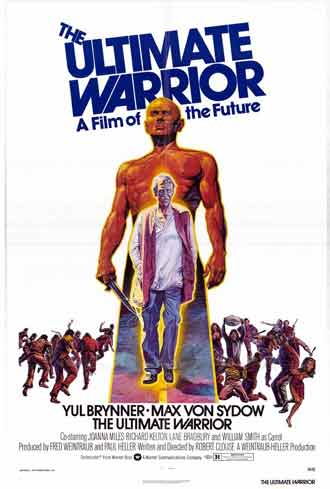 and so anyway it turns out the best thing about The Ultimate Warrior (1975) is not the moment when a young mother, safe within Max Von Sydow’s fortified compound, decides to sneak out into the violent gang-filled streets of post-apocalyptic Manhattan in search of powdered milk rumoured to be hidden in a nearby derelict bakery, nor is it her decision that the best way to do so is to leave via the front door (er, portcullis) with her given-to-squalling infant on her back, but her decision that the best time to do so is under the cover of broad daylight…
Oblivion (Joseph Kosinski 2013)
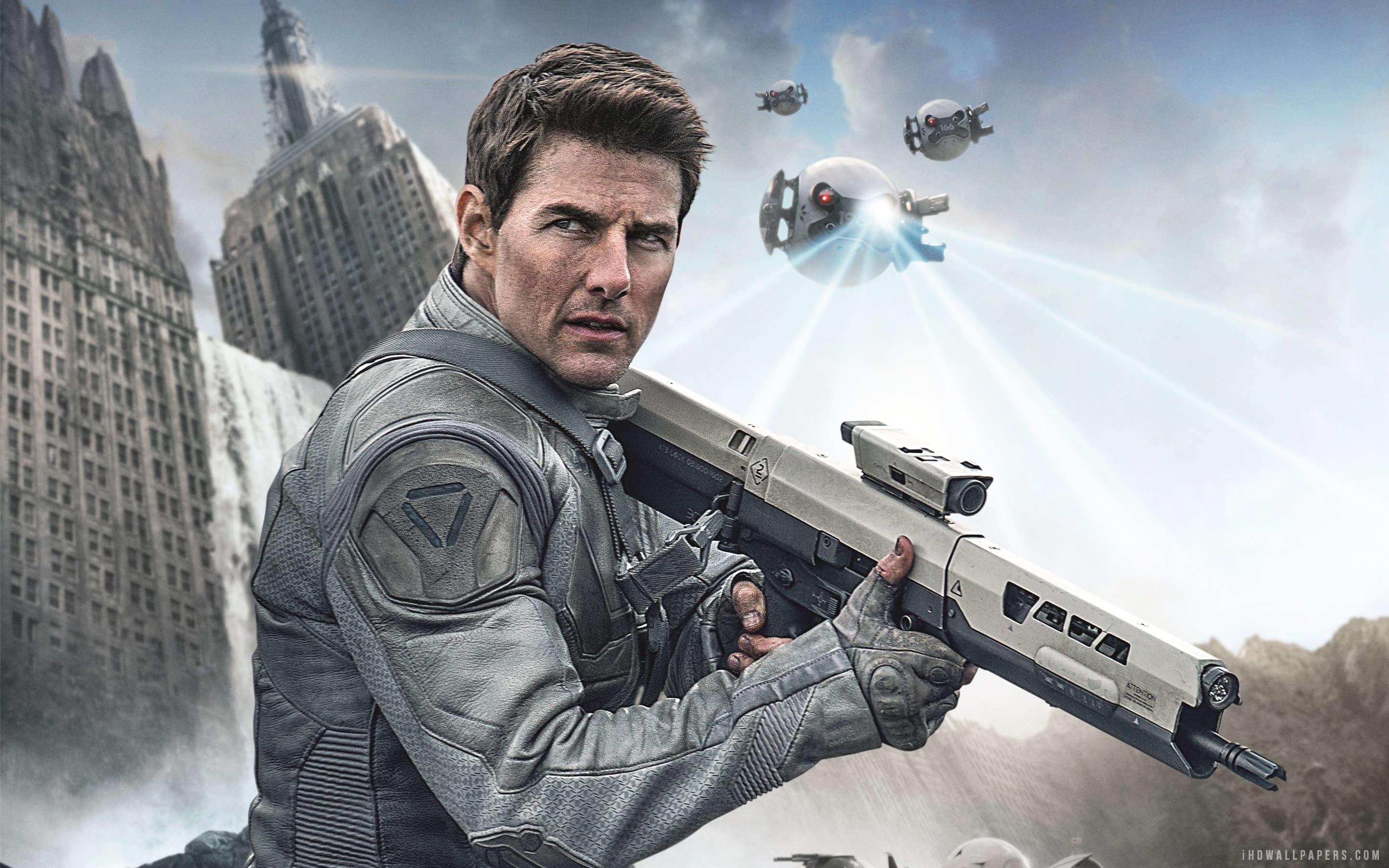 and so anyway it turns out the best thing about Oblivion (2013), a film which patches together bits from every other science fiction film ever, is the way in which flying spherical robot drones manage to combine 2001: A Space Odyssey’s shuttle pods with RoboCop’s ED209 and with The Black Hole’s V.I.N.CENT and Old Bob, though sadly this also brings us to the worst thing about the movie, the way in which a bunch of cowardly philistine corporate suits lacking Joseph Kosinki’s genius and vision refused to have the drones voiced by Windsor Davies, who voiced Sergeant Major Zero in the key sf text of the late twentieth-century, Terrahawks…

