 Azanian Bridges is a neat little thriller, set in more or less the present-day South Africa but in a world in which Apartheid continues. A quick and compelling read, it does a couple of rather cunning things.
The first is its choice of alternate history premise.
There are a number of African alternate histories which invert or rewrite elements of European colonialism (e.g., Abdourahman A. Waberi’s In the United States of Africa (2006), Africa Paradis (Sylvestre Amoussou 2006) – and Nisi Shawl’s Everfair (2016) to look forward to).
There is a future history imagining the conditions for the emergence of something akin to Apartheid (Arthur Keppel-Jones’s When Smuts Goes: A History of South Africa from 1952 to 2010, first published in 2015 (1947)).
There is an array of near-future thrillers that anticipate the end of Apartheid (Anthony Delius’s The Day Natal Took Off (1960), Gary Allighan’s Verwoerd – the End (1961), Iain Findlay’s The Azanian Assignment (1978), Randall Robinson’s The Emancipation of Wakefield Clay (1978), Andrew McCoy’s The Insurrectionist (1979), Larry Bond’s Vortex (1981), Nadine Gordimer’s July’s People (1981), Frank Graves’s African Chess (1990)).
And there is an alternate history with the brilliant premise of aliens arriving in the skies over Johannesburg during the Apartheid era, although sadly District 9 (Blomkamp 2009) doesn’t have the faintest idea what to do with it. (Read Nnedi Okorafor’s Lagoon (2014) instead.)
But, as far as I know, Azanian Bridges is the first story to project Apartheid beyond 1994.
In doing so, Wood sketches in some sly geopolitical changes. The Soviet Union did not withdraw from Afghanistan in 1989, but has spent thirty years ‘haemmorrhaging men into their Afghan ulcer’ (31). Perestroika and glasnost seem not to have happened, and the USSR is intact, apparently governed by generals. The Berlin wall has not fallen, nor has the Eastern bloc collapsed. Consequently, ‘the old anti-communist arguments for supporting’ South Africa (163) held sway rather longer among Western powers, and it comes as little surprise that Bush and Blair were both supporters of the Apartheid regime. But now President Obama – along with his ally, the US-backed mujahideen leader Osama bin Laden – are involved in peace talks with the Soviets. The Cold War might finally be limping into its terminal phase, and with weakening Soviet influence in Africa, China is investing heavily across the continent. Meanwhile, in a South Africa ruled by President Eugène Terre’Blanche’s Afrikaner Weerstandsbeweging, Mandela did not leave Robben Island and FW de Klerk is still in prison for trying to bring Apartheid to an end in the 1980s.
All of which is sketched in with greater economy than I have just managed, not least because the layers of paranoid security and firewalling significantly restrict all South Africans’ access to the internet and other global media. Phones with cameras are also banned since they are a ‘potentially easy source of troubling video’ (45) – a nice touch that captures the novel’s relevance to our #blacklivesmatter times.
The second (and really really) cunning thing that Wood does is make a connection between the new experimental technology introduced into this alternative near-present and the form his narrative takes: the Empathy Enhancer allows one to experience the experience of others, and vice versa; the novel’s chapters alternate between Sibusiso Mchunu, a young amaZulu on the edges of anti-Apartheid struggle who is deeply traumatised when a friend dies in his arms, shot to death by the police at a protest, and the white (but as-yet not very committed) liberal, Dr Martin Van Deventer, the neuropsychologist treating Sibusiso and co-inventor of the Empathy Enhancer.
The security services want the EE device for use in interrogations. Anti-Apartheid groups want to use it to undermine the regime, person-by-person. It is not clear why the Chinese want it, but they do. So when Sibusiso goes on the lam with the device, and Martin sets out in pursuit, the alternating chapters set you up to expect a tensely intercutting thriller, as pursuers become the pursued.
And there are a number of tense sequences and suspenseful passages.
But Wood is playing a very different game, subverting the form to make the reader focus on the twin protagonists’ very different experiences of living in a racist state which sees them both, in different ways, as its enemies. This ranges from the most perilous things – run-ins with the security services – to the most quotidian: when Martin is told to destroy his cell phone so it can’t be used to trace him, he simply ‘grind[s] the phone under [his] heel’ (153); when Sibusiso’s phone is simply taken from him and tossed into the sea, he is ‘upset and angry’, in large part because ‘we have been taught to throw nothing away’ (129).
Such contrasts are the point of the novel.
Azanian Bridges itself is the Empathy Enhancer. Read it and weep.
 Austrian physicist and rocketry pioneer Max Valier became a friend and populariser of Hermann Oberth, and working with Fritz von Opel became the first person to test-drive a liquid-fuelled rocket-propelled car (he should also have been the first person to fly a rocket-propelled plane, but Opel was a bit of a dick about it all). He also wrote fiction, including ‘Auf kühner Fahrt zum Mars’ published in Die Rakete (1928), and then translated by Francis Currier as ‘A Daring Trip To Mars’ for Hugo Gernsback’s Wonder Stories (July 1931). Valier’s preface boasts of the accuracy of the ‘mathematical parts’, which ‘as based on careful calculation’, which I believe, although his claim that the story is ‘entertainment’ is debatable. Unless he means the bits where he raises gender and class politics in relation to spaceflight:
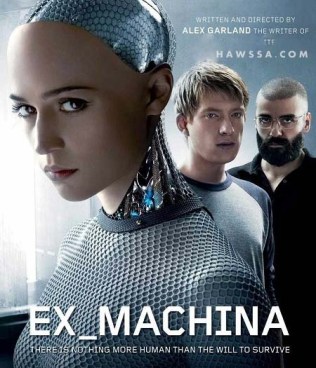 and so anyway it turns out that the best thing about Ex Machina (2015) is that, having expositioned all that stuff about the Turing Test and then bromanced it into irrelevance over geek/hipster beers, the film then doubles down by making it clear that the way the Test really works is that if you give your robot boobs then you can determine whether or not she is human not by her occasional hints that she possesses agency outside your bullshit patriarchal compulsory heterosexuality but by how long it takes ‘her’ – like all human women in movies – to betray you…
 ***************************************************************
 ***************************************************************
 and so anyway it turns out that the best thing about Sucker Punch (2011) is that after unintentionally outing himself with the gay soft-porn classic 300 (2007), Zack Snyder set out to make a tawdry, anime- and game-inspired women-in-cages, women-in-their-pants fantasy action movie but instead went the full Vincente Minnelli by making a melodrama about female suffering (with camp gothic overtones) crossed with a backstage musical (albeit with the song and dance numbers removed)…
 ***************************************************************
 ***************************************************************
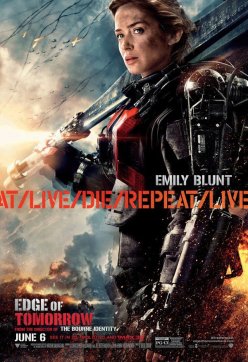 and so anyway it turns out that the best thing about Edge of Tomorrow (2014) is not the way in which the DVD marketing finally admits that Edge of Tomorrow is a shit title that is nowhere near as good as the tag-line Live. Die. Repeat. and now pretends that the film is actually called Live Die Repeat: Edge of Tomorrow, nor is it Emily Blunt, although she is usually the best thing in anything she is in and would be the best thing about Edge of Tomorrow were it not this other thing, no, the best thing about Edge of Tomorrow or whatever the hell we are supposed to call it now is the simple beauty of watching itsy-bitsy teeny-weeny action star Tom Cruise dying horribly over and over again – for most things in life there is Barclaycard, but some things really are priceless…
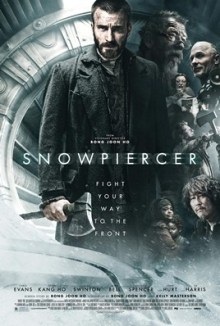 and so anyway it turns out that the best thing about Snowpiercer (2013) is not the endless arguments about how implausible it is that those two kids could survive in the snowy landscape after the crash as if the ecology of the metaphorical train they have been riding for the last seventeen years made any kind of rational sense, nor is it Tilda Swinton’s decision to play the villainous Mason as some kind of bizarre cross between Janet Street-Porter and Mary Whitehouse (and pull it off), nor is it John Hurt’s half-assed Long John Silver look, but the way in which Bong carries over dystopian elements of our present world into the post-apocalypse, so that – having survived the end of the world – Olivia Spencer’s Tanya, the main black character, is still killed by a white cop, and so that the middle classes still feel free to go to the back of the train and bray their nonsense at the top of their irritating voices as if the rules and etiquette of the quiet carriage somehow do not apply to them…
 Mark Bould