Florence, the Rocket and the War Machine

16239585931_b38f6cdc91_z
Florence. Andrea Gibbons, 2015.

They say nothing ever happens in Florence, Arizona. That no one ever goes there except prisoners headed for one of its nine prisons. That the only people who stay more than a couple of hours are either inmates or guards.

They say it is a place to pass through, but by this they mean ‘pass by’.

It is a town that does not want to be seen.

It is a town that knows shame.

It is where he came from, the man who nearly got us all killed.

There are monuments, weatherworn and decrepit, but they do not celebrate him. They recall his folly. They are a civic embarrassment the townsfolk are too ashamed to remove.

And so Florence, Arizona, hides away as best it can.

***

The story begin somewhere else, somewhere to the south, down past Tucson. In Pima county. The Baboquivari Mountains, perhaps, or maybe the Quinlans. Somewhere high up, where the air is clear.

Young Hans was a keen amateur astronomer. Enthused by Percival Lowell’s first book about Mars, he set out to observe the red planet during the 1896 opposition. Two years earlier, several observatories reported a great light on the illuminated part of the disk. An article in Nature had identified the specific location, and he subjected it to particular scrutiny.

He reported seeing an array of peculiar markings near the site. He wrote to Lowell, at his observatory up in Flagstaff, and to the Lick Observatory in San Jose. In their archives, you can still see his cramped letters, his painstaking maps. Preserved in curatorial atonement for the fact that no one ever replied. A refusal to expunge him, or to absolve those ‘betters’ who disdained him at such a cost to us all.

uncredited, early 1930s?
Uncredited, early 1920s?

When he returned to Florence, he was a changed man, haunted, as if he knew something so terrible he dare not speak it aloud. And slowly and surely he drew his plans. Counted down the 780 days until the next opposition. Started to build.

Several articles about Hans appeared in the Florence Reminder & Blade-Tribune over the next two years. One suggests that he sought the assistance of Nikola Tesla, who was up in Colorado Springs during 1899, although there is no record of them actually meeting. Press interest may have waxed and waned, but it never seemed to affect Hans. He was firmly uncommunicative.

Uncredited, 1940s?
uncredited, 1940s?

There was talk of having him committed, but it came to nothing. He remained tight-lipped.

***

2015
2015
2015
2015
2015
2015
Rocket engine, 2015.

The rocket still stands where it landed upon its return from its second flight in 1934. Back in 1901, it landed about a block further south, but Florence, slowly expanding throughout the twentieth century, long ago engulfed the spot.

Nor is any trace left of the construction site, from which he launched the rocket in 1899. A couple of miles further from Main Street, it is buried beneath an undistinguished suburban tract.

All that remains of this astonishing feat is the rocket engine, tucked away at the back of the local museum, and the towering shell of the craft – an unsanctioned monument, uncared for, decaying. Its spindly legs stubbornly refuse to collapse.

You cannot get near it. A row of stores and workshops, not all of them in business any longer, block the way, and it is surrounded by a high fence – not to protect it so much as to disavow the townsfolks’ vandalic urges. Every decade or so someone suggests the council demolish it, but somehow the proposal always runs out of steam. You get the sense that the town is waiting for it to collapse of its own accord, that if they make no overt move against the rocket its unwilled destruction will free them.

***

In 1899, Hans disappeared. The rocket, too.

When Sheriff Nichols inspected the construction site, he found a large patch of scorched desert earth. ‘Pretty much a precise circle,’ he told the Florence Reminder & Blade-Tribune reporter. The lack of debris scotched any suspicion that Hans had just blown himself up, but that did not prevent the rumour that he had merely fired the rocket off into the desert and absconded in the night. For two years, his fate remained a topic of gossip and speculation. In the saloons and private homes of Florence, it was something to chew over when the nights were cold or the days were long.

If no one saw his departure, everyone witnessed his return. Round about lunch time, smack in the middle of town. Descending on a pillar of flame, his craft ruby red with heat.

Night fell before the hatch opened. He lowered a rope ladder he could barely climb down. Two men clambered up to his swooning figure before he could fall, and brought him the last few yards down to earth.

He was starved and dehydrated. He had lost one arm below the elbow, and the crudely cauterised stump was gangrenous. A hasty second amputation was performed before he regained consciousness. He lay in a feverish slumber for nearly a week. He would cry out in his sleep, seem to wake, utter incoherent warnings. He spoke of monstrous beings, all brain and staring eyes and tentacles. Of humanoid creatures farmed on vast estates. Of the killing pens. The thirst for blood. He described a vast cannon, a space gun he called it, and the immense shells being shipped to it on broad planet-girdling canals.

He told us they were coming.

Frankly, he raved.

The descent of the Sonora cylinder.  Uncredited 1901.
The descent of the Sonora cylinder. Uncredited 1901.

And no one believed him.

Not even when the big city newspapers carried stories about ‘a huge outbreak of incandescent gas’ visible on the surface of Mars.

He tried to warn us.

And then they started to fall from the sky. In the south-east of England, around London.

The pit. Uncredited, 1901.

On the east coast, at Grover’s Mill, New Jersey and Grand Island, New York.

On the west coast, near Linda Rosa, California.

And, though it is often forgotten, one landed in the Sonora Desert, too. At dusk, as the dying sun turns the light a golden orange, a Martian cylinder punched a crater deep into the desert, cracking the air, lighting up the sky.

After a pause, a lull, noises started in the pit. An aura of dazzling light could be seen for miles. Some alien industry, hidden from human eyes.

tripod 4 bw
Martian war machine, outskirts of Florence. Uncredited, 1901.

That one, Hans insisted, was coming for him, and when the war machine, as the whole world would learn to call such alien tripods, emerged, it did indeed head directly for Florence.

***

All that saved Hans – and Florence – was the the thing that saved us all. The transient creatures that swarm and multiply in a drop of water. Infusoria. Bacteria. Or so the story goes, and it is not wrong, but there is more to it than that.

Martian war machine, 2015. Note the supporting legs added to help keep it upright and stable when at rest.

The press wasted no time in holding Hans responsible. He had, they claimed, recklessly awakened the Martians to our presence and led them here. Chronology did not seem to matter. They wanted a scapegoat, and that was that.

In those days it was much easier to disappear without a trace. Hans had friends among the Yavapai and Apache, and knew people down in Mexico. He was never heard of again, though some claim he returned to pay penance.

'Flash' Gordon. Uncredited, mid-1930s?
Flash Gordon. Uncredited, mid-1930s?

Early in 1934, when the rogue planet entered our solar system and came rushing in the direction of Earth, when the Moon shifted in its orbit and freak weather tore around the world, the rocket disappeared for half a year. As did a famous young polo player enjoying a desert winter at a nearby dude ranch – Flash Gordon.

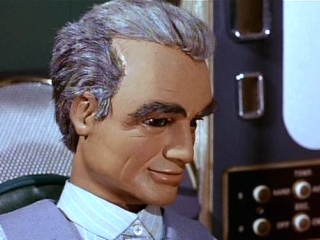
Feted on his return from combatting the alien warlord of the planet Mongo, Gordon insisted that we really owed our survival to the intervention of Hans. But the press were untroubled by the facts. They wanted to present the public with an unabashed hero, the world with an American saviour. No one was interested in recuperating Hans, regardless of the sacrifice he had made.

In a dying statement, Gordon reiterated the role of his friend in defeating Ming, and added a tidbit that has been ignored for decades. According to Gordon, that was the second time Hans saved the planet. After landing on Mars in 1899, Hans discovered the plan to invade Earth and so deliberately infected the Martian population. He severed his own arm, left the flesh to rot and putrefy. He introduced the rotten remains into food and water supplies. The Martians had no immunity to terrestrial bacteria, and a recent analysis of infection rates among the invaders suggest they were sick before they landed. If so, Hans, who never put us at risk, in fact actually saved us.

Many remain sceptical about this evidence, preferring to retain the image of Hans as a monster, to demonise him. Why, they ask, did he not proclaim his innocence? Why did he not protest the defamation of his name and character? Why did he flee?

The answer, it seems to me, is simple.

Shame. A deeper and more tangible shame than Florence can ever know.

Hans did not betray us. He did something much worse.

On our behalf, he killed.

Nearly half a century before the word was even coined, to save us all Hans Zarkov committed genocide.

Note The last two times I tried to write this, my opening sentences took me in rather different directions, here and here.

The Disappearance of Nicolas Cage

(Transcript of the pilot episode of Jason Wyngarde’s Mysterious World, which was cancelled mid-season 2023.)

The last time Nicolas Cage, the financially-troubled star of the National Treasure franchise, was incontrovertibly among us was late in April 2011. He has not been seen since, nor has his body been found.

Good evening, I am Jason Wyngarde, and this is my mysterious world – our mysterious world.

MV5BNzY0ODM1NzU0OV5BMl5BanBnXkFtZTcwNTExNjIyOA@@._V1_SX214_AL_In the opening months of 2011, Cage was in New Orleans, shooting Simon West’s thriller Stolen, a film which famously could only be completed with groundbreaking synthespian software. Following a street argument with Alice Kim, his third wife and the mother of his youngest son, Kal-El, Cage was arrested on Saturday 16 April on suspicion of domestic abuse, breach of the peace and public drunkenness. He was bailed out by reality TV star Duane ‘Dog the Bounty Hunter’ Chapman, and returned to work the following Monday. Reports from the set that he was becoming increasingly pensive and introspective were initially taken to indicate embarrassment, contrition, perhaps even genuine soul-searching. But when he failed to return home on the eve of his court appearance, scheduled for May 31, his creditors’ suspicions that he was in fact planning to abscond were apparently confirmed.

Chapman, who at the time insisted that posting Cage’s bail was merely part of his day job and had nothing to do with his TV show, was just one of many who took part in the ensuing – and completely unsuccessful – manhunt. The footage he shot was never broadcast, although some of it eventually surfaced in James Franco’s nine-hour documentary about Cage, ninja guru shaman superhero, a decade later.

Reports of Cage’s illegal flight prompted an internet wildfire of rumours, which-movies-have-the-most-terrible-endings-1477618313-may-31-2013-1-600x400speculations and reported sightings. There were at least eight incidents involving a man dressed as a bear punching a nun. In each case, the assailant later claimed in court that ‘Nicolas Cage made me do it’, a phrase that swept the world for a fortnight that summer as the search for the missing star intensified.

As shown in Werner Herzog’s Cage of Forgotten Dreams, at least one Christian sect was thrown into acrimonious disarray – resulting in rifts, suicides and shootings – by the possibility that the Rapture had happened and God had seen fit to take only one man.

kal_elAll of this was small comfort to Kal-El Cage, who in one of ninja guru shaman superhero’s most poignant sequences revealed to Franco that he grew up pretending that his absent father had just flown away for a few days to the solitude of his arctic Fortress and would be back home tomorrow.

However, sifting through the evidence and hypotheses, a pattern does begin to emerge in the testimony of those who were closest to Cage during the months before his disappearance. Many of their comments indicate that the Oscar-winning star was growing increasingly anxious about his acting. In one of his last interviews, he spoke of being absolutely overwhelmed by Casey Affleck’s pseudo-documentary I’m Still Here, colourfully describing Joaquin Phoenix’s faked breakdown as

the fucking quintessence of Nouveau Shamanic performance. It’s an acting style I’ve been perfecting since I was an extra in Brubaker, and out of nowhere, he’s zen-mastering it like a motherfucker.

nicolas-cage-660aEven at the time, this prompted a rumour that the Elvis-loving Cage, who was married to Lisa Marie Presley for 108 days in 2002, dropped out of sight to undertake a secret art project of his own, touring the world incognito, faking Elvis sightings. Implausible as this may seem, the twenty-eight months after his disappearance did coincide with a massive increase in reported sightings of the long-dead King of Rock’n’Roll.

Mark Neveldine and Brian Taylor, co-directors of the Crank movies and Gamer, spoke of a sense of melancholy that began to affect Cage during the final days of shooting Ghost Rider: Spirit of Vengeance in early 2011. Neveldine at first suspected it was prompted by yet another article on ‘this sequel no-one wants to a film no-one wanted’ and the kinds of movies Cage was making (he had just signed up for National Treasure 3). But Taylor dates Cage’s mood-change to the night the three of them went to see Drive Angry 3D together:

Nic’s always known some pretty way out people, not just comic book fan weird, but really weird: kabalists, chaoticians, numeromancers, edge-scientists. And let’s face it, Nic always acted in 3-D even when the film was in 2-D. He told me he’d taken on Drive Angry just to see what would happen when the technology raised everyone else’s thespian chops to the level of his own multidimensional acting kata. I thought he was joking, but after seeing the film he just went really quiet for a couple of days. One night he wandered off into the hills with a couple of bottles of mescal; and when he came back, he had this crazed look in his eye, like he’d just glimpsed the edge of something, something profound, sublime. He was a little manic and over the top for the last couple of days shooting, constantly on the phone, texting and emailing between takes. But then we were done, and that was that.

Neveldine adds:

He was on fine form at the wrap party, but the next morning was the last time I saw him. Last thing he said to me, was ‘I’ve seen the next step, the way through this, through all this. And I think my guys have cracked it. Could be scary, should be cool’. But he wouldn’t explain what he meant.

1238618115-cage_sonOn the night of his disappearance, Cage left a message on the phone of his recently-married son Weston, lead singer of Eyes of Noctum, saying only ‘When they ask, tell them “dimensional quadrature”’.

It was while researching this peculiar phrase – it is a mathematical term, concerned with numerical integration – that I met Professor Peter King, and the pieces of the puzzle of Nicolas Cage’s disappearance finally fell into place.

King is the world’s leading authority on incunabula and rejectamentalia. He’d contacted me about archiving my papers at the Miskatonic Institute of Technology.

He explained that the term ‘dimensional quadrature’ is usually attributed to H.G. Wells but actually originates in Charles Eric Maine’s 1955 novel Timeliner: A Story of Time and Space. Maine apparently adopted it to describe a method of time-travel because of the popular misconception, perpetuated by Wells’ 1895 The Time Machine, that time is the fourth dimension. This is not the case, and scientists at MiskaTech have recently demonstrated experimentally that the fourth dimension is a physical plane intersecting our own and a number of other dimensions.

They can tell us little about the nature of the fourth dimension, this phantom zone, other than that it is very different to the world we know. And that once you open up a portal to it, if you listen carefully – very, very carefully – you can just make out what sounds like a single, solitary human voice. Distorted, crying. Shouting and raging. Consuming the very walls that imprison it.

I have now heard it on two occasions.

Is it the voice of Nicolas Cage?

I cannot definitively say.

But could it really be anyone else?

Who else would have pushed so hard? Burned with such intensity? Broken on through to the other side?

Who else could or would have taken acting, literally, to another dimension?

I am Jason Wyngarde, and this is my mysterious world – our mysterious world. Join me again next week, when we hunt, south of the border, for Chupacabra and Peuchen. Thank you and goodnight.

8/5/11

Killer, Joke

lego___custom___agent_47___hitman___002_by_kobalt1977-d6t3yhlBack when he started, it was the travel he looked forward to most. He would set himself in motion and inertia would take him there. It had pleased him, too, that most of the journey would consist of another kind of inertia. Just sitting there. That odd combination of momentum and stasis.

He read a lot.

He inspected the toilet bowl and rim minutely, wiped them down with a wad of toilet paper, which he then flushed away. While the cistern refilled, he refolded the end of the roll so that the room would, when he left, show no trace of him having been there.

His bowels gurgled, and he flushed once more.

Nowadays, the travel was the worst part. Jet-setting in economy, trying to remain unnoticed, he could cope with. But at some point, the combination of ageing, airline food and the stress of a contract started to leave him constipated. Sometimes for days.

In the bedroom, the parts of a sniper’s rifle awaited his expert hands.

In Rome, it was merely inconvenient, but by the Manila trip it had started interfering with the job. He took to arriving days earlier than necessary, even though that increased his exposure, but to no avail. The bloating and discomfort would continue until long after he was back home. A doctor diagnosed IBS. His only consolation was that it was IBS-A, which alternated between diarrhoea and constipation. IBS-D, and that would have been the ignominious end of a lucrative career.

Maybe it was time to retire, anyway, he thought, as he finished assembling the rifle.

His bowels shifted and groaned. He farted noisily. The carbon pills he’d popped did little to staunch the stench. He thought, with a self-conscious smile, Now that’s what I call trace evidence.

He flipped open the tripod, mounted the rifle and checked the sights. It was a tight angle and he would have just a couple of seconds in which to take the shot. He breathed deeply to maintain his calm, a finger resting lightly on the trigger.

His stomach cramped.

He glanced at the watch on the inside of his wrist. He still had at least five minutes. It was time enough. He returned to the bathroom.

This should not be happening to me. He considered himself, not inaccurately, one of the best in the business, and he was, more or less, at the peak of his game.

He strained, even though the doctor had told him not to. Something seemed to give. There was a plopping sound – he strained some more – and another.

It was odd, he thought, not for the first time. He was like, say, an illuminator of medieval manuscripts or, better yet, the apprentice of a great artist. His work was renowned, and yet he was anonymous. Well-known, but completely unknown.

He leaned forward and looked down behind him. Two tiny pieces of dark shit sat on the bottom of the bowl.

They are, he thought as he wiped his ass, like shards chipped away by a master sculptor, seeking the form hidden within the mass.

Once he was dressed, he repeated the ritual eradication of any evidence of his presence in the bathroom.

God alone knows what he is sculpting in there.

He glanced at his watch, and strode purposefully to where the rifle stood ready. He checked his breathing, and waited.

A replica in miniature – but not too miniature, it feels – of the doors of the Florence Baptistry?

He pulled the trigger, took the shot.

Maybe something equine, in the style of del Verrocchio or even Leonardo?

A double tap to be certain.

A David, perhaps, after Donatello or – dare I wish? – Michelangelo?

He picked up the spent cartridges, speedily disassembled the gun and packed away its parts. In less than a minute he was by the door, ready to leave. No sound of anyone outside. He reached for the handle, and as he did so, his bowels flip-flopped once more. The fart was loud, sustained and really really smelly.

Yeah, he thought, as he stepped into the corridor, swept up once more by the inertia that would see him safely home. Whatever is going on in there is a real copro-naissance.

[Author’s note: Okay, I admit it, ‘Shit, Joke’ would have been a better title.]

24/12/14

The Valid-For-One-Day-Only* Perfect Hard SF Story, with a Hint of Transcendence

9.-2001-A-Space-Odyssey-Stanley-Kubrick-1968Writing a hard-sf story is not easy. I should know – I tried it once.

After careful study, I ripped not one but two ideas from that week’s top science stories and combined them for extra unpitying induracy. For a little dazzle, I  structured the whole thing around an allusion to a canonical story. Then one of the two science stories at the core of the endeavour promptly fell apart.

But here it is anyway:

As the arsenic-based lifeform’s computer printed out the nine-billionth name of god, it adjusted its telescope to observe the other end of the optical spectrum and, overhead, without any fuss, the small red stars were going on.

*Actually 2 December 2010. Then this happened.

2/12/2010

‘Hoodie’, from Jason Wyngarde, The Second Battle of Britain (London: Verso, 2033)

In 2011, the British Con-Dem coalition government imposed massive cuts to public spending, ostensibly to reduce the national deficit. The funding shortfalls produced by this austerity programme were to be met by opening up public services – schools, hospitals, universities, hospitals, libraries, and so on – to corporate investment and, where the profitability was likely too be too small or too distant in time, voluntary work within the affected communities. This latter option, known as the Big Society initiative, met with little success and was quietly dropped from political and news agendas. Not, however, before introducing the country to an array of costumed crimefighters and, eventually, a handful of genuine heroes.

Memos and recordings of secret high level meetings leaked to the press in 2015 show that, in an attempt to reduce the cuts to the police service, senior officers conspired to provoke the wave of protests sweeping the UK into violence. They reasoned that the greater the threat to property – one tape reveals officers agreeing to use ‘public order’ as a euphemism – the more likely corporate bosses were to pressurise politicians into maintaining, perhaps even expanding, the police budget.

This strategy proved disastrous.

Many aspects of police work were suddenly opened up to competitive tender, with tax-payers’ money diverted into the coffers of multinational security consultant companies. The size of the police force was massively reduced. Many former officers found themselves employed by these new ‘security providers’ as freelancers or on short-term, zero-hour contracts, doing the same work for minimum wage or less. Only the least profitable of police work – crimes against people, particularly in the poorest sectors of society – were left to the barely funded police force.

Meanwhile, the tail-end of Big Society state initiatives encouraged neighbourhood watch schemes and other community groups to police their own streets. And while many people were concerned about the violence and injustices this introduced, the media lapped it up.

Steven Seagal presented four seasons of the reality TV series Have-A-Go Heroes, a ratings hit that inspired numerous imitators, including Ross Kemp’s Britain’s Hardest Heroes and Danny Dyer’s Village Vigilantes.

Richard Branson, Simon Cowell, Andrew Lloyd-Webber and Alan Sugar joined forces to produce Britain’s Got Talents, a show which uncovered the nation’s would-be superheroes, and The X-Factory, which followed each season’s finalists through superhero boot camp. For a while, their names were on the lips of school-children everywhere. Wicca Man. EastEnder. White Van Man. CiderMan, the west country cyborg.

General Dodd, the former head of Britain’s top-secret Meta-Human programme, came out of retirement and once more summoned his Diddy Men – a veritable army of forgotten bullies in long underwear – from the obscurity of their seniors’ villages and sheltered accommodation. Colonel Bogey, Boy’s Own, the Dandy, the Minx, Brown Owl, Victor, Hotspur, Warlord, Bullet, Starlord, the Space Hopper…

But things were already going badly wrong.

Austerity measures intensified, driving the country ever deeper into poverty and despair. Workhouses returned, called Job Centres now, and in the Brutal Parishes peonage too root. Private police forces, security contractors and criminal gangs – the differences between increasingly nominal – carved up cities. No-go zones and exclusion zones proliferated. Emergency powers were declared. Black-shirted militias were formed. Labour camps opened. Cities burned. People died. And so did civil liberties.

At first, only a handful dared to raise their voices in opposition.

Banned once more, and once too often, from a Liverpool mall because she refused to uncover her face for security cameras, a sixteen-year-old girl decided enough was enough. She burned down a militia R&R centre in a former library. She called herself Hoodie.

This first act of heroic resistance attracted others, and soon she was joined by Bradford’s The Muslamist. Then Wolverhampton’s ASBOy. Glasgow’s Northern Emergency Defence System. Billericay’s Counter-Hegemonists Against the Violent State.

And Citizen Media was everywhere, breaking the corporate stranglehold on information. ‘We are not the heroes,’ his broadcasts would conclude. ‘The people are the heroes, and it is time to get heroic.’

In the North, the Angel stirred.

Clegatron quailed.

The Insurgency had begun.

28/5/11

‘Global Recession in Century 21’, from Jason Wyngarde, Neo-liberalism and Other Economic Fantasies (Verso 2023)

The first major international organisation to fallwasp victim to the global recession was WASP, the World Aquanaut Security Patrol. Funding cuts saw it broken up into smaller national units, many of which were immediately disbanded. Marineville, that icon of postwar internationalism and sixties marineville 2design, was auctioned off to International Leisure, a division of Tracy International. It now combines a high-tech gated community with an exclusive resort. Its successful hosting of G7, G8 and G10 meetings, far from the media and even marinevillefurther from protestors, only enhanced its reputation among business elites. A retirement village for the super-rich is currently under construction.

ASP-UK, advised to expand its range of activities while right-sizing its operations, diversified into pollution monitoring, landfill management and recycling facilities. Around this time, mute amphibian beauty Marina became a marina1subject of interest to Immigration Services. Sans papier and facing internment, she quietly disappeared, apparently preferring to return to life beneathtroyatlanta the seas as one of Titan’s slave-girls. Six months later, Captain Troy Tempest, fresh from rehab, married Lieutenant Atlanta Shore. Acrimonous divorce followed within the year.

Spectrum also suffered massive cuts as European governments shifted military funding away from international collaborations. Angel Interceptors were replaced with ill-suited Eurofighters, cloudbase11band the cost of retrofitting them to Cloudbase’s unique launch systems became just one more reason to scrap this ‘airborne monument to Keynesian folly and excess’. Helicarrier_(Earth-80920)When irreconcilable differences in management styles saw attempts to share resources with SHIELD collapse, the fate of Spectrum was sealed. It slowly shrank to a clearing house for commissioning Private Military Contractors before formally disbanding.

Captain Scarlet, once the heroic face of this proud organisation, spent his final years as a Spectrum agent attending corporate events in a desperate bid to find alternative income streams. The extent of this desperation captain-scarletonly became apparent when footage of a five-thousand-dollar-a-plate event was leaked onto youtube, showing Scarlet being shot and killed – over and over again – by drunken executives at ten thousand dollars a bullet. You can see in his eyes that he knows it will never be enough.

In later years, Scarlet became the repeated victim of Joe McClaine, a stalker suffering from multiple personality disorder. As a child, Joe was the joe90subject of systematic abuse by his scientist father, apparently condoned – and certainly covered up – by his employers, the shadowy World Intelligence Network. During the course of his trial, Joe manifested as many as 90 different personalities. Ironically, Scarlet and his would-be killer are currently in separate wings of the same asylum.

One figure to ride out, and indeed profit from, the recession and era of austerity was billionairre Jeff jefftracyTracy. His reputation, however, took quite a beating. Media outlets controlled by Tracy International depict him as a very private man, withdrawn and introspective. Critics, however, insist that he no longer dare show his face in public after the scandals that rocked International Rescue. Did the CIA really subcontract extraordinary Thunderbird2rendition abductions to International Rescue? Was Thunderbird 2 being used for human trafficking? What exactly happened to that refugee flotilla that sank without a survivor less than a mile from Tracy Island?tracy island

Jeff Tracy sporadically attempts to win back public support, philanthropically endangering the lives of his poorly-trained sons (and bystanders) by disregarding health and safety regulations in emergency situations. Courtesy of striking firefighters and ambulance crews, the once-lauded Tracy brothers are now commonly known as Scab Rescue.


29/10/10

Geoglyphs, Central Arizona Plateau

Today we rented a small plane – the smallest and scariest I have ever been in – from a private airstrip north of Tucson. Fortunately, the pilot stubbornly refused to comply with any of the appropriate stereotypes – not a slightly nutty veteran or a UFO abductee or an alcoholic, neither a barnstormer nor a cropsprayer. Indeed, Celeste bore no resemblance whatsoever to Randy Quaid. Just paying off her student loans as best she could. She was very calm, very professional, all business. She gave us a strict talking to about the differences between big-ass passenger jets and single props, and as soon as she realised we were not really interested in all the other tourist stuff, she flew us low and fast to the escarpment, and then climbed steeply up and over the Central Arizona Plateau. She know exactly what we wanted to see – something that can only be seen from the air.

plateau 1
Triple Cross geoglyph

These highlands are believed to have been occupied by a people the Navajo call Anaasází, which means ‘ancestors of our enemies’ but is now taken to mean ‘ancient people’ or ‘ancient ones’. The Anaasází date back to the 12th century BCE. The immense geoglyphs that adorn the Plateau are older even than that. There is no consensus among archaeologists about their age, other than that they predate Peru’s much better known Nazca lines by at least a millennium (that is, to the time of ancient Egypt’s Old Kingdom); but they may be far older than that.

They were discoveredby a geologist called William Dyer during the Great Depression while he was testing equipment – aeroplanes and cold weather gear – for an Antarctic expedition, but little else is known about his subsequent career. He is said to have been sceptical about the patterns his pilot discerned –  the designs are generally abstract, and there are certainly no zoomorphic or phytomorphic designs like those found in Peru – until he observed the regularity of the lines in the Triple Cross formation. Later expeditions, funded through Roosevelt’s Works Progress Administration, mapped some four dozen geoglyphs; excavation of several sites showed the figures, some of which cover several kilometres, to have been formed by digging shallow trenches into the surface rock so as to reveal darker rock below. To date, though, archaeologists have found few traces of the people who created the geoglyphs. Anaasází oral tradition offers no real clues, either.

We could only afford our pilot and plane for a few hours, so reluctantly we turned back in the early afternoon. I will post a full gallery of photos on Facebook when I get a chance, but here are a few more that we took.

plateauplateau 7plateau 6plateau 4plateau 3

1 Pueblo Indians claim always to have known of the geoglyphs, and there is no reason to doubt them. Although the forms are said only to be visible from the air, many of them can in fact be made out from the upper slopes of the Barrier Mountains at the north and east of the Plateau.

George


abominable

He was called George, and there was something about him.

Something that made people want to hug and pet and squeeze him and repeatedly say his name. It was a burden, a cross to bear, and he hated it, often with a melodramatic flourish, but just as often he would use it to get what he wanted.

And to get close enough to kill.

In 1969, dodging the draft, he crossed the border to Canada and in Vancouver signed on to a tramp freighter bound, ironically enough, for Asia. To the chagrin of his crewmates and through gritted teeth he quickly became the skipper’s favourite. The combination of leisure and boredom nearly did for him. In Calcutta, he jumped ship. Fleeing the investigation into his nautical benefactor’s death, and posing as a photographer, he joined an ill-fated expedition into Tibet.

He was never seen again.

A few years later, neither were the yeti.


22/12/14