The Warped World of Koreyoshi Kurahara (Criterion Eclipse boxset 28)

Kurahara_box[A version of this review first appeared in Film International 62 (2013), 54–8]

Following an apprenticeship under Toho’s Kajiro Yamamoto, and a short stint at Shochiku, Koreyoshi Kurahara joined Nikkatsu in 1954, the year the studio recommenced production after the war. He served as an assistant director on Crazed Fruit (Kurutta kajitsu 1956), Kô Nakahira’s ground-breaking taiyozoku-eiga (sun tribe film), before going on to direct a couple of films per year for the studio between 1957 and 1967, enlivening potentially formulaic material in a manner every bit as distinctive as that of his better-known contemporary, Seijun Suzuki.

XXX_Film_iamwaiting_originalKurahara’s debut film, I Am Waiting (Ore wa matteru ze 1957) – included in the earlier Criterion Eclipse collection, Nikatsu Noir – seems less like American film noir than French poetic realism. A moody, melancholic tale centred on a dockside café, it tells of the apparently doomed love between the café’s owner (an ex-boxer, stripped of his license after killing a man in a brawl) and a woman (a former opera singer, reduced to warbling in a mobster’s nightclub) he dissuades from committing suicide. Their respective backstories, however, contain the cruellest of coincidences and traps. This sense of inescapable fate is key to the earliest of the films included in this boxset, Intimidation (Aru kyouhaku 1960). Like La Bête humaine (1938), it begins with a train approaching a town, but where Jean Renoir’s film concentrates on the rails which run relentlessly ahead, crossing and merging but always driving forward, remorselessly conveying the hapless driver to his fate, Intimidation’s opening shots are misty – oneiric – with steam and condensation. Kurahara’s train races through the tunnels cut into snow-covered mountains, taking us beneath the cold heights that rise above but are inseparable from the darkness below.

Kurahara_Filmw_Intimidation_originalIntimidation focuses on the relationship between Takita, the assistant manager of a regional bank, and his childhood friend, Nakaike. Many years earlier, Takita had been involved with Nakaike’s sister, Yuki, but abandoned her to steal Kumiko, the daughter of the bank president, away from Nakaike and thus accumulate nepotistic advantages. While Nakaike is still a lowly clerk, and Yuki an embittered geisha, Takita is being promoted to the Tokyo head office, where he is to be groomed as his father-in-law’s successor. The train, though, has brought a stranger to town who threatens blackmail: unless Takita rob his own bank, Kumaki will reveal his financial irregularities and sexual infidelities. Takita hopes to take advantage of the fact that Nakaike is on guard duty on the night of the robbery. But – as an eerie dream sequence, deploying a subjective camera far more effectively than either Dark Passage (Daves 1947) or Lady in the Lake (Montgomery 1947), warns us – nothing is quite what it seems.

The economy of the film’s set-up enables Kurahara to focus upon set-pieces – such as an almost-silent heist, every bit as remarkable as the one in Rififi (Dassin 1955) – and upon unpacking, through a series of reversals, multiple layers of manipulation, revenge, humiliation and despite. Lacking the claustrophobia of film noir’s Academy ratio, Kurahara uses his widescreen format (and a frequently mobile camera) to emphasise movement through physical space, which he contrasts to the relative absence of social mobility. Depth of field, along with startling cuts along the 180° line, stress the gulf between classes. Kurahara also often favours high angle shots that strengthen the diagonal arrangement of rival characters, craning down as the balance of power alters to shift their apparent relative height. Other high angle shots seem to pin characters to the floor, as if on a dissection board. Juxtapositions within and between shots jab the viewer in the eye like a boxer, compressing information with all the swagger of Sam Fuller.

warped ones 1Such bravura flourishes become the core of Kurahara’s style by The Warped Ones (Kyonetsu no kisetsu 1960). Reworking the taiyozoku-eiga by turning from Crazed Fruit’s privileged kids to the disenfranchised youths of the unhomely, post-war tenements, it follows the story of petty criminal Akira. Thanks to journalist Kashiwagi, he is caught pick-pocketing a tourist and sentenced to Tokyo Juvenile Reformatory, where, amidst brutality and violence, he meets another young thug, Masura. After this dazzling title sequence, the film proper begins with their release. Teaming up with the prostitute Yuki, they begin a summer of casual crime. Revenge, rape, street-fighting, murder and abortions follow, interspersed with hi-jinks, impulsive thievery, mucking around and mockery of bourgeois pastimes. Driven by Toshiro Mayuzumi’s jazz score, Yoshio Mamiya’s lively hand-held cinematography and Akira Suzuki’s snappy editing, The Warped Ones is, at times, even more exhausting than it is fascinating – as if Neveldine+Taylor had directed a mash-up of Godard’s À bout de souffle (1960) and Bande à part (1964) co-written by Jim Thompson and a young Harlan Ellison. Kurahara’s camera is constantly distracted, preferring to move through space rather than cut to reaction shots. Its gaze often drifts upwards to swirl across the collage of jazz greats decorating the ceiling of Akira’s favourite bar or, more tellingly, to flood the screen with the brilliant white blaze of the summer sun. This is not the Impressionist dappling of light found in Kurosawa’s Rashômon (1950), but light as a monumental, sublime energy: on the one hand, it suggests the transcendence of earthly conditions for which Akira yearns but lacks the patience to attain; and on the other, an oppressive weight, pinning him down, exposing his purposelessness. As with Intimidation, life presses hot and hard, and Kurahara cannot resist showing us every bead of sweat.

Although not exactly a sequel, Black Sun (Kuroi taiyo 1964) returns to this milieu. In The Warped Ones, Akira threatens Kashiwagi’s pregnant girlfriend Fumiko with a broken bottle. Gill, a black American who hangs out in the same bar, intervenes, dragging Akira away and driving him to the beach. In a totally unexpected sequence – which echoes earlier shots of Masura and Yuki cavorting while Akira rapes and impregnates Fumiko – Gill and Akira run hand in hand across the sand before plunging into the sea harmlessly to exhaust Akira’s rage. In Black Sun, Tamio Kurahara_Filmw_BlackSun_originalKawachi plays Mei, identical to his earlier Akira in almost every respect, Yuko Chishiro plays another prostitute called Yuki, and Chico Roland plays Gill, a wounded GI on the run after killing two other servicemen. The film starts with the desolate wasteland before an ominously alien-looking nuclear power station, where tiny figures scavenge for scrap. The jazz-obsessed Mei, who lives in a bombed-out church with his dog Thelonius Monk, thinks nothing of robbing these weary middle-aged mudlarks so that he can buy the new Max Roach Quartet album. When he finds Gill hiding in his squat, Mei assumes they will automatically be friends, since he loves black American music, and thus all black Americans. The culture-clash melodrama that follows (perhaps the oddest of rashamen films) plays like some demented, infernal rendition of The Defiant Ones (Kramer 1958) – part John Cassavetes, part Shinya Tsukamoto. Roland plays Gill as a feverish, distracted brute, wielding a ridiculously large machine gun, sweating profusely, mumbling and yelping his lines. Kurahara draws awkward parallels between post-Occupation Japan and the American civil rights struggle – and at one point even has Mei don blackface and whitewash Gill’s face so that they can escape by posing as street entertainers.

But all this bizzarerie ends magnificently. The increasingly incoherent Gill is obsessed with reaching the sea, which he associates with his mother and with redemption. Mei manages to get him first to a filthy, oil-slicked estuary, and then to a rooftop overlooking a heavily industrialised port. Somehow Gill gets caught in the ropes tethering an advertising balloon. He pleads with Mei to release it. And as the pursuing MPs close in, the delirious Gill rises up towards the sun, an absurd, black, blasphemous, jazz Christ.

Made between The Warped Ones and Black Sun, I Hate But Love (Nikui an-chikusho 1962) moderates and modulates Kurahara’s stylistic excesses, as one would expect of a colour vehicle for Nikkatsu’s – arguably Japan’s – biggest stars of that year, Yujiro Ishihara and Ruriko Asaoka. (Ishihara, an overnight success thanks to his performance in Crazed Fruit, played I Am Waiting’s ex-boxer and had already in 1962 co-starred with Asaoka in Kurahara’s hit Ginza Love Story (Ginza no koi no monogatari)). Kurahara’s camera remains restless, but not so unanchored that it cannot cope with sets and occasional back-projection. This time the contrived set up comes straight from a 1930s screwball or 1950s sex comedy, but the movie that ensues is more of a melodrama. Sort of.

i hate but love 1In just two years, Daisaku Kita has been transformed from a penniless poet into a radio and television star, thanks to a deal he struck with Noriko Sakakta: she would manage him, initially for free, but they would never consummate their romantic entanglement with so much as a kiss. Fed up with an unfulfilling life of constant bustling activity, and frustrated by his relationship with Noriko, Daisaku encounters Yoshiko Igawa. She has devoted her life to buying a jeep with which to aid Toshio Kosaka, a doctor in a remote village, in his work. Yoshiko insists that she and Toshio, who have conducted their entire relationship through letters, possess a ‘pure love’. Daisaku agrees on air to deliver the jeep to Toshio, so that he can experience some trace of this love – a love so different to that which he shares with Noriko. And Noriko pursues him across Japan, trying to bring him back in order to save his career from his multiple breaches of contract – at least, that is what she tells herself.

Kurahara’s road movie never becomes as achingly romantic as Godard’s Pierrot le fou (1965) or Takeshi Kitano’s Hana-bi (1997), and his melodrama eschews the oedipal intensity of Nicholas Ray. His comedy has neither the bite of Preston Sturges (although one sequence resembles Sullivan’s Travels (1941) more than slightly), nor the brashness of Yasuzo Masumura’s Giants and Toys (Kyojin to gangu 1958), although Masumura – and Frank Tashlin – would undoubtedly have enjoyed the sequence in which Daisaku and Noriko struggle through a cloacal tunnel onto the fecal mud of mountain roads. But somehow Kurahara pulls it off – his stars, especially Asaoka, are a delight – and he even manages to conclude with a shot looking up at the sun, here betokening a pure love of hope and renewal.

The light that saturates Asaoka’s Etsuko – and the entire frame – in Thirst For Love (Ai no kawaki 1967) signifies something rather different: sexual ecstasy, erotic distraction, amoral desire. Etsuko, widowed soon after her marriage, submits to the attentions of her father-in-law, fends off those of her brother-in-law, and yearns for the family’s young groundskeeper, Saburo. Despite desiring Etsuko, Saburo does not know what to make of her, and her pursuit of him is confused, impulsive, uncertain. The class gulf between them is too great for her imagination to bridge, and she becomes increasingly cruel to him, trying to make him suffer just as she (feels she) suffers. Based on a Yukio Mishima novel, and offering the perfect set-up for a film by Luis Buñuel or Douglas Sirk, Thirst for Love instead more closely resembles Shohei Imamura’s The Insect Woman (Nippon konchuki 1963) and Intentions of Murder (Akai satsui 1964) in its study of a feminisuto (but hardly feminist) woman.

While occasional shots and scenes possess the still formality of Yasujirô Ozu, these are odd moments of calm in another stylistically mercurial movie, incorporating voice-over narration, interior monologues, negative footage, slow motion, extreme close-ups, stills, sound distortions, intertitles, flashes of violent fantasised action, brief flashes of colour film (bright red, of course), a conversation that suddenly jumps into long-shot and switches from audible dialogue to subtitles, and, most remarkable of all, a two-and-half minute shot in which the camera cranes around an ornate light-fitting, showing the eight people seated at the family dinner table, before moving off to one side to look down at them as they converse, and then craning around and down behind Saburo as he rises to leave, before zooming in on Etsuko, sitting at the other end of the table, as she watches him depart.

Thirst for Love was Kurahara’s last film under contract to Nikkatsu. Studio bosses purportedly found it too arty and delayed its release, prompting Kurahara to quit the studio (in the same year, Nikkatsu fired Suzuki for turning in the brilliant absurdist hitman movie, Branded to Kill (Koroshi no rakuin 1967), rather than the sane, polished and pedestrian Joe Shishido vehicle they had expected). Kurahara continued to make movies, albeit at a reduced rate, eventually transforming himself into the reliable and unchallenging director of such films as Antarctica (Nankyoku monogatari 1983), the biggest Japanese box-office hit prior to Hayao Miyazaki’s Princess Mononoke (Mononoke-hime 1997). But in his decade as a Nikkatsu contract director with an output as eclectic as Suzuki’s, he developed a personal style and vision every bit as striking as those of such contemporaries in the Japanese New Wave as Imamura, Masumura, Nagisa Oshima and Hiroshi Teshigahara. And by making this selection of his films available, Criterion have once more done us invaluable service.


Paris noir et noir – and hardly morbid at all

Richard Wright was cremated at Père Lachaise.

wright

But before that happened, he used to enjoy hanging out at the Café Tournon with Chester Himes. (You could also find James Baldwin and Ollie Harrington there, and it was where Duke Ellington made his Paris debut.)

wright a

wright b


Although the management are only interested in letting you know that Joseph Roth lived there. I guess they figure the legend of an unholy drinker is bad for business. (Did you like the literary gag there?)

roth

Somewhere on this street, Chester Himes used to have an apartment.

himes a

himes


But when John A. Williams was visiting Paris and dropped by to see him, he found Himes had moved out, leaving the flat to Melvin Van Peebles.

We found Himes still keeping good company in the unexpected book department of Le Bon Marché, the first ever department store.

himes b

Another African-American in Paris:

baker

And Harry’s Bar. Where Humphrey Bogart used to hang out.

harry's bar

Their margarita is a damn fine margarita…

harry's bar inside

…but it is not as good a margarita as their mojito is a mojito.

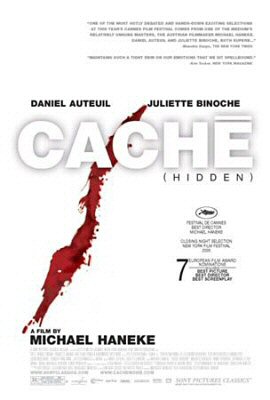
Caché (Michael Haneke 2005)

hidden-cache-poster-1and so anyway it turns out the best thing about Caché (2005) is not the rather effortless manner in which Michael Haneke matches his filmmaking style to the tedious self-regard of his bourgeois protagonists, but the fact that I did not have to pay a penny to watch it since some bloke, never found out who exactly, just left a copy in a supermarket carrier bag on the doorstep…

Dandies in the Underworld

fantomasA giant figure in immaculate evening dress looms over night-time Paris. Stepping over familiar landmarks, he gazes out at us from behind a domino mask. And in his outstretched hand is a bloodied dagger. The image, by Gino Starace, is iconic. It is Fantômas. The Lord of Terror. The Genius of Evil. But despite his costume, he is not a gentleman.

Created in 1911 by Marcel Allain and Pierre Souvestre for a series of 32 monthly novels, the enormously popular Fantômas soon crossed over to the movies. In 1913 and 1914, Louis Feuillade directed five films about the endless quest of Inspector Juve and journalist Jerôme Fandor to capture the criminal mastermind. However, although Starace’s picture was used to promote Feuillade’s Fantômas, he only once appears costumed like this – and then as a figment of the defeated Juve’s imagination.

The head of a vast criminal organisation and a master of disguise, Fantômas has less in common with the gentleman thief than with the villains of Fritz Lang’s Die Spinnen (1919-20), Spione (1928) and Dr Mabuse films (1922, 1933, 1960), in whom the terrors of disempowerment and anonymity that accompany capitalist-industrial, urban modernity coalesce. Brutally instrumentalist and utterly impersonal, there is no true identity to be discovered behind his series of disguises.

Starace’s dapper but knife-wielding gentleman is – in the face of the globalising forces of empire and capital squaring off on the eve of World War I – at once reassuring, anachronistic, transgressive and fantastical. Perhaps this is why Fantômas, the product of arch-conservatives, so appealed to such radical avant-gardists as Guillaume Apollinaire, Antonin Artaud, Blaise Cendrars, René Magritte and Kurt Weill. He embodies the contradictions of his age.

The probable source of Starace’s gentleman-thief image is AJ Raffles, perhaps channelled through Maurice Leblanc’s Arsène Lupin. Created by EW Hornung in the 1890s, Raffles is the finest slow bowler of his generation. Penniless, he is nonetheless proud to be a Gentleman rather than a Player, and likewise insists on his amateur status as a thief. Selecting only the most challenging jobs and most exquisite loot to support his bachelor lifestyle, he robs from the rich and is not averse to others helping the poor.

raffles-1917He appeared in a dozen films between 1905 and 1939. Raffles, the Amateur Cracksman (1917) stars John Barrymore in a breakneck mash-up of Hornung’s stories that only ever pauses to display The Great Profile’s great profile. This Raffles appears to be not so much a gentleman as someone who knows a gentleman’s tailor (Barrymore, his looks and his star both fading, is a more compelling gentleman thief in Arsène Lupin and Grand Hotel, both 1932). In Raffles (1925), House Peters, known as ‘The Star of a Thousand Emotions’, can muster only a handful of them, including ‘stolid refusal to be charismatic’ and ‘discomfort in ill-fitting evening dress’. In contrast, da993b7bbe01f24bdfcf2ae6e48c04bbRonald Colman in the first talkie Raffles (1930) gives one of his most effortless-seeming performances – as if acting were too vulgar even to contemplate – and the warm timbre of his Surrey burr modulates plummy received pronunciation into something quite sensuous. But the narrative material had already been filleted of its fundamental queerness. Hornung’s stories, focused on the close bond between Raffles and his accomplice Bunny, are full of innuendo and double entendre, with occasional allusions to amyl nitrate and Oscar Wilde.

Once the Production Code was enforced, the gentleman thief became not merely straight but almost completely desexualised. In the 1940 Raffles, David Niven is too young, his Raffles too boyish, and the casting of classical Hollywood’s very best good girl, Olivia de Havilland, as his love interest compounds an error that would not be corrected until Yorkshire Television’s 1977 Raffles series, raffles_tll10starring Anthony Valentine. Perfectly cast, Valentine’s precise delivery and slightly faded looks – the contrast between his crow’s feet and seemingly plasticised cheekbones suggests more than merely a youth misspent – unleash the homoerotic appeal of the gentleman thief: the tastefully furnished, comfortable quarters, devoid of women; the endless flirtations, but avoidance of romance or entanglement; the gentlemen’s clubs; the secret nocturnal identity; the dressing-up to break into other men’s houses; the crossing of class barriers; the mixing with rough trade…

But, queer or otherwise, this sexual undercurrent is not the only source of the gentleman thief’s appeal. The flipside of Fantômas, that anonymously devastating force of modernity, the gentleman thief negotiates modernity’s transformations of economic and social structures. This is beautifully captured by the prominence afforded a bust of WG Grace in the apartment of Valentine’s Raffles. As the finest cricketer of his generation, Grace is worthy of Raffles’s respect. But despite being a Gentleman, he was only nominally an amateur, making more money from the sport than any professional Player. A similar whiff of disrepute surrounds Raffles.

As old hierarchies crumbled, signifiers of social class were disrupted by wider access to certain varieties of commodity. Appearances begin to deceive. In Ernst Lubitsch’s racy, pre-Code Trouble in Paradise (1932), a Baron (Herbert Marshall) and a Countess (Miriam Hopkins) only fall in love when each discovers the other is a fake and a thief. Self-made and simulacral, they can play any social role – given the right costume – but the only place they really belong is with each other, conning, stealing or on the lam. However, such semiotic manipulations rarely succeed. In Pépé le moko (1938), Jean Gabin’s proletarian thief is unutterably stylish, but he cannot escape his class or fate.

In the post-war period, values shifted. Consider the contrast in The Pink Panther (1963) between the aristocratic Phantom and his nephew: David Niven is too old, Robert Wagner too American, too glib. A new consumerist masculinity was taking over, and gentleman thieves were no longer gentlemen. And they were as likely to solve crimes as commit them.

The character-type saw a popular resurgence in 1966, the year in which Cary Grant, Hollywood’s master of sartorial transformation (and a gentleman thief in To Catch a Thief, 1955), retired from films. The charm of Gambit’s Harry Dean (Michael Caine) is located in the gulf between his East London vowels and his dubious received pronunciation when posing as Sir Harold Dean. That of Kaleidoscope’s Barney Lincoln (Warren Beatty) depends entirely on his transparent reliance on a broad smile to buy time when he is out of his social depth. This league of ‘gentlemen’, which also includes Oliver Reed in The Jokers (1967) and Stanley Baker in Perfect Friday (1970), consists of working- (or middle-) class boys made good, and valorised for doing so. The very best of them is to be found in How to Steal a Million (1966), less a film than an opportunity to ponder whether Audrey Hepburn – as elegant when disguised as a cleaning lady as when dressed by Givenchy – or a young Peter O’Toole is the more beautiful (although it is probably a draw, O’Toole does showcase some of the most remarkable cigarette-handling you will ever see).

21129_Danger-Diabolik-05Costume, commodities and consumption are also at the heart of Mario Bava’s Diabolik (1968). The eponymous Jaguar-driving criminal mastermind (played by John Phillip Law, who looks like the offspring of Alain Delon and a Vulcan mod) dresses in full-enclosure leather and rubber body suits to commit his crimes, only his eyes visible through a domino-shaped cutaway. Based on a 1960s Italian comic book character, Diabolik is an intriguing inversion of Fantômas. His ‘terrorism’ is restricted to destroying the taxation system because the government have wasted so much public money pursuing him, and his subterranean base is a fantasy of modish, high-tech apartment living – a love-nest shared with Eva (Marisa Mell), his beautiful blonde accomplice with a taste for mini-raf_bun2dresses, hotpants, hipsters, peekaboo tops and kinky boots. Crime, for them, is passionate foreplay and, in contrast to poor Raffles and Bunny, it need never go unconsummated.

This dynamic between class and consumption was repeatedly played out on British television in the late 1960s and early 1970s. Adam Adamant (Gerald Harper), a Victorian secret agent revived in swinging London, was a gentleman (and misogynistic prig) but not a thief. Peter Wyngarde’s deliciously-voiced Jason King was no castgentleman, although he was certainly a player. Tony Curtis’s brash self-made millionaire Danny Wilde partners up with Roger Moore’s Lord Brett Sinclair to fight crime in expensive locations in The Persuaders!, although Moore always seemed less an aristocrat than a bemused estate agent. However, the pattern was most decisively set when, in the fifth season of The Avengers, Patrick Macnee’s John Steed, formerly so well-dressed that you forgot he was a government functionary, let himself be costumed by Pierre Cardin. Bringing modern touches to classic Savile Row designs might have sounded innocuous, but from there it was only a short step to working with Gareth Hunt…

Perhaps it was the backlash against the ‘excesses’ of the 1960s and 1970s, or perhaps it was neo-liberalism’s success in persuading otherwise sensible people that there are no such things as society or social and economic classes, that finally did for the gentleman thief. Where is he now?

In Entrapment (1999), Sean Connery – whose James Bond negotiated so intriguingly between working-class physique and access to style, articulating social mobility as a semiotic possibility – is just some rich guy, no more convincing as a gentleman than he was as a Soviet submarine commander. There is too much of the catalogue model about Pierce Brosnan in The Thomas Crown Affair (1999), and George Clooney’s Danny Ocean merely gentrifies the rat pack. Remorselessly heterosexualised, they reek of new money. And then there is The Gentleman Thief (2001), which only exists because the BBC realised – far too late – that they should lazily cast Nigel Havers as Raffles before it was too late. Or former Eastender Michelle Ryan as Doctor Who’s ‘aristocratic’ thief/Emma-Peel-wannabe, Lady Christina de Souza…

Frankly, I’d rather work with Gareth Hunt.

[A version of this piece first appeared in Electric Sheep back when it was hard copy; but issue 12 (winter 2009), is now out of print.]

Film neige: noir + snow

hqdefaultIn 1952, midway between two great noir performances as a psychotic racist (Crossfire, 1947; Odds Against Tomorrow, 1959), Robert Ryan played detective Jim Wilson in Nicholas Ray’s On Dangerous Ground. Alongside Ryan and Ray, the film has pretty much everything you could want from a tough-cop-on-the-edge noir: a script by AI Bezzerides, a score by Bernard Herrmann, and roles for Ida Lupino both in front of and (uncredited) behind the camera.

Wilson is sick of the scum he encounters – and beats on, with weary resignation and twisted joy – every day. Facing possible prosecution over a too-vigorous interrogation, he is sent out of the city to help some small-town cops track the killer of a young girl through the mountains. It is winter. And in the snow, the film begins to change – morphing, like all of Ray’s film noirs, into something more closely resembling the melodramas for which he is best remembered. Wilson stumbles upon the isolated house of a beautiful blind woman. Her kid brother, Danny, is the deranged killer; she is blind because she stayed to look after him rather than going away to have an operation. And her faith in Wilson’s goodness – something he just does not deserve – redeems him.

But this generic transformation is not merely Ray’s doing. It has something to do with the snow.

The first Max Payne video game (2001) is set during the worst blizzard to hit New York in a century, and in Sin City (2005), when Hartigan (Bruce Willis) is released from prison, having finally confessed to crimes he did not commit in order to go out and commit some for real (not without good reason), snow falls, blanketing the ground. There is something very right about these images, appearing in cross-media franchises that function as compendia of American crime fiction tropes.

But snow is rare in film noir.

There is sun, wind and rain – Key Largo (1948) has all three – but very little snow.

Citizen Kane (1941), visually the most significant American precursor of noir, has snow, and the climax of Fritz Lang’s You Only Live Once (1937) does get very cold, since its couple on the run are the odds-against-tomorrow-harry-belafonte-1959only fugitives ever to head for the Canadian rather than the Mexican border. And if you’ve not seen Robert Wise’s Odds Against Tomorrow recently you can be forgiven for thinking it has snow: the sound effects are so good, the icy wind cuts right through you. But in classical Hollywood, film neige, like the snow that somehow brings Britain grinding to a halt every couple of years, is pretty thin on the ground.

Why is this? Well, actually snow is relatively rare in studio-era Hollywood. It does appear in big-budget films (Way Down East, 1920), but it is difficult and expensive to shoot in cold, wet conditions and film noir rarely had a dime to spare. And when you fake it, it looks fake. However, that need not be a problem for films that are comical (How to Marry a Millionaire, 1953), fantastical (The Curse of the Cat People, 1944), musical (Swing Time, 1936) or otherwise given to artifice (All That Heaven Allows, 1955). Film noir, though, is rarely any of these things.

Snow has great noirish potential. It is treacherous, unpredictable. It can betray you, isolate you, trap you, kill you. Pursuers can track you through the snow, and it can force you into dangerous proximity to them. Banks and drifts obscure contours, conceal familiar markers. Flurries become blizzards. Visibility reduces. Cold becomes colder. Circulation slows. You begin to lose feeling. Death is never far away. It creeps inwards.

All of which makes sense in the wilderness, and even, sort of, in the older, northern and eastern cities in which, typically, gangster films – and Max Payne and Sin City – are set.

But film noir is a Californian invention. Whether it is the sultry Argentine night in which Rita Hayworth threatens to strip (Gilda, 1946), the dazzling Mexican afternoon out of which Jane Greer emerges to lead Robert Mitchum astray (Out of the Past, 1947), the hot Mexican night in which Mitchum, shirtless and glistening, is flogged with a belt, the buckle opening welts in his back, and thrown into a steam-filled engine room (His Kind of Woman, 1951), or the unseen suburban deck on which Barbara Stanwyck is sunbathing when Fred MacMurray comes hawking insurance (Double Indemnity, 1944), film noir thrives on heat.

In the heat, passions rise. Tempers fray. Everyone becomes just a little bit flushed. A little bit moist.

Snow simply lacks this erotic resonance.

So Robert Ryan, stuck overnight with Ida Lupino (and, admittedly, Ward Bond), has little choice but to sleep on the floor and wake up in a neighbouring genre; and film noir could do little with snow until it was reworked overseas and in post-classical Hollywood.

François Truffaut’s Tirez sur le pianiste (1960) casts Charles Aznavour as bar-room piano player Charlie Kohler. Once a concert pianist, he goes to pieces when he finds out that his waitress wife slept with an impresario to get him his big break. When she tells him this, he leaves her and she commits suicide. He abandons celebrity for anonymity, and rediscovers love with another supportive waitress, Léna. They flee Paris to his family farm, where his criminal brothers are holed up, having double-crossed their gang. Truffaut sets the final few minutes of the film in a desolate, rural snowscape, wryly inverting film noir’s black:white ratio. TruffautTirezSurLePianisteLenaThe gunfight between the gang and Charlie’s brothers plays on the spatial disorientations – and slippery footing – of deep, featureless snow. Léna, of course, is caught in the crossfire, robbing Charlie of his renewed future.

Charlie returns to the bar. A new waitress is introduced. Will she too become involved with him, offer him redemption? Will it also end badly for her? The snow reminds us that for Truffaut (or perhaps merely Charlie), women are like snowflakes: they are all unique, but this only makes them indistinguishable, interchangeable.

Even bleaker is The Criminal (1960), made in the UK by exiled American director Joseph Losey. Fresh out of prison, Johnny Bannion (Stanley Baker), a cocksure working-class lad made good in London’s gangland, organises a brilliant racetrack heist; but being in love, he makes a tiny error and is promptly betrayed. When he is sent back to prison, his bosses abduct his girlfriend Suzanne to force him to reveal the whereabouts of the loot. Instead, Bannion promises it all to a crook who can break him out. He rescues Suzanne, but is followed to the snow-dusted field where he buried the money. A shoot-out leaves him bleeding to death in this dismal, grey-white, rutted landscape. As the camera cranes up and away from his corpse, his killers randomly scratch at 23-The-Criminal-360x216the frozen dirt in the hope of finding the cash – and we hit the permafrost of existence: life is not just cold, it is as hard and featureless and unrelenting as the ground on which Bannion dies.

In Fargo (1996), snow simplifies things. The ground – even the air – loses its features. The world is reduced to small towns and corporate franchises linked only by roads, phones, TV broadcasts and flows of money in a whited-out desert of the real. It is as if Chuck Jones and Jean Baudrillard had collaborated on a Jim Thompson adaptation. The Coen brothers’ caricatures of Minnesotans and North Dakotans open up the gulf between American capitalism and the kind of small-town values (decency, neighbourliness) that Sarah Palin pretends to embody. In Sam Raimi’s A Simple Plan (1998), snow isolates a gently parodic small town so as to reveal the extent to which those values are a myth desperately at odds with capitalism. College-educated Hank (Bill Paxton), his unemployed brother Jacob (Billy Bob Thornton) and Jacob’s friend, Lou (Brent Briscoe), find a kidnapper’s plane, carrying over four million dollars in ransom, crashed in the snow. Family ties and class differences clash as Jacob is forced to choose between Hank and Lou. Hank’s wife, Sarah (Bridget Fonda), initially nice-as-apple-pie, becomes grimly determined to hang onto the cash. Violence erupts. People die. But that is nothing to her hatred for their just-getting-by lives.

jlgThe Lookout (2007) is likewise about the contradictions of the American dream. Former high school hockey star Chris Pratt (Joseph Gordon-Levitt), brain-damaged in a car crash, has lost everything. Wintry Kansas-Missouri settings emphasise his barren existence. Bank robbers manipulate him into helping them, but the heist goes wrong. Chris must concoct and follow a complex plan to free his kidnapped best friend – the only problem is, Chris has severe difficulties with planning future actions and suffers form short-term memory dysfunction. Against a stark white snowscape, the world – bitterly, ironically – redeems Chris, almost against his will.

However, the bleakest American neo-neige is – unsurprisingly – not actually American. A Danish-Canadian-British-Brazilian co-production co-written by Hubert Selby Jr, Nicolas Winding Refn’s Fear X (2003) starts with Harry Caine (John Turturro) opening the curtains of his Wisconsin suburban tract home. Snow falls gently on the snow-covered street. A woman enters the house opposite. It is Harry’s wife. But Harry is dreaming. His wife is dead, killed in a double homicide outside the mall where he works as a security guard. The black and white surveillance footage from that day – over which Harry pores every night, desperate for any clue as to who killed her and why – fills the screen, grainy and blurred, a blue-grey world of silhouettes, shadows and snow.

Snow fills Harry’s dreams and memories. It creeps into his system, fills him from the core – twin wavefronts of despair and isolation.artikel_fear_x_2

Is it worth risking his life to get a step closer to the killer?

‘I’m not living anyway’, he replies.

[A version of this piece first appeared in Electric Sheep back when it was hard copy; but issue 8 (winter 2008), is now out of print.]

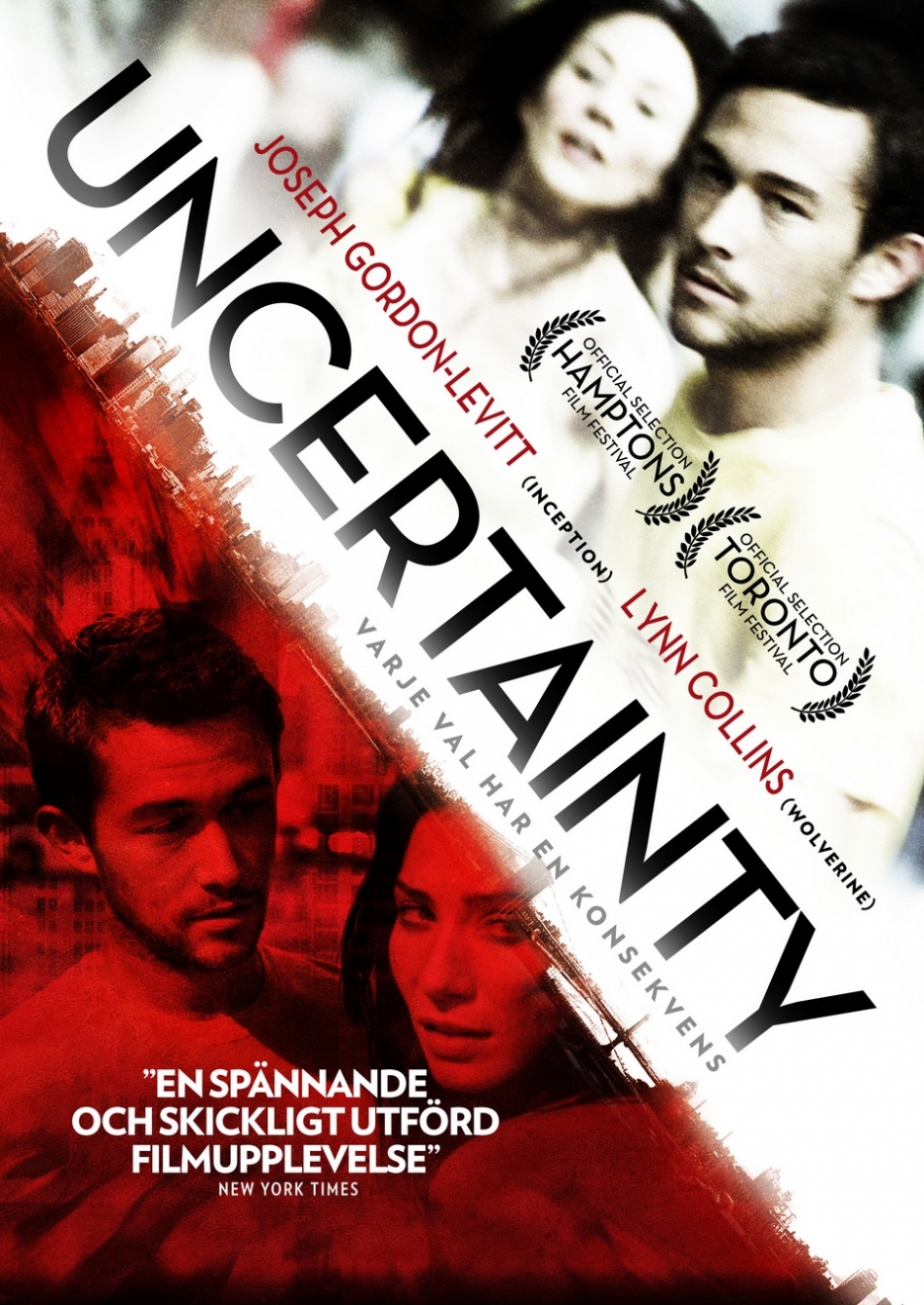
Uncertainty (Scott McGehee and David Siegel 2009)

936full-uncertainty-posterand so anyway it turns out that the best thing about Uncertainty (2009) is, as you would expect from the writers/directors of Suture (1993) and The Deep End (2002), its bold experimentalism – not so much with the narrative structure that attempts to construct the perfect date movie by intertwining two different versions of the same day depending on whether the protagonists decide to go to Brooklyn or Manhahattan and, respectively, into a family melodrama or a conspiracy thriller, while also confirming to each gendered-genre viewer that the other gendered-genre viewer’s preference is lame, but with the valiant – and entirely successful attempt – to outdo Stephen Sommers’ similar effort in G.I. Joe: The Rise of Cobra (2009) to make a film so meh that not even the presence of Joseph Gordon-Levitt (doubled!) can save it…

Trespass (Joel Schumacher 2011)

nicole-kidman-trespass-posterand so anyway it turns out that the best thing about Trespass (2011) is neither Nicolas Cage’s reliably amusing hair nor the film’s surprising, if unsurprisingly ham-fisted, commentary on the intertwined illusory nature of finance capital, masculinity and sexual/commodity desire, but that moment when you realise that Nic and his equally insufferable family have been taken hostage by a violent gang of inept home invaders cum jewel thieves led by that bloke who used to be in Neighbours

Killer, Joke

lego___custom___agent_47___hitman___002_by_kobalt1977-d6t3yhlBack when he started, it was the travel he looked forward to most. He would set himself in motion and inertia would take him there. It had pleased him, too, that most of the journey would consist of another kind of inertia. Just sitting there. That odd combination of momentum and stasis.

He read a lot.

He inspected the toilet bowl and rim minutely, wiped them down with a wad of toilet paper, which he then flushed away. While the cistern refilled, he refolded the end of the roll so that the room would, when he left, show no trace of him having been there.

His bowels gurgled, and he flushed once more.

Nowadays, the travel was the worst part. Jet-setting in economy, trying to remain unnoticed, he could cope with. But at some point, the combination of ageing, airline food and the stress of a contract started to leave him constipated. Sometimes for days.

In the bedroom, the parts of a sniper’s rifle awaited his expert hands.

In Rome, it was merely inconvenient, but by the Manila trip it had started interfering with the job. He took to arriving days earlier than necessary, even though that increased his exposure, but to no avail. The bloating and discomfort would continue until long after he was back home. A doctor diagnosed IBS. His only consolation was that it was IBS-A, which alternated between diarrhoea and constipation. IBS-D, and that would have been the ignominious end of a lucrative career.

Maybe it was time to retire, anyway, he thought, as he finished assembling the rifle.

His bowels shifted and groaned. He farted noisily. The carbon pills he’d popped did little to staunch the stench. He thought, with a self-conscious smile, Now that’s what I call trace evidence.

He flipped open the tripod, mounted the rifle and checked the sights. It was a tight angle and he would have just a couple of seconds in which to take the shot. He breathed deeply to maintain his calm, a finger resting lightly on the trigger.

His stomach cramped.

He glanced at the watch on the inside of his wrist. He still had at least five minutes. It was time enough. He returned to the bathroom.

This should not be happening to me. He considered himself, not inaccurately, one of the best in the business, and he was, more or less, at the peak of his game.

He strained, even though the doctor had told him not to. Something seemed to give. There was a plopping sound – he strained some more – and another.

It was odd, he thought, not for the first time. He was like, say, an illuminator of medieval manuscripts or, better yet, the apprentice of a great artist. His work was renowned, and yet he was anonymous. Well-known, but completely unknown.

He leaned forward and looked down behind him. Two tiny pieces of dark shit sat on the bottom of the bowl.

They are, he thought as he wiped his ass, like shards chipped away by a master sculptor, seeking the form hidden within the mass.

Once he was dressed, he repeated the ritual eradication of any evidence of his presence in the bathroom.

God alone knows what he is sculpting in there.

He glanced at his watch, and strode purposefully to where the rifle stood ready. He checked his breathing, and waited.

A replica in miniature – but not too miniature, it feels – of the doors of the Florence Baptistry?

He pulled the trigger, took the shot.

Maybe something equine, in the style of del Verrocchio or even Leonardo?

A double tap to be certain.

A David, perhaps, after Donatello or – dare I wish? – Michelangelo?

He picked up the spent cartridges, speedily disassembled the gun and packed away its parts. In less than a minute he was by the door, ready to leave. No sound of anyone outside. He reached for the handle, and as he did so, his bowels flip-flopped once more. The fart was loud, sustained and really really smelly.

Yeah, he thought, as he stepped into the corridor, swept up once more by the inertia that would see him safely home. Whatever is going on in there is a real copro-naissance.

[Author’s note: Okay, I admit it, ‘Shit, Joke’ would have been a better title.]

24/12/14