African Science Fiction 101: update 2

The months since my last update have been crazily busy with other things, so there has been little time for research and even less time for actually reading any of the goodies I’ve uncovered. Most of which are annoyingly inconvenient sizes and shapes to lug around with me over my Xmas perambulations. But I thought I would post another list before Xmas (and before that teetering pile of books in the corner falls over on top of me).

First up, I should mention the hugely embarrassing omission of Amos Tutuola from the article that started all this (and my indebtedness to Paul March-Russell for drawing it to my attention   in such a generous way). Truth is, I have never read anything by him, though The Palm-Wine Drinkard (1952), My Life in the Bush of Ghosts (1954) and Feather Woman of the Jungle (1962) may well 51ZoowIE8gL._SY344_BO1,204,203,200_be squeezed into the suitcase. As might D.O. Fagunwa’s Forest of a Thousand Daemons: A Hunter’s Saga (1939), translated by Wole Soyinka(!) – the first Yoruba-language novel, said to be an influence on Tutuola, not least in its fantastical landscape in which the supernatural is as real and present as the natural world.

While we’re in the margins of what might be considered sf, I have had a load of things recommended to me that might be more appropriately labelled ‘weird’ or ‘slipstream’:

  • Tawfiq Al-Hakim, The People of the Cave (1933) – a play based on the seven sleepers of Ephesus, who sleep their way into the future; their story is told in the eighteenth surah of the Qu’ran
  • Bertène Juminer, Bozambo’s Revenge (1968)41yjzEc0m9L._SY344_BO1,204,203,200_ – satirical alternate history in which Africans have colonised a swampy Europe full of idle, childish, pallid natives
  • Gamal al-Ghitani, The Zafarini Files (1976) – in a crowded corner of Sadat-era Cairo, a sheikh uses magic to take away men’s sexual potency
  • Olympe Bhêly-Quénum, Snares without End (1978) – there is an essay about him at Weird Fiction Review
  • Ivan Vladislavić, The Folly (1993), which seems to have a nice salvage vibe to it, if not exactly salvagepunk
  • Calixthe Beyala, How to Cook Your Husband the African Way (2002) – begins with a black woman explaining how she turned white, but not in quite the way I initially thought it was going to go
  • José Eduardo Agualusa, The Book of Chameleons (2004) – a murder mystery involving a trader in memories and identity creation
  • Ondjaki, Granma Nineteen and the Soviet’s Secret (2008) – a wonderful poetic novel, one of the best things I’ve read this year; there is something fantastical about it, but there is not any fantasy in it…
  • Franklin Rosemont and Robin DG Kelley, eds, Black, Brown and Beige: Surrealist Writings from Africa and the Diaspora (2009) – does what it says on the tin
  • Fiston Mwanza Mujilla, Tram 83 (2014)Tram-83-310px-square – according to reviewers it is ‘Blade Runner in Africa with a John Coltrane soundtrack’ that ‘transfigures harsh reality with a bounding, inventive, bebop-style prose’ and depicts ‘a world so anarchic it would leave even Ted Cruz begging for more government’
  • A. Igoni Barrett, Blackass (2015) – Furi Wakiboko wakes up one morning to discover he has turned white; well, all but one part of him has…

The more obviously genre works that have come my way include:

  • Charlie Human, Apocalypse Now Now (2013) – an urban fantasy thriller in Cape Town’s supernatural underworld
  • Masha du Toit, Crooks & Straights (2014)51Jp-br-R1L._SX310_BO1,204,203,200_ – YA urban fantasy in which Cape Town provides a home for magical refugees
  • Sarah Lotz, The Three (2014) – global thriller with horror/fantasy edge
  • SL Grey, Under Ground (2015) – while a lethal virus sweeps the world, the folks hiding out in a plush subterranean survival bunker find they have brought horror with them
  • Rob Boffard, Tracer (2015) – set on the falling-apart space station housing the last of humanity above a devastated Earth
  • Ivor W. Hartmann, ed., AfroSF volume 2 (2015)afrosf2 – contains five novellas by Tade Thompson and Nick Wood, Mame Bougouma Diene, Dilman Dila, Andrew Dakalira, and Efe Tokunbo Okogu
  • Jo Thomas and Margrét Helgadóttir, eds, African Monsters (2015) – contains fifteen stories and a comic strip by, among others, Dilman Dila, Nerine Dorman, Tendai Huchu, Sarah Lotz, Nnedi Okorafor, Tade Thompson, Nick Wood

(Should also mention Tade Thompson’s debut novel, Making Wolf (2015), although it is a crime thriller, not sf/f.)

One of the things I am interested in starting to trace is the role of speculation and futurity in African political discourse, which has recently led me to:

  • JE Casely Hayford (aka Ekra-Agiman), Ethiopia Unbound: Studies in Race Emancipation (1911) – a novel which apparently includes a vision of a future pan-Africa
  • Camara Laye, A Dream of Africa (1966) – a novel which apparently does the same

Taking of awkwardly shaped and sized books, as I was some time back, one final goody I stumbled across, which provides some useful context for thinking about African sf/f is Readings in African Popular Literature (2002), edited by Stephanie Newell. It reprints some critical articles, but also some fiction and comics and various pages from Drum magazine.
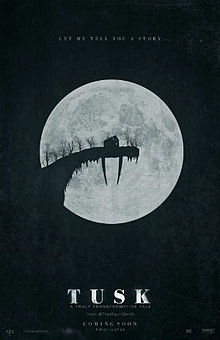

 

Tusk (Kevin Smith 2014)

Tusk_(2014_film)_posterand so anyway it turns out that the best thing about Tusk (2014), a film in which an erstwhile mariner turned mad surgeon/serial killer abducts asshole shock-podcaster Justin Long in order to transform him into a walrus fit for gladiatorial combat, is not the spot-on depiction of Canadians in all their native variety, but that moment (and every subsequent moment) that comes several tens of minutes into the film when you go from staring at the screen wondering what you are staring at to staring at the screen wondering whether you are staring at the most expensive movie Frank Henenlotter never made or at a god’s-honest-truth work of genius such as has never actually been made by Wes Anderson…

Another day, another dollar

imagesA route through the maze was not something he could intuit. Of that he was certain.

The skinny shadows told him it was around about noon. He stopped at a corner, nestled into the angle between the walls. They were grey, fifteen, maybe twenty, feet high and uniform apart from their roughly textured surface.

From where he sat, he could see for dozens of feet in each direction. A clear field of fire. If he had a gun. And the ego, or malice, it took to use one.

He could not put his faith in chance. It was appealing, to take a random turn here, another there. To press on. To cover ground. But the odds against it working were so great that he could not calculate them.

His water supply was running low. He had no food, but was not hungry anyway. He could not figure out why that was. All of his appetites had dissolved. He had to force himself to drink. Swallowing was hard. His throat felt bruised.

There was not an ounce of energy left in his limbs, but he rose to his feet, a little unsteadily.

If he could rise further, rise like Icarus, even momentarily, and look down from above to see how far it stretched. Whether he was closer to one of the outer walls than the others. What lay beyond.

He started to walk. That was what he did. It was what he always did.

If he stayed in one place, he could keep better track of the passage of time. Mark it off, day by day, in prison-house scratches. Four vertical, one diagonal. Over and over again. But instead he kept moving. With some kind of systematicity, he told himself, though he might have been lying.

Movement, he thought, the orderly passage through space over time, proved it wasn’t all the same.

Intermittently, he left markings on the walls. Glyphs and sigils. Doodles. Not to mark a route he might one day want to retrace, but to force a sense of difference on the walls that enclosed him. To make change seem real. To construct a lie of progress.

But a realisation had been growing slowly inside him. Metastasising, and with it an awful dread.

There was no way out.

It was not a maze at all.

It was a fucking allegory.

The Atrocity Exhibition (Jonathan Weiss US 2001)

51K5H8KCA5LAssuming it is even possible, to what extent and in what ways should adapta­tions remain faithful to their sources? All manner of possibilities emerge when the adaptation is free of the constraints of respectability, accessibility and banal fidelity that a studio budget tends to entail, and when the source is supposedly ‘unfilmable’, as is the case with Weiss’s independently financed adaptation of JG Ballard’s novel.

Ballard’s and Ballardian prose is recited in voiceover and by carefully pos­itioned actors – affectless mannequins in static tableaux. The camera is locked or tracks slowly. Interspersed is footage of Hiroshima survivors, crash test dum­mies, nuclear tests, Kennedy’s assassination, plastic surgery, the Challenger dis­aster, the war in Vietnam, penetration, Marilyn Monroe. A voiceover posits that the film was shot by Dr Travis (Victor Slezak), misappropriating the institution’s equipment and funds, as therapy, but is uncertain for whom.

Often, however, this mixture of stock footage and re-enacted scenes feels more like a high-end BBC documentary profile of Ballard, with the talking heads and explicatory arc excised. Some shots are strikingly composed, particularly when situating humans among architecture, but they lack the clinical precision of Cronenberg’s adaptation of Ballard’s Crash (Canada/UK 1996) and never achieve the gor­geous insanities of Matthew Barney’s Cremaster cycle (1995–2002). The static set-ups and slow tracks suggest Tarkovksy, but lack his attention to rhythm, to sculpting in time. While the film is never as torpid as, say, a classical Hollywood adaptation of Hemingway, its languor is strangely at odds both with Ballard’s surrealist prose montage and the media landscape he dissected. Imagine what Godard or Tsukamoto could have done with such material.

Several times Weiss tilts his camera upwards from the ground at his feet to an object further away, opening up a wider perspective. This tension between the detail and the whole pins Weiss and his film in the angle between two depths of field. Take for example the long shot of Karen Novotny (Anna Juvander), being fucked from behind while leaning out of a car window, naked apart from a picture of Ronald Reagan strapped over her face. The camera tracks in slow­ly, the music on the soundtrack adding a sense of respectfulness rather than juxtaposition. Before we can make out the image over her appropriately bored face, we know it will be of Reagan. All the elements are there, but somehow together they become less than their sum. The sequence only comes alive when old movie footage of Reagan, apparently looking askance at these shenanigans, is briefly inserted. This captures something of Ballard’s impish absurdism but nothing that might shock, however fleetingly, the bourgeoisie.

 The Atrocity Exhibition is not so much an adaptation as an ambiguous memoriali­sation, turning Ballard into a suburb of European art cinema.

A version of this review originally appeared in Science Fiction Film and Television, 1.2 (2008), 359–60.

Crimson Peak (del Toro 2015)

MV5BNTY2OTI5MjAyOV5BMl5BanBnXkFtZTgwNTkzMjQ0NDE@._V1_SX640_SY720_Pretty much all the commentary so far has been about one of two things.

Critics have been unanimous in their praise of how gorgeous the film looks, from its gothicky design to its fabulous frocks and sumptuous colour palette (it also has some nice irises and cunning wipes).

Or they have echoed del Toro’s own point that it is not really a horror movie so much as a gothic romance, full of echoes and allusions, including: Poe’s ‘The Fall of the House of Usher’; the several versions of Jane Eyre and Silence of the Lambs; Du Maurier’s Rebecca; Hitchcock’s Rebecca and Notorious; Medak’s The Changeling; The Haunting, and Wises’s; King’s The Shining, and Kubrick’s; the Coen’s Barton Fink; del Toro’s own Devil’s Backbone; and so on.

All of these critics are right, and yet without exception they overlook del Toro’s major accomplishment.

Somehow, he manages constantly to keep this astonishing overblown confection of evil aristocrats, ghosts, forbidden rooms, gramophone cylinders, automata, letters, keys, ghosts, murder, incest, idiosyncratic grim-up-north grimness, peculiarly hardy Cumberland moths, violent assaults and revolutionary mining technology just this side of hilariously funny. And somehow he makes it a constant delight, grand guignol at its most operatic, all logic subordinated to production design.

But it would take just one person in the auditorium to start laughing, and it could all go disastrously wrong.

It is not the first time del Toro has walked this particular line. Much as I enjoyed them, Hellboy II and  Pacific Rim edge along a similar tightrope, and are rather less successful in keeping it together.

Early in the film, protagonist Edith Cushing (Mia Wasikowska) explains of a story she has written that it is not so much a ghost story as a story with ghosts in it, and that her ghosts are actually metaphors for the past. With the kind of New Weird chutzpah that China Miéville once championed, del Toro’s film takes completely the opposite tack. His ghosts are ghosts, not metaphors.

However, the logic of Miéville’s argument meant that while one should be absolutely committed to treating monsters as monsters rather than as metaphors, this should nonetheless leave their metaphorical potential open and even make for more effective metaphoricity. But with del Toro’s pastiche late-Victorian setting lacking the historical resonances of Devil’s and Pan’s Labyrinth‘s (not unproblematic) Spanish Civil War settings, there is nothing really for his ghosts to gain metaphorical purchase, even if they were so inclined. There is some stuff about aristocrats as parasites, and a whole Blut und Boden thing lying around should anyone want to make something of it, but no one does. And del Toro seems utterly uninterested in the gendered restrictions and sexual repression that seem so fundamental to gothic romance.

It is a film of many layers, all of them on the surface.

On the other hand, I loved every deliriously silly minute of it, and you get the impression del Toro did, too.

South Wales is weird. And fantastical.

We had some time to kill before the Thee Faction and Helen Love (and others for We Shall Overcome) gig in Newport, so we nipped over to Caerleon to see the amazing Roman ruins. We did not expect to find this:

wales 1

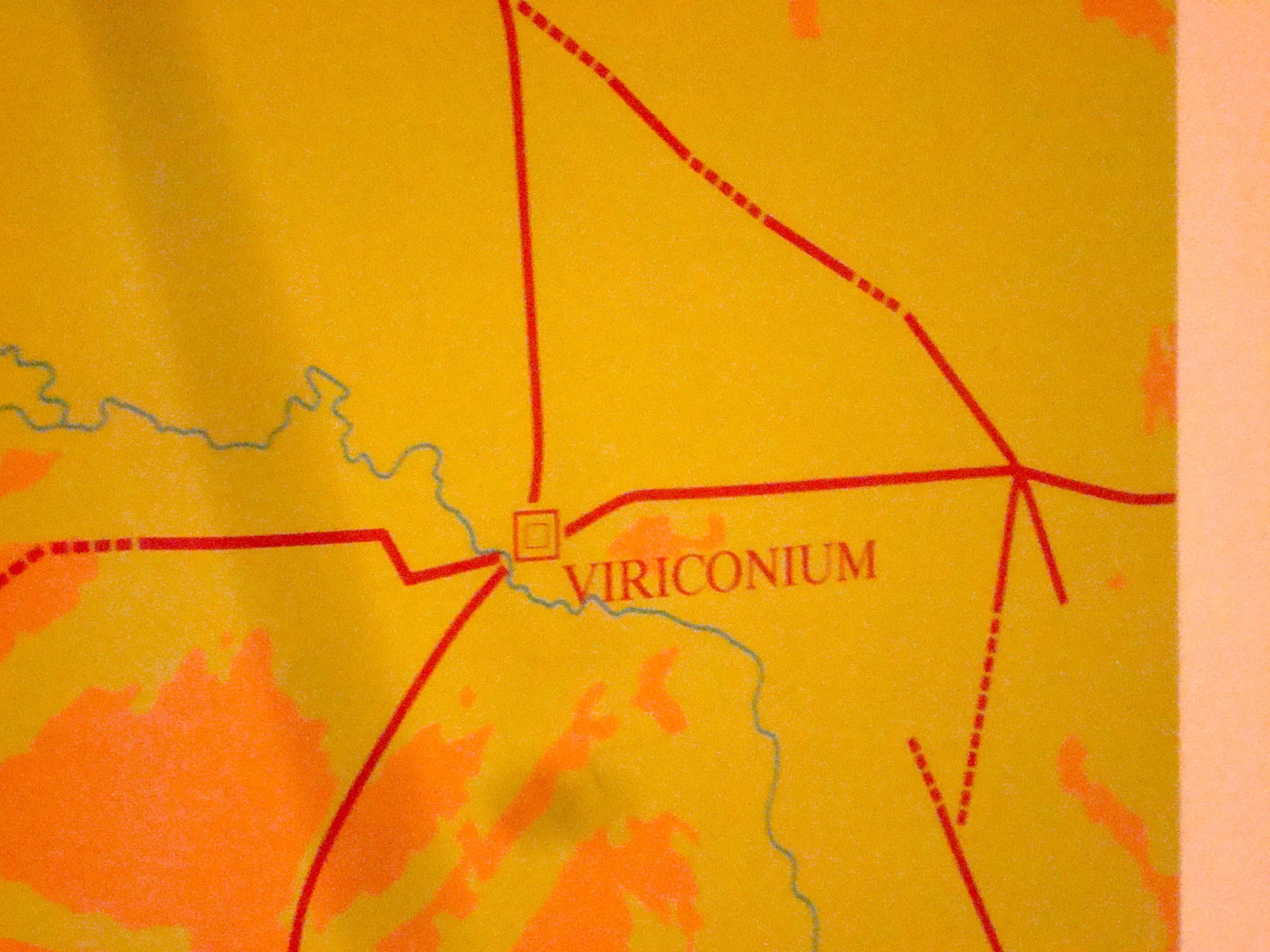
Or, on a map in the museum, to find this:

wales 2

To be honest, this was probably a different guy by the same name:

wales 3

Few things are more weird, though, than putting up a plaque to remember resistance to the Chartists:

wales 4

Before leaving for our walk back to Newport, we thought we’d have a pint. Not expecting the pub we ended up in to be one where this once happened:

wales 5

A lovely afternoon full of surprises. And the gig was even better. Once Thee Faction got on the stage. And then Helen Love.


Bone Tomahawk (S. Craig Zahler 2015)

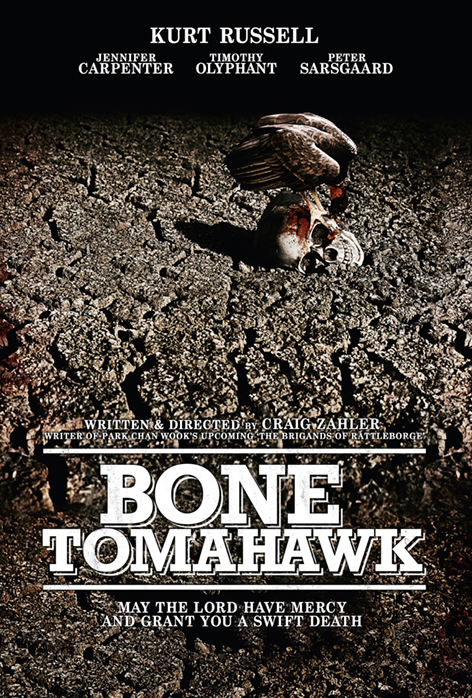
37128_1_largeBone Tomahawk is easily the best horror western I have seen – admittedly not an overcrowded field – since Antonia Bird’s Ravenous (1999). But it is also undone by one big problem.

Let us begin with the good things, before I point out the glass is half empty, throw the rest in your face and smash the glass.

Kurt Russell is finely grizzled, tough and thoughtful as the Sheriff, and Richard Jenkins, playing his not-exactly-the-sharpest-tool Replacement Assistant Deputy, is as engaging as I have ever seen him. David Arquette does a lot with the little he is given to do, and neither Patrick Wilson, as the broken-legged husband, nor Matthew Fox, as the wealthy loudmouth Indian-killer, who make up the rescue party manage to mess it up. The four of them would not be out of place in a Joe Lansdale story. Nor would Sean Young as the mayor’s wife, the real power in the small frontier town of Bright Hope. (Just realised that the image I’ve chosen shows off an earlier cast, which also included Jim Broadbent at one point.)

Bone Tomahawk is (mostly) well-constructed, with some very nicely written passages (the flea circus bit is especially good, if undermined a little by the exchange of looks at the end of it). For a brief while it even looks like the film might give Lili Simmons, as the wife, something to do (it does not). The unmistakably western landscape is also intriguingly unfamiliar. Most of the graphic violence is well done, with really effective sound effects. And there are some nice little touches, undwelled upon, such as how exactly Simmons’ character knows how many Troglodyte males there are in the clan. Indeed, in some respects it is the kind of solid B western and a solid little horror movie – and not so committed to the latter that it forgets to also do the former – that might tempt one to call it Lansdale-ian.

But there is that one big problem. And the film is really conscious of it.

You simply cannot tell this kind of story – the kind of abduction-by-injuns story that goes right back to Protestant settlers’ captivity narratives – without relying on a very long history of racist tales and depictions of native Americans. Bone Tomahawk does what it can to not be racist. It seems sincere about it. It creaks and groans in places with the effort.

And at least it doesn’t have Adam Sandler in it.

But it fails.

Perhaps this kind of story is always doomed to fail in this respect.

Bone Tomahawk begins with two westerners doing unspeakable things. Brutally, with inadequately sharpened knives, they kill men in their sleep so as to rob them. This is supposed to work, I think, so as to encourage us later not to judge all native Americans by what the set-aside inbred clan of savage pre-human Troglodytes do. Indeed, the Troglodytes are even given a mutation that suggests they might actually not be human but some isolated evolutionary spur (they resemble the diseased islanders of Peter Jackson’s King Kong, Immortan Joe and his warboys, The Descent‘s subterranean predators, the nuclear mutations of The Hills Have Eyes). Certainly, the well-dressed, assimilated native American who refuses to go along on the rescue mission –  he does provide the rescue party with information about where to find the Troglodytes, but with a quite admirable fuck-all-y’all, y’all-gonna-die kind of attitude – regards the Troglodytes as some kind of Other, just as the good townsfolk of Bright Hope might regard the robbers as utterly different from themselves.

But sadly none of this is sufficient to separate the Troglodytes from deeply racist stereotypes, or the film from siding with colonialist expansion into the American west. (And one of just two black characters is brutally slain the moment he wanders in front of the camera – but not eaten, because the cannibalistic Troglodytes, I think the explanation went, have no time for black folks. The Mexican characters fare no better.)

Which is not to say that the film lacks interesting potential.

With the only other native American assimilated into white culture, if spikily unforgiving, the Troglodytes – coated with white ash, accoutred with skulls, bones and tusks, wielding weapons made from sharpened bone – possess a spectral quality, despite their blunt materiality. They return as the repressed bad conscience of genocide. They scalp deputy Nick in front of the other captives and cram his scalp into his mouth, symbolically forcing him (arguably) to take back just one of the many slanders against native Americans that came from the mouth of white colonisers.

That the Troglodytes themselves cannot speak – they posses a mutated larynx and a boney, more-or-less sealed second mouth in their throats, through which they whistle and howl – communicates volumes. They are the subaltern. They are destined, it seems, never to speak. Nor, sadly, to win.

The Real Magic of Glastonbury

I admit I have always been sceptical of the place, all the crystals and shit. Back when I worked the festival circuit as a steward all those years ago, Glastonbury was the one I’d always skip, and although I’ve lived just a short bus drive away for more than a decade I’ve never felt the inclination to go.

But then – through some complex alchemy of rail repairs and the inability to think of an alternative – that is where we went.

The key is to leave the centre, with its shops full of crystals and wind-chimes, questionable displays of ‘ethnic’ clothes and accoutrements, King Arthur merchandise. The key is to get away from the strangely accented American who ‘can see the energy vortexes, although they are much smaller than [he] expected’.

Be gracious – permit him the uglier plural form of ‘vortex’ – and move on!

It is out beyond the town, away from the commercialisation and tourism, that you really begin to sense what it is that draws so many people.

There is some inexplicable energy or power about the place.

You can feel it in the air.

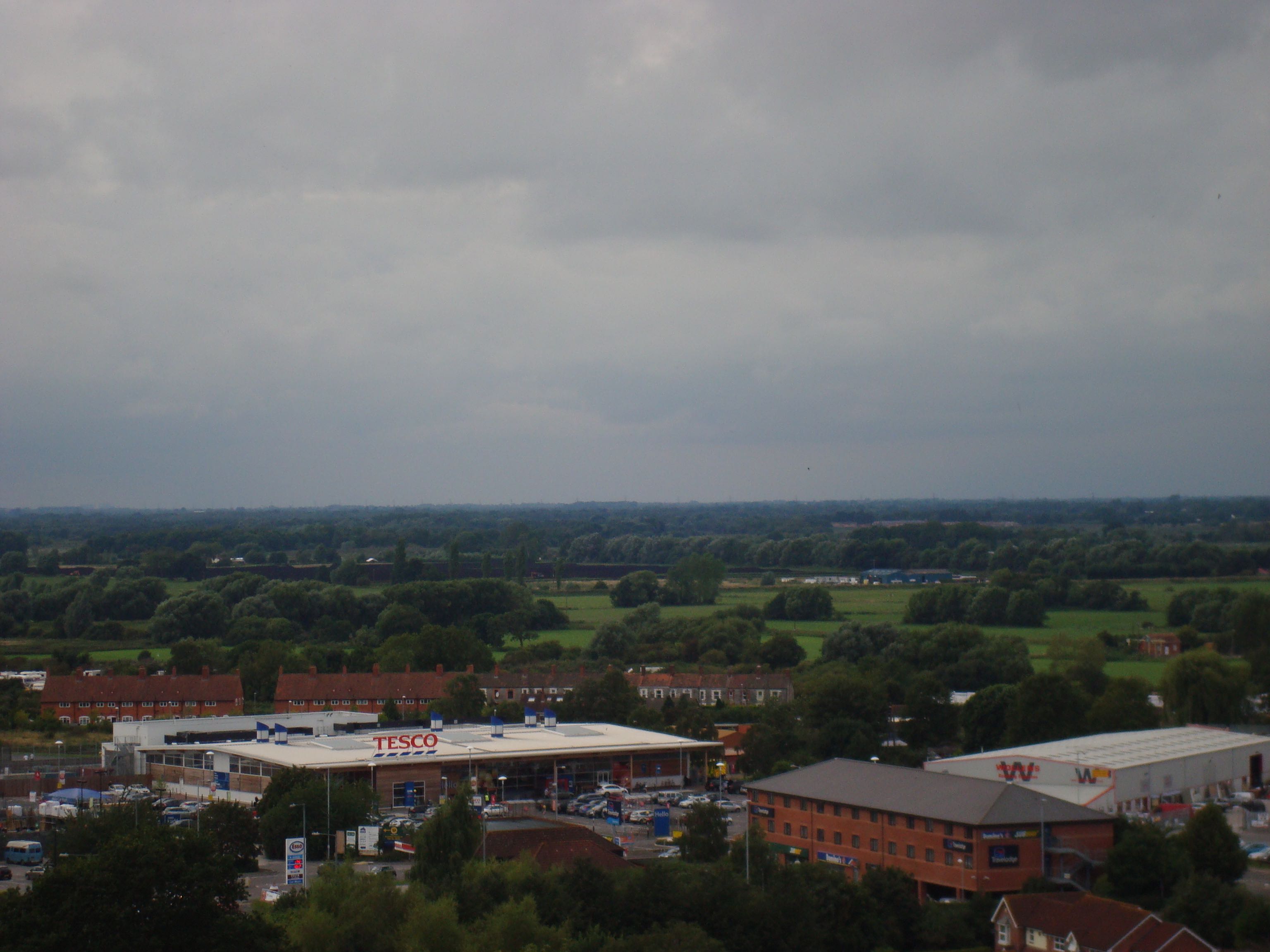
Down there, among the huddled boxes that cower, their backs turned to the grim periphery of builders’ yards and struggling industrial parks, in pathetic denial,

glas barrats

their UPVC conservatories lolling like pallid dry tongues, too enervated even to lap sustenance from the perpetual drizzle that fills the air.

Down there, cowering in the scant shelter their Tesco and their Wickes can offer from the louring sky, empty now of gods.

glas tesco

Down there, gnawing on chicken bones behind their KFC and then casting them in a desperate cleromancy.

glas kfc

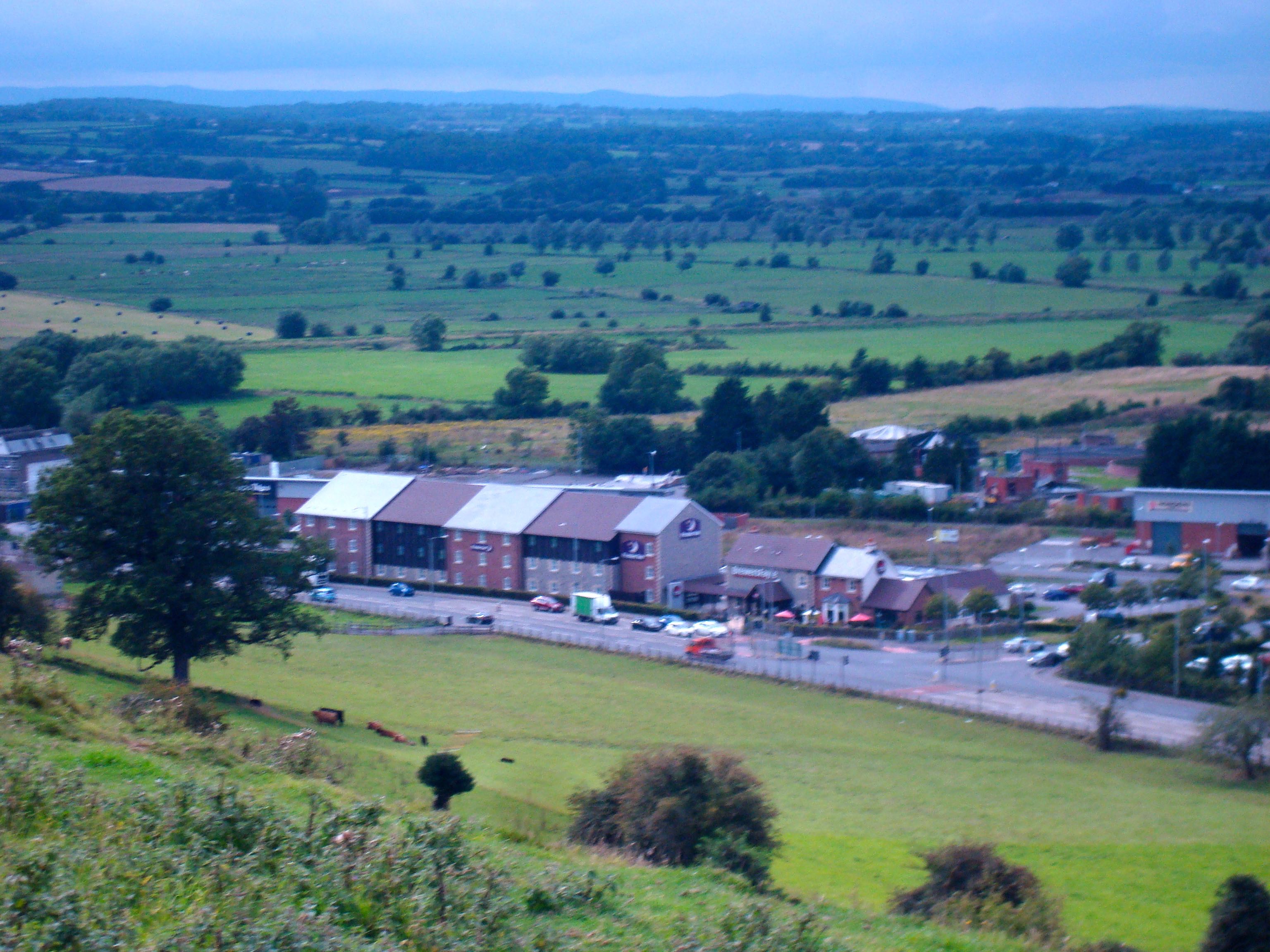
Down there, in their antiseptic hostelries, practicing their antic anomie, their idiot sex magick.

glas premier

Down there, where they dream of a different world.

glas garages

Down there, among the detritus of their strange rituals…

glas magick

…their fevered incantations…

glas incantation

…their sacrifices…

glas leg

Down there, among their baubles, their pitiable comforts…

glas garden

…there is something terrifying and unerring.

Some scurfish divinity.

Some tawdry pleroma.

Some filthy backwash of the sublime.

My Holiday in the Peak District, final day

Dark-clouds-over-Chrome-landscapeDay 1234am4pm71117, 21.

I should never have…

I have his dreams, I see the ancient temple beneath the rocks, I see where the face is

was

it is no longer there

later
Peering out of the windows at what my watch assures me must be noon – even in this thick caul of fog there is some light out there, though it is diffused, lacks direction, is too ambient even to cast a shadow – there is nothing but a luminous watery haze. Something moves out there. Not the black dog nor the white hare, their duty of prolepsis is long over and they have fled. What moves out there is vast and inhuman.

Sometimes I think I am the bottom of an alien ocean and above me a leviathan courses through the deeps, pursuing elephantine prey with a stately grace born of its immensity. Sometimes I feel its shadow fall on this narrow house. Terror turns to hope. How can something as miniscule as a human life even be noticed by a being so colossal?

I know this is just idle fancy.

The thing outside is terrene, mineral. Asperous. It moved so slowly for millennia that it appeared to be without life. Perhaps its liveliness was twisted out of sight in another dimension. But now it walks the Earth again.

later
It is coming for me. I know that, though not how I know that. I can only surmise that hidden in the words of the codex by some ancient steganography were words, curled up like a virus, waiting to be woken, words that infiltrated my mind, replicating and replacing neurons, wiring themselves into me. And that by some strange conjunction of influences, I was drawn here. And they leapt again, from me to the even older text Charteris unearthed, and activated something within it.

later
I see I have become quite mad.

later
What we think of as madness is really knowledge, perhaps even a kind of truth. I see the world differently now, and it is twisting me, making me other. Who knows what I will have become by the time my rescuers arrive?

But I am not so delusional as to expect rescue any more, or respite.

The thing out there is quartering the ground. It is drawing close.

It will not be long until it finds me.

later
It’s in the trees! It’s coming!

***

Fin

My Holiday in the Peak District, day 21

Dark-clouds-over-Chrome-landscapeDay 1234am4pm711, 17.

It is now ten days since we last ate. Even the honey with which I rendered the bitter tea palatable has run out. I suspect Charteris of stealing tiny amounts each day, and whenever I am now forced to drink such amaroidal stuff I must quell a rage that swells in my chest and throat. I fear it is not part of me but that thing within me that was summoned here, and that as I grow weaker it grows stronger.

Trapped in this Cimmerian gloom, I struggle to recall what daylight looks like. All there is is lethargy and a sense of inevitable withering.

The thin and desperate cries of Dyson and MacReady have fallen silent now.

Something is moving around out there.

Charteris shambled fitfully around the cottage, regressing into the very likeness of a villager, his hands becoming awkward appendages, capable only of clenching and clutching. Occasional moments of lucidity interrupted his constant mumbling occasionally, but it was clear his sentience was fading. He slept a lot, but restlessly. He tossed and turned as if animated by some idiot cosmic puppeteer, his strings badly tangled. He would, with persistent dull regularity, awake screaming in terror. When I tried to quiet him, he muttered over and over that ‘It is gone, it is gone’. After several days of such obscure maunderings, I realised that he had been dreaming about the crypt, about the stone face in the wall. He has infected my imagination. Even now, when I try to recall that strange grotto, I can visualise it perfectly, but the face is no longer there.

The odd thing about going so long without food is that I am too exhausted to do anything, yet too exhausted to sleep. My face is the colour of bruises. There is a rash spreading on my left arm. I found a patch of that fungus there and scrubbed at it too hard with a toothbrush. Cleansing my flesh, I broke the skin and gave it a way inside me. I scratch at it without realising until blood coats my arm.

Each day I press on slowly with my work on the printout of the writing on the tablets. My head is too blurry. The script remains elusive, dancing just outside the reach of my stumbling intellect. It taunts me.

I would not have done it.

It was not me that did it. It was that thing that he brought here inside me.

Several days ago, Charteris started wandering up to me at random moments and shaking me violently, interrupting my concentration. He kept claiming I was in a trance, incanting the ancient words on the sheets before me. He would not understand that it was impossible for me to do so, that there was no way for me to pronounce a language that had not been uttered on this world in millennia.

He will never understand now.

But as I sit here, alone at last, I cannot help but wonder whether he was speaking some kind of truth. My mind has not always been as focused as I claimed. With my disrupted sleep, it is no wonder I sometimes drift off a little while poring over these archaic texts. Perhaps in a state of hypnagogic liminality my consciousness slips, and whatever it is inside me that was summoned here gains egress from the realm in which it has been confined and some tendril of its dreadful being possesses me.

That would explain it.

That would explain how Charteris came to be lying at my feet, his head not merely bludgeoned but crushed – caved in, as if by the exertion of some monstrous pressure on skull.

It would explain how his blood came to be mingled with mine on my hands and arms.

At least I need no longer go hungry.

Final day