xXx: Return of Xander Cage (DJ Caruso 2017)

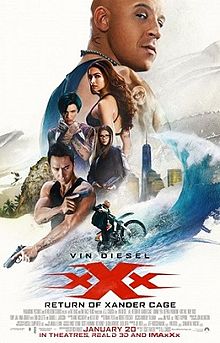
xxx_return_of_xander_cage_film_poster-jpegand so anyway it turns out the best thing about xXx: Return of Xander Cage (2017) is not reminding people that when xXx (Rob Cohen 2002) first came out serious people seriously spoke about it seriously killing off the hopelessly moribund Bond franchise, seriously,[1] and being able to prove it by pointing to the film’s complex self-referentiality (well, the succession of innuendo so lame even Roger Moore would have questioned the wisdom of saying such things aloud), no, the best thing about xXx: Return of Xander Cage was seeing it in a cinema full of boys who were not alive when xXx came out and who were in fact so young that, when Ice Cube turns up for his cameo, they not only have no idea about xXx: State of the Union (Lee Tamahori 2005),[2] and thus of who Darius Stone is, but were also not actually all that clear on the identity of Cube himself, no, wait, the very best thing about xXx: Return of Xander Cage is having an audience of teenage boys turn around in unison and stare at you when Cube/Stone appears and you are the only person in the auditorium to let out a small involuntary cheer…

Notes
[1] But then Vin Diesel walked away from the franchise, and from the Fast and Furious franchise, to make the massively underrated but still a bit crappy Chronicles of Riddick (David Twohy 2004) and especially, and lest we forget, The Pacifier (Adam Shankman 2005).
[2] Aka, for non-US, audiences xXx: The Next Level.

RIP John Hurt

article-2508559-19758e8e00000578-312_306x423[Something written pseudonymously about John Hurt for a 50th anniversary feature on Doctor Who. I have no idea by who.]

He is the one who comes between. The one we did not know was there. The one who does not count (or, at least, was not counted). Even his costume, part-McGann/part-Eccleston and bridging between them both, is interstitial, not really his own. He is the not-Doctor who says ‘no more’. As Matt Smith’s Doctor explains: ‘I said he was me, I never said he was the Doctor. … The name I chose is the Doctor. The name you choose, … it’s like a promise you make. He’s the one who broke the promise’ – and what he did to end the Time War, destroying Gallifrey and billions of Time Lords, he did ‘not [do] in the name of the Doctor’.

It now seems inevitable that sooner or later John Hurt would play the Doctor, and that when he did it would be this particular Doctor – the War Doctor – or someone like him. The one who can bear it no longer. The one who must face a Kobayashi Maru moment that is no mere test or simulation, and which cannot, Kirk-like, be glibly cheated.[1] It is not just that Hurt, the oldest actor to play the role, has been around even longer than the series,[2] and thus can bring a sense of perspective to the more infantile, gurning, gesticulatory, timey-wimey shenanigans of the relaunched series, to its peacock displays of masculinity, its violence and all the snogging. Although, edging his sorrow with an impish despair at the younger men playing his older self, he does.

Nor is just that Hurt’s sf credentials are impeccable, although they are. In Contact (Zemeckis US 1997), he portrays the billionaire funding the first contact mission as an Arthur C. Clarke lookalike, and more recently he raised Hellboy (Ron Perlman) from a pup for Guillermo del Toro. Haggard and squalid in Michael Radford’s Nineteen Eighty-four (UK 1984), his is the definitive screen Winston Smith; but one can easily imagine him taking a role in Equals, the Kristen Stewart-starring ‘epic love story’ adaptation of Orwell’s novel with which we are currently threatened, just so he can suffer again and suffer some more. It would not be the first time Hurt returned for a further dose of agony and anguish, reprising tragedy as farce. After all, his is the chest from which the alien chestburster first burst, and then again in Spaceballs (Brooks US 1987).

And it this capacity for suffering, and for provoking our sympathy, that is the key to Hurt’s persona and to his casting as the Doctor, and as this particular Doctor; that, and his aura of jaded sexual dissidence – he is, do not forget, Caligula in I, Claudius (UK 1976) – that often also leads to suffering.

He is Max, the heroin addict stuck in a Turkish hellhole prison in Midnight Express (Parker UK/US 1978) but in Love and Death on Long Island (Kwietniowski UK/Canada 1997), he is Giles De’Ath – a reclusive, modernity-hating author who stumbles into a cinema hoping for an E.M. Forster adaptation and instead gets Hotpants College II and is smitten with its star, Ronnie Bostock (Jason Priestley). He is John Merrick in The Elephant Man (Lynch US 1980), disfigured, despised and turned into a sideshow freak. Yet he is also The Countess in Even Cowgirls Get the Blues (Van Sant US 1993), sagely noting, ‘All of us are freaks in one way or another. Try being born a male Russian Countess into a white, middle class, Baptist family in Mississippi, and you’ll see what I mean’. In 10 Rillington Place (Fleischer UK 1971), he is the ill-educated Timothy Evans, framed and executed for murders committed by serial killer John Christie (Richard Attenborough). In Scandal (Caton-Jones UK 1989), he is Stephen Ward, the procurer at the heart of the Profumo affair, who is abandoned by his Establishment friends, scapegoated and driven to suicide (or possibly murdered by MI5). But he is also the fabulous flaming Quentin Crisp in The Naked Civil Servant (UK 1975), produced by Doctor Who’s very own Verity Lambert, and in An Englishman in New York (UK 2009).[3] He is the fearfully haunted Parkin in Whistle and I’ll Come to You (UK 2010) and the ailing vampire Christopher Marlowe in Only Lovers Left Alive (Jarmusch UK/Germany/France/Cyprus/US 2013), but he is also the world-weary assassin in The Hit (Frears UK 1984) and, in a neat reversal, Britain’s fascist dictator, the Big Brother to Evey’s (Natalie Portman) Winston Smith, in V for Vendetta (McTeigue US/UK/Germany 2005).

And in Frankenstein Unbound (Corman US 1990), he is Dr Joe Buchanan, the inventor of an ultimate weapon that tears holes in time and space. It casts him back to the very birth of sf, to the Villa Diodati in 1817, but in an alternative history in which Mary Shelley is writing up a factual account, not a novel, of the Frankenstein affair. And then he travels forward into a future in which his superweapon has destroyed humankind.

He has done all this before. No wonder the War Doctor’s weary mantra is ‘no more, no more’. You can hear his exhaustion ground deep in that gravelly voice.

‘I’ve been fighting this war for a long time, I’ve lost the right to be the Doctor’, he tells the sentient ultimate weapon as he prepares to use it, knowing that his punishment will be to survive genociding his own people. But Hurt has suffered – has hurt – for so long, who else had the right to be the War Doctor?

Notes
[1] Although, being a Steven Moffat episode, actually it can. The scenario can be gamed, and what was written in stone can be rewritten, while handy amnesia also leaves continuity pretty much intact.
[2] Already a stage actor, his first television appearance was in an episode of Probation Officer (UK 1959–62) broadcast two years before ‘An Unearthly Child’.
[3] Sadly, he is also Kerwin, the gay cop teamed with Ryan O’Neal in the alleged comedy Partners (Burrows US 1982).

Magic Mike XXL (Gregory Jacobs 2015)

magic-mike-xxl-poster-01and so anyway it turns out that the best thing about Magic Mike XXL (2015) is not that it has a credit for ‘tool manager’, though it does, nor that, thanks to a too-tight posing pouch, we finally get a glimpse of Channing Tatum’s wagging little doggie tail, but that in this post-truth era of alternative facts someone bothered to keep a full and accurate record of the great shirt drought of ought ’15…

Amir Tag Elsir, Telepathy: A Novel (2015)

telepathyThe narrator of Sudanese Amir Tag Elsir’s Telepathy (2015), a moderately successful author, returns from a trip to Kuala Lumpur, where he has been gathering impressions, incidents, ideas, character traits and even potential characters for his next novel. However, back in Khartoum, he finds himself living in the peculiar fall-out of his previous novel, Hunger’s Hope, when he runs into a man with the same name as its improbably-named protagonist, Nishan Hamza Nishan.

At first the narrator thinks it is some kind of stunt. Or perhaps an overzealous fan has, in misguided tribute, changed his name.

But the ‘real’ Nishan only found out about the ‘fictional’ Nishan when a neighbour – Shu‘ayb Zuhr, an unemployed graduate of the college of Public Relations and, it turns out, aspiring but uninspiring poet – brought Hunger’s Hope to his attention.

And, anyway, the ‘real’ Nishan has only read the first 120 pages. He does not know that in the second half of the novel the ‘fictional’ Nishan – whose biography up to that point is uncannily similar to his own – dies an untimely death.

The narrator recalls that writing Hunger’s Hope came to him much too easily – as if the ‘real’ Nishan had dictated it to him telepathically. Indeed, he concludes, telepathy is the only way the near identity of the ‘fictional’ and the ‘real’ Nishans can be explained; the divergences between their ‘real’ and ‘fictional’ lives are surely the result of the ‘real’ Nishan’s broadcasting telepathically but unconsciously. (The narrator’s mentor, the octagenerian playwright Abd al-Qawl, is little help; he merely recalls that one of his most controversial early plays was dictated to him through 26 dreams on 26 consecutive night.)

What is the narrator to do? What does he owe to the ‘real’ Nishan? Has he – by giving the novel that ending – condemned the ‘real’ Nishan to an early grave? And where has the ‘real’ Nishan suddenly disappeared to? And what should the narrator do when former communist Asim Ajib, once known as Asim Revolution, and now founder of the Nonaligned Publishing house invents a jacket blurb by him for a collection of Shu‘ayb Zuhr’s poems? Are there plots and conspiracies, however absurd, afoot? And what exactly is the role of Najma, wannabe writer, not-exactly-fan/not-exactly-friend in all of this? And why has she chosen him as the father of the child she want to have?

Amir Tag Elsir’s short comic novel is full of curious incident and odd, often rather sad, characters, such as Murtaja, a young man who ‘was studying at the university and went mad. Now he declares confidently that he is Wikipedia … and that in his head are a billion pages on which the entire world is written’; he roams ‘around in torn shorts, staring at the ground while reciting odd stories from the version of the Wikipedia that lived in his head’. The narrators life and Khartoum itself are slightly out-of-focus jumbles of layered histories, of migrations and separations, of differences of wealth, custom, tradition and rank.

A quick and easy read, Telepathy piles up rather more questions than it answers. Its conclusion is deliberately abrupt. A final sentence screeches the novel to a halt, reframing (but not explaining) everything that has happened (or not happened) before.


Tag Elsir, born in Sudan and now resident in Qatar, is the nephew of Tayeb Salih, author of Season of Migration to the North (1966) which was one of my top reads of 2016; it is much too soon to decide whether Telepathy will make this years list.


My top 26 films of 2016

In 2016 I watched 308 films – less than usual, in part because I taught less film this year, in part because I was reading too much.

Top 26 films seen in 2016 (not including films I’ve seen before)
Evolution (Hadzihalilovic 2015)
The Neon Demon (Winding Refn 2016)
He Never Died (Krawczyk 2015)
Mænd & høns/Men & Chicken (Jensen 2015)
Bush Mama (Gerima 1979)
Arsenal (Dovzhenko 1929)
Two Year at Sea (Rivers 2011)
Dutchman (Harvey 1967)
Kraftidioten/In Order of Disappearance (Moland 2014)
Kotoko (Tsukamoto 2011)
Arrival (Villeneuve 2015)
The Last Winter (Fessenden 2006)
Amigo
(Sayles 2010)
girlfight (Kusama 2000)
Creed (Coogler 2015)
Lost River (Gosling 2014)
Le Capital (Costa-Gavras 2012)
Diary of a Teenage Girl (Heller 2015)
Rogue One: A Star Wars Story
(Edwards 2016)
Vertigo Sea (Akomfrah 2015)
Losing Ground (Collins 1982)
Welcome Home Brother Charles (Fanaka 1975)
The Sacrament (West 2013)
The Flying Ace (Norman 1926)
Shooting Stars
(Bramble and Asquith 1928)
That Demon Within (Lam 2014)

The 308 films of 2016
Adventures of Robinson Crusoe (Buñuel 1954)
Ah! La Barbe (de Chomón 1905)
Ai no Korida (Oshima 1976)
Albert Nobbs (Garcia 2011)
All That Heaven Allows (Sirk 1955)
A maison ensorcelée (de Chomón 1908)
Amigo (Sayles 2010)
Anita and Me (Hüseyin 2002)
À nous la liberté (Clair 1931)
L’antre de le sorcière (de Chomón )
Army of Darkness (Raimi 1993)
Arrival (Villeneuve 2015)
Arsenal (Dovzhenko 1929)
Astérix & Obélix: Mission Cléopâtre (Chabat 2002)
Attack of the Giant Leeches (Kowalski 1959)
Attack the Block (Cornish 2011)
Austerity (Gavris 2015)
Autómata (Ibáñez 2014)
Avengers: Age of Ultron (Whedon 2015)
Azur & Asmar: The Princes’ Quest (Ocelot 2006)

Baise-moi (Despentes and Trihn Thi 2000)
Barcelone – parc au crépuscule (de Chomón 1904)
Barcelone, principale ville de la Catalogne (de Chomón 1912)
Belle (Asante 2013)
Betrayal of the Dove (Hamilton 1993)
Better Off Dead (Holland 1985)
The Big Knife (Aldrich 1955)
Birdman or (The Unexpected Virtue of Ignorance) (Iñárritu 2014)
Blood Ah Goh Run (Shabazz 1982)
Bloody Mallory (Magnat 2002)
Blue Ruin (Saulnier 2013)
La boîte à cigars (de Chomón 1907)
Boyz N the Hood (Singleton 1991)
Brave (Andrews, Chapman and Purcell 2012)
Bret Maverick (Margolin 1981)
Bride of Frankestein (Whale 1935)
The Brothers Bloom (Johnson 2008)
Bullet Boy (Dibb 2004)
Bunny Lake is Missing (Preminger 1964)
Burning an Illusion (Shabazz 1981)
The Burrowers (Petty 2008)
Bush Mama (Gerima 1979)
Butch Cassidy and the Sundance Kid (Hill 1969)
By Right of Birth (Gant 1921)

The Caller (Seidelman 1987)
Le Capital (Costa-Gavras 2012)
La caporal épinglé (Renoir 1962)
Carol (Haynes 2015)
Casablanca (Curtiz 1942)
Les cents trucs (de Chomón 1906)
Chappie (Blomkamp 2015)
Chigger Ale (Llansó and Seoane 2013)
Child 44 (Espinosa 2015)
Child of Resistance (Gerima 1973)
Cloud Atlas (Wachowskis and Tykwer 2012)
Cobra Verde (Herzog 1987)
Coiffures et types de Hollande (Machin 1910)
Comedown (Huda 2012)
The Company of Wolves (Jordan 1984)
Conspiracy: The Trial of the Chicago 8 (Kagan 1987)
Contagion (Soderbergh 2011)
Le couple témoin (Klein 1977)
Le courant électrique (de Chomón 1906)
Création de la serpentine (de Chomón 1908)
Creed (Coogler 2015)
Crimson Peak (del Toro 2015)
Cry of the City (Siodmak 1948)
Cthulhu Regio Entropy (Carvalho 2016)

Dallas Buyers Club (Vallée 2013)
Dark Mirror (Siodmak 1946)
Dead of Night (Cavalcanti, Crichton, Dearden and Hamer 1945)
Diary of a Teenage Girl (Heller 2015)
Dick Barton at Bay (Grayson 1950)
Dick Barton: Special Agent (Goulding 1948)
Dick Barton Strikes Back (Grayson 1949)
Diggstown (Ritchie 1992)
Dirty Pretty Things (Frears 2002)
District 9 (Blomkamp 2009)
Divergent (Burger 2014)
Dog Eat Dog (Shoaibi 2001)
Don’t Look Now (Roeg 1973)
Dracula Untold (Shore 2014)
Drive Hard (Trenchard-Smith 2014)
Ducks and Drakes (Campbell 1921)
Dutchman (Harvey 1967)

Edge of Tomorrow (Liman 2014)
Electric Hôtel (de Chomón 1908)
Elf (Favreau 20003)
Elysium (Blomkamp 2013)
En avant les musiques (de Chomón 1907)
Entr’acte (Clair 1924)
Evil Dead II (Raimi 1987)
Evil Roy Slade (Paris 1972)
Evolution (Hadzihalilovic 2015)
Excalibur (Boorman 1981)
Une excursio incohérente (de Chomón 1909)
Ex Machina (Garland 2015)

Fahrenheit 451 (Truffaut 1966)
The Fall (Tarsem 2006)
Fantastic Four (Trank 2015)
Fauteuils d’orchestre (Thompson 2006)
The Flying Ace (Norman 1926)
Fording the River (Smith 1910)
Frankenstein (Whale 1931)
Frida (Taymor 2002)
Frozen (Buck and Lee 2013)
Fury (Ayer 2015)
Future Shock! The Story of 2000AD (Goodwin 2014)

Galaxy Quest (Parisot 1999)
Gazon Maudit (Balasko 1995)
Gérone, la Venise espagnole (de Chomón 1912)
Ghost Dog: The Way of the Samurai (Jarmusch 1999)
Ghosts with Shit Jobs (McCawley, Morrison, Munroe and Young 2012)
The Gift (Edgerton 2015)
Ginger Snaps (Fawcett 2000)
girlfight (Kusama 2000)
The Girl on the Train (Taylor 2016)
A Girl Walks Home Alone At Night (Amirpour 2014)
The Gold Diggers (Potter 1983)
Le goût des autres (Jaoui 2000)
The Grand Budapest Hotel (Anderson 2014)
Green Room (Saulnier 2015)
Grosse Point Blank (Armitage 1997)
Growing Up (Cole 1971)

The Harvest (Smith 1908)
The Hateful Eight (Tarantino 2015)
The Haunting (Wise 1963)
Hedwig and the Angry Inch (Mitchell 2001)
He Never Died (Krawczyk 2015)
L’hereu de can pruna (de Chomón 1904)
Los Heróes del sitio de Zaragoza (de Chomón 1903)
High-Rise (Wheatley 2015)
hors d’ouevres (Potter 1971)
Hot Fuzz (Wright 2007)
Hour Glass (Gerima 1971)
How I Live Now (Macdonald 2013)

I Don’t Know You, But I Need You to Change the World (Libre Films 2016)
L’inaugurazione del campanile di San Marco (1912)
Independence Day (Emmerich 1996)
Innocence (Hadzihalilovic 2004)
L’insaisissable pickpocket (de Chomón 1908)
Inside Llewyn Davis (Coen brothers 2014)
In Time (Niccol 2011)
Invasion of the Body Snatchers (Siegel 1956)
The Invisible Man (Whale 1933)
It Follows (Mitchell 2014)

Jerk (Potter 1969)
John Wick (Stahelski 2014)

Kill, Baby…Kill! (Bava 1967)
Ki ri ki, acrobates japanois (de Chomón 1907)
Kiss Me Deadly (Aldrich 1955)
Kotoko (Tsukamoto 2011)
Kraftidioten/In Order of Disappearance (Moland 2014)
Krampus (Dougherty 2015)
Kung Fury (Sandberg 2015)

The Last Winter (Fessenden 2006)
Lee Scratch Perry’s Vision of Paradise (Schaner 2015)
Life and Lyrics (Laxton 2006)
The Lion in Winter (Harvey 1968)
The Lobster (Lanthimos 2016)
Locke (Knight 2013)
The London Story (Potter 1986)
The Long Good Friday (Mackenzie 1980)
Losing Ground (Collins 1982)
Lost River (Gosling 2014)
Love (Eubank 2011)
Les lunatiques (de Chomón 1908)

The Machine (James 2013)
Mad About Men (Thomas 1954)
Mad Love (Freund (1935)
Maggie (Hobson 2015)
The Maltese Falcon (Huston 1940)
Mænd & høns/Men & Chicken (Jensen 2015)
The Maze Runner (Ball 2014)
Mea Culpa (Cavayé 2014)
The Mechanic (West 2011)
The Medusa Touch (Gold 1978)
Métamorphoses (de Chomón 1912)
The Mistletoe Bough (Stow 1904)
Mix Me a Person (Norman 1962)
Moon (Jones 2009)
The Movement (Antoine 2015)
The Mummy (Freund 1932)

Naked Lunch (Cronenberg 1991)
The Neon Demon (Winding Refn 2016)
Night in the Wild Garden (Llansó 2015)
Noah (Aronofsky 2014)
Nosferatu (Murnau 1922)

One Million Steps (Stotz 2015)
Only Lovers Left Alive (Jarmusch 2013)
OSS 117: Le Caire, nid d’espions (Hazanavicius 2006)
Les ouefs du Pâques (de Chomón 1907)
Les papillons japonais (de Chomón 1908)

The Passion of Remembrance (Blackwood and Julien 1986)
Paul (Mottola 2011)
Peau d’âne (Demy 1970)
Le petit poucet (de Chomón 1909)
The Phantom of the Opera (Lubin 1943)
Pitch Perfect 2 (Banks 2015)
Pirates are the Best Customers (Lungu 2015)
Play (Potter 1970)
Plotono nuotatori della III divisione cavalleria comandata da S.A.R. il conte torino (Comerio 1912)
Plongeur fantastique (de Chomón 1906)
Poison (Haynes 1991)
Pool of London (Dearden 1951)
Post Grad (Jenson 2009)
Prête-moi ta main (Lartigua 2006)
Pride (Warchus 2014)
Pride and Prejudice (Leonard 1940)
Pride and Prejudice and Zombies (Steers 2016)

Queen Kong (Agrama 1976)

The Raid 2 (Evans 2014)
Rapsodia Satanica (Oxilia 1917)
A Reckless Rover (1918)
Red Riding Hood (Hardwicke 2011)
Repo Chick (Cox 2009)
Repo Man (Cox 1984)
Repo Man (Cox 1984)
Rio Bravo (Hawks 1959)
The River (Renoir 1951)
RoboCop (Verhoeven 1987)
RoboCop 2 (Kershner 1990)
RoboCop 3 (Dekker 1993)
Rogue One: A Star Wars Story (Edwards 2016)
Le Roi des dollars (de Chomón 1905)
Rollerball (Jewison 1975)
Rollin’ with the Nines (Gilbey 2006)

Sabotage (Hitchcock 1936)
The Sacrament (West 2013)
Les Saignantes (Bekolo 2005)
Scott Pilgrim vs. the World (Wright 2010)
Sculpteur express (de Chomón 1907)
Seven Songs for Malcolm X (Akomfrah 1993)
Shank (Ali 2010)
Shooting Stars (Bramble and Asquith 1928)
Sicario (Villeneuve 2015)
Sightseers (Wheatley 2012)
Silent Country (Wren 2016)
Silk Stockings (Mamoulian 1957)
Sin Nombre (Fukunaga 2009)
Slow West (Maclean 2015)
Snowpiercer (Bong 2013)
Song of Freedom (Wills 1936)
Son of Frankenstein (Lee 1939)
Southland Tales (Kelly 2006)
Southpaw (Fuqua 2015)
South West 9 (Parry 2001)
Space Station 76 (Plotnick 2014)
Le spectre rouge (de Chomón 1907)
Speed (De Bont 1994)
Stalag 17 (Wilder 1953)
Stalker (Tarkovsky 1979) and here, too
Star Wars (Lucas 1977)
Star Wars: The Force Awakens (Abrams 2015)
Step Up (Fletcher 2006)
Stormy Weather (Stone 1945)
Streets of Parliament (O’Connell 2015)
Sucker Punch (Snyder 2011)
Superstition andalouse (de Chomón 1912)
Sur un air de Charleston (Renoir 1927)

Take Shelter (Nichols 2011)
Taxi Driver (Scorsese 1976)
That Demon Within (Lam 2014)
Le théâtre électrique de bob (de Chomón 1906)
The Thing (Carpenter 1982)
The Thing from Another World (Nyby 1951)
Thirteen (Hardwicke 2003)
This is My Land (Rivers 2006)
Thriller (Potter 1979)
Throne of Blood (Kurosawa 1957)
The Time Machine (Schellerup 1978)
Tomatoes Tree (Mobasseri 2016)
Tomorrowland (Bird 2015)
A Touch of Zen (King Hu 1971)
The Transporter (Letterier and Yuen 2002)
Tree (Zare 2016)
Tropikos (Akomfrah 2014)
Les tulipes (de Chomón 1907)
Two Nights of Vaudeville (1915)
Two Year at Sea (Rivers 2011)

Under the Skin (Glazer 2013)

Le Vampire (Painlevé 1945)
Vertigo Sea (Akomfrah 2015)
De Vierde Man (Verhoeven 1983)
Villain (Tuchner 1971)
Le voleur invisible (de Chomón 1909)
Le voyage sur Jupiter (de Chomón 1909)

The Walk (Zemeckis 2015)
Welcome Home Brother Charles (Fanaka 1975)
Werewolf of London (Walker 1935)
What a Carve Up! (Jackson 1961)
The Wicker Man (Hardy 1973)
Wild Card (West 2015)
The Wolf Man (Waggner 1941)
The Wolverine (Mangold 2013)
Written on the Wind (Sirk 1956)

X-Men (Singer 2000)
X-Men: Days of Future Past (Singer 2014)
X-Men: First Class (Vaughn 2011)
X-Men 2 (Singer 2002)
X-Men: The Last Stand (Ratner 2005)
X-Men Origins: Wolverine (Hood 2009)
Xtro (Davenport 1982)
Xtro II: The Second Encounter (Davenport 1990)

Young Soul Rebels (Julien 1991)

My top 20 books of 2016

152992In 2016, I read 243 books – there were a lot of short ones this year, and more comics than usual, plus I wrote a couple of synoptic chapters that required a lot of very fast reading or re-reading.

Portnoy compliance figures
All of the world except…122 (61 by women)
…straight white men writing in English 103
Don’t quite fit 18


My top 20 (which does not include books I’ve read before)

A Igoni Barrett, Blackass (2015)
Aphra Behn, Oroonoko (1688)
Karen Blixen, Out of Africa (1937)

Alejo Carpentier, The Kingdom of This World (1949)
Ta-Nehisi Coates, The Beautiful Struggle (2008)

Warren Ellis and Jason Howard, Trees, volume one (2014)
–. Trees, volume two (2015)

Muriel Jaeger, The Man with Six Senses (1927)
Marlon James, John Crow’s Devil (2005)
Storm Jameson (as William Lamb), The World Ends (1937)

China Miéville, Last Days of New Paris (2016)
Jason W Moore, Capitalism in the Web of Life: Ecology and the Accumulation of Capital (2015)

Laurie Penny, Everything Belongs to the Future (2016)

Maurice Renard, The Master of Light (1933)
Nina Revoyr, Southland (2003)
Raymond Roussel, Impressions of Africa (1910)

Tayeb Salih, Season of Migration to the North (1966)
Nisi Shawl, Everfair (2016)
Zadie Smith, White Teeth (2000)

Tade Thompon, Rosewater (2016)

The full list
Leila Aboulela, Minaret
Saladin Ahmed, Throne of the Crescent Moon
Juice Aleem, Afrofutures and Astro Black Travel: A Passport to a Melanated Future
David Annan, Ape: The Kingdom of Kong
Jake Arnott, The House of Rumour
Mike Ashley, ed., The Feminine Future: Early Science Fiction by Women Writers

JG Ballard, HighRise
Steven Barnes, Gorgon Child
–. Firedance 
Jim Barratt, Bad Taste
A Igoni Barrett, Blackass
Barroux, Hannah Berry, Kate Charlesworth, Dan McDaid, Pat Mills, Denise Mina, Will Morris, Adam Murphy, Mary Talbot and Irvine Welsh, IDP: 2043
William Beckford, Vathek
Aphra Behn, Oroonoko
–. Oroonoko
Neil Bell (as Miles), The Seventh Bowl
Brian Michael Bendis and Michael Gaydos, Jessica Jones: Alias, volume one
Jane Bennet, Vibrant Matter: A Political Ecology of Things
Lauren Beukes, Moxyland
–. Broken Monsters
Karen Blixen, Ehrengard
–. Out of Africa
–. Shadows on the Grass
Karin Boye, Kallocain
Ray Bradbury, Fahrenheit 451
Kamau Brathwaite, Middle Passages
Poppy Z Brite, His Mouth Will Taste of Wormwood, and Other Stories
Douglas and Shea T Brode, Gene Roddenberry’s Star Trek: The Original Cast Adventures
Anthony Browne, King Kong
Ed Bunker, Dog Eat Dog
Katherine Burdekin, Swastika Night
David Butler, Fantasy Cinema: Impossible Worlds on Screen
Octavia Butler, Clay’s Ark
–. Mind of My Mind
–. Patternmaster
–. Wild Seed

John W Campbell, Islands of Space
–. Invaders from the Infinite
Ramsey Campbell, Ancient Images
Karel Čapek, War with the Newts
Alejo Carpentier, The Kingdom of This World
Angela Carter, The Bloody Chamber
Willa Cather, My Ántonia
–. O Pioneers!
Aimé Césaire, A Tempest
M.E. Chamberlain, The Scramble for Africa
Bruce Chatwin, The Viceroy of Ouidah
John Cheng, Astounding Wonder: Imagining Science and Science Fiction in Interwar America
George Clinton and Ben Greenman, Brothas Be, Yo Like George, Ain’t That Funkin’ Kinda Hard on You?
Ta-Nehisi Coates, The Beautiful Struggle
JM Coetzee, Foe
John Collier, Tom’s A-Cold
Christopher Columbus, Journal of the First Voyage
Joseph Conrad, Almayer’s Folly
–. The Secret Agent
John Corbett, ed., The Wisdom of Sun Ra: Sun Ra’s Polemical Broadsheets and Streetcorner Leaflets
John Corbett, Anthony Elms and Terri Kapsalis, eds, Pathways to Unknown Worlds: Sun Ra, El Saturn and Chicago’s Afrofuturist Underground, 1954–68
–. Traveling the Spaceways: Sun Ra, the Astro Black and Other Solar Myths
André Couvrer, The Androgyne
Alex Cox, Chris Bone and Justin Randall, Waldo’s Hawaiian Holiday
David Cronenberg, Consumed
JA Cuddon, ed., The Penguin Book of Ghost Stories
Lincoln Cushing, ¡Revolución!: Cuban Poster Art

Rjurik Davidson, The Library of Forgotten Dreams
Claire De Duras, Ourika
Françoise de Graffigny, Letters of a Peruvian Woman
Samuel R Delany, Babel-17
–. The Ballad of Beta-2
–. City of a Thousand Suns
–. Driftglass
–. The Einstein Intersection
–. Empire Star
–. The Jewels of Aptor
–. Nova
–. Out of the Dead City
–. The Tides of Lust
–. The Towers of Toron
Samuel R. Delany and Howard V. Chaykin, Empire: A Visual Novel
Guy Dent, Emperor of the If
Thomas De Quincey, Confessions of an English Opium Eater
Virginie Despentes, King Kong Theory
Thomas Disch and John Sladek, Black Alice

George Alec Effinger, Budayeen Nights
–. A Fire in the Sun
–. The Exile Kiss
Warren Ellis and Jason Howard, Trees, volume one
–. Trees, volume two

Fadia Faqir, The Cry of the Dove
John M Faucette, The Age of Ruin
–. Crown of Infinity
–. Siege of Earth
–. The Warriors of Terra
Jennifer L. Feeley and Sarah Ann Wells, eds, Simultaneous Worlds: Global Science Fiction Cinema
Peter Fryer, Staying Power: The History of Black People in Britain

Otto Willi Gail, The Shot into Infinity
– The Stone from the Moon
Stuart Galbraith IV, Monsters Are Attacking Tokyo! The Incredible World of Japanese Fantasy Films
Steven Gil, Science Wars through the Stargate: Explorations of Science and Society in Stargate SG-1
Beryl Gilroy, Boy-Sandwich
John Gloag, To-Morrow’s Yesterday
Solon L. Goode, The Winged Ship
P Anderson Graham, The Collapse of Homo Sapiens
SL Grey, Under Ground
Jon Courtenay Grimwood, Pashazade
Ken Grimwood, Replay

Rider Haggard, King Solomon’s Mines
Peter Haining, The Classic Era of American Pulp Magazines
Cicely Hamilton, Theodore Savage
Edmond Hamilton, Crashing Suns
–. Outside the Universe
Lynsey Hanley, Estates: An Intimate History
Otfrid von Hanstein, Between Earth and Moon
Milo Hastings, City of Endless Night
Margrét Helgadóttir, The Stars Seem So Far Away
Margrét Helgadóttir and Jo Thomas, eds, African Monsters
–. Asian Monsters
Cat Hellisen, Beastkeeper
Matt Hills, Blade Runner
Steve Holland, The Mushroom Jungle: A History of Postwar Paperback Publishing
Robert Horton, Frankenstein
Reginald Hudlin, John Romita, Jr and Dean White, Who Is The Black Panther?

Tony Isabella, Dennis O’Neill, Trevor Von Eeden, Michael Netzer, Frank Springer and Vince Colletta, Black Lightning
Shirley Jackson, The Haunting of Hill House
–. The Haunting of Hill House
Muriel Jaeger, The Man with Six Senses
Marlon James, John Crow’s Devil
Gwyneth Jones, The Grasshoppers’ Child
Bertène Juminer, Bozambo’s Revenge

Billy Kahora, Imagine Africa 500
Ann Kaplan, Climate Trauma: Foreseeing the Future in Dystopian Film and Fiction
Frigyes Karinthy, Capillaria
David Katz, People Funny Boy: The Genius of Lee ‘Scratch’ Perry
Richard Kelly and Brett Weldele, Southland Tales: Two Roads Diverge
–. Southland Tales: Fingerprints
–. Southland Tales: The Mechanicals
Geoff King, Donnie Darko
Jack Kirby, Black Panther, volume one
–. Black Panther, volume two
Natsuo Kirino, Out
Teruhisa Kitahara and Yukio Shimizu, Robots, Spaceships and Other Tin Toys
Dale Knickerbocker, ed., Lingua Cosmica: Science Fiction from Beyond the Anglophone Universe

Larissa Lai, Automaton Biographies
William Lamb (Storm Jameson), The World Ends
Ann Leckie, Ancillary Justice
–. Ancillary Sword
Ursula Le Guin, A Wizard of Earthsea
–. Tombs of Atuan
Gaston LeRoux, The Man with the Black Feather
Marjorie Liu and Sana Takeda, Monstress, volume one: Awakening

Don McGregor and mostly Billy Graham, The Essential Black Panther, volume one
Don McGregor et al, The Essential Luke Cage, Power Man
Marc McLaurin, Dwayne Turner, Rurik Tyler, Gordon Purcell and Sal Velluto, Luke Cage: Second Chances, volume one
Marc McLaurin, DG Chichester, Gregory Wright, Scott Benefiet, Paris Cullins, Brian Pelletier, Richard Pace, Kirk Van Wormer and Steven Butler, Luke Cage: Second Chances, volume two
Zaiba Malik, We Are A Muslim, Please
Nick Mamatas, Cthulhu Senryu
Linda Medley, Castle Waiting
Farah Mendlesohn and Edward James, A Short History of Fantasy
Abram Merritt, The Moon Pool
China Miéville, Last Days of New Paris
–. London’s Overthrow
G.R. Mitchison, The First Workers’ Government, or New Times for Henry Dubb
Jason W Moore, Capitalism in the Web of Life: Ecology and the Accumulation of Capital
Timothy Morton, Hyperobjects: Philosophy and Ecology after the End of the World
José Moselli, Illa’s End
Sam Moskowitz, ed., When Women Rule

E Nesbit, The Story of the Amulet
Henry Neville, The Isle of Pines

Nnedi Okorafor, Binti
–. The Book of Phoenix
Denny O’Neil and Neal Adams, Superman vs. Muhammad Ali
Naomi Oreskes and Erik M Conway, The Collapse of Western Civilization

Jussi Parikka, The Anthrobscene
Laurie Penny, Everything Belongs to the Future
Andrey Platonov, The Foundation Pit
Charles Portis, Norwood
Mary Prince, The History of Mary Prince, A West Indian Slave, Related by Herself
–. The History of Mary Prince, A West Indian Slave, Related by Herself
Jedediah Purdy, After Nature: A Politics for the Anthropocene

Sun Ra, The Immeasurable Equation: The Collected Poetry and Prose
Hannu Rajaniemi, The Quantum Thief
–. The Fractal Prince
–. The Causal Angel
Sir Walter Ralegh, The Discoverie of the Large, Rich and Bewtiful Empyre of Guiana
Rudolph Raspe, The Surprising Adventures of Baron Munchausen
Maurice Renard, The Master of Light
Nina Revoyr, Southland
Chris Roberson and Robert Adler, Do Androids Dream of Electric Sheeep?: Dust to Dust, volume one
Chris Roberson and Robert Adler, Do Androids Dream of Electric Sheeep?: Dust to Dust, volume two
Kim Stanley Robinson, Sixty Days and Counting
Randall Robinson, The Emancipation of Wakefield Clay
Roy Rockwood (Howard R Garis), Through Space to Mars; or, The Longest Journey on Record
Raymond Roussel, Impressions of Africa
Mary Rowlandson, A Narrative of the Captivity and Restoration of Mrs Mary Rowlandson
Salman Rushdie, East, West

Tayeb Salih, Season of Migration to the North
James Sallis, Bluebottle
Andrew Sarris, “You Ain’t Heard Nothin’ Yet”: The American Talking Film: History and Memory 1927–1949
Olive Schreiner, The Story of an African Farm
Max Sexton and Malcolm Cook, Adapting Science Fiction to Television: Small Screen, Expanded Universe
William Shakespeare, The Tempest
–. The Tempest
Edward Shanks, The People of the Ruins
Nisi Shawl, Everfair
Lao She, Cat Country
MP Shiel, The Young Men Are Coming!
Robert Silverberg, The World Inside
John Sinclair, ed. Sun Ra: Interviews and Essays
Zadie Smith, White Teeth
–. NW
Mickey Spillane, Kiss Me, Deadly
Nick Srnick and Alex Williams, Inventing the Future: Postcapitalism and a World Without Work
Olaf Stapledon, Last and First Men
Francis Stevens (Gertrude Barrows), The Nightmare and Other Tales of Dark Fantasy
–. The Heads of Cerberus

Greg Tate, Flyboy in the Buttermilk: Essays on Contemporary America
–. Midnight Lightning: Jimi Hendrix and the Black Experience
JP Telotte and Gerald Duchovany, eds, Science Fiction Double Feature: The Science Fiction Film as Cult Text
Andrew Teverson, Fairy Tale
Roy Thomas et al. The Essential Luke Cage, Power Man, volume 1
Tade Thompon, Making Wolf
–. Rosewater
JRR Tolkien, The Hobbit
Alberto Toscano and Jeff Kinkle, Cartographies of the Absolute

Max Valier, A Daring Trip to Mars
Jen Van Meter, Cully Hamner and Laura Martin, Black Lightning Year One
Théo Varlet and André Blandin, Timeslip Troopers
Gerald Vizenor, The Heirs of Columbus

McKenzie Wark, Molecular Red: Theory for the Anthropocene
Andy Weir, The Martian
HG Wells, All Aboard for Ararat
–. The Anatomy of Frustration
–. The Holy Terror
–. The Shape of Things to Come
Alex Wheatle, Brixton Rock
Jack Williamson, The Legion of Space
–. The Cometeers
Mark JP Wolf, Building Imaginary Worlds: The Theory and History of Subcreation
Nick Wood, Azanian Bridges
Barbara Wootton, London’s Burning

Gene Luen Yang, Saints
Paul Youngquist, A Pure Solar World: Sun Ra and the Birth of Afrofuturism

Rachel Zadok, Gem Squash Tokoloshe
Chen Zo, Sorceror to the Crown
Rogue One: A Star Wars Story (Edwards 2016)

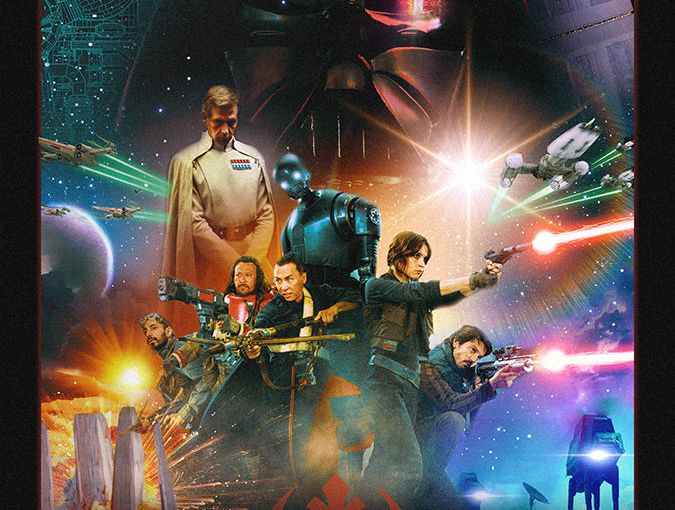
rgjyqwmw7alhlucwpltband so anyway it turns out that the best thing about Rogue One: A Star Wars Story (2016) is its duration since it gives you plenty of time to plot out the prequel (Episode 3a-1) about a ragtag band of outsiders on a secret mission to discover the person – at whose existence the entire franchise repeatedly hints – who, inspiring gloryhound Galen Erso in the process, has spent decades trying to destroy the Empire from within by deliberately incorporating into bases and other facilities, without anyone in the Imperial Design Division noticing, such abundant design flaws as those in the Imperial data bank on Scarif…

Stuff what I done in 2016

So the big thing this year was receiving the Science Fiction Research Association’s Pilgrim Lifetime Achievement Award for Critical Contributions to the Study of Science Fiction and Fantasy. I am still a little freaked out by it.

Other honours this year included being asked to join the advisory board of the soon-to-be-launched Miskatonic Journal of Horror Studies and being invited to give three keynotes and a couple of research papers/talks:

  • ‘The Afrocyberpunk City’, The City of the Future symposium, Universität Hamburg, Germany 29–30 January 2016
  • ‘Afrofuturism Archive Accrue Artefact’, King’s Fantastic Talks series, King’s College, London, 27 February 2016
  • ‘Robots on the Streets, Icebergs in the Skies: London, Austerity, Anthropocene’, Fantasies of Contemporary Culture, Cardiff University/Prifysgol Caerdydd, 23 May 2016
  • ‘Afrofuturism, Archive, Anthropocene’, Global Fantastika, University of Lancaster, 4–5 July 2016
  • ‘Things Above, and Beyond: the Anthropocene Unconscious of Miéville’s ‘Polynia’ and Llansó’s Crumbs’, Fantastic Material(s): Things and the Workings of the Non-Real, Institute of English Cultures and Literatures, Uniwersytet Śląski w Katowicach, Poland 7–8 July 2016
13245270_10209622339946050_5386051050193209390_n
In Cardiff, with Billy Proctor, at a conference only slightly populated by balding middle-aged white men

Good times were had in Germany, Wales, England and especially Poland – though clearly I am getting old as I was forced to retire sick at the end of the first day of Global Fantastika, which I still feel guilty about. I also examined 4 PhDs: two in the UK, one in Australia (though they never fly you down there) and one in Sweden – where a good time was also had.

[In Katowice, where Karolina, knowing I don’t really like having my photo taken, ensured I existed only in fragments. More on Poland here, here,  here, here, here and here. {More on Sweden here, here, here and here.}]

There was also the launch of the monograph series Studies in Global Science Fiction, for Palgrave, which I am coediting with Anindita Bannerjee and Rachel Heywood Ferreira. Our first volume, Ritch Calvin’s Feminist Science Fiction and Feminist Epistemology: Four Modes, is already out. Send proposals.

The nearest I got this year to publishing an article in a refereed journal were an immensely long interview:

  • ‘Not Just the Viggo Mortensen of Desolated Left Politics: An Interview with China Miéville’, Paradoxa 28: Global Weirding (2016), edited by Gerry Canavan and Andrew Hageman. The introduction to the issue is here; the other interview, between Andrew, Timothy Morton and Jeff VanderMeer is here; and the contents page from which China and I are mysteriously missing – I assume it is a complex metafictional gag  that will make sense when you read the interview – is here

and a chapter in an edited collection:

  • ‘Paying Freedom Dues: Marxism, Black Radicalism, and Blaxploitation Sf’ in Ewa Mazierska and Alfredo Suppia, eds, Red Alert: Marxist Approaches to Science Fiction Cinema (Wayne State UP 2016), 72–97

But I did manage some essays, reviews and blogs:

I also gave a talk on ‘Why Are So Many Robots Female?’ for the We, Robot event at the Being Human festival, finished an article on Afrofuturism, Robots of Brixton and Crumbs, wrote four book chapters (on cult sf movies, dystopian sf movies, sf between the wars, and afrofuturism in the 1960s and 1970s, all but one of which still need revising and polishing), a review essay and two book reviews.

I am knackered.