 and so anyway it turn out that the best thing about The Hateful Eight (Tarantino 2015) roadshow version is not the intermission, because that would be too easy a joke, nor is it every single frame of QT’s yappy remake of John Carpenter’s The Thing (1982) in which no one is speaking because it is all just so gosh-durn pretty to look at (though it is), nor that QT enables you to wile away the hours trying to figure out which precise combination of the characters the title refers to (unless it is self-deprecating joke about his oeuvre) but just the fact that someone at long last has dared to bring to the cinema an adaptation of the very best but least successful series of novels by Enid Blyton….
Category: Film
Creed (Ryan Coogler 2015)
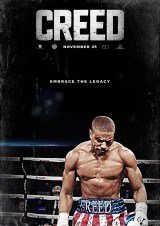 and so anyway it turns out that the best thing about Creed (2015) is the moment when, after Rocky Balbao falls sick and is forced to drop out of training Adonis Creed, and after Clubber Lang and Ivan Drago step up to help Adonis prepare for his title shot, and after Adonis is forced to drop out because of a hand injury, Rocky himself puts on the gloves and stars-and-stripes shorts for one last shot at glory…
Dracula Untold (Gary Shore 2014)
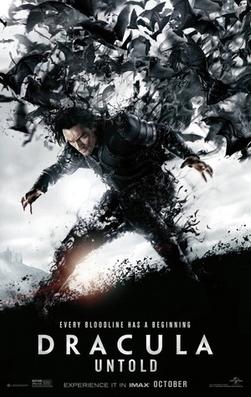 and so anyway it turn out that the best thing about Dracula Untold (2014) is not that, despite its title, it begins with extensive voiceover narration, nor that it promptly sets you up to expect a queer vampire western when the first named location is Broketooth Mountain, nor that Luke Evans dies right at the start so that his big brother Jason Statham can take over (mainly because that doesn’t actually happen), nor the Taransylvaniarantula spiders lurking in the ancient vampire’s cave, but the moment when Vlad, his kingdom about to be overrun by Turks (well, they’re Turk-ish), as a last resort goes to implore the ancient vampire master, ‘Save my people – you’re Charles Dance, you’ll do any old shit for money’…
Divergent (Neil Burger 2014)
 and so anyway it turns out the best thing about Divergent (2014) is not its role in the mysterious rise of Jai Courtney, easily the very worst of all the very bad actors in the much-loved Spartacus, nor is it the way that it makes you want to watch the much-loved and incredibly silly Equilibrium (Wimmer 2002) again, but the bold formal experiment it conducts by taking the training montage sequence as the basis for its narrative structure but then including two hours of all the tedious stuff you would normally cut out…
Writing, publications, events in 2015
 Writing anything more substantial than blog posts has been hard this year. Things that got in the way included: burn out; depression; general HE mission-drift/precarity/anxiety/malaise; having to design/validate/launch a new degree programme; spending time planning a large research project only to find my institution will not support a bid to the one source likely to fund it. Hopefully, I will find some energy soon since I have an article, a book chapter, a review and a magazine feature due in the next month; and another three essays, two reviews, and six keynotes and invited research talks scheduled before the end of the summer. Oh, and that co-edited collection I keep forgetting about.
But, of course and as always, Sherryl, Gerry and I edited three issues of Science Fiction Film and Television on schedule. And some publications did leak into the world in 2015
Monograph translation
Science Fiction: The Routledge Film Guidebook (2012) appeared in Turkish as Bilimkurgu (Kolektif Kitap 2015)
Contributions to edited collections
‘The Coy Cult Text: The Man Who Wasn’t There as Noir Sf’ in JP Telotte and Gerald Duchovnay, eds, Science Fiction Double Feature: The Science Fiction Film as Cult Text (Liverpool UP 2015), 38–52
‘Slipstream Cinema: Dick without the Dick’ in Stefan Schlensag and Alexander Dunst, eds, The World According to Philip K. Dick (Palgrave Macmillan 2015), 119–136
‘The Futures Market: American Utopias’ in Eric Carl Link and Gerry Canavan, eds, The Cambridge Companion to American Science Fiction (Cambridge UP 2015), 83–96
Non-peer-reviewed article
‘African SF 101’, The SFRA Review (2015), 11–18; also here and here. This was also my most successful blog of the year: 1300+ views in one day, 4,250 as of ten minutes ago (about a fifth of my blog views for the year). It has also been translated in two parts (here and here) for the website of the World Chinese Science Fiction Association, China’s largest association for science fiction practitioners and fans.
Blog
‘Piqued Oil’, Salvage online (5 Oct 2015).
Fiction
‘Milton Friedman: An Obituary’, Salvage 1 (2015), 225–229. Also here. This started off a long time ago as a joke and ended up being my first published fiction. In the giddy aftermath, I spilled out an actual story – exactly the kind of space opera/western/romance/mathporn mash-up with gratuitous Maverick, Flash Gordon and M. John Harrison riffs no one wants to publish – so for the counterfactual Ballard piece currently under concoction I have reverted to wilfully obscure material in a non-fiction format.
Events
I was interviewed for Alessandro Inglima and Yari Lanci’s Coded Skins, a documentary on the SpaceApe that is currently in production. Simultaneously made me feel really old, and all young and street.
I was part of a panel on ‘Video Nasties’ before the UK premiere of Joe D’Amato’s uncut Anthropophagus, The Cube, Bristol, 16 September 2015.
I introduced the 1930 sonorised version of Sergei Eisenstein’s Battleship Potemkin (along with Everyday, Vintik-Sphintik and Interplanetary Revolution) for Bristol Silents, The Lansdown, Bristol, 23 September 2015.
I helped to organise Global Futures: On Science Fiction, featuring Bill Campbell, Zen Cho, Carmelo Rafala, Geoff Ryman, Stephanie Saulter, Donna Scott and Tade Thompson, at Book & Kitchen, London, 7 November 2015.
And I was the only even remotely mean-spirited curmudgeon who made it into the final cut of Channel 5’s The Definitive History of Star Wars, 11 December 2015,
My top thirty-two films of 2015
This year, I watched 365 films (though I could not work up the energy to transcribe the incomplete-because-of-system-constraints list from my FB page this morning, so you will have to go dig around there if you really care). Anyways, here are my top nine films which had cinema releases or previews in the UK this year, and the top twenty-three I saw for the first time this year:

The top nine (in (current) order of preference)
Hard To Be A God (German 2013)
Crumbs (Llansó 2015)
High Rise (Wheatley 2016)
Mad Max Fury Road (Miller 2015)
White God (Mundruczó 2014)
Furious 7 (Wan 2015)
Bone Tomahawk (Zahler 2015)
The Signal (Eubank 2014)
Spy (Feig 2015)
The other top twenty-three (in alphabetical order, ‘cos decisions are too hard and I already made a bunch)
21 Jump Street (Lord/Miller 2012)
Adrift in Tokyo (Satoshi Miki 2007)
The Baader Meinhoff Complex (Edel 2008)
The Babadook (Kent 2014)
Babylon (Rosso 1981)
Beasts of the Southern Wild (Zeitlin 2012)
Black Joy (Simmons 1977)
The Drop (Roskam 2014)
Go For Sisters (Sayles 2013)
A Lonely Place to Die (Gilbey 2011)
Los Angeles Plays Itself (Andersen 2003)
Make Way for Tomorrow (McCarey 1937)
Piccadilly (Dupont 1929)
Pitch Perfect (Moore 2012)
The Rover (Michôd 2014)
The Shining (US cut) (Kubrick 1980)
The Sorcerer’s Apprentice (Zeman 1978)
Stage Struck (Dwan 1925)
The Stolen Airship (Zeman 1967)
This Filthy World (Garlin 2006)
Tiger in the Smoke (Baker 1956)
Tusk (Smith 2014) – though I might be completely wrong about this
Yeelen (Cissé 1987)
Jack Reacher (Christopher McQuarrie 2012)
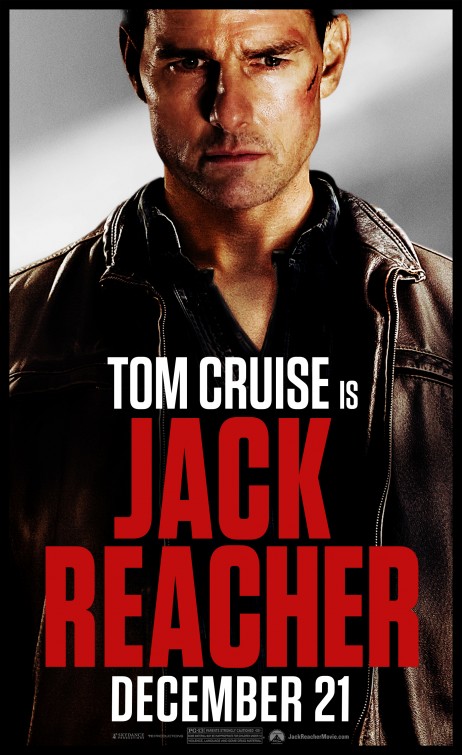 and so anyway it turns out that the best thing about Jack Reacher (2012) – especially since diminutive star and producer Tom Cruise either can’t or won’t follow the rather sage advice hidden in the title of the currently-filming sequel Jack Reacher: Don’t Go Back – is not the clattering sub-Bourne car chase in which our tiny hero careens off cars and kerbs because he is not tall enough to simultaneously reach the pedals and see over the dashboard, but the look on the bantam face of the literally pocket-sized Cruise, so tiny you really can pick him up and carry him around in your breast pocket like a half-smoked Panatela or flashlight pen, when, on what was obviously the first day of shooting, it suddenly dawned on him that he had bought the rights to a series of rather ordinary thrillers featuring a six foot five, 220+ pound Aryan wet-dream of a man, rather than the heart-warming (and, to iddy-biddy Tom, profoundly resonant) triumph-over-adversity tale of a small boy who, like the Lilliputian star, would stretch and stretch and stretch but still not be able to get onto the sofa without being lifted…
Whiplash (Damien Chazelle 2014)
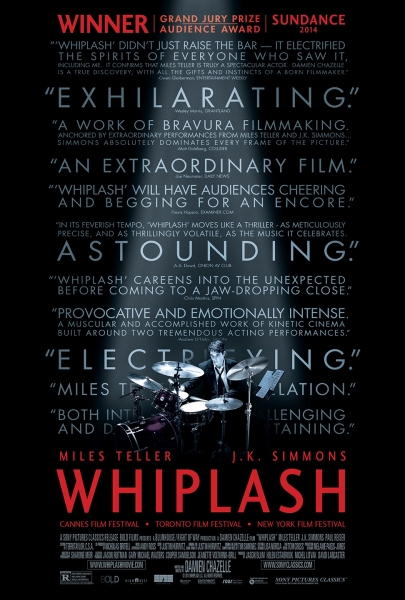 and so anyway it turns out that the best thing about multi-Oscar-winning Whiplash (2014) is not that – thanks mainly to the music, the editing and Supergirl’s chin, which once you have seen you will never unsee – it manages to combine being quite enjoyable with being a big pile of totally reprehensible tosh, nor that it got Babylon 5‘s Garibaldi back in shape and won him an Oscar, but that it showed me exactly where I have been going wrong pedagogically for the last 22 years, putting all that effort into not being a complete and utter dick, and made me look forward to turning over a new, abusive leaf when I get back to classes in the new year…
Star Wars: The Force Awakens (JJ Abrams 2015)
 and so anyway it turns out that the best thing about Star Wars: The Force Awakens (2014) is not the way tumbleweed blows across the Tatooine desert when Simon Pegg makes his desperately unfunny ‘Rey gun’ joke, nor is it the revelation that the ‘home’ Han is so glad to be back at is the one in which his grandkids have dumped him, where he rooms with Bruce Campbell’s Elvis and Ossie Davis’s JFK, no, the best thing about the new Star Wars movie is the eighteen months of misdirection during which Channing Tatum and Jonah Hill straight-up straightface lied about the next Jump Street movie cross-over being with the Men in Black franchise…
The City in Fiction and Film, week 12

This was a nice gentle week, beginning with watching Passport to Pimlico (Henry Cornelius 1949) and then turning to other matters before discussing it.
First up was some general feedback on the student’s first essays. They all get extensive individual written feedback, but it is good to pool together some more general points, since individual feedback can sometimes feel very isolating – as if you alone are the only person making errors. Overall, though, the class has done pretty well, and we pretty much focused on essay structure, quoting and paraphrasing more effectively, and presentational conventions.
Second, I presented a broad strokes overview of what we have done this semester – it is good to remind students of quite how much ground they have covered, and to make more explicit the connections between weeks, especially if you can also not-so-subtly tailor it towards the upcoming exam in January.
Third, we took a look at the exam paper, ensuring that everyone understood what is required of them – and pointing out that it would be a good idea to ensure they had access to a copy of the film they were going to write about before they go home for the Xmas break.
Then, at last, we discussed Passport to Pimlico – which to my bemusement no-one much liked. So we spent some time off-topic digging into that:
- partly it was that it is more of a comic film than a comedy, genial rather than guffaw-inducing;
- partly it was the historical specificity of the film and thus of much of the humour;
- partly it was that the humour depends so heavily on types which are no longer commonplace, and on the casting of specific actors. For example, if you don’t know Margaret Rutherford, her character is probably quite mystifying, but if you do know her she is a delight to watch because she is up there on the screen being Margaret Rutherford; Basil Radford and Naunton Wayne are only quite so funny because of the way they turn up in yet another film as basically those guys from The Lady Vanishes (Hitchcock 1938); and so on;
- partly it was a lack of someone to identify with – something I would have liked to have more time to talk about because I am never quite sure a) what it means, and b) why people feel it is necessary to find someone like themselves in a film in order to enjoy it (if that is what it means). It is, however, worth noting that this – whatever this is – is probably compounded by the film being sort of centred on Arthur Pemberton (Stanley Holloway) but dispersing its narrative among an ensemble cast.
It must have all seemed even more baffling when I mentioned that one part of the film – when ordinary Londoners turn up to feed the besieged Burgundians – always chokes me up, the way those I-am- Spartacus moments tend to do (although oddly, not in Spartacus (Kubrick 1960)).
Thank goodness I didn’t get on to talking about the apparent influence of the film on late-60s/early-70s black power sf – Warren Miller’s The Siege of Harlem (1965) in particular seems to borrow a chunk of it – or to pointing out that when imdb trivia says ‘Some historians, for some reason, have considered this to be a borderline science-fiction film’ I think it is referring to something I once wrote.
So, alone in a room full of people who did not even remotely plain love the movie, I found myself thinking, ‘Blimey, I’m a furriner’. And no one airlifted me a pig for company…
Building on last week’s discussion of Bicycle Thieves, we considered the film in relation to postwar experience and to the emerging conflicted programmes of rebuilding bombed cities and slum clearance. The film opens with a lovely bit of contrast and misdirection: a dedication to the end of rationing (which would not end for another five years) cuts to a little bit of Latin nightlife, possibly in Havana – only it is not Havana at all, but Pimlico (actually Lambeth), and the music is only ‘Les Norman and his Bethnal Green Bambinos’ on the radio. So we cut from the exotic to the mundane, to a world not of languid plenty but to a period of austerity languishing in a heatwave. (This contrast is returned to throughout the film: when communal eating is instituted, but takes the form of sidewalk cafés, but they don’t like French cuisine; when Shirley Pemberton (Barbara Murray), out courting the impoverished duke (Paul Dupuis), dreams of the orange orchards where he lives, only for him to point our there is really only a cement factory there now; etc.
One of things I like about Passport to Pimlico and Ealing’s Hue and Cry (Charles Crichton 1947) is their willingness to show bomb-damaged London – unlike, say, The Perfect Woman (Knowles 1949), which opts for the rather fantastical London of a West End farce where it seems like there is not a trace of the war (although it too articulates a utopian vision of plenitude in the midst of austerity).
The Pimlico community, a mix of lower middle class shopkeepers and their more working class neighbours, also contrasts well with the working-class communities of Bicycle Thieves. The community is disjointed, primarily along class lines, as the council meeting demonstrates – Arthur presents his lovingly crafted plan to convert the bomb-site into a swimming pool and park so the neighbourhood kids have somewhere safer to play and the adults have somewhere to relax, but the proposal is outvoted by the local bank manager Mr Wix (Raymond Huntley) and others who wish merely to sell the land to the highest bidder. This kind of conflict between a community’s needs/wishes and the (apparently) easy money to be made off property developers forms a pretty constant current in postwar development, including things such as Lambeth councils recent dodgy campaign against the residents of Cressingham Gardens.
The community, however, is brought together by conflict – the film makes very pointed use of WWII imagery, evoking the already-mythologised spirit of the Blitz as much as it does the Berlin airlift. And the film positions us on the side of the community against Whitehall bureaucracy, against jobsworth coppers and customs agents – but also, a little problematically, other Londoners, conceived of as spivs and black-marketeers trespassing on the Burgundians new position of exceptionality and privilege, as too much chaos and disorder, as not-being-from-around-here. Sadly, the film never ceases to be timely in this regard. But on the bright side, a kind of border-defying, working-class internationalism based on sharing breaks out among Londoners (and chokes me up), countering wealth and power, and opening out the Burgundian community once more.
And then it was time for mid-year module evaluation forms, and holiday wishes, and then home for a nice cup of tea (except the central computer controlling the phasing of Bristol’s traffic lights had gone haywire and that nice cup of tea was a couple of hours away).
 Mark Bould